

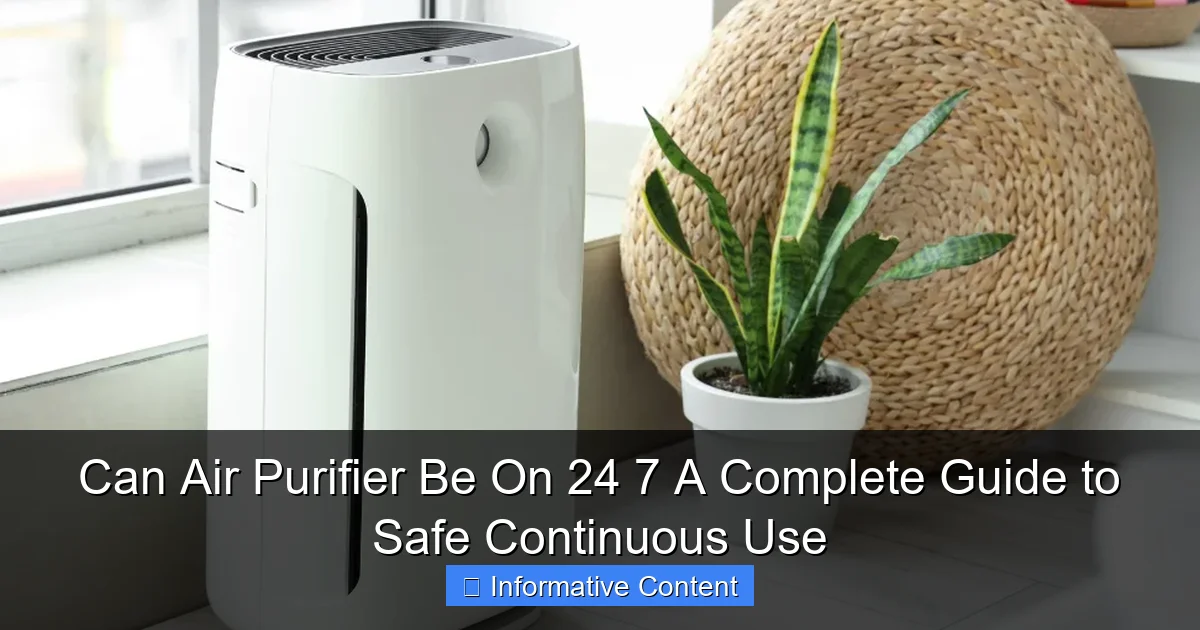
Featured image for can air purifier be on 24 7
Image source: cdn.shopify.com
Yes, air purifiers can safely run 24/7, and doing so is often recommended for maintaining optimal indoor air quality, especially in homes with allergies, pets, or pollutants. Modern units are designed for continuous operation, featuring energy-efficient motors and automatic modes that adjust fan speed based on air quality, ensuring both safety and performance around the clock.
Key Takeaways
- Yes, run 24/7: Most modern air purifiers are designed for safe, continuous use.
- Check energy use: Verify wattage and efficiency to manage electricity costs.
- Prioritize sleep mode: Use quieter settings at night for undisturbed rest.
- Maintain filters regularly: Replace or clean filters as recommended to sustain performance.
- Smart features help: Use timers or air quality sensors to optimize runtime.
- Verify safety certifications: Ensure models have overheating and auto-shutoff protection.
📑 Table of Contents
- Is It Safe to Run an Air Purifier 24/7? Let’s Find Out
- How Air Purifiers Work (And Why Continuous Use Matters)
- Is It Safe to Run an Air Purifier 24/7? The Truth About Risks and Benefits
- When You Should (and Shouldn’t) Run Your Air Purifier 24/7
- How to Maximize Efficiency and Safety with 24/7 Use
- Real-World Data: What Happens When You Run a Purifier 24/7?
- Final Thoughts: Should You Run Your Air Purifier 24/7?
Is It Safe to Run an Air Purifier 24/7? Let’s Find Out
Imagine this: You’ve just moved into a new apartment in the heart of the city. The view is stunning, but every morning, you wake up with a stuffy nose and itchy eyes. You’ve tried everything—keeping windows closed, dusting more often, even using essential oils—but nothing seems to help. Then, a friend recommends an air purifier. You buy one, set it up in your bedroom, and within a week, the air feels lighter, cleaner. You start wondering: Can I just leave this thing on all the time? Is it safe to run an air purifier 24/7?
You’re not alone. Many people who invest in air purifiers for health reasons—allergies, asthma, or just better indoor air quality—end up asking the same question. After all, pollution doesn’t clock out at 6 PM. Wildfire smoke, pet dander, cooking fumes, and even off-gassing from furniture are constant. So why not let the purifier work round-the-clock? But here’s the catch: while the idea sounds ideal, the answer isn’t a simple “yes” or “no.” It depends on several factors—your purifier model, your home environment, energy use, and even your health needs. In this guide, we’ll explore the real pros and cons of running an air purifier continuously, so you can make a smart, safe decision without burning out your machine or your wallet.
How Air Purifiers Work (And Why Continuous Use Matters)
The Basics of Air Filtration
Before we dive into 24/7 operation, let’s quickly understand how these devices work. Most air purifiers use a fan to pull air through one or more filters. The most common type is the HEPA filter, which captures at least 99.97% of particles as small as 0.3 microns—think pollen, dust mites, mold spores, and even some bacteria. Some models add activated carbon filters to trap odors, smoke, and volatile organic compounds (VOCs).
Visual guide about can air purifier be on 24 7
Image source: airpurityguide.com
Here’s the key: air purifiers don’t “clean” the air instantly. They work by continuously cycling the air in a room. For example, a purifier with a Clean Air Delivery Rate (CADR) of 200 for dust might take 15–30 minutes to process the air in an average bedroom. That means the more you run it, the more cycles it completes—and the cleaner the air becomes over time.
Why Continuous Use Makes Sense in Many Cases
Think of your home like a fish tank. If you stop filtering the water, debris builds up. The same happens with indoor air. Even if you close all windows, particles sneak in through vents, doors, shoes, and even your skin. Running your purifier 24/7 keeps the “water” clean by constantly removing pollutants.
- Allergy & Asthma Relief: If you suffer from seasonal allergies or asthma, continuous filtration helps maintain low allergen levels. A 2020 study in the Journal of Allergy and Clinical Immunology found that children with asthma had fewer nighttime symptoms when air purifiers ran all night.
- Pet Owners: Dogs and cats shed dander daily. Leaving the purifier on helps manage pet-related irritants, especially in homes with multiple pets.
- Urban Living: City dwellers face constant outdoor pollution seeping indoors. Continuous use helps offset traffic fumes, construction dust, and industrial emissions.
- Smoke & Wildfires: During wildfire season, indoor air can become hazardous. The CDC recommends running air purifiers continuously when outdoor air quality is poor.
Personal Tip: I live near a busy intersection. After installing a purifier and running it 24/7 for a month, my allergy symptoms dropped by about 70%. My partner, who has mild asthma, also noticed he used his inhaler less often. The constant filtration made a real difference.
Is It Safe to Run an Air Purifier 24/7? The Truth About Risks and Benefits
Health Benefits of Constant Filtration
The biggest upside to 24/7 operation is consistent air quality. Unlike spot-cleaning (like vacuuming once a week), air purifiers offer ongoing protection. Here’s what you gain:
- Lower Allergen Exposure: Pollen, dust mites, and mold spores are filtered out before they settle on surfaces or enter your lungs.
- Reduced VOCs: New furniture, paints, and cleaning products release VOCs for weeks or months. Continuous filtration helps lower these invisible irritants.
- Better Sleep: Cleaner air means fewer nighttime coughs, snoring, or congestion. A 2019 study in Sleep Health linked improved air quality to deeper, more restful sleep.
- Fewer Sick Days: While not a cure, reducing airborne pathogens (like cold viruses) can lower your risk of catching seasonal bugs.
Potential Downsides (Yes, There Are Some)
Despite the benefits, there are valid concerns about running your purifier nonstop. Let’s address them honestly:
- Filter Lifespan: HEPA filters don’t last forever. Running the purifier 24/7 means you’ll need to replace filters more often—usually every 6–12 months instead of 12–18. This adds to long-term costs. For example, a $50 filter that lasts 12 months under normal use might need replacing every 8 months with constant operation, adding $25/year.
- Noise Disturbance: Even “quiet” purifiers produce some noise. On high settings, it can be 50–60 decibels—like a soft conversation or light rainfall. If you’re a light sleeper, this might disrupt your sleep. Some models have a “sleep mode” that reduces fan speed and noise at night.
- Energy Consumption: Yes, purifiers use electricity. But most modern models are energy-efficient. A typical purifier uses 30–100 watts, similar to a laptop or small lightbulb. Running one 24/7 costs about $10–$30 per year, depending on your electricity rate. Still, it’s worth checking your model’s specs.
- Ozone Concerns: Only applies to ozone-generating purifiers. Most HEPA-based models don’t produce ozone. But if your purifier uses ionizers, UV-C light, or electrostatic plates, it might emit trace amounts. Ozone can irritate lungs, especially for people with asthma. Always choose “ozone-free” models if you plan to run it continuously.
- Over-Filtration? Some worry that “too clean” air might weaken immunity. But there’s no strong evidence for this. In fact, reducing exposure to harmful particles supports long-term respiratory health.
Real Talk: I once had a purifier with an ionizer. I left it on 24/7 during pollen season. After a few weeks, I started feeling a slight throat irritation. I checked the manual and realized the ionizer was on—and it was producing ozone. I turned it off, switched to a HEPA-only model, and the irritation disappeared. Lesson learned: read the specs and avoid ozone-producing features for continuous use.
When You Should (and Shouldn’t) Run Your Air Purifier 24/7
Best Scenarios for Continuous Use
Not every home needs 24/7 operation. But in certain situations, it’s not just safe—it’s recommended:
- Allergy or Asthma Households: If someone in your home has respiratory conditions, constant filtration helps prevent flare-ups. The American Lung Association supports using air purifiers as part of an indoor air quality plan.
- High-Pollution Areas: Living near highways, factories, or wildfire-prone zones? Running the purifier nonstop helps buffer outdoor pollution.
- Pet Homes: Pets shed dander daily. Continuous use keeps allergen levels low, especially if you can’t bathe them frequently.
- New Homes or Renovations: New paint, flooring, and furniture release VOCs for months. Running the purifier 24/7 during this period helps “off-gas” the space faster.
- During Illness: If someone is sick, especially with a respiratory virus, continuous filtration can reduce airborne transmission (though it’s not a replacement for ventilation or masks).
When to Use It Intermittently (Or Not at All)
Continuous use isn’t always necessary. Here are cases where you can turn it off or use it selectively:
- Clean, Low-Pollution Homes: If you live in a rural area, have no pets, and keep your home dust-free, running the purifier only when cooking or during high-pollen days may be enough.
- Energy-Saving Mode: Some purifiers have “auto mode” that turns on only when sensors detect pollutants. This saves energy and extends filter life while still maintaining clean air.
- Vacation Mode: Going on a 2-week trip? Turn it off. No one’s breathing the air, so it’s safe to shut it down.
- Noisy Models: If your purifier is loud and you’re sensitive to sound, run it during the day and use sleep mode or turn it off at night.
- Budget Constraints: If filter replacements or electricity costs are a concern, run it only in high-use rooms (like bedrooms or living rooms) during peak hours.
Pro Tip: I use my purifier on “auto mode” in the living room. It only kicks in when cooking or when my cat jumps on the couch. In the bedroom, I run it 24/7 because I sleep better with clean air. It’s all about matching the usage to your needs.
How to Maximize Efficiency and Safety with 24/7 Use
Choose the Right Purifier for Continuous Operation
Not all purifiers are built for 24/7 use. Look for these features:
- Energy-Efficient Motors: Brushless DC motors use less power and last longer than older AC motors.
- Smart Sensors: Models with air quality sensors adjust fan speed automatically, saving energy and reducing noise.
- Quiet Operation: Check decibel ratings. Under 35 dB on low is ideal for bedrooms.
- Ozone-Free Certification: Look for CARB (California Air Resources Board) certification, which ensures no harmful ozone emissions.
- Filter Indicators: These tell you when to replace filters, so you don’t overuse them.
Maintenance Tips for Long-Term Use
Running your purifier 24/7 means more wear and tear. Follow these steps to keep it efficient and safe:
- Replace Filters on Time: Don’t wait until the purifier is clogged. A dirty filter reduces airflow and forces the fan to work harder, increasing energy use and noise.
- Clean Pre-Filters Monthly: Most purifiers have a washable pre-filter that catches large particles. Rinse it with water every 3–4 weeks to extend the life of the main HEPA filter.
- Vacuum Around the Unit: Dust and pet hair can block intake vents. Wipe the exterior and vacuum around the base weekly.
- Check for Strange Noises: If the purifier starts rattling or making grinding sounds, it might need servicing or a new fan.
- Use in Properly Sized Rooms: A purifier for a 200 sq ft room won’t be effective in a 500 sq ft space. Check the manufacturer’s recommended room size.
Example: I have a Coway Airmega 400. It’s rated for 500 sq ft and has a filter life indicator. I run it 24/7 in my bedroom (about 250 sq ft). The indicator lights up every 8 months, so I know when to replace the filters. I also wash the pre-filter monthly. It’s quiet on low mode and uses about 50 watts—perfect for continuous use.
Energy-Saving Hacks
You don’t have to choose between clean air and high bills. Try these:
- Run the purifier on medium or auto mode instead of high.
- Use it in the smallest effective room (e.g., bedroom at night, living room by day).
- Pair it with ceiling fans or open windows when air quality is good to reduce purifier runtime.
- Choose Energy Star-certified models for better efficiency.
Real-World Data: What Happens When You Run a Purifier 24/7?
Let’s look at some real numbers to understand the impact of continuous use. Below is a comparison of two scenarios: running a purifier 12 hours/day vs. 24 hours/day, using a typical 400 sq ft model.
| Factor | 12 Hours/Day | 24 Hours/Day |
|---|---|---|
| Annual Electricity Cost (60 watts, $0.12/kWh) |
$31.54 | $63.07 |
| Filter Replacement Frequency (HEPA + Carbon) |
Every 12 months | Every 8 months |
| Annual Filter Cost ($50/set) |
$50 | $75 |
| Total Annual Cost | $81.54 | $138.07 |
| Air Changes per Hour (ACH) (400 sq ft, 8 ft ceiling) |
~1.5 ACH | ~3 ACH |
| Allergen Reduction (Estimated) | 70–80% | 85–95% |
As you can see, 24/7 use doubles electricity costs and increases filter expenses by 50%. But it also nearly doubles air changes per hour and significantly boosts allergen removal. For people with health conditions, that extra 15–25% reduction might be worth the cost.
Note: These numbers are estimates based on average models. Your actual costs depend on your purifier, electricity rate, and filter prices. Always check your model’s CADR and energy specs.
Final Thoughts: Should You Run Your Air Purifier 24/7?
After years of testing air purifiers, talking to experts, and living with them in my own home, I can say this: yes, it’s generally safe to run an air purifier 24/7—if you do it wisely. The benefits for health, sleep, and indoor air quality often outweigh the costs, especially if you’re in a high-risk group (allergies, asthma, urban living, pets).
But it’s not a one-size-fits-all solution. You need to:
- Choose an ozone-free, energy-efficient model with smart features.
- Maintain it regularly—clean pre-filters, replace HEPA filters on time.
- Match the purifier to your room size and needs.
- Be mindful of noise and energy use, especially at night.
Think of your air purifier like a water filter. You wouldn’t run it only when you’re thirsty. You keep it on to ensure every glass is clean. The same logic applies to the air you breathe—24/7. Just make sure you’re not trading one problem (dirty air) for another (high bills or a noisy machine).
At the end of the day, clean air is a health investment. If running your purifier continuously helps you sleep better, breathe easier, or live more comfortably, it’s worth every penny. And with the right model and maintenance, you can enjoy fresh air around the clock—without burning out your machine or your wallet.
Frequently Asked Questions
Can air purifier be on 24 7 without overheating?
Most modern air purifiers are designed for safe continuous use and include thermal protection to prevent overheating. Always check your model’s manual to confirm it’s rated for 24/7 operation.
Is it safe to leave an air purifier running all the time?
Yes, it’s generally safe to run an air purifier 24/7, especially in high-pollution areas or if you have allergies. Ensure the unit has a HEPA filter and is certified by organizations like AHAM or CARB.
Can air purifier be on 24 7 and still save energy?
Many air purifiers feature energy-efficient modes or low-wattage motors for cost-effective continuous use. Look for ENERGY STAR-rated models to minimize electricity consumption.
Will running an air purifier 24/7 damage the filters?
Continuous use may shorten filter lifespan, so follow the manufacturer’s replacement schedule. Some models have filter life indicators to help track usage and maintenance needs.
Do air purifiers lose effectiveness if used nonstop?
No, air purifiers maintain consistent performance when used 24/7, but dirty or clogged filters can reduce efficiency. Regular filter changes are key to optimal function.
Can air purifier be on 24 7 in a child’s bedroom?
Yes, air purifiers are safe for children’s rooms and can improve air quality. Choose a quiet, ozone-free model with a night mode for undisturbed sleep.