
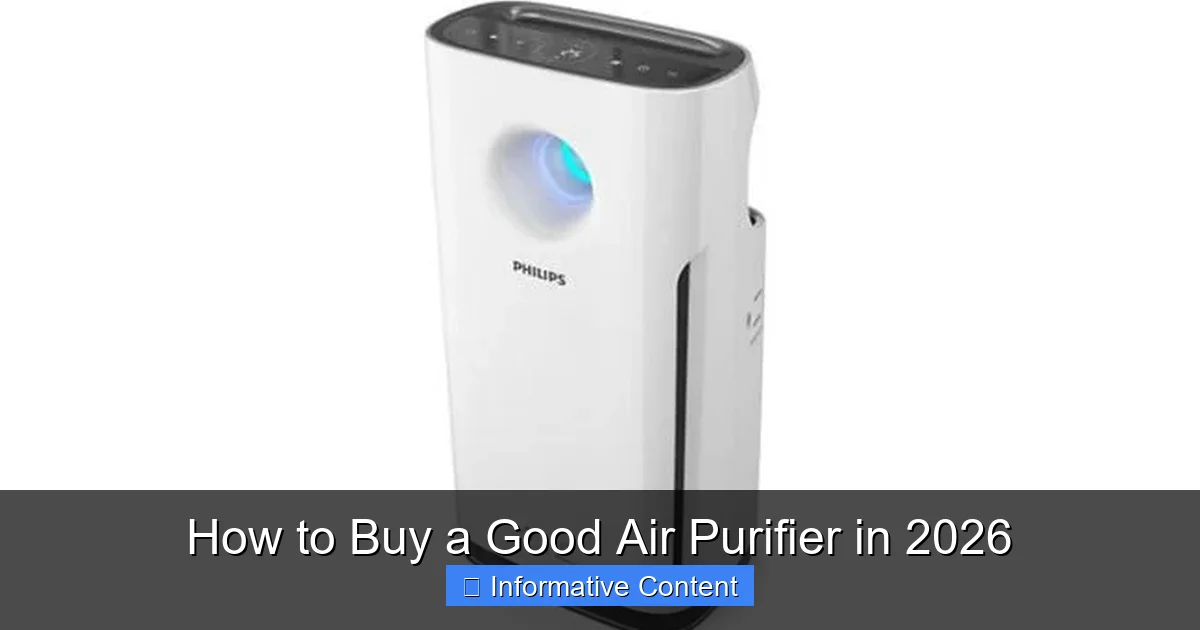
Featured image for how to buy a good air purifier
Image source: olansi.net
Choosing the right air purifier in 2026 starts with matching the unit’s Clean Air Delivery Rate (CADR) to your room size for maximum efficiency. Look for HEPA filters that capture 99.97% of particles and consider smart features like real-time air quality monitoring and app control for convenience and performance. Energy efficiency, noise levels, and filter replacement costs are also key to long-term satisfaction.
Key Takeaways
- Measure your room size: Match the purifier’s CADR to your space for optimal performance.
- Prioritize HEPA filters: Choose True HEPA to capture 99.97% of airborne particles.
- Check noise levels: Opt for <40 dB for bedrooms and quiet zones.
- Verify energy efficiency: Look for ENERGY STAR certification to save on bills.
- Monitor filter costs: Factor in replacement frequency and long-term expenses.
- Smart features help: Use air quality sensors and auto-mode for convenience.
- Read real reviews: Trust user feedback over marketing claims for reliability.
📑 Table of Contents
How to Buy a Good Air Purifier in 2026
Imagine walking into your home after a long day, expecting a breath of fresh air—only to be greeted by the faint smell of yesterday’s dinner, pet dander floating in the sunlight, or that musty odor that just won’t quit. You’re not alone. Millions of people around the world struggle with indoor air quality, especially as homes become more energy-efficient and tightly sealed. In 2026, the air inside your house might actually be more polluted than the air outside. That’s where a good air purifier comes in—not as a luxury, but as a necessity for better health, better sleep, and peace of mind.
But here’s the thing: not all air purifiers are created equal. Walk into any big-box store or scroll through online marketplaces, and you’ll be bombarded with options—some sleek and silent, others bulky and loud, with price tags ranging from $50 to over $1,000. It’s easy to feel overwhelmed. Do you really need a HEPA filter? What’s the deal with CADR ratings? And why do some models promise to “ionize” the air while others claim to use “UV-C light”? The truth is, buying a good air purifier in 2026 isn’t just about picking the shiniest model—it’s about understanding your specific needs, knowing what features actually matter, and avoiding the marketing fluff.
In this guide, I’ll walk you through everything you need to know to make a smart, informed decision. Whether you’re dealing with allergies, pets, smoke, or just want cleaner air for your family, I’ve got you covered. We’ll break down the key features, explain the tech in simple terms, and share practical tips based on real-world use. By the end, you’ll know exactly how to buy a good air purifier—one that fits your space, your lifestyle, and your budget.
Understand Your Air Quality Needs
Before you even start looking at models, take a moment to think about why you want an air purifier. Are you sneezing every time your cat walks by? Do you live near a busy road with heavy traffic? Maybe you’ve noticed a persistent musty smell in your basement, or you’re concerned about wildfire smoke during the summer months. Identifying your specific air quality challenges is the first step in choosing the right purifier.

Visual guide about how to buy a good air purifier
Image source: olansi.net
Common Indoor Air Pollutants
Indoor air can contain a surprising mix of contaminants, many of which are invisible but harmful over time. Here are the most common culprits:
- Allergens: Dust mites, pollen, pet dander, and mold spores can trigger allergies and asthma. These particles are often between 0.3 and 10 microns in size.
- Volatile Organic Compounds (VOCs): Found in cleaning products, paints, air fresheners, and even new furniture, VOCs can cause headaches, dizziness, and long-term health issues.
- Smoke: Whether from cooking, cigarettes, or wildfires, smoke contains fine particles (PM2.5) that can penetrate deep into your lungs.
- Bacteria and Viruses: Especially relevant in 2026, airborne pathogens remain a concern in shared spaces and homes with multiple occupants.
- Odors: Cooking smells, pet odors, and mildew can linger and affect your comfort and mental well-being.
For example, if you have a dog or cat, you’ll want a purifier that excels at capturing pet dander and neutralizing odors. If you live in a city with high pollution levels, look for a model that handles fine particulate matter effectively. And if someone in your household has asthma, prioritize a purifier with a medical-grade HEPA filter.
Assess Your Living Space
Not all rooms are created equal when it comes to air purification. A purifier that works great in a 300-square-foot bedroom might struggle in a 1,000-square-foot open-concept living area. Consider the following:
- Room size: Measure the square footage of the room where you plan to use the purifier. Most manufacturers list a “coverage area” in their specs—make sure your room falls within that range.
- Ceiling height: High ceilings mean more air volume, which can reduce a purifier’s effectiveness unless it’s designed for larger spaces.
- Airflow: Is the room well-ventilated? Are there windows that open? Air purifiers work best in enclosed spaces with minimal drafts.
- Usage patterns: Will the purifier run 24/7, or only during certain times (like when cooking or sleeping)? Continuous use may require a more durable motor and quieter operation.
Pro tip: If you’re placing the purifier in a bedroom, noise level becomes critical. A unit that’s too loud can disrupt sleep, even if it’s cleaning the air effectively. Look for models with a “sleep mode” or decibel ratings below 30 dB on the lowest setting.
Key Features to Look for in a Good Air Purifier
Now that you know what you’re dealing with, let’s talk about what makes an air purifier truly effective. In 2026, the market is flooded with gadgets that promise clean air, but only a few deliver. Here are the must-have features to prioritize.
HEPA Filtration: The Gold Standard
If there’s one feature you should never compromise on, it’s a true HEPA (High-Efficiency Particulate Air) filter. According to the U.S. Department of Energy, a true HEPA filter must capture at least 99.97% of particles as small as 0.3 microns. That includes dust, pollen, mold spores, and even some bacteria.
Beware of terms like “HEPA-type” or “HEPA-like”—these are marketing tricks. They may look similar, but they don’t meet the same rigorous standards. Always check the product description or packaging for “True HEPA” or “H13 HEPA” (a higher grade used in medical settings).
For example, the Levoit Core 400S uses a True HEPA H13 filter and is highly rated for allergy sufferers. It captures pet dander, smoke particles, and even some viruses, making it a solid choice for most homes.
Activated Carbon Filter for Odors and Gases
While HEPA filters are great for particles, they can’t remove gases, odors, or VOCs. That’s where an activated carbon filter comes in. Made from porous carbon, this filter adsorbs (not absorbs) chemical pollutants and odors, trapping them in its structure.
If you cook frequently, have pets, or use strong cleaning products, a carbon filter is essential. Some advanced models even use catalytic carbon or potassium iodide-infused carbon to target specific chemicals like formaldehyde.
For instance, the Blueair Blue Pure 211+ combines a HEPA filter with a layer of activated carbon, making it excellent for both particle removal and odor control. It’s also one of the most energy-efficient models on the market.
CADR Rating: How Fast Does It Clean?
CADR stands for Clean Air Delivery Rate, and it measures how quickly a purifier can remove smoke, dust, and pollen from the air. The higher the CADR, the faster the unit cleans. The Association of Home Appliance Manufacturers (AHAM) certifies CADR ratings, so look for that seal of approval.
Here’s a quick guide:
- Smoke CADR: Best for homes with smokers or wildfire risk.
- Dust CADR: Ideal for allergy sufferers or homes with carpeting.
- Pollen CADR: Great for seasonal allergy relief.
As a rule of thumb, choose a purifier with a CADR at least two-thirds the size of your room in square feet. So for a 300-square-foot room, aim for a CADR of 200 or higher.
Smart Features and Connectivity
In 2026, many top air purifiers come with smart features that make them easier to use and more effective. These aren’t just gimmicks—they can significantly improve your experience.
Look for models with:
- Air quality sensors: These detect pollutants in real time and automatically adjust fan speed. The Dyson Purifier Humidify+Cool Formaldehyde uses a solid-state sensor to monitor formaldehyde levels, a common indoor toxin.
- App control: Control your purifier from your phone, set schedules, and receive filter change reminders. The Coway Airmega 400S offers full app integration and even shows real-time air quality data.
- Voice control: Works with Alexa, Google Assistant, or Siri for hands-free operation.
- Auto mode: Adjusts fan speed based on air quality, saving energy and reducing noise.
While smart features add convenience, they also increase the price. If you’re on a budget, a basic model with a HEPA filter and good CADR may be more than sufficient.
Noise Level and Energy Efficiency
You might not think about noise and energy use when buying an air purifier, but these factors can make or break your experience—especially if you plan to run it all night or in a quiet home office.
Understanding Decibel Ratings
Air purifiers are rated in decibels (dB), just like any other appliance. Here’s what to expect:
- 20–30 dB: Whisper-quiet, ideal for bedrooms. You’ll barely notice it’s on.
- 30–40 dB: Quiet library level. Suitable for light sleepers or offices.
- 40–50 dB: Normal conversation level. May be noticeable in a quiet room.
- 50+ dB: Can be disruptive, especially at night.
Most quality purifiers offer multiple fan speeds. On the lowest setting, they should run quietly enough for uninterrupted sleep. The Austin Air HealthMate HM400, for example, operates at just 28 dB on low—perfect for nighttime use.
Energy Consumption and Operating Costs
Air purifiers aren’t typically power-hungry, but running one 24/7 can add up over time. Look for models with the ENERGY STAR certification, which means they meet strict efficiency guidelines set by the EPA.
Here’s a rough estimate of annual energy costs:
- A 50-watt purifier running 24/7 costs about $60–$70 per year (based on $0.13/kWh).
- A 20-watt model drops that to around $25–$30.
Also consider filter replacement costs. HEPA filters typically last 6–12 months, while carbon filters may need replacing every 3–6 months, depending on usage. Some brands, like Levoit, offer affordable replacement filters, while others can be pricey.
Pro tip: Choose a purifier with a washable pre-filter. This captures larger particles like pet hair and dust, extending the life of your main HEPA filter and saving you money.
Top Air Purifier Brands and Models in 2026
With so many options on the market, it helps to know which brands consistently deliver quality, reliability, and customer support. Here are some of the top performers in 2026, based on expert reviews, user feedback, and performance testing.
Levoit
Levoit has become a household name for affordable, high-performance air purifiers. Their Core series offers excellent value, with True HEPA filters, quiet operation, and sleek designs. The Levoit Core 600S is a standout for large rooms, covering up to 635 square feet with a CADR of 410.
Pros: Great price-to-performance ratio, app control, low noise.
Cons: Carbon filter is less robust than some competitors.
Coway Airmega
Known for their dual-fan technology and stylish designs, Coway purifiers are a favorite among urban dwellers. The Airmega 400S uses a four-stage filtration system and covers up to 1,560 square feet—ideal for open floor plans.
Pros: High coverage, smart features, washable pre-filter.
Cons: Higher price point, app can be glitchy.
Dyson
Dyson doesn’t just make vacuums—they’ve entered the air purification market with high-tech, multi-functional units. The Dyson Purifier Cool combines air purification with a fan, and some models even include humidification.
Pros: Sleek design, real-time air quality display, HEPA + carbon filtration.
Cons: Expensive, limited filter lifespan, not ideal for large rooms.
Blueair
Blueair focuses on simplicity and efficiency. Their Blue Pure 211+ is one of the most popular models, praised for its high CADR and low energy use. It’s also one of the quietest purifiers in its class.
Pros: Excellent particle removal, energy-efficient, easy to maintain.
Cons: Basic design, no smart features.
Austin Air
If you want medical-grade filtration, Austin Air is the gold standard. Their HealthMate HM400 is used in hospitals and homes alike, with a 60-square-inch HEPA filter and 15 pounds of activated carbon.
Pros: Superior filtration, durable build, 5-year filter life.
Cons: Bulky design, higher price, no smart features.
Air Purifier Comparison Table
| Model | Coverage (sq ft) | CADR (Dust/Smoke/Pollen) | Filter Type | Noise (Low Setting) | Smart Features | Price Range |
|---|---|---|---|---|---|---|
| Levoit Core 400S | 400 | 260/245/260 | True HEPA H13 + Carbon | 24 dB | App, Auto Mode | $250–$300 |
| Coway Airmega 400S | 1,560 | 350/347/350 | True HEPA + Carbon | 22 dB | App, Air Quality Sensor | $600–$700 |
| Dyson Purifier Cool | 800 | 165/165/165 | HEPA + Carbon | 28 dB | App, Air Quality Display | $700–$800 |
| Blueair Blue Pure 211+ | 540 | 350/350/350 | HEPA + Carbon | 31 dB | None | $300–$350 |
| Austin Air HealthMate HM400 | 1,500 | 250/250/250 | True HEPA + Carbon | 28 dB | None | $700–$800 |
This table gives you a quick snapshot of how top models compare. Remember, the best air purifier for you depends on your specific needs—not just specs.
Final Tips for Buying a Good Air Purifier in 2026
Before you click “buy,” here are a few final tips to ensure you get the most out of your investment:
- Read real user reviews: Expert reviews are helpful, but real-world experiences matter. Look for feedback on noise, filter life, and customer service.
- Check warranty and support: A good purifier should come with at least a 2-year warranty. Brands like Austin Air offer 5-year coverage.
- Consider placement: Keep your purifier at least 6 inches away from walls and furniture for optimal airflow. Avoid placing it behind curtains or in corners.
- Run it consistently: Air purifiers work best when used regularly. Don’t just turn it on during allergy season—run it year-round for the best results.
- Replace filters on time: A clogged filter reduces efficiency and can even blow dirty air back into the room. Set calendar reminders for replacements.
And one last thought: a good air purifier isn’t a magic solution. It works best alongside other healthy habits—like vacuuming regularly, using exhaust fans while cooking, and keeping windows closed during high-pollen days.
In 2026, clean air is more important than ever. Whether you’re protecting your family from allergens, reducing exposure to pollutants, or simply creating a fresher, more comfortable home, the right air purifier can make a real difference. By understanding your needs, prioritizing key features, and choosing a reliable model, you’ll breathe easier—literally and figuratively.
So go ahead, take that first step. Your lungs (and your peace of mind) will thank you.
Frequently Asked Questions
What should I look for when buying an air purifier in 2026?
When shopping for an air purifier in 2026, prioritize models with a true HEPA filter, which captures 99.97% of particles as small as 0.3 microns. Also consider room size compatibility, noise levels, and smart features like air quality sensors and app connectivity.
How do I choose the right size air purifier for my room?
Match the air purifier’s Clean Air Delivery Rate (CADR) to your room’s square footage—most manufacturers provide a recommended coverage area. For larger spaces, opt for a unit with a higher CADR or consider using multiple smaller purifiers.
Are air purifiers with HEPA filters worth the extra cost?
Yes, air purifiers with true HEPA filters are worth the investment because they effectively remove allergens, dust, and pollutants. Avoid “HEPA-type” filters, as they don’t meet the same rigorous standards.
Do air purifiers help with odors and smoke?
Air purifiers with activated carbon filters can reduce odors from cooking, pets, and smoke by trapping gaseous pollutants. For best results, choose a model that combines HEPA and carbon filtration.
How often should I replace the filter in my air purifier?
Most filters need replacing every 6 to 12 months, depending on usage and air quality. Many modern air purifiers include filter replacement indicators to help you stay on schedule.
What are the best smart air purifiers in 2026?
In 2026, top smart air purifiers offer Wi-Fi connectivity, real-time air quality monitoring, and voice control via Alexa or Google Assistant. Look for models with intuitive apps that provide usage insights and automatic adjustments.