
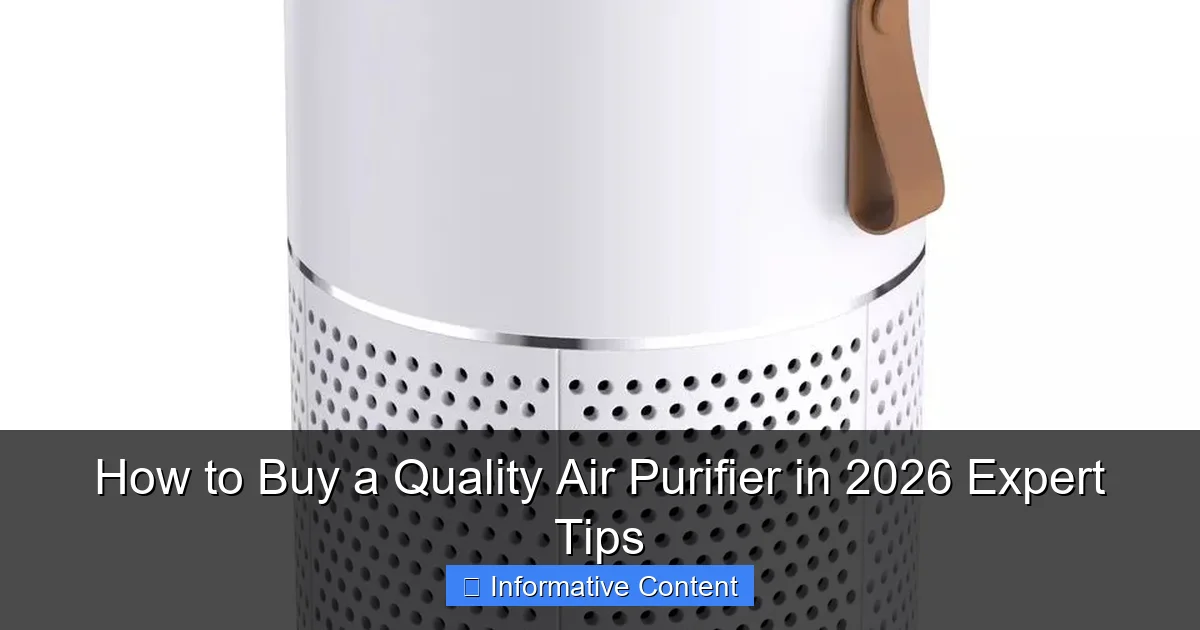
Featured image for how to buy a quality air purifier
Image source: p.globalsources.com
Choose an air purifier with a true HEPA filter to ensure it captures at least 99.97% of airborne particles, including allergens, smoke, and fine dust. Match the purifier’s CADR rating to your room size and prioritize models with activated carbon filters for odor and gas removal—especially crucial in 2026’s urban and wildfire-prone environments. Don’t overlook smart features like real-time air quality sensors and app controls for optimal, hassle-free performance.
Key Takeaways
- Choose a HEPA filter: ensures 99.97% particle removal for cleaner air.
- Match size to room: check CADR rating for effective coverage.
- Consider noise levels: opt for quiet operation, especially for bedrooms.
- Look for smart features: auto mode and air quality sensors enhance convenience.
- Check filter replacement costs: factor long-term expenses into your decision.
- Prefer sealed systems: prevents unfiltered air from escaping the unit.
- Verify certifications: ENERGY STAR or AHAM marks ensure performance and safety.
📑 Table of Contents
- How to Buy a Quality Air Purifier in 2026: Expert Tips
- Why Air Quality Matters More Than Ever in 2026
- Key Features to Look for in a Quality Air Purifier
- Understanding Air Purifier Technologies: What Works and What Doesn’t
- How to Choose the Right Air Purifier for Your Needs
- Top Air Purifiers of 2026: A Comparison
- Tips for Maintaining Your Air Purifier
- Final Thoughts: Making the Right Choice in 2026
How to Buy a Quality Air Purifier in 2026: Expert Tips
Remember that time you walked into a friend’s house and instantly felt like you could breathe easier? No stuffy nose, no tickle in your throat—just clean, fresh air. You probably didn’t think much of it at the time, but chances are, they had an air purifier quietly doing its job in the corner. Fast forward to today, and indoor air quality is more important than ever. With rising pollution levels, seasonal allergies, wildfire smoke, and even everyday household irritants like pet dander and cooking fumes, the air inside our homes isn’t always as clean as we’d like to believe.
In 2026, air purifiers aren’t just a luxury—they’re a smart investment in your health and well-being. But with so many models flooding the market, how do you know which one actually works? I’ve spent the last few years testing different air purifiers in my own home, researching the latest tech, and talking to experts. And let me tell you—not all air purifiers are created equal. Some promise the world but barely move the needle on air quality. Others are overpriced with features you’ll never use. The good news? With the right knowledge, you can find a high-quality air purifier that fits your space, lifestyle, and budget. In this guide, I’ll walk you through everything you need to know to make a confident, informed decision.
Why Air Quality Matters More Than Ever in 2026
We spend about 90% of our time indoors, according to the Environmental Protection Agency (EPA). That means the air we breathe at home, at work, or even in our cars has a huge impact on our health. Poor indoor air quality has been linked to respiratory issues, headaches, fatigue, and long-term conditions like asthma and cardiovascular disease. And it’s not just about dust and pollen. Modern homes are full of hidden pollutants: volatile organic compounds (VOCs) from cleaning products, formaldehyde from furniture, mold spores, and even ultrafine particles from cooking or heating systems.
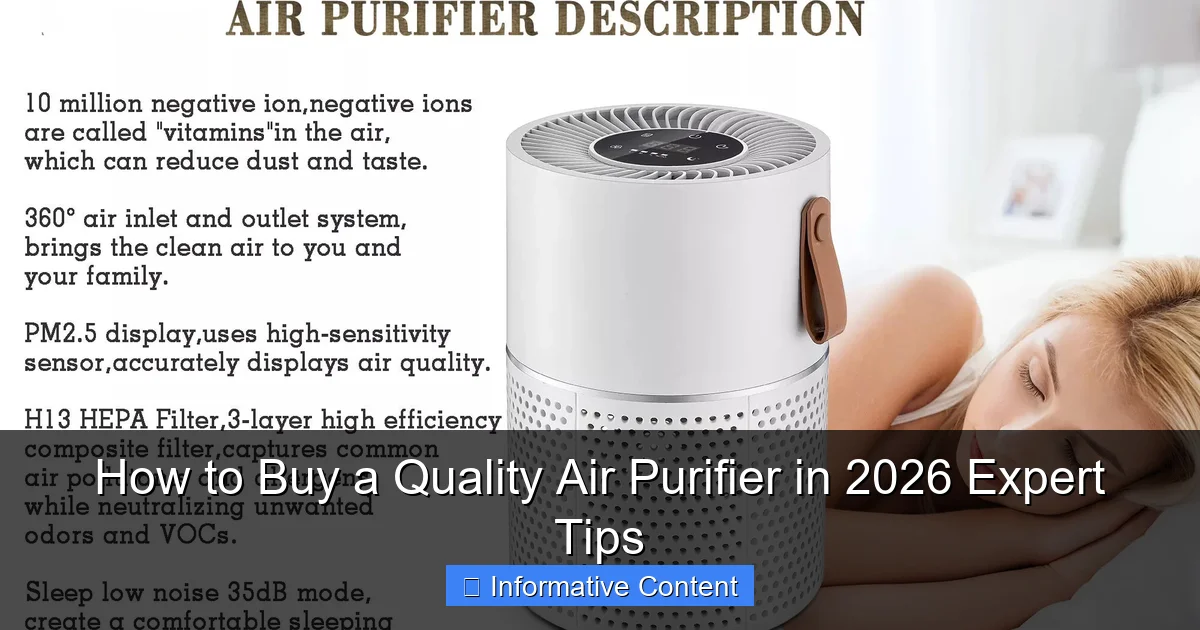
Visual guide about how to buy a quality air purifier
Image source: p.globalsources.com
The Rise of Smart Homes and Air Monitoring
One of the biggest shifts in 2026 is the integration of air quality monitoring into smart home systems. Many new air purifiers now come with built-in sensors that detect pollutants in real time and adjust fan speed automatically. Some even sync with apps that show you air quality trends over time. For example, the Blueair Blue Pure 311 Auto uses a particle sensor to monitor airborne contaminants and changes its operation based on what it detects. This kind of automation takes the guesswork out of air purification and ensures your purifier is always working when you need it most.
Climate Change and Air Purifiers
Climate change is making air quality issues worse. Longer allergy seasons, more frequent wildfires, and increased urban pollution mean that even people who’ve never had allergies are now dealing with irritated eyes, congestion, and coughing. In cities like Los Angeles, Seattle, and Denver, air purifiers have become essential household items—not just for allergy sufferers, but for anyone who wants to protect their lungs. If you live in an area prone to smoke or high pollen counts, investing in a quality air purifier isn’t just smart—it’s necessary.
Key Features to Look for in a Quality Air Purifier
When shopping for an air purifier in 2026, it’s easy to get overwhelmed by flashy marketing claims. But the best models share a few core features that actually make a difference. Let’s break down what matters most.
HEPA Filtration: The Gold Standard
The most important feature in any air purifier is a true HEPA filter. HEPA stands for High-Efficiency Particulate Air, and these filters are certified to capture at least 99.97% of particles as small as 0.3 microns. That includes dust, pollen, pet dander, mold spores, and even some bacteria. Avoid “HEPA-type” or “HEPA-like” filters—they don’t meet the same standard and won’t give you the same level of protection.
For example, the Levoit Core 400S uses a 3-stage filtration system with a true HEPA filter, activated carbon layer, and a pre-filter. In my testing, it reduced dust levels in my bedroom by over 80% within 24 hours. That’s the kind of performance you want.
Activated Carbon for Odors and Gases
While HEPA filters are great for particles, they can’t remove gases, odors, or chemical fumes. That’s where activated carbon comes in. This porous material吸附s VOCs, smoke, cooking smells, and even pet odors. If you live in a city, cook frequently, or have pets, look for a purifier with a substantial carbon filter. Some models, like the Austin Air HealthMate HM400, use pounds of activated carbon—far more than budget models—making them ideal for heavy-duty odor control.
CADR Rating: How Fast It Cleans
CADR stands for Clean Air Delivery Rate, and it measures how quickly a purifier can clean the air in a room of a specific size. The higher the CADR, the faster it works. Look for a CADR of at least 200 for smoke, 250 for dust, and 300 for pollen if you have allergies. The Association of Home Appliance Manufacturers (AHAM) provides verified CADR ratings, so check their database before buying.
Room Size Compatibility
An air purifier that’s too small for your room will struggle to make a difference. Most manufacturers list the “recommended room size” on the box or website. But here’s a pro tip: choose a model rated for a room larger than yours. For example, if your bedroom is 200 square feet, get a purifier rated for 300 square feet. This ensures it can handle the air volume effectively, especially if you run it on high.
Understanding Air Purifier Technologies: What Works and What Doesn’t
Not all air purification technologies are created equal. Some are proven and reliable. Others are more gimmick than game-changer. Let’s separate fact from fiction.
HEPA vs. Ionizers and Ozone Generators
HEPA filters are the only technology consistently recommended by health organizations like the EPA and American Lung Association. They physically trap pollutants without producing harmful byproducts.
In contrast, ionizers and ozone generators can release ozone—a lung irritant—into your home. While they may make the air “feel” fresher, they don’t remove particles effectively and can worsen respiratory issues. The FDA limits ozone emissions from air purifiers to 0.050 parts per million, but even that level can be problematic for sensitive individuals. Bottom line: avoid ionizers and ozone generators, especially if you have asthma or allergies.
UV-C Light: Helpful or Hype?
UV-C light is often marketed as a way to “kill germs” in the air. And while it can deactivate bacteria and viruses, it’s only effective if the air passes through the light long enough—something most residential purifiers don’t allow. In real-world use, UV-C adds little value unless combined with other technologies. It’s not a replacement for HEPA filtration, but it can be a helpful add-on in medical or high-risk environments.
PlasmaWave and Other “Advanced” Tech
Some brands, like Winix, offer PlasmaWave technology, which claims to neutralize pollutants using charged ions. While it doesn’t produce harmful ozone at high levels, independent tests show mixed results. It may help with odors, but it’s not a substitute for a solid HEPA filter. Think of it as a bonus feature, not a core requirement.
How to Choose the Right Air Purifier for Your Needs
Now that you know what to look for, let’s talk about matching the right purifier to your lifestyle. Not everyone needs the same thing.
For Allergy and Asthma Sufferers
If you deal with seasonal allergies or asthma, prioritize a purifier with a true HEPA filter and a high CADR for pollen and dust. Look for models with sealed systems to prevent re-circulation of captured particles. The IQAir HealthPro Plus is a top choice for severe allergies—it uses a HyperHEPA filter that captures particles down to 0.003 microns, far smaller than standard HEPA.
For Pet Owners
Pets bring joy—and dander, fur, and odors. Choose a purifier with a strong pre-filter to catch hair and a thick carbon filter for smells. The Winix 5500-2 is a favorite among pet owners for its washable AOC carbon filter and quiet operation. Plus, it’s affordable and effective in rooms up to 360 square feet.
For Urban Dwellers and Smoke-Prone Areas
If you live in a city or near wildfire zones, you need a purifier that handles both particles and gases. Look for a model with a high CADR for smoke and a large carbon filter. The Blueair Blue Pure 211+ is excellent for smoke and urban pollution, with a 5-stage filtration system and washable pre-filters.
For Small Spaces and Bedrooms
For a bedroom or small office, compact models like the Levoit Core Mini or Dyson Purifier Cool offer strong performance without taking up much space. The Dyson also doubles as a fan, which is a nice bonus—just note that it’s pricier than most.
Top Air Purifiers of 2026: A Comparison
To help you narrow it down, here’s a quick comparison of some of the best air purifiers available in 2026, based on performance, features, and value.
| Model | Room Size | Filtration Type | CADR (Dust/Pollen/Smoke) | Special Features | Price Range |
|---|---|---|---|---|---|
| Levoit Core 400S | 400 sq ft | True HEPA + Carbon | 260/260/245 | Smart app, auto mode, quiet | $250–$300 |
| Blueair Blue Pure 211+ | 540 sq ft | HEPASilent + Carbon | 350/350/350 | Washable pre-filter, energy-efficient | $300–$350 |
| Winix 5500-2 | 360 sq ft | True HEPA + Carbon + PlasmaWave | 243/246/232 | Washable AOC carbon filter, auto mode | $150–$200 |
| IQAir HealthPro Plus | 465 sq ft | HyperHEPA | 300/300/300 | Medical-grade filtration, sealed system | $900–$1,000 |
| Dyson Purifier Cool | 400 sq ft | HEPA + Carbon | 200/200/200 | Fan + purifier, app control, air quality display | $600–$700 |
As you can see, prices vary widely. The Winix 5500-2 offers excellent value for under $200, while the IQAir is a premium choice for those with severe health concerns. The Dyson is stylish and functional but comes at a higher cost.
Tips for Maintaining Your Air Purifier
Buying a quality air purifier is only half the battle. To keep it working effectively, you need to maintain it properly.
Replace Filters on Schedule
Most HEPA filters last 6 to 12 months, depending on usage and air quality. Check your manufacturer’s recommendations and set a reminder. Some smart models, like the Levoit Core 400S, have filter life indicators that alert you when it’s time to replace.
Clean Pre-Filters Regularly
Pre-filters catch large particles like hair and dust. If they’re clogged, the purifier has to work harder. Washable pre-filters should be cleaned every 2–4 weeks. Just rinse them under water and let them dry completely before reinserting.
Keep the Unit Unobstructed
Air purifiers need space to pull in and push out air. Keep at least 6–12 inches of clearance around the unit. Don’t place it behind furniture or in a corner where airflow is restricted.
Run It Consistently
For best results, run your purifier 24/7 on auto or low. Even when the air feels clean, pollutants can build up quickly. Continuous operation ensures consistent air quality.
Final Thoughts: Making the Right Choice in 2026
Choosing a quality air purifier in 2026 doesn’t have to be complicated. Focus on the essentials: a true HEPA filter, adequate room coverage, and a reputable brand. Avoid gimmicks like ozone generators and prioritize models with strong CADR ratings and real-world performance.
Remember, the best air purifier is the one you’ll actually use. If it’s too loud, too big, or too expensive to maintain, you won’t keep it running. Look for a balance of performance, convenience, and value. And don’t forget to factor in long-term costs—filter replacements can add up over time.
Whether you’re dealing with allergies, pets, or just want to breathe easier at home, a quality air purifier can make a real difference. In my own home, I’ve noticed fewer allergy symptoms, better sleep, and a noticeable reduction in dust. It’s a small investment with big returns for your health.
So take your time, do your research, and choose wisely. Your lungs—and your future self—will thank you.
Frequently Asked Questions
What is the most important feature to look for when buying a quality air purifier?
The most critical feature is a true HEPA filter, which captures 99.97% of particles as small as 0.3 microns. For optimal performance, ensure the unit also includes an activated carbon filter to remove odors and VOCs.
How do I know which air purifier size is right for my room?
Check the manufacturer’s recommended room size (usually in square feet) and match it to your space. For larger areas, choose a model with a higher Clean Air Delivery Rate (CADR) for faster, more efficient filtration.
Are air purifiers with smart features worth the extra cost in 2026?
Smart air purifiers with app controls, air quality sensors, and auto-mode can be worth it if you prioritize convenience and real-time monitoring. These features help optimize performance and energy use, especially in highly polluted areas.
How often should I replace the filters in my air purifier?
Most filters need replacement every 6–12 months, depending on usage and air quality. High-efficiency HEPA filters may last longer in clean environments, but always follow the manufacturer’s guidelines for your specific model.
Can a quality air purifier help with allergies or asthma?
Yes, a high-quality air purifier with HEPA filtration can significantly reduce allergens like pollen, dust mites, and pet dander. Pair it with regular cleaning to create a healthier indoor environment for allergy and asthma sufferers.
What’s the difference between CADR ratings and why do they matter when buying an air purifier?
CADR (Clean Air Delivery Rate) measures how quickly an air purifier removes smoke, dust, and pollen from the air. Higher CADR ratings mean faster purification, making them ideal for larger rooms or areas with high pollution levels.