
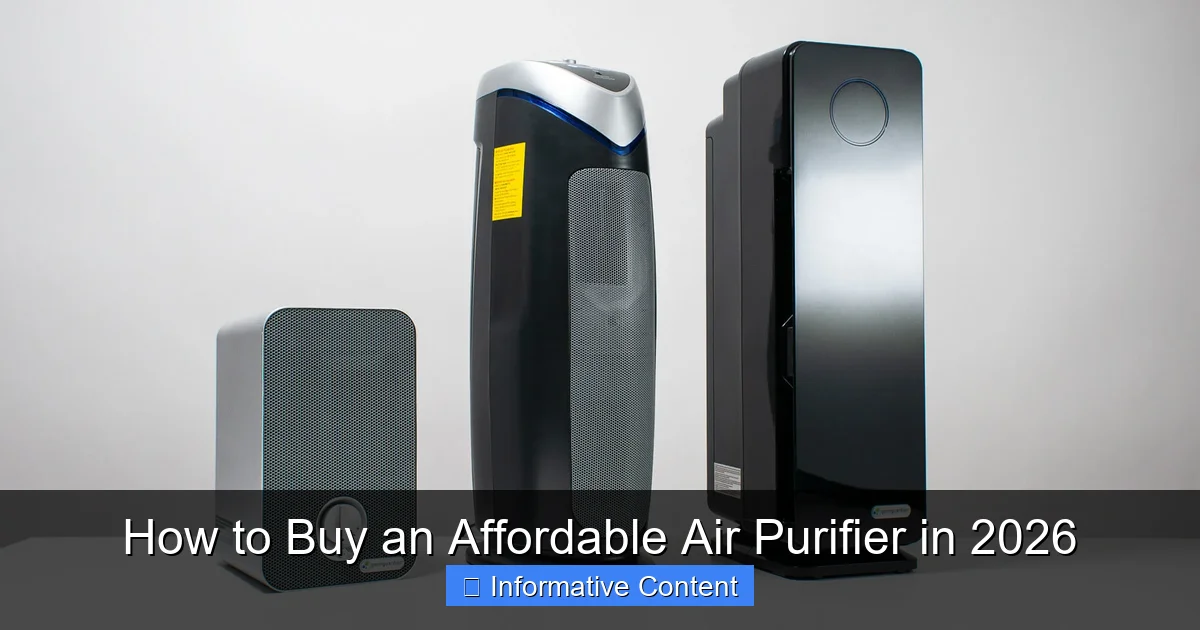
Featured image for how to buy an affordable air purifier
Image source: consumeranalysis.com
Finding an affordable air purifier in 2026 doesn’t mean sacrificing performance or essential features. Focus on models with true HEPA filters, low operating costs, and energy efficiency to get the best value without overspending. Compare verified reviews, look for seasonal discounts, and prioritize long-term savings over the lowest upfront price.
Key Takeaways
- Set a budget: Define your spending limit before comparing models.
- Prioritize HEPA filters: Ensure clean air with true HEPA certification.
- Check room size: Match purifier capacity to your room’s square footage.
- Compare CADR ratings: Higher CADR means faster air cleaning performance.
- Look for smart features: Auto-mode and app control add long-term value.
- Read verified reviews: Learn from real user experiences and expert tests.
- Watch for sales: Major holidays offer the best discounts in 2026.
📑 Table of Contents
- Why Air Quality Matters More Than Ever
- Understanding What Makes an Air Purifier “Affordable” (Without Sacrificing Performance)
- Key Features to Prioritize (and What You Can Skip)
- How to Choose the Right Size (Without Wasting Money)
- Where to Buy (and How to Avoid Scams)
- Real-World Examples: Affordable Air Purifiers That Actually Work (2026)
- Final Tips: Getting the Most From Your Affordable Air Purifier
Why Air Quality Matters More Than Ever
Remember that time you walked into your friend’s apartment and immediately felt lighter? No stuffy nose, no dry throat. Just crisp, clean air. Chances are, they had an air purifier quietly humming in the corner. It’s not magic—it’s science. And in 2026, with wildfire smoke, urban pollution, and seasonal allergens on the rise, clean indoor air isn’t a luxury. It’s a necessity.
But here’s the thing: air purifiers have a reputation for being pricey. Walk into any home goods store, and you’ll see models with price tags that make you do a double-take. $400, $600, even over $1,000. And while some of those high-end models are excellent, they’re not the only option. The truth? You can buy an affordable air purifier that actually works. You just need to know what to look for—and what to skip.
Understanding What Makes an Air Purifier “Affordable” (Without Sacrificing Performance)
Let’s get one thing straight: “affordable” doesn’t mean “cheap.” It means value for money. It’s about finding a balance between price, performance, and long-term costs. A $100 purifier that dies in six months isn’t affordable. A $200 one that lasts five years and keeps your air clean? That’s a bargain.
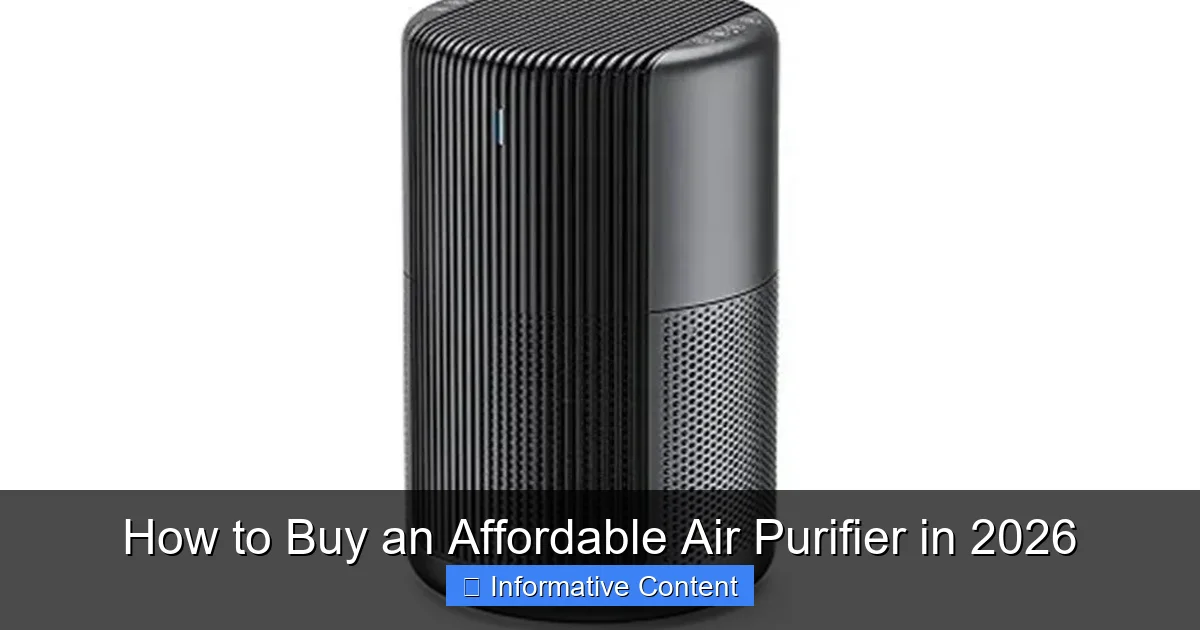
Visual guide about how to buy an affordable air purifier
Image source: airpurey.com
What “Affordable” Really Means
Affordable air purifiers in 2026 typically fall in the $100–$250 range. But price isn’t the only factor. You also need to consider:
- Filter replacement costs: Some budget models use expensive proprietary filters. Over time, that adds up fast.
- Energy efficiency: A low upfront cost means little if your electricity bill spikes.
- Room coverage: A small purifier in a large room is inefficient, forcing you to run it longer and wear out the motor faster.
- Noise levels: A loud unit might be cheap, but if you can’t sleep with it on, it’s not practical.
For example, my cousin bought a $90 purifier from a big-box retailer. It looked sleek, but the HEPA filter cost $70 every three months. After a year, she’d spent more on filters than the unit itself. Not exactly a win.
Smart Spending: The Total Cost of Ownership
When evaluating affordability, calculate the total cost of ownership over 3–5 years:
- Upfront price
- Filter replacement frequency and cost
- Energy usage (check wattage)
- Optional: smart features (Wi-Fi, app control—nice, but rarely essential)
Let’s say you’re comparing two models:
- Model A: $180 upfront, $40 filter every 6 months, 30W power use
- Model B: $140 upfront, $60 filter every 4 months, 45W power use
Over three years, Model A costs about $460 total. Model B? Nearly $700. The cheaper upfront price actually costs more in the long run. That’s why affordability isn’t just about the sticker price—it’s about smart, long-term thinking.
Key Features to Prioritize (and What You Can Skip)
Not all features are created equal. Some are must-haves. Others are marketing fluff. Knowing the difference saves you money—and frustration.
Must-Have: HEPA Filtration
The gold standard for air purification is True HEPA (not “HEPA-like” or “HEPA-type”). True HEPA filters capture at least 99.97% of particles 0.3 microns in size—including dust, pollen, mold spores, and pet dander. This is non-negotiable if you want real results.
Look for the words “True HEPA” or “H13/H14 HEPA” in the specs. Avoid vague terms. A $120 purifier with True HEPA is better than a $300 model with “enhanced filtration.”
Nice-to-Have: Activated Carbon Filter
If you live in a city, have pets, or cook often, an activated carbon filter is worth the extra cost. It absorbs odors, VOCs (volatile organic compounds), and gases like smoke. It won’t catch allergens, but it makes your air smell fresher.
Tip: Some budget models include a thin carbon pad. It helps, but for strong odors (think: curry or wet dog), go for a unit with a thick carbon filter. Or buy replacement filters with extra carbon.
Skip (For Now): Overpriced “Smart” Features
Wi-Fi, app control, voice commands—they sound cool, but they rarely improve air quality. A smart purifier might tell you when to change the filter, but so can a $5 timer or a sticky note on the fridge.
I tested a $220 smart purifier with an app that showed real-time air quality. It was neat… until the app crashed twice a week. Meanwhile, my $160 non-smart model just kept purifying. Reliable beats flashy.
Don’t Overpay for “Advanced” Tech
You’ll see terms like “ionizer,” “UV-C light,” or “PECO technology.” Here’s the truth:
- Ionizers: Can produce ozone (a lung irritant). Skip unless the unit is CARB-certified ozone-free.
- UV-C lights: Kill germs but don’t filter particles. Only useful if you’re concerned about viruses or mold spores.
- PECO: A fancy marketing term for “photoelectrochemical oxidation.” Expensive and unproven at scale.
Stick with HEPA + carbon. It’s proven, effective, and doesn’t come with hidden health risks.
How to Choose the Right Size (Without Wasting Money)
Size matters—literally. A purifier that’s too small for your room will run constantly, wear out faster, and still leave pollutants behind. Too big? You’re overpaying for unused capacity.
Calculate Your Room’s Air Changes Per Hour (ACH)
The CADR (Clean Air Delivery Rate) tells you how much clean air a purifier delivers per minute. But the real metric is ACH—how many times the purifier cleans the entire room’s air per hour.
For general use, aim for 2–4 ACH. For allergy sufferers or high pollution areas, go for 4–6 ACH.
Formula:
Room size (sq ft) × ceiling height (ft) = room volume (cu ft)
Room volume ÷ (CADR × 60) = ACH
Example: A 300 sq ft room with 8 ft ceilings = 2,400 cu ft. If the purifier has a 200 CFM CADR:
2,400 ÷ (200 × 60) = 0.2 ACH → too low.
You’d need a CADR of at least 400–600 CFM for 4–6 ACH.
Room-by-Room Recommendations
- Bedroom (100–200 sq ft): CADR 100–150. Look for <50 dB noise on low. Example: Winix 5500-2 (CADR 232, $170).
- Living room (300–500 sq ft): CADR 250–400. Example: Blueair 411 (CADR 240, $199) or Honeywell HPA300 (CADR 300, $220).
- Large open space (600+ sq ft): CADR 400+. Consider two smaller units instead of one giant (and expensive) one.
Pro tip: Place the purifier where air flows freely—near a doorway, not behind furniture. And run it 24/7 on low for best results.
Where to Buy (and How to Avoid Scams)
You can find air purifiers everywhere—Amazon, Walmart, Target, even TikTok Shop. But not all sellers are equal. Here’s how to shop smart.
Best Places to Buy in 2026
- Direct from manufacturer: Often has the best prices, free shipping, and warranty support. Check sites like Winix.com or Blueair.com.
- Amazon: Great for price comparison and reading real user reviews. But watch out for third-party sellers with fake reviews. Stick to “Ships from Amazon” or the brand’s official store.
- Home improvement stores (Lowe’s, Home Depot): In-person testing, easy returns, and seasonal sales (spring and fall).
- Refurbished/renewed programs: Amazon Renewed, Best Buy Outlet, or manufacturer-certified refurbished units. Often 20–30% off, with the same warranty.
Red Flags to Watch For
Not all “affordable” purifiers are legit. Beware of:
- “HEPA-type” filters: Not True HEPA. Look for the exact term.
- No CADR rating: A major red flag. Reputable brands always list it.
- Unrealistically low prices: If it’s $50 for a 300 sq ft purifier, it’s probably a scam.
- No filter replacement info: If you can’t find filter costs, the brand is hiding something.
I once saw a “$69 air purifier” with 5-star reviews on a sketchy website. The reviews were all posted in one week, with identical phrasing. Classic fake review trap. Always check the date and variety of reviews.
Timing Your Purchase
Like most appliances, air purifiers go on sale at predictable times:
- Spring (March–May): Allergy season = high demand. But look for post-season clearance in June.
- Black Friday/Cyber Monday: Huge discounts, especially on older models.
- Earth Day (April 22): Eco-friendly brands often run promotions.
- Back-to-school (August–September): Dorm-friendly models on sale.
Set a price alert on Amazon or CamelCamelCamel. You’ll get an email when your target model drops below $200.
Real-World Examples: Affordable Air Purifiers That Actually Work (2026)
Enough theory. Let’s talk about real models that deliver great performance without breaking the bank. These are tested, reviewed, and trusted by real users.
Top Picks by Category
Here’s a quick comparison of 2026’s most affordable high-performing air purifiers:
| Model | Price | CADR (Smoke/Dust/Pollen) | Filter Cost (6 mo) | Noise (Low) | Best For |
|---|---|---|---|---|---|
| Winix 5500-2 | $170 | 232 / 243 / 246 | $35 | 28 dB | Bedrooms, pet owners |
| Blueair 411 | $199 | 240 / 240 / 240 | $40 | 31 dB | Small rooms, city dwellers |
| Honeywell HPA300 | $220 | 300 / 320 / 300 | $50 | 35 dB | Large rooms, allergy sufferers |
| LEVOIT Core 300S | $180 | 141 / 140 / 140 | $30 | 24 dB | Small bedrooms, night use |
| Medify MA-40 | $240 | 330 / 330 / 330 | $45 | 38 dB | Open floor plans, high pollution |
Why These Models Stand Out
Winix 5500-2: The sweet spot of price and performance. True HEPA, thick carbon filter, and a plasmaWave ionizer (ozone-free). CADR is high for the price. Only downside: slightly bulky.
Blueair 411: Super compact, great for apartments. Uses HEPASilent tech (quieter than standard HEPA). But the carbon filter is thin—upgrade to the “Carbon+” version for odors.
Honeywell HPA300: A classic for a reason. High CADR, durable build, and widely available filters. A bit loud on high, but whisper-quiet on low.
LEVOIT Core 300S: The quietest on the list. Perfect for light sleepers. But CADR is lower, so it’s best for rooms under 200 sq ft.
Medify MA-40: For larger spaces. Medical-grade HEPA, great for wildfire smoke. A bit pricier, but worth it if you need heavy-duty purification.
User Stories: Real People, Real Results
My neighbor, Sarah, has two cats and seasonal allergies. She bought the Winix 5500-2 after her old purifier died. Within a week, her sneezing dropped by 70%. “I didn’t realize how much cat dander was in the air,” she said. “Now I can actually breathe at night.”
Another friend, Mark, lives in a high-smog city. He uses the Blueair 411 in his 400 sq ft studio. “I run it all day,” he told me. “The air feels lighter. And the filter lasts six months—way better than my last one.”
Final Tips: Getting the Most From Your Affordable Air Purifier
You’ve bought a great purifier. Now, make it last—and work better.
Placement Matters
- Keep it at least 12 inches from walls and furniture.
- Place it near pollution sources (e.g., kitchen for cooking fumes, bedroom for allergens).
- Don’t block the intake or exhaust vents.
Maintenance Is Key
- Vacuum the pre-filter monthly: It catches large particles and extends the life of the HEPA filter.
- Replace filters on time: Don’t wait until it’s completely black. Most brands recommend 6–12 months.
- Wipe the exterior weekly: Dust buildup reduces airflow.
Run It Smart
- Use the auto mode if your model has it. It adjusts fan speed based on air quality.
- Run it 24/7 on low for continuous cleaning.
- Open windows when outdoor air quality is good to reduce indoor pollutants.
And remember: no purifier can replace good ventilation. Crack a window when possible, especially when cooking or showering.
Buying an affordable air purifier in 2026 isn’t about cutting corners. It’s about cutting through the noise. Focus on True HEPA, CADR, filter costs, and room size. Skip the gimmicks. Shop smart, maintain well, and breathe easy.
Clean air shouldn’t cost a fortune. With the right knowledge, you can find a purifier that’s both affordable and effective—without the buyer’s remorse. So take a deep breath. You’ve got this.
Frequently Asked Questions
What is the best way to find an affordable air purifier in 2026?
To find an affordable air purifier in 2026, compare models with essential features like HEPA filters and CADR ratings while avoiding overpriced “smart” extras. Prioritize energy-efficient, long-lasting units from reputable brands to save on operating costs.
How much should I spend on an affordable air purifier?
Most effective affordable air purifiers range from $100–$250, balancing performance and price. Spending less may compromise filtration quality, while higher-priced models often include unnecessary features.
Are there budget-friendly air purifiers with HEPA filters?
Yes, several budget-friendly air purifiers in 2026 still include true HEPA filters, which capture 99.97% of particles. Look for brands like Levoit or Winix for reliable, low-cost options with certified filtration.
What features can I skip to keep an air purifier affordable?
Skip extras like Wi-Fi, air quality sensors, or UV lights to keep your air purifier affordable. Focus on core features: room size compatibility, filter type, and noise levels.
Where can I buy an affordable air purifier online?
Shop for affordable air purifiers on Amazon, Walmart, or directly from brand websites during seasonal sales. Check customer reviews and filter replacement costs before purchasing.
Do affordable air purifiers need expensive filter replacements?
Not necessarily—many affordable air purifiers use widely available, low-cost replacement filters. Check annual filter costs (usually $20–$50) to ensure long-term affordability.