

Featured image for how to choose the right air purifier
Image source: cdn.shopify.com
Choosing the right air purifier in 2026 starts with matching the unit’s Clean Air Delivery Rate (CADR) and HEPA filtration to your room size and air quality needs. Look for smart features like real-time air quality monitoring and auto mode to ensure efficient, hassle-free purification. Prioritize energy efficiency, low noise levels, and filter replacement costs to get long-term value without compromising performance.
Key Takeaways
- Match the purifier to your room size: Choose a model with a CADR rating suitable for your space.
- Prioritize HEPA filters: They capture 99.97% of airborne particles, including allergens and pollutants.
- Consider your specific air quality needs: Select filters targeting smoke, pet dander, or VOCs as needed.
- Check noise levels: Opt for quiet operation, especially for bedrooms or offices.
- Evaluate energy efficiency and running costs: Look for ENERGY STAR certification and affordable filter replacements.
- Use smart features wisely: Air quality sensors and auto modes enhance convenience and performance.
📑 Table of Contents
- Why Clean Air Matters More Than Ever in 2026
- Know Your Air Quality Needs (Before You Buy)
- Filter Types: What’s Under the Hood?
- Noise, Energy Use, and Maintenance: The Hidden Costs
- Smart Features and Tech: Worth the Hype?
- Price, Brands, and Long-Term Value
- Data Table: Air Purifier Comparison (2026)
- Final Thoughts: Your Clean Air Journey Starts Here
Why Clean Air Matters More Than Ever in 2026
Imagine this: You walk into your home after a long day, take a deep breath, and feel… nothing. No freshness. No relief. Just stale, recycled air. That’s the reality for millions of people who don’t realize their indoor air quality is worse than the smog outside. In 2026, we’re not just battling outdoor pollution—we’re facing invisible threats like wildfire smoke, microplastics, and allergens that linger in our homes. And if you’ve ever had a child with asthma, a partner who sneezes nonstop, or you just want to feel more energized, clean air isn’t a luxury. It’s a necessity.
But here’s the thing: Not all air purifiers are created equal. Some are glorified fans with a filter. Others promise miracles but cost more than your monthly rent. Choosing the right air purifier isn’t just about picking the most expensive model or the one with the flashiest ads. It’s about understanding your needs, your space, and what actually works. Whether you’re dealing with pet dander, wildfire haze, or just want peace of mind, this guide will help you find the perfect air purifier—without the overwhelm.
Know Your Air Quality Needs (Before You Buy)
Let’s start with the basics: You wouldn’t buy running shoes if you never run. The same goes for air purifiers. Before spending a dime, ask yourself: *What am I actually trying to clean?* Your needs will dictate everything from filter type to room size compatibility.
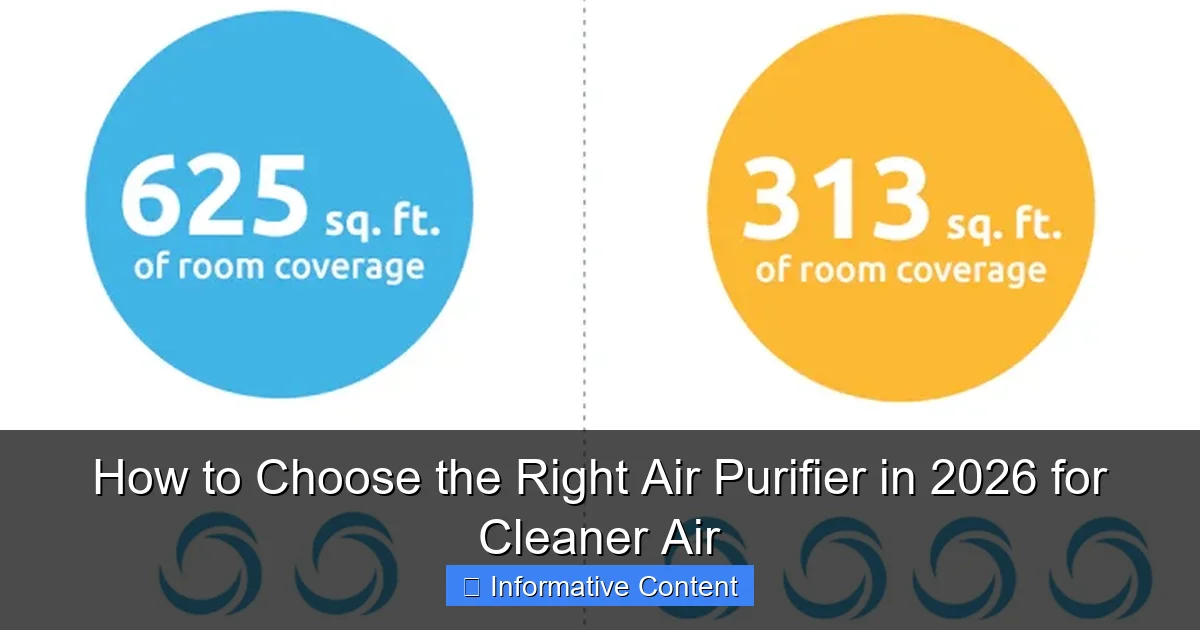
Visual guide about how to choose the right air purifier
Image source: cdn.shopify.com
Identify Your Primary Concerns
- Allergies or asthma? You’ll need a purifier with a HEPA (High-Efficiency Particulate Air) filter. These capture 99.97% of particles as small as 0.3 microns—think pollen, dust mites, and mold spores. For example, if your child wakes up congested every spring, a HEPA filter is non-negotiable.
- Pets in the house? Look for models with activated carbon filters to neutralize odors from litter boxes or wet dog smell. Bonus: Some purifiers have pre-filters that trap pet hair, saving your main filter from clogging.
- Living near wildfires or highways? Wildfire smoke contains ultrafine particles (PM2.5) and VOCs (volatile organic compounds). You’ll need a combination of HEPA + carbon + possibly a PCO (photocatalytic oxidation) filter. The IQAir HealthPro Plus is a favorite for this, though pricier.
- Concerned about viruses or bacteria? Consider a purifier with UV-C light (e.g., Winix 5500-2). It kills airborne pathogens but works best alongside HEPA.
Pro tip: If you’re unsure, try an air quality monitor (like the Airthings View Plus). It measures PM2.5, VOCs, CO2, and humidity. I once thought my home was “fine,” but my monitor revealed PM2.5 levels 3x higher than outdoor air. That data changed my purifier choice overnight.
Consider Your Room Size and Air Changes
Air purifiers are rated by ACH (Air Changes per Hour) and CADR (Clean Air Delivery Rate). ACH tells you how many times the unit can filter the entire room’s air hourly. For allergies, aim for 4-5 ACH. For smoke or viruses, 6+ ACH is better. CADR measures speed (in cubic feet per minute). Higher CADR = faster cleaning.
- Small rooms (under 200 sq ft): A 100-150 CADR unit (e.g., Blueair Blue Pure 411) works well. Great for bedrooms or home offices.
- Medium rooms (200-400 sq ft): Look for 200-300 CADR (e.g., Honeywell HPA300). Ideal for living rooms or kitchens.
- Large/open spaces (400+ sq ft): You’ll need 350+ CADR or multiple units. The Dyson Purifier Humidify+Cool covers 800 sq ft but costs $800. For tight budgets, two LEVOIT Core 300S units (each $150) might be smarter.
Real-world example: My 350 sq ft living room has a 250 CADR purifier. It takes 45 minutes to clean the air fully. If I had a 400 CADR model, it’d take 25 minutes. Worth the upgrade for faster relief during allergy season.
Filter Types: What’s Under the Hood?
Filters are the heart of any air purifier. But not all filters do the same job. Let’s break down the key types and when to use them.
HEPA Filters: The Gold Standard
True HEPA filters (not “HEPA-like” or “HEPA-type”) must meet strict standards: 99.97% efficiency at 0.3 microns. They’re the go-to for allergens and fine particles. But they can’t handle gases or odors—that’s where carbon comes in.
- Pros: Proven effectiveness, widely available, easy to replace.
- Cons: Doesn’t remove VOCs, can’t kill pathogens alone.
- Cost: Replacement filters range from $30-$100, depending on brand.
Tip: Check the filter’s MERV rating. MERV 17-20 is equivalent to HEPA. If a purifier says “MERV 13,” it’s *close* but not true HEPA.
Activated Carbon Filters: Odor and Gas Busters
Carbon filters use porous charcoal to trap gases, odors, and VOCs (think: cooking fumes, paint, wildfire smoke). The more carbon, the better. Some units have thin carbon pads—avoid these. Look for deep-bed carbon filters (e.g., Airpura T600 with 18 lbs of carbon).
- Pros: Neutralizes stubborn smells, reduces chemical exposure.
- Cons: Needs replacement every 6-12 months (sooner if you cook or smoke).
- Watch out: Cheap purifiers use “carbon-coated” filters. These are ineffective after a few months.
Specialty Filters: UV-C, Ionizers, and PCO
- UV-C light: Kills bacteria and viruses but doesn’t remove particles. Use it with HEPA for best results. Avoid if you’re sensitive to ozone (some UV models produce trace amounts).
- Ionizers: Release charged particles to clump together dust and allergens, making them easier to filter. However, they can produce ozone (a lung irritant). If you choose one, pick an ionizer with ozone-free certification (e.g., Blueair Pure Fan).
- PCO (Photocatalytic Oxidation): Uses UV light and a catalyst to break down VOCs. Effective but expensive. The Air Oasis 5000 is a top pick for chemical sensitivity.
My take: Stick to HEPA + carbon for most homes. Add UV-C or PCO only if you have specific needs (e.g., post-renovation VOCs or immunocompromised family members).
Noise, Energy Use, and Maintenance: The Hidden Costs
Air purifiers aren’t just about performance—they’re about lifestyle fit. A purifier that’s too loud, too power-hungry, or too high-maintenance might end up in a closet.
Noise Levels: From “Hush” to “Helicopter”
Noise is measured in decibels (dB). Here’s what to expect:
- 20-30 dB: Whisper-quiet (ideal for bedrooms). The Blueair Blue Pure 411 hits 17 dB on low.
- 40-50 dB: Normal conversation level. Most purifiers are here on medium speed.
- 60+ dB: Vacuum cleaner level. Avoid for sleeping unless you use “sleep mode.”
Real talk: I once bought a purifier with “ultra-quiet” marketing. On low, it was 38 dB—fine for daytime. But on high, it hit 65 dB. I returned it. Now I use the LEVOIT Core 300S with a “sleep mode” (22 dB). Game-changer for night use.
Energy Consumption: Watts Matter
Air purifiers run 24/7 in many homes. Energy use varies widely:
- Small units: 10-30 watts (~$5-$15/year).
- Large units: 50-150 watts (~$25-$75/year).
- Energy Star-certified models: 20-30% more efficient (e.g., Honeywell HPA300).
Tip: Check the EnergyGuide label. A 100-watt purifier running 24/7 costs ~$88/year at $0.12/kWh. That’s $440 over 5 years—more than the unit itself!
Maintenance: Filters, Cleaning, and Lifespan
Neglecting maintenance = reduced efficiency. Key things to consider:
- Filter replacement frequency: HEPA filters last 6-18 months. Carbon filters last 3-12 months (sooner with heavy use). Some models have filter life indicators (e.g., Dyson).
- Pre-filters: Washable pre-filters (like Winix’s) save money. Just rinse monthly.
- Cleaning the unit: Wipe the exterior weekly. Vacuum intake grills monthly.
Pro tip: Buy purifiers with modular filters. The IQAir HealthPro Plus lets you replace only the carbon layer when needed, saving $100+ per year.
Smart Features and Tech: Worth the Hype?
2026’s air purifiers are smarter than ever. But do you need app control, voice commands, or air quality sensors? Let’s weigh the pros and cons.
App Connectivity and Automation
Smart purifiers (e.g., LEVOIT Core 300S, Dyson Purifier Humidify+Cool) connect to apps for:
- Remote control (turn on from work).
- Real-time air quality tracking.
- Filter life monitoring.
- Scheduling (e.g., run at full speed during wildfire alerts).
But: Apps can glitch. I’ve had purifiers “disconnect” from Wi-Fi, forcing manual control. If you’re not tech-savvy, stick to basic models with manual controls.
Auto Mode and Air Quality Sensors
Many purifiers have built-in sensors to adjust fan speed based on air quality. Great for hands-free use—but accuracy varies.
- High-end sensors (e.g., IQAir, Airpura): Use laser or electrochemical tech. Reliable.
- Budget sensors (e.g., LEVOIT, Blueair): Often use optical sensors. Can misread humidity as particles.
My experience: My LEVOIT once ran at full speed for 2 hours because it detected “high particles”—turns out, I’d just boiled water. A $200 standalone sensor (like Airthings) is more accurate than most built-in ones.
Voice Control and Integration
Purifiers with Alexa/Google Assistant support let you say, “Alexa, turn on the purifier.” Handy, but not essential. If you already use smart home tech, it’s a nice perk. If not, skip it.
Price, Brands, and Long-Term Value
Air purifiers range from $50 to $1,500. But price isn’t everything. Here’s how to get the best value.
Entry-Level ($50-$150)
- Best for: Small rooms, mild allergies.
- Top picks: LEVOIT Core 300S (HEPA + carbon, $130), Blueair Blue Pure 411 (HEPA + washable pre-filter, $120).
- Watch out: Some “budget” models use weak motors or thin filters. Read reviews.
Mid-Range ($150-$400)
- Best for: Medium/large rooms, pet owners, wildfire areas.
- Top picks: Winix 5500-2 (HEPA + carbon + UV-C, $170), Honeywell HPA300 (HEPA + carbon, $220).
- Perks: Better build quality, quieter operation, longer filter life.
High-End ($400+)
- Best for: Severe allergies, chemical sensitivity, large homes.
- Top picks: IQAir HealthPro Plus (HEPA + 18 lbs carbon, $900), Airpura T600 (HEPA + 26 lbs carbon, $700).
- Trade-offs: High upfront cost, but lower long-term filter expenses.
Brand Reputation and Warranty
Stick to brands with strong reputations:
- IQAir: Swiss engineering, 5-year warranty. Filters last 2-3 years.
- Winix: Korean quality, 2-year warranty. Great mid-range value.
- LEVOIT: Affordable, 2-year warranty. App integration is solid.
Red flag: Brands with no warranty or vague filter replacement info (e.g., “replace when dirty”). You’ll waste money on guesswork.
Data Table: Air Purifier Comparison (2026)
| Model | Price | Room Size | CADR (Dust/Pollen/Smoke) | Noise (Low/High) | Filter Type | Smart Features | Warranty |
|---|---|---|---|---|---|---|---|
| LEVOIT Core 300S | $130 | 219 sq ft | 141/140/145 | 22/52 dB | HEPA + Carbon | App, Auto Mode | 2 years |
| Winix 5500-2 | $170 | 360 sq ft | 243/246/232 | 27/55 dB | HEPA + Carbon + UV-C | Auto Mode, PlasmaWave | 2 years |
| Blueair Blue Pure 411 | $120 | 185 sq ft | 105/105/105 | 17/46 dB | HEPA + Washable Pre-filter | Manual Controls | 2 years |
| IQAir HealthPro Plus | $900 | 400 sq ft | 300/300/300 | 27/59 dB | HEPA + 18 lbs Carbon | Manual Controls | 5 years |
| Dyson Purifier Humidify+Cool | $800 | 800 sq ft | 300/300/300 | 30/62 dB | HEPA + Carbon + Humidifier | App, Auto Mode, Voice Control | 2 years |
Final Thoughts: Your Clean Air Journey Starts Here
Choosing the right air purifier isn’t about chasing the fanciest tech or the biggest price tag. It’s about matching your needs to the right tool. Whether you’re fighting pet odors, wildfire smoke, or just want to breathe easier, start with the basics: Identify your air quality concerns, measure your room size, and prioritize HEPA + carbon filters. Then, factor in noise, energy use, and maintenance. A $130 purifier that runs quietly and filters your bedroom’s air 5 times an hour might be better than a $900 model that’s too loud for night use.
And remember: Air purifiers are just one piece of the puzzle. Pair yours with good ventilation (open windows when possible), regular vacuuming (with a HEPA vacuum), and humidity control (aim for 30-50%). In 2026, clean air isn’t just a trend—it’s a foundation for health, focus, and peace of mind. So take your time, do your research, and invest in the purifier that fits your life. Your lungs will thank you.
Frequently Asked Questions
What size air purifier do I need for my room?
To choose the right air purifier, calculate your room’s square footage and select a model with a Clean Air Delivery Rate (CADR) that matches or exceeds it. Most manufacturers list room size compatibility—opt for one rated 20-30% higher than your space for optimal performance.
How to choose the right air purifier for allergies or asthma?
Look for a HEPA air purifier with a true HEPA filter (captures 99.97% of particles 0.3 microns or larger) and activated carbon for allergens, pet dander, and VOCs. Pair it with a high CADR for smoke and pollen if seasonal allergies are a concern.
Are air purifiers with ionizers or UV-C light worth it?
Ionizers can produce ozone, which may irritate lungs, so avoid them if you have respiratory issues. UV-C light can kill mold and bacteria but works best alongside a HEPA filter—prioritize core filtration over added features when choosing the right air purifier.
What maintenance does an air purifier require?
Most models need filter replacements every 6–12 months, depending on usage and air quality. Washable pre-filters should be cleaned monthly to maintain efficiency and extend the life of your air purifier.
How noisy are air purifiers on higher settings?
Noise levels vary by model—check decibel (dB) ratings; 50–60 dB is typical for medium speeds, similar to a quiet conversation. For bedrooms, opt for a “sleep mode” with noise under 40 dB for undisturbed rest.
Can an air purifier reduce viruses and bacteria?
Yes, a high-quality air purifier with a HEPA filter and UV-C light can trap and neutralize airborne pathogens. Ensure the model is tested against viruses like H1N1 or SARS-CoV-2 for proven effectiveness in reducing airborne contaminants.