
Featured image for can air purifier detect gas
Image source: hvacseer.com
Most air purifiers cannot detect gas, as they are designed to filter particles, not sense gaseous pollutants like carbon monoxide or natural gas. Only specialized models with integrated gas sensors can identify specific gases, and even these require proper placement and maintenance to function effectively. For true gas detection, always rely on dedicated gas detectors for safety. Learn more about what an air purifier does to improve home air quality.
Key Takeaways
- Air purifiers cannot detect gas: They filter air but lack gas sensors.
- Use dedicated gas detectors: Install CO or VOC alarms for safety.
- HEPA filters trap particles: They don’t capture gases or odors effectively. Learn how HEPA filters catch dust, pollen and pet dander.
- Check for hybrid models: Some combine purifiers with gas detection features.
- Prioritize air quality testing: Use air quality monitors for comprehensive insights.
- Gas leaks require immediate action: Evacuate and call professionals if suspected.
📑 Table of Contents
- Can Air Purifier Detect Gas? Find Out the Truth Here
- How Air Purifiers Work (And What They’re Designed For)
- Can Some Air Purifiers *Help* With Gas-Related Problems?
- Types of Gases and How Air Purifiers Respond (Or Don’t)
- What You Should Use Instead: Proper Gas Detection Tools
- Smart Air Purifiers vs. Gas Safety: A Practical Comparison
- Final Thoughts: The Truth About Air Purifiers and Gas
Can Air Purifier Detect Gas? Find Out the Truth Here
Imagine this: You’re cooking dinner, and suddenly, you catch a faint whiff of something off. Is it the garlic? Or could it be gas? Your mind races. You check the stove—everything looks fine. But that smell lingers. Now, you’re wondering: Can my air purifier detect gas? It’s a question many of us have asked, especially as we invest in devices to keep our homes cleaner and safer. Discover the best air purifier for your home in 2026.
We live in a time when air quality is more than just a health concern—it’s a lifestyle priority. From wildfire smoke to pet dander, we’re constantly battling invisible threats. Air purifiers promise relief, but do they really help with something as serious as gas leaks? I’ve been there, standing in my kitchen, sniffing the air, wondering if my purifier was silently protecting me or just quietly circulating the same stale air. In this post, we’ll dive deep into what air purifiers can and cannot do when it comes to detecting gas. No fluff, no sales pitch—just honest, practical answers.
How Air Purifiers Work (And What They’re Designed For)
Understanding the Basics of Air Purification
First, let’s clear up a common misconception: air purifiers are not gas detectors. They’re designed to clean the air by removing particles like dust, pollen, smoke, mold spores, and pet dander. Some advanced models can also reduce odors and volatile organic compounds (VOCs), but their primary function is filtration, not detection.
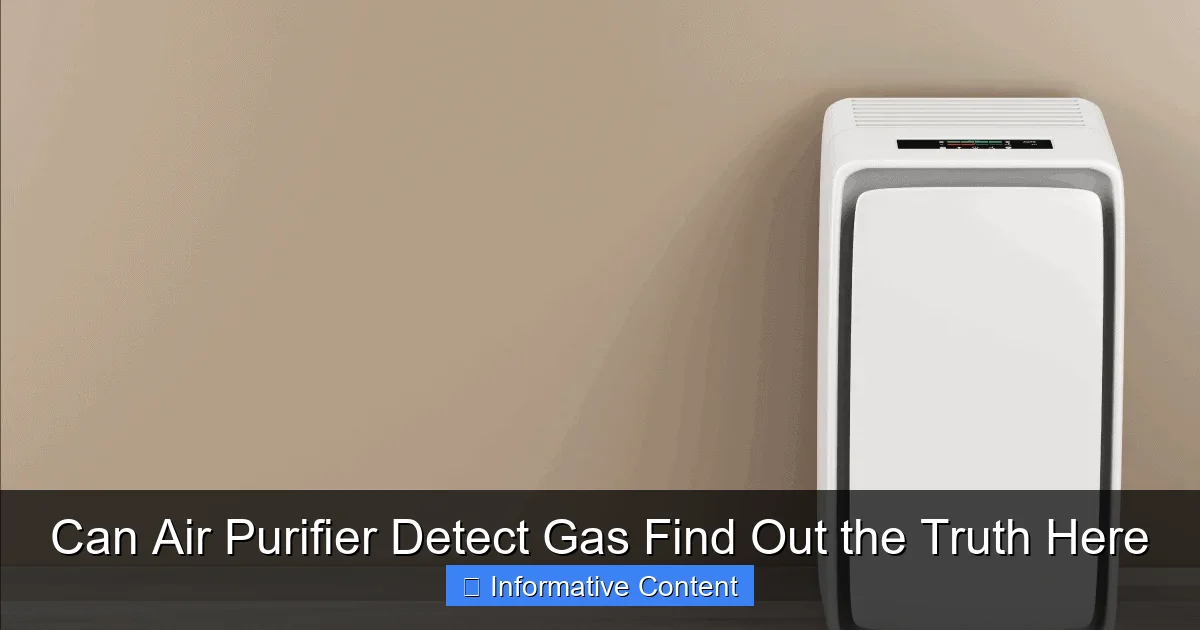
Visual guide about can air purifier detect gas
Image source: hvacseer.com
Most air purifiers use a combination of filters:
- HEPA filters trap tiny particles (as small as 0.3 microns) with over 99.97% efficiency.
- Activated carbon filters absorb odors and gases like cooking smells, smoke, and some VOCs.
- Pre-filters catch larger debris like hair and lint to extend the life of the main filters.
Think of it like a coffee filter. It removes grounds (particles) but won’t tell you if the coffee is too strong or too weak. Similarly, an air purifier removes contaminants—it doesn’t sense or signal danger.
Why They Can’t “Detect” Gas
Gas detection requires sensors—electronic components that react to specific chemicals. For example, a carbon monoxide (CO) detector uses electrochemical sensors to measure CO levels in parts per million (ppm). A natural gas (methane) detector uses metal oxide semiconductors or infrared sensors.
Air purifiers, on the other hand, lack these specialized sensors. They don’t measure gas concentrations. They don’t sound alarms. They don’t alert you when something’s wrong. They simply run in the background, cleaning the air based on airflow and filter capacity.
Real-life example: My neighbor, Sarah, once had a minor propane leak in her garage. Her high-end air purifier was running on “turbo” mode, but it never alerted her. It was her dog, who started whining and acting restless, that tipped her off. She called a technician, who found the leak. The purifier? It did nothing but keep circulating the gas-filled air.
Can Some Air Purifiers *Help* With Gas-Related Problems?
Indirect Benefits: Reducing Odors and Irritants
While air purifiers can’t detect gas, some models can help reduce the effects of certain gases—especially those that cause odors or irritate the respiratory system.
For instance:
- Natural gas (methane) is odorless in its pure form, but utility companies add a chemical called mercaptan to give it that “rotten egg” smell. Activated carbon filters in air purifiers can absorb this odor, making the air smell fresher.
- Propane also has added odorants. A purifier with a large carbon filter might help mask the smell temporarily.
- VOCs from household products (paint, cleaning sprays, adhesives) can off-gas over time. Carbon filters can reduce these, improving indoor air quality.
But here’s the catch: Reducing odor is not the same as eliminating danger. Just because the smell is gone doesn’t mean the gas is. In fact, it could make things more dangerous—because you’re less likely to notice a leak.
Smart Air Purifiers with VOC Sensors
Some newer, high-end air purifiers (like the IQAir HealthPro Plus, Dyson Purifier Humidify+Cool, or Winix 5500-2) come with built-in VOC sensors. These sensors measure levels of volatile organic compounds, which can include gases like benzene, formaldehyde, and even traces of combustible gases.
These purifiers may display a “VOC level” on their screen or app, and some even adjust fan speed automatically when VOCs rise. Sounds promising, right?
But there’s a big difference between measuring general VOCs and detecting specific, dangerous gases. For example:
- A VOC sensor might spike when you use nail polish remover or light a scented candle.
- It might also react to a small gas leak—but it won’t tell you which gas it is.
- It won’t measure CO or methane at the levels needed for safety.
Tip: If you have a smart purifier with VOC sensors, don’t rely on it for gas safety. Use it as a general air quality monitor, not a gas alarm.
Types of Gases and How Air Purifiers Respond (Or Don’t)
Carbon Monoxide (CO): The Silent Killer
Carbon monoxide is colorless, odorless, and deadly. It’s produced by incomplete combustion—think gas stoves, furnaces, water heaters, or car exhaust in attached garages.
Air purifiers cannot detect CO. No matter how fancy the model, if it doesn’t have a dedicated CO sensor, it’s useless for this threat.
Worse, some people believe that a purifier with a carbon filter can “clean” CO. It can’t. Activated carbon is ineffective against CO. In fact, some purifiers with ionizers can even produce trace amounts of ozone, which can react with other chemicals and worsen indoor air quality.
Real-life example: A friend of mine, Mark, thought his Dyson air purifier would protect his family from CO because it had a “smart sensor.” He installed it near his gas furnace. When the furnace developed a crack, CO levels rose. The Dyson showed “excellent air quality” because it wasn’t designed to measure CO. His CO detector, mounted on the ceiling, did sound the alarm—saving his family.
Methane (Natural Gas) and Propane
These are the gases we most often worry about in homes with gas stoves, heaters, or grills.
- Methane (natural gas) is lighter than air and rises. It’s mostly harmless at low levels but explosive at concentrations above 5%.
- Propane is heavier and sinks, pooling near the floor.
Air purifiers don’t have sensors for these gases. They might absorb the odorants (like mercaptan), making the air smell better—but that’s it. In fact, masking the smell could be dangerous. If you can’t smell gas, you might not realize there’s a leak until it’s too late.
Tip: If you smell gas, leave the house immediately, don’t use electrical switches, and call your gas company or emergency services from outside.
Volatile Organic Compounds (VOCs)
VOCs aren’t “gas” in the same way as CO or methane, but they’re gaseous chemicals emitted by many household items:
- Paint, varnishes, and solvents
- Cleaning products and air fresheners
- New furniture and carpets
- Gasoline and kerosene
Here, air purifiers can help—especially those with large activated carbon filters. They can reduce VOC levels over time, improving air quality and reducing headaches, eye irritation, or long-term health risks.
But again: Reduction is not detection. You still need to be mindful of sources. For example, if you’re painting a room, open windows and use a fan—don’t rely on your purifier to “clean it up.”
What You Should Use Instead: Proper Gas Detection Tools
Carbon Monoxide Detectors
These are essential for every home, especially if you have gas appliances, a fireplace, or an attached garage.
- Place them on every level of your home, especially near bedrooms.
- Test them monthly and replace batteries annually.
- Replace the unit every 5–7 years (check the manufacturer’s date).
Look for detectors with digital readouts (shows CO levels in ppm) and end-of-life alerts. Brands like Kidde, First Alert, and Google Nest Protect are reliable.
Natural Gas and Propane Detectors
These are less common but highly recommended, especially if you cook with gas or have gas heating.
- Place them near gas appliances, water heaters, or furnaces.
- Some models detect both natural gas and propane.
- They sound an alarm at low concentrations (usually 10% of the lower explosive limit).
Popular models include UEi Test Instruments CD100A and Kidde Nighthawk. Some even connect to smart home systems and send alerts to your phone.
Combination Detectors
Some devices, like the Google Nest Protect, detect both smoke and CO. A few newer models (like Airthings Wave Plus) go further, measuring CO, radon, humidity, temperature, and VOCs—but still not specific flammable gases like methane.
Tip: Pair a gas detector with a smart plug or smart speaker. That way, if the alarm goes off, you can get a voice alert even when you’re not home.
Smart Air Purifiers vs. Gas Safety: A Practical Comparison
Let’s break down the real differences between what smart air purifiers offer and what gas safety devices provide. This isn’t about which is “better”—it’s about understanding their roles.
Data Table: Air Purifier vs. Gas Detector Capabilities
| Feature | Air Purifier (with VOC Sensor) | Carbon Monoxide Detector | Natural Gas Detector |
|---|---|---|---|
| Detects CO | ❌ No | ✅ Yes (in ppm) | ❌ No |
| Detects Methane/Propane | ❌ No | ❌ No | ✅ Yes (in LEL%) |
| Detects VOCs | ✅ Yes (general) | ❌ No | ❌ No |
| Alerts You | 🔊 Sometimes (via app or light) | 🚨 Loud alarm + app alerts | 🚨 Loud alarm + app alerts |
| Reduces Odors | ✅ Yes (carbon filter) | ❌ No | ❌ No |
| Removes Particles | ✅ Yes (HEPA filter) | ❌ No | ❌ No |
| Best For | Improving air quality, reducing allergens | CO poisoning prevention | Gas leak prevention |
As you can see, air purifiers and gas detectors serve completely different purposes. You need both for true home safety.
When a Smart Purifier Can Be Helpful
Despite their limitations, smart air purifiers with sensors can be part of a broader air quality strategy:
- They can alert you to high VOC levels—prompting you to ventilate or investigate.
- They help track air quality trends over time (great for allergy sufferers).
- They improve overall comfort by reducing odors and particles.
But they should never replace dedicated gas detectors. Think of them as a “health coach” for your air, not a “bodyguard.”
Final Thoughts: The Truth About Air Purifiers and Gas
So, can air purifiers detect gas? The short answer: No, not really. They’re not built for it, and relying on them for gas safety is a risky mistake.
Air purifiers are fantastic tools for cleaning the air—removing dust, allergens, smoke, and some odors. Some high-end models with VOC sensors can give you general air quality feedback. But when it comes to life-threatening gases like carbon monoxide, methane, or propane, they fall short.
Here’s the truth I’ve learned through research, conversations with experts, and real-life stories: You need the right tool for the right job. An air purifier is like a vacuum for your air. A gas detector is like a smoke alarm for your safety. They don’t compete—they complement.
My advice?
- Keep your air purifier if it helps with allergies, smoke, or odors—but don’t expect it to save you from a gas leak.
- Install a CO detector on every level of your home.
- If you use gas appliances, consider a natural gas/propane detector.
- Test all detectors regularly and replace them on schedule.
- Never ignore a gas smell—even if your purifier says “air quality is excellent.”
At the end of the day, your family’s safety isn’t about convenience or tech hype. It’s about having the right tools, knowing how they work, and not confusing air cleaning with gas detection. Your nose might be your first warning—but your detectors are your lifeline.
Stay safe, stay informed, and breathe easy—knowing you’ve got both clean air and real protection.
Frequently Asked Questions
Can air purifiers detect gas in the home?
Most standard air purifiers cannot detect gas, as they are designed to filter particles like dust and allergens, not gases. However, some advanced models with specialized sensors (e.g., VOC or CO detectors) can identify certain harmful gases.
Do any air purifiers with gas detection actually work?
Yes, high-end air purifiers equipped with gas sensors (like those for VOCs, carbon monoxide, or radon) can detect specific gases. These models often include real-time air quality monitors and alerts for added safety.
How does an air purifier detect gas compared to a standalone detector?
Air purifiers with gas detection use built-in sensors to measure airborne chemical concentrations, while standalone detectors are calibrated for specific gases (e.g., methane, propane). Purifiers may not be as precise but offer dual functionality for air cleaning and monitoring.
Can an air purifier detect natural gas leaks?
Only air purifiers with specific gas sensors (e.g., methane detectors) can identify natural gas leaks. Most standard purifiers lack this capability, so a dedicated natural gas detector is recommended for safety.
What type of air purifier should I buy to detect harmful gases?
Look for models with HEPA + activated carbon filters and built-in gas sensors (e.g., VOC or CO detectors). Brands like Dyson, Molekule, and Airthings offer purifiers with advanced gas detection features.
Is it worth buying an air purifier that detects gas?
If you’re concerned about indoor air quality and potential gas exposure (e.g., from cooking or HVAC systems), a purifier with gas detection adds value. For critical safety needs (like gas leaks), pair it with a dedicated gas detector.