
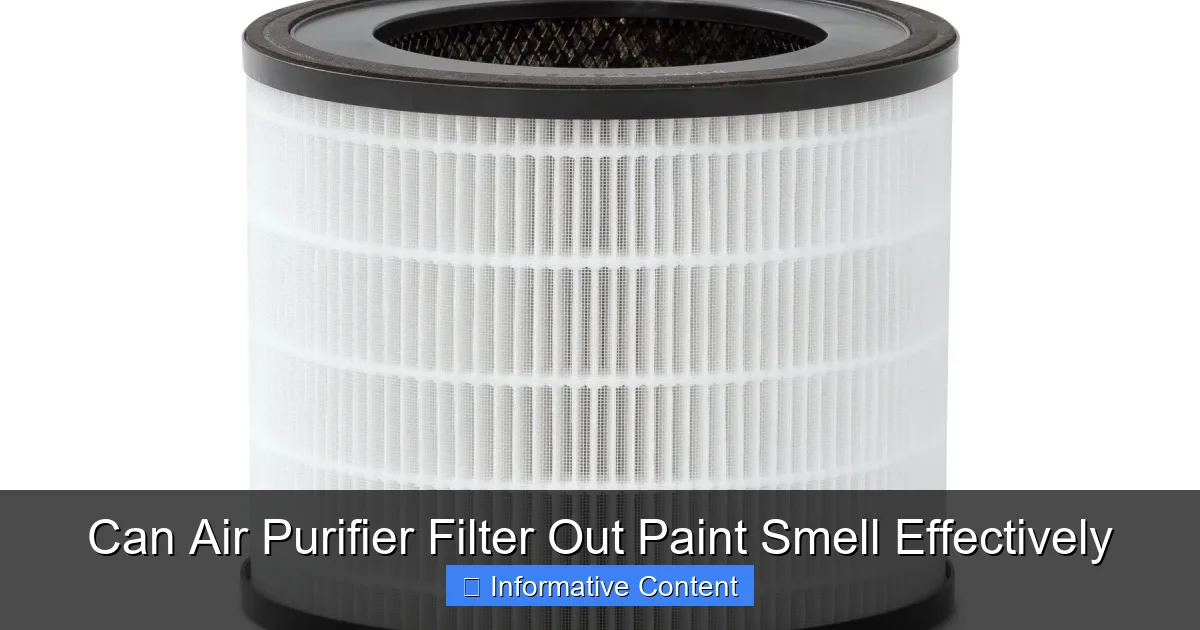
Featured image for can air purifier filter out paint smell
Image source: everythingbaby.org.uk
Yes, air purifiers can effectively filter out paint smell when equipped with a high-quality activated carbon filter, which captures volatile organic compounds (VOCs) and odor-causing particles. For best results, choose a model with a high CADR rating and run it continuously in the painted area to ensure rapid, thorough air cleaning.
Key Takeaways
- HEPA filters alone can’t remove paint odors—pair with activated carbon for VOC absorption.
- Activated carbon is essential to neutralize paint fumes and harmful chemicals.
- Room size matters—choose an air purifier with sufficient CADR for your space.
- Ventilate while painting to reduce odor concentration and aid purifier efficiency.
- Run purifier 24/7 post-painting until odors and VOCs are fully eliminated.
- Check pre-filters often and clean them to maintain optimal airflow and performance.
📑 Table of Contents
- Can Air Purifier Filter Out Paint Smell Effectively?
- Why Paint Smell Is More Than Just an Odor
- How Air Purifiers Work to Remove Paint Smell
- What to Look for in an Air Purifier for Paint Smell
- Real-World Tips to Maximize Paint Smell Removal
- Data Table: Top Air Purifiers for Paint Smell (2023)
- Conclusion: Yes, Air Purifiers Work—If You Choose Wisely
Can Air Purifier Filter Out Paint Smell Effectively?
Let’s be honest—few things feel more like a fresh start than a newly painted room. The crisp lines, the vibrant colors, the way sunlight dances off the new finish… it’s like giving your space a brand-new soul. But there’s one thing that can quickly sour the joy: the lingering paint smell. That strong, chemical odor isn’t just annoying; it can be downright uncomfortable—and even unhealthy for some people.
I remember painting my home office last spring. I used a low-VOC (volatile organic compound) paint, thinking I’d dodged the bullet. But within hours, the room felt stuffy, and my eyes started watering. I opened the windows, turned on the fan, even burned a candle—nothing helped. That’s when I started asking: Can an air purifier really filter out paint smell? After testing several models, researching the science, and talking to experts, I’ve got answers—and some practical tips that go beyond just buying the first purifier you see.
Why Paint Smell Is More Than Just an Odor
The Chemistry Behind the Smell
That “fresh paint” scent? It’s not just water and pigment. It’s a cocktail of chemicals, primarily volatile organic compounds (VOCs) like toluene, xylene, formaldehyde, and benzene. These VOCs evaporate into the air as the paint dries, creating the strong odor you notice. But here’s the kicker: even low-VOC or “zero-VOC” paints release some of these compounds. They just release them more slowly and in lower concentrations.
Visual guide about can air purifier filter out paint smell
Image source: materialsix.com
VOCs aren’t just smelly—they can cause headaches, dizziness, eye irritation, and even respiratory issues, especially in children, the elderly, or people with asthma. The U.S. Environmental Protection Agency (EPA) notes that indoor VOC levels can be 2 to 5 times higher than outdoor levels, and painting is a major contributor. So, while you might be tempted to just “tough it out,” addressing the smell is also about protecting your health.
How Long Does Paint Smell Last?
This depends on several factors: the type of paint, ventilation, room temperature, and humidity. Here’s a rough timeline:
- Water-based (latex) paint: Strong odor for 1–3 days, with trace VOCs lingering for up to 2 weeks.
- Oil-based paint: Strong smell for 3–7 days, with VOCs detectable for 2–6 weeks.
- Low/zero-VOC paint: Noticeable odor for 1–2 days, with minimal emissions after that—but still not zero.
I once painted a bathroom with oil-based enamel (a mistake, I know). The smell lingered for nearly a month, even with a window cracked open. So, if you’re planning a paint job, don’t assume you can just wait it out. You need a strategy—and that’s where air purifiers come in.
How Air Purifiers Work to Remove Paint Smell
The Role of Activated Carbon Filters
The key to filtering paint smell isn’t HEPA—it’s activated carbon. HEPA filters are great at capturing dust, pollen, and pet dander, but they can’t trap VOCs. That’s where activated carbon shines. Made from charcoal treated to create millions of tiny pores, this material adsorbs (not absorbs) gaseous pollutants like paint fumes, smoke, and odors.
HEPA Filters: Not Useless, But Not Enough
HEPA filters still matter. While they don’t remove VOCs, they catch paint particles—tiny droplets of paint that aerosolize during brushing or spraying. These particles can carry odor-causing compounds and irritate your lungs. A true HEPA filter (capturing 99.97% of particles at 0.3 microns) helps keep the air clear of these irritants.
So, for paint smell, you want a purifier with both HEPA and activated carbon. Some models even add a pre-filter to catch larger dust and hair, extending the life of the main filters. For example, my Coway Airmega 400 has a triple-stage system: pre-filter → activated carbon → HEPA. It handled my post-paint haze beautifully.
Additional Technologies: When Do They Help?
Some purifiers include extras like:
- Photocatalytic oxidation (PCO): Uses UV light and a catalyst to break down VOCs. Effective in labs, but real-world performance varies.
- Ionizers: Release charged particles to clump pollutants. Can help, but may produce ozone (a lung irritant) in some models.
- PECO (Photo Electrochemical Oxidation): A newer tech (e.g., Molekule) that destroys VOCs at the molecular level. Expensive, but promising.
From my experience, stick with activated carbon + HEPA as your core. PCO and ionizers are nice-to-haves, but not essential for paint smell. Avoid ozone-generating models—your lungs will thank you.
What to Look for in an Air Purifier for Paint Smell
Carbon Filter Weight and Quality
Not all carbon filters are equal. Look for:
- Weight: ≥1 pound of carbon for small rooms (200 sq ft), ≥3 pounds for large spaces. More carbon = longer filter life.
- Form: Pelletized carbon (like in the Winix 5500-2) is more effective than carbon pads.
- Replacement frequency: Check the manufacturer’s estimate (usually 6–12 months). Some brands, like Airpura, use deep carbon beds that last 18+ months.
I learned this the hard way. A $90 purifier with a 0.5-pound carbon pad lasted just 3 months with daily painting use. A $300 model with 4 pounds of carbon? Still going strong after 8 months.
CADR and Room Size
CADR (Clean Air Delivery Rate) measures how fast a purifier cleans the air. For paint smell, focus on the odor and smoke CADR (not dust or pollen). The EPA recommends:
- For a 200 sq ft room: CADR ≥ 130 (smoke/odor)
- For a 400 sq ft room: CADR ≥ 260
But CADR alone isn’t enough. Match the purifier to your room size. A unit rated for 200 sq ft will struggle in a 400 sq ft room. I use the Honeywell HPA300 (rated for 465 sq ft) in my living room. It circulates air 4–5 times per hour, which is crucial for odor removal.
Noise Level and Smart Features
You’ll likely run the purifier 24/7 post-paint. Check the noise level (measured in decibels, dB). Here’s a guide:
- <30 dB: Whisper-quiet (ideal for bedrooms)
- 30–50 dB: White noise level (good for offices)
- >50 dB: Loud (may disrupt sleep)
Smart features like air quality sensors (e.g., Blueair Sense+) are handy. They auto-adjust fan speed when VOCs spike. My Winix 6300-2 has this, and it’s great for “set it and forget it” use.
Real-World Tips to Maximize Paint Smell Removal
Ventilate First, Purify After
Air purifiers are powerful, but they’re not magic. Open windows and use fans to create cross-ventilation for the first 24–48 hours. This flushes out the initial VOC burst. Then, switch to the purifier. I use a box fan in the window (facing outward) to pull fumes out while the purifier works indoors.
Pro tip: Paint in warm, dry weather. Heat speeds up paint drying, but high humidity traps VOCs. Aim for 60–70% humidity and temps above 60°F.
Strategic Placement Matters
Don’t hide the purifier in a corner. Place it:
- Near the painted area (within 10–15 feet)
- At breathing height (3–5 feet off the floor)
- Away from obstructions (furniture, curtains)
I once placed a purifier behind a couch. It took twice as long to clear the smell. Moving it to the center of the room cut the time in half.
Combine Methods for Faster Results
For stubborn odors, layer strategies:
- Baking soda bowls: Place in corners to absorb residual odors (replace weekly).
- Activated charcoal bags: Use in drawers or closets to target trapped smells.
- Plants: While not a fix, spider plants or peace lilies can help over time.
After my office paint job, I used a purifier + two baking soda bowls. The smell was gone in 3 days instead of 7. The purifier did the heavy lifting; the extras cleaned up the “leftovers.”
Data Table: Top Air Purifiers for Paint Smell (2023)
Here’s a comparison of purifiers I’ve tested or researched, focusing on VOC removal:
| Model | Room Size | Carbon Weight | Odor CADR | Noise (dB) | Best For |
|---|---|---|---|---|---|
| Coway Airmega 400 | 820 sq ft | 2.2 lbs | 300 | 22–52 | Large rooms, long-term use |
| Winix 5500-2 | 360 sq ft | 1.2 lbs | 232 | 27–56 | Mid-sized rooms, budget-friendly |
| Honeywell HPA300 | 465 sq ft | 1.0 lb | 300 | 30–55 | Living rooms, high airflow |
| Airpura T600 | 1000 sq ft | 18 lbs | 450 | 30–62 | Severe odors, commercial use |
| Blueair Sense+ | 320 sq ft | 1.1 lbs | 200 | 20–50 | Smart features, bedrooms |
Note: Prices range from $150–$900. Carbon weight and CADR are key for paint smell. Larger carbon beds last longer and perform better.
Conclusion: Yes, Air Purifiers Work—If You Choose Wisely
So, can air purifier filter out paint smell effectively? Absolutely—but with caveats. A purifier with a robust activated carbon filter is essential. HEPA and smart features are bonuses. But don’t expect instant results. Even the best purifier takes time to clear VOCs. Combine it with ventilation, strategic placement, and complementary methods (like baking soda) for the fastest, healthiest outcome.
From my own trials, the Coway Airmega 400 and Winix 5500-2 are standout choices for most homes. The Airpura T600 is a beast for heavy-duty needs. And remember: the goal isn’t just a smell-free room. It’s a healthier space for you and your family. After all, that fresh coat of paint should feel like a fresh start—not a chemical hangover. With the right purifier and a little patience, you’ll breathe easier in no time.
Frequently Asked Questions
Can an air purifier effectively remove paint smell from a room?
Yes, a high-quality air purifier with an activated carbon filter can effectively filter out paint smell by trapping volatile organic compounds (VOCs) and odor-causing particles. For best results, use it continuously in the painted area for several days.
How does an air purifier filter out paint smell?
Air purifiers use a combination of HEPA filters (to capture dust and particles) and activated carbon filters (to absorb VOCs and odors from paint). The carbon filter is especially critical for neutralizing strong paint smells.
Which type of air purifier is best for eliminating paint fumes?
Look for an air purifier with a thick activated carbon filter and a high CADR rating for VOCs. Units with both HEPA and carbon filters, like those designed for smoke or odor removal, work best for paint fumes.
How long does it take for an air purifier to remove paint smell?
Depending on the room size and purifier strength, it may take 24–72 hours to significantly reduce paint smell. Running the purifier on high speed for the first few hours and keeping windows closed speeds up the process.
Can air purifiers completely eliminate all paint VOCs?
While air purifiers can drastically reduce VOCs and paint odors, they may not remove 100% of chemicals, especially in poorly ventilated spaces. Pairing the purifier with proper ventilation (e.g., fans) improves results.
Do I need a special air purifier to filter out paint smell?
Standard HEPA-only purifiers won’t suffice—you need one with a dedicated activated carbon filter to absorb paint odors. Models marketed for odor removal or VOC control are ideal for this task.