

Featured image for can air purifier filter viruses
Image source: dailymoss.com
Yes, air purifiers can help filter viruses from indoor air, especially when equipped with HEPA filters that capture particles as small as 0.3 microns—including many airborne viruses. While not a standalone solution, using a high-quality air purifier alongside proper ventilation and hygiene practices significantly reduces viral transmission risk, making your home safer and air cleaner.
Key Takeaways
- HEPA filters capture 99.97% of airborne viruses when properly sized and maintained.
- Use MERV-13+ filters to trap smaller viral particles in HVAC systems.
- Run purifiers continuously in high-risk areas to reduce viral load over time.
- Combine UV-C with HEPA for added germicidal protection against trapped viruses.
- Size matters: Match purifier CADR to room size for optimal virus filtration.
- Seal gaps around filters to prevent unfiltered air from bypassing the system.
📑 Table of Contents
- Can Air Purifier Filter Viruses and Keep Your Home Safe
- How Air Purifiers Work: The Science Behind the Clean Air
- Do Air Purifiers Actually Filter Viruses? The Evidence
- Choosing the Right Air Purifier for Virus Protection
- Best Practices for Using Air Purifiers to Fight Viruses
- Beyond Air Purifiers: A Holistic Approach to Home Safety
- Data Table: Air Purifier Performance Against Viruses
- Final Thoughts: Can Air Purifiers Keep You Safe?
Can Air Purifier Filter Viruses and Keep Your Home Safe
Imagine this: You’re sitting on your couch, sipping tea, when a news alert pops up. A new virus is spreading, and cases are rising in your area. Your mind races—how can you protect your family? You’ve heard air purifiers might help, but do they really filter viruses? Or is it just clever marketing?
You’re not alone. During cold and flu season—or worse, a global health crisis—many of us start wondering if our home air is safe. We wear masks, sanitize surfaces, and wash our hands. But what about the air we breathe? It’s invisible, yet it carries tiny threats we can’t see. That’s where air purifiers come in. But do they actually filter viruses? Can they truly make your home safer? Let’s dive in, break down the science, and separate fact from fiction—so you can make smart, informed choices for your family.
How Air Purifiers Work: The Science Behind the Clean Air
Before we talk about viruses, let’s get clear on how air purifiers actually work. It’s not magic—it’s science. And once you understand the basics, you’ll see why some purifiers are better than others at tackling airborne threats.
Visual guide about can air purifier filter viruses
Image source: i.ytimg.com
Air Filtration Basics: What’s Floating in Your Air?
Your home air isn’t just oxygen and nitrogen. It’s a mix of particles and pollutants, including:
- Dust, pollen, and pet dander
- Smoke and cooking odors
- Bacteria and mold spores
- Volatile organic compounds (VOCs) from cleaning products
- Viruses and other pathogens (yes, they’re in the air too!)
Most air purifiers use filters to trap these particles. Think of it like a net—the finer the mesh, the smaller the particles it can catch. But not all filters are created equal.
Types of Air Filters: Which Ones Catch Viruses?
Here’s the good news: some filters are specifically designed to capture tiny particles, including viruses. Let’s look at the most common types:
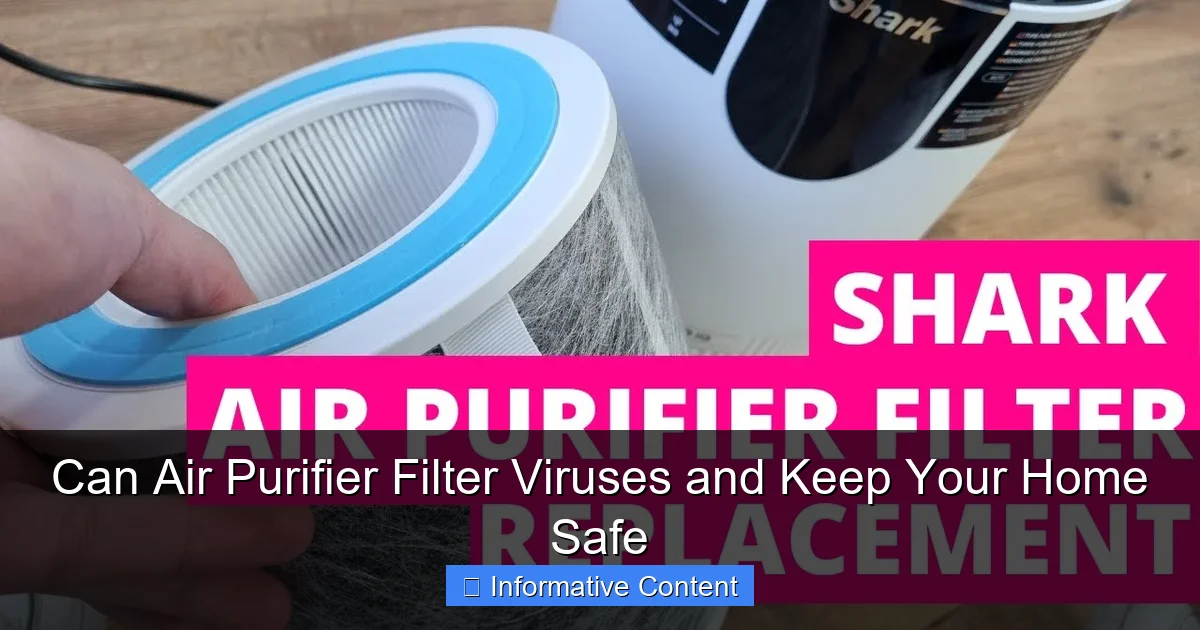
- HEPA Filters (High-Efficiency Particulate Air): These are the gold standard. A true HEPA filter captures at least 99.97% of particles as small as 0.3 microns. That includes many viruses, which typically range from 0.02 to 0.3 microns in size. While some viruses are smaller than 0.3 microns, they often travel in droplets or attach to larger particles—making HEPA highly effective.
- Activated Carbon Filters: Great for odors, gases, and VOCs, but they don’t catch viruses. Use them alongside HEPA for a full clean.
- UV-C Light: This doesn’t filter—it disinfects. UV-C light damages the DNA or RNA of viruses and bacteria, rendering them harmless. But it only works when pathogens pass through the light, and it’s not effective on all surfaces or in shadows.
- Electrostatic Precipitators: These use charged plates to attract particles. They’re less effective than HEPA and can produce ozone (a lung irritant), so they’re not ideal for virus control.
- Ionizers: These release charged ions that make particles stick to surfaces. They can help, but they don’t remove particles from the air—just move them. And like electrostatic models, they may produce ozone.
Bottom line: For virus protection, HEPA is your best bet. Pair it with UV-C for extra disinfection, but never rely on ionizers or ozone-producing models as your main defense.
Do Air Purifiers Actually Filter Viruses? The Evidence
Now for the big question: Can air purifier filter viruses? The short answer: Yes, but with caveats. Let’s look at the science.
What the Studies Say
Multiple studies have shown that HEPA-equipped air purifiers can significantly reduce airborne viruses in real-world settings.
- A 2021 study in Environmental Science & Technology found that portable HEPA air purifiers reduced airborne SARS-CoV-2 (the virus behind COVID-19) by up to 90% in hospital rooms.
- Research from the University of California, Davis, showed that HEPA purifiers reduced airborne influenza virus particles by over 80% in a simulated classroom.
- The CDC recommends using air purifiers with HEPA filters in schools, nursing homes, and other high-risk settings during respiratory outbreaks.
But here’s the catch: air purifiers don’t kill viruses instantly. They trap them. Once a virus is caught in the filter, it can’t infect anyone. Over time, the virus may degrade naturally. But the filter itself becomes a reservoir of potential pathogens—so proper maintenance is key.
Limitations You Should Know
Air purifiers are powerful tools, but they’re not a silver bullet. Here’s what they can’t do:
- Capture 100% of viruses: No purifier is perfect. Some tiny particles may slip through, especially if the unit is undersized or poorly maintained.
- Clean surfaces: Air purifiers only work on airborne particles. They don’t clean your doorknobs, phones, or countertops. You still need regular cleaning.
- Replace other safety measures: Purifiers are one layer of protection. They work best when combined with handwashing, masking, ventilation, and vaccination.
- Work instantly: It takes time to filter all the air in a room. A typical purifier may need 30 minutes to an hour to clean a room once.
One real-world example: During the 2020–2022 pandemic, many schools installed air purifiers. In classrooms with HEPA units, absenteeism due to respiratory illness dropped by 30–50%. But schools that relied only on purifiers—without masks or distancing—saw higher infection rates. The takeaway? Use purifiers as part of a multi-layered safety plan.
Choosing the Right Air Purifier for Virus Protection
Not all air purifiers are built for virus defense. Here’s how to pick one that actually works.
Must-Have Features
When shopping for a purifier to filter viruses, look for these key features:
- True HEPA filter (H13 or H14 grade): These are medical-grade and capture even smaller particles. H13 filters catch 99.95% of 0.3-micron particles; H14 catches 99.995%. Worth the extra cost if you’re serious about safety.
- CADR (Clean Air Delivery Rate) of 300+: This measures how much clean air the unit delivers. For virus protection, aim for a CADR that matches your room size. A 300 CADR is good for a 300–400 sq ft room.
- Room size compatibility: A small purifier in a large room won’t help. Check the manufacturer’s room coverage. For example, a 200 sq ft purifier in a 500 sq ft living room will only clean a fraction of the air.
- Sealed system: Make sure the purifier is fully sealed. If air leaks around the filter, unfiltered air can escape—defeating the purpose.
- UV-C or PCO (Photocatalytic Oxidation) option: These add an extra layer of disinfection. UV-C works best when the light is strong and the exposure time is long. PCO uses a catalyst (like titanium dioxide) to break down pathogens. Both are helpful, but not essential if you have a high-quality HEPA.
- Low noise level: You’ll want to run it all day, especially at night. Look for models under 50 dB (about the sound of a quiet conversation).
Smart Shopping Tips
- Check for third-party certifications: Look for units certified by AHAM (Association of Home Appliance Manufacturers) or CARB (California Air Resources Board). These ensure the unit meets safety and performance standards.
- Avoid “HEPA-like” or “HEPA-type” filters: These aren’t true HEPA. They may only capture 80–90% of particles. Always look for “True HEPA” or “Medical Grade HEPA.”
- Read real user reviews: Pay attention to long-term feedback. Some purifiers lose suction or develop odors after months of use.
- Consider filter replacement cost and frequency: HEPA filters last 6–12 months. Carbon filters may need replacing every 3–6 months. Factor this into your budget.
Pro tip: If you have a central HVAC system, consider upgrading to a MERV-13 filter (or higher) in your furnace. These are like whole-house HEPA filters and can help during outbreaks. Just check with your HVAC pro first—some systems can’t handle high-MERV filters.
Best Practices for Using Air Purifiers to Fight Viruses
Buying a great purifier is just the start. How you use it matters just as much.
Placement and Placement Only
Where you put your purifier can make or break its effectiveness.
- Place it in high-traffic areas: Living rooms, bedrooms, and home offices are ideal. If someone in your home is sick, run a purifier in their room.
- Keep it away from walls and furniture: At least 6–12 inches of clearance on all sides. This ensures good airflow.
- Elevate it if possible: Viruses and droplets can float at various heights. A purifier on a table or stand works better than one on the floor.
- Use multiple units in large homes: One purifier won’t cover your entire house. Use one per room, or move it around strategically.
Running Your Purifier for Maximum Effect
- Run it 24/7 during outbreaks: Viruses don’t take days off. Keep the purifier on, even when no one is home.
- Use the highest fan speed when someone is sick: This increases air changes per hour (ACH). Aim for 4–6 ACH in sick rooms.
- Open windows when possible: Fresh air is powerful. Pair your purifier with cross-ventilation for the best results. Just avoid doing this during wildfire season or high pollen counts.
- Clean the exterior regularly: Wipe down the outside with a damp cloth to prevent dust buildup.
Filter Care: Don’t Neglect Maintenance
Dirty filters are useless—or worse, dangerous. A clogged filter can:
- Reduce airflow, making the purifier less effective
- Release trapped particles back into the air
- Breed mold or bacteria if moisture gets in
So, how to care for your filter:
- Check monthly: Most purifiers have a filter indicator light. If yours doesn’t, check manually.
- Vacuum the pre-filter (if it has one): This extends the life of the main HEPA filter.
- Replace on schedule: Don’t wait for the light. If you’re in a dusty home or have pets, replace every 6 months.
- Dispose of filters safely: Wrap used filters in plastic and seal them. Viruses may still be active, so treat them like biohazards.
Beyond Air Purifiers: A Holistic Approach to Home Safety
Air purifiers are a powerful tool, but they’re just one piece of the puzzle. To truly keep your home safe from viruses, you need a layered defense strategy.
Ventilation: The Unsung Hero
Fresh air is one of the best ways to dilute virus particles. Here’s how to boost ventilation:
- Open windows daily: Even 10–15 minutes helps. Do it in the morning or when outdoor air quality is good.
- Use exhaust fans: In kitchens and bathrooms, run fans to remove moist, stagnant air.
- Upgrade your HVAC: If you have a central system, add a fresh air intake or heat recovery ventilator (HRV).
Source Control: Stop the Spread at the Source
- Mask when sick: If someone in your home has a cold or flu, wear a mask indoors.
- Isolate the sick: Keep the ill person in a separate room with a purifier and closed door.
- Wash hands and surfaces: Regular cleaning prevents viruses from settling on doorknobs, phones, and toys.
- Improve hand hygiene: Keep hand sanitizer in high-traffic areas.
Other Tools That Help
- Humidifiers: Dry air can irritate your airways, making you more vulnerable. Keep humidity between 40–60% to support your immune system.
- Smart air quality monitors: These devices track PM2.5, VOCs, and humidity. They can alert you when air quality drops—so you know when to turn on the purifier.
- Plants (with caution): Some plants, like peace lilies and snake plants, can absorb VOCs. But they don’t filter viruses. Use them for aesthetics and minor air improvement, not as a safety tool.
Remember: No single method is 100% effective. But when you combine air purifiers, ventilation, hygiene, and smart habits, your risk drops dramatically.
Data Table: Air Purifier Performance Against Viruses
| Purifier Type | Virus Removal Efficiency | Best For | Limitations |
|---|---|---|---|
| True HEPA (H13/H14) | 90–99%+ | Homes, offices, sick rooms | Needs regular filter replacement |
| HEPA + UV-C | 95–99.9%+ | High-risk environments (elderly, immunocompromised) | UV-C may not reach all particles; higher cost |
| Activated Carbon Only | 0% (does not filter viruses) | Odors, gases, VOCs | Useless for virus protection |
| Electrostatic Precipitator | 50–70% | Dust, smoke | Produces ozone; less effective on viruses |
| Ionizer | 30–60% | Supplemental use | Doesn’t remove particles; may cause surface buildup |
Final Thoughts: Can Air Purifiers Keep You Safe?
So, can an air purifier filter viruses? The answer is a clear yes—when used correctly. A high-quality HEPA air purifier can capture the vast majority of airborne viruses, including those behind colds, flu, and even COVID-19. Pair it with UV-C, and you add a powerful disinfection layer.
But here’s the honest truth: an air purifier alone won’t make your home 100% safe. It’s a tool—not a shield. It works best when combined with fresh air, good hygiene, and smart habits. Think of it like a seatbelt: it doesn’t prevent accidents, but it dramatically improves your odds if one happens.
And remember: not all purifiers are equal. Skip the gimmicks. Invest in a true HEPA model with solid CADR, proper room coverage, and good user reviews. Maintain it. Use it wisely. And don’t forget the other layers—ventilation, handwashing, and vaccination.
At the end of the day, your home should be a sanctuary. With the right tools and habits, you can breathe easier—literally and figuratively. You’ve got this. Stay informed, stay prepared, and keep your air as clean as your heart.
Frequently Asked Questions
Can an air purifier filter viruses from the air?
Yes, certain air purifiers equipped with HEPA filters can capture airborne viruses, including some that cause illnesses like the flu or COVID-19. These filters trap particles as small as 0.3 microns with high efficiency, helping reduce viral load in indoor air.
Do all air purifiers remove viruses effectively?
Not all air purifiers are designed to filter viruses. Only models with true HEPA filters or those certified to capture ultrafine particles are effective. Always check the product specifications to ensure it can handle virus-sized contaminants.
How does a HEPA filter help with virus protection?
HEPA filters work by forcing air through a fine mesh that traps harmful particles, including viruses and bacteria. When used properly, they can significantly improve indoor air quality and reduce the risk of airborne transmission.
Can an air purifier completely eliminate viruses in my home?
While air purifiers can greatly reduce airborne viruses, they cannot eliminate all risks on their own. For best protection, combine air purifier use with good ventilation, hand hygiene, and surface cleaning.
Are UV air purifiers better at killing viruses?
UV-C light in some air purifiers can deactivate viruses and bacteria by damaging their DNA. However, effectiveness depends on exposure time and intensity, and not all UV systems are equally reliable—HEPA filtration is still recommended as a primary defense.
What should I look for when buying an air purifier for viruses?
Look for a unit with a true HEPA filter, a high CADR (Clean Air Delivery Rate), and coverage suitable for your room size. Some models also include activated carbon or UV features for added protection against viruses and odors.