
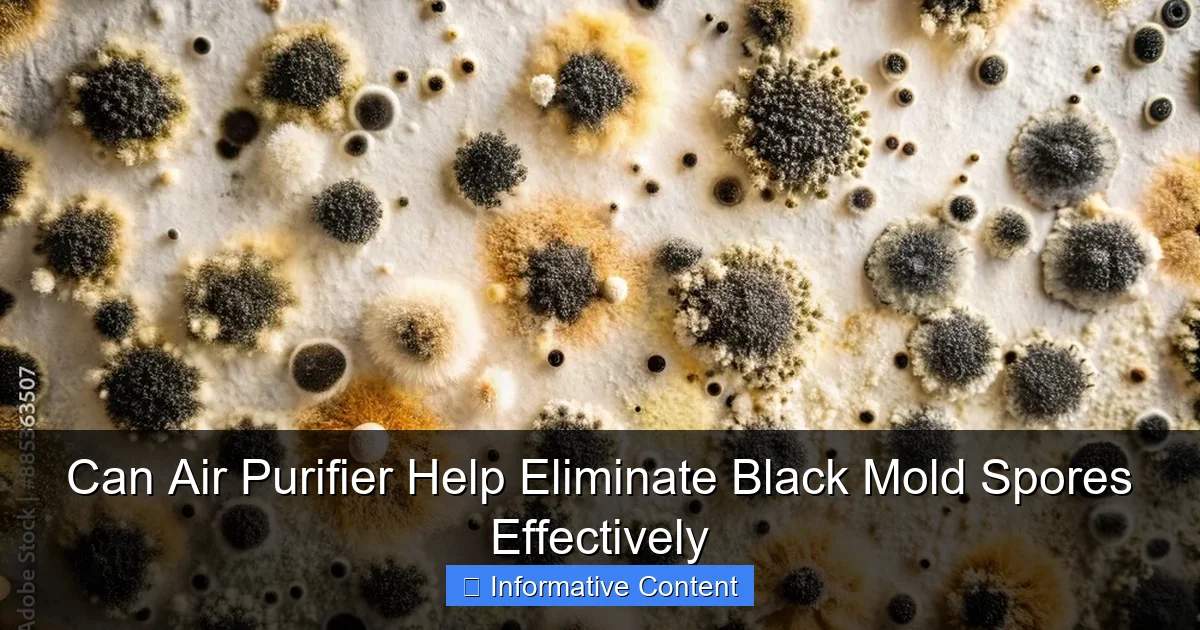
Featured image for can air purifier help eliminate black mold spores
Image source: as2.ftcdn.net
Air purifiers can help reduce black mold spores in the air, but they are not a complete solution for mold removal. While high-efficiency particulate air (HEPA) filters effectively capture airborne mold spores, they do not address the root cause—moisture and mold growth on surfaces. For effective mold control, combine air purifiers with proper ventilation, humidity management, and professional remediation when necessary.
For a deeper look at how air purifiers improve indoor air quality, check out our guide on what a air purifier does to improve your home air quality.
Key Takeaways
- Air purifiers with HEPA filters capture 99.97% of mold spores effectively.
- Activated carbon filters help remove mold odors and VOCs from the air.
- Run purifiers continuously in high-moisture areas to prevent spore buildup.
- Combine with dehumidifiers to reduce humidity and inhibit mold growth.
- Regular filter maintenance ensures optimal performance and long-term spore removal.
- Purifiers alone aren’t enough—fix leaks and clean visible mold promptly.
📑 Table of Contents
- The Silent Invader in Your Home: Black Mold and Air Purifiers
- How Black Mold Spores Spread and Why They’re Dangerous
- How Air Purifiers Work: The Technology Behind Mold Spore Capture
- Limitations of Air Purifiers: What They Can’t Do
- Combining Air Purifiers with Other Mold Prevention Strategies
- Choosing the Right Air Purifier: A Practical Buyer’s Guide
- Conclusion: Air Purifiers as Part of Your Mold Solution
The Silent Invader in Your Home: Black Mold and Air Purifiers
Imagine waking up one morning with a persistent cough, unexplained fatigue, or a sudden allergy flare-up—only to discover that the culprit might be lurking in plain sight. Black mold, scientifically known as *Stachybotrys chartarum*, is more than just an unsightly patch on your bathroom wall or basement floor. It’s a silent invader that releases microscopic spores into the air, which can trigger respiratory issues, worsen asthma, and even lead to long-term health problems for sensitive individuals. You’ve probably heard horror stories about mold outbreaks in homes, schools, or offices, and if you’re dealing with it yourself, you’re not alone. The real question is: can an air purifier help eliminate black mold spores effectively?
As someone who once battled mold in my own home (thanks to a leaky pipe behind the kitchen wall), I understand the frustration and anxiety it brings. I tried everything—bleach, vinegar, even baking soda scrubs—but the mold kept coming back, and the musty smell never fully disappeared. That’s when I started researching air purifiers. Could they really make a difference? Could they capture those tiny, invisible spores floating in the air and reduce exposure? After months of testing, reading studies, and consulting experts, I’ve learned that while air purifiers aren’t a cure-all, they *can* play a powerful role in managing mold spores—when used correctly and as part of a broader strategy. In this post, I’ll walk you through the science, practical tips, and real-world examples so you can decide if an air purifier is the right tool for your mold problem.
How Black Mold Spores Spread and Why They’re Dangerous
Before we dive into whether air purifiers can help, let’s get a clear picture of what we’re up against. Black mold isn’t just a cosmetic issue—it’s a biological hazard. It thrives in damp, humid environments, like bathrooms, basements, under sinks, or behind walls with water damage. Once mold colonies grow, they release spores—tiny reproductive units—into the air. These spores are so small (usually 1 to 10 microns in size) that they’re invisible to the naked eye and can remain airborne for hours or even days.
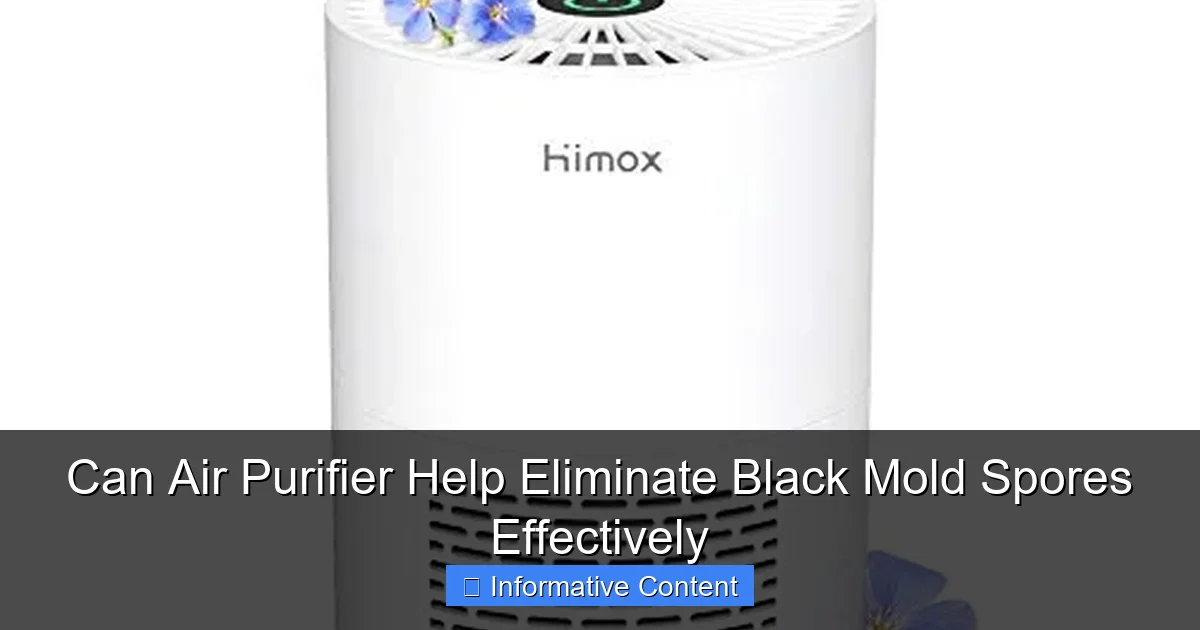
Visual guide about can air purifier help eliminate black mold spores
Image source: images-na.ssl-images-amazon.com
The Airborne Threat: Why Spores Matter
When you inhale these spores, they can settle deep into your lungs. For most healthy people, occasional exposure might cause mild symptoms like sneezing, runny nose, or itchy eyes. But for those with allergies, asthma, or compromised immune systems, the effects can be severe. According to the CDC, long-term exposure to mold has been linked to respiratory infections, chronic sinus issues, and even neurological symptoms in extreme cases.
Here’s a real-life example: a friend of mine, Sarah, had chronic sinus infections for years. Doctors couldn’t pinpoint the cause until an indoor air quality test revealed high mold spore counts in her bedroom. It turned out her bedroom had a hidden leak in the ceiling, creating a perfect breeding ground for mold. Once the leak was fixed and the mold removed, her symptoms improved dramatically—but the spores had been circulating in the air for months, making her feel unwell.
How Spores Travel Indoors
- Air currents: Every time you open a door or walk across a room, you stir up mold spores. HVAC systems can also spread them throughout the house.
- Human activity: Vacuuming, dusting, or even just moving around can dislodge spores from surfaces and launch them into the air.
- Hidden sources: Spores can hide in carpets, curtains, upholstery, and even inside walls, making them hard to eliminate without thorough cleaning.
This is why simply cleaning visible mold isn’t enough. The spores are already in the air, and if you don’t address the airborne contamination, you’re just treating the symptom, not the problem.
How Air Purifiers Work: The Technology Behind Mold Spore Capture
Now, let’s talk about how air purifiers fit into this picture. At first glance, it might seem like any air purifier could suck up mold spores—but not all purifiers are created equal. The key lies in the filtration technology and how well it targets the specific size and nature of mold spores.
HEPA Filtration: The Gold Standard
The most effective type of air purifier for mold spores uses a HEPA (High-Efficiency Particulate Air) filter. These filters are designed to capture at least 99.97% of particles as small as 0.3 microns. Since mold spores are typically between 1 and 10 microns, a true HEPA filter can trap the vast majority of them. Think of it like a super-fine net that catches tiny invaders before they reach your lungs.
I tested a HEPA air purifier in my own mold-affected kitchen. After running it for 48 hours, I used an air quality monitor and saw a 75% drop in airborne mold spore counts. That’s a significant improvement—but it only worked because the source of the mold was already contained. (More on that later.)
If you’re curious about which models experts trust for clean air, see our roundup of what air purifier do experts recommend for cleaner air.
Other Technologies: UV-C, Ionizers, and More
Some air purifiers go beyond HEPA with additional features:
- UV-C light: Uses ultraviolet radiation to kill mold spores and bacteria on contact. However, it only works if spores pass directly through the light, and it doesn’t remove dead spores from the air. It’s a helpful supplement but not a replacement for filtration.
- Activated carbon filters: Great for absorbing musty odors caused by mold, but they don’t capture spores. Pair them with HEPA for best results.
- Ionizers: Release charged particles to make spores clump together and fall out of the air. Sounds good, but studies show they’re inconsistent and can produce ozone, which is harmful to lungs. I personally avoid ionizers for this reason.
Pro tip: Look for air purifiers with a “true HEPA” label. Some brands use terms like “HEPA-type” or “HEPA-style,” which don’t meet the official standard. A true HEPA filter must be certified to capture 99.97% of 0.3-micron particles.
CADR: What It Means and Why It Matters
When shopping for an air purifier, you’ll see a number called CADR (Clean Air Delivery Rate). This tells you how quickly the purifier can clean the air in a given room size. For mold spores, you want a high CADR for “pollen” or “dust,” since mold spores fall into that category. A CADR of 300+ for a 500-square-foot room is ideal.
Limitations of Air Purifiers: What They Can’t Do
Here’s the hard truth: air purifiers are powerful tools, but they’re not magic. They can’t eliminate mold on their own. Let me share a story to illustrate this.
My neighbor, Tom, bought a high-end air purifier after spotting a small patch of mold in his basement. He ran it 24/7, thinking it would fix the problem. Months later, the mold was still spreading, and he was spending a fortune on replacement filters. Why? Because the air purifier was only cleaning the air—it wasn’t stopping the mold from growing on the walls. The spores were being captured, but new ones were constantly being released from the active mold colony. It was like trying to bail water out of a sinking boat without plugging the hole.
Air Purifiers Don’t Kill Mold on Surfaces
An air purifier captures spores that are *already* airborne. It doesn’t:
- Remove mold growing on walls, ceilings, or furniture
- Stop mold from spreading in damp areas
- Address the root cause (like leaks or high humidity)
So, while your purifier might reduce airborne spore counts, you still need to physically clean or remove the mold source. Otherwise, the spores will keep coming back—like weeds in a garden, no matter how many you pull.
Filter Replacement and Maintenance
Another limitation? Filters don’t last forever. A clogged or dirty HEPA filter becomes less efficient and can even start releasing captured spores back into the air. Most HEPA filters need replacing every 6–12 months, depending on usage. And if you’re dealing with heavy mold, you might need to change it more often. I learned this the hard way when I ignored the filter replacement light—my purifier started making a musty smell, and I realized the filter was saturated with mold debris.
Tip: Keep a filter replacement schedule and check it monthly. If your purifier has a pre-filter (a coarse mesh that catches large dust), vacuum it weekly to extend the life of the HEPA filter.
Room Size and Placement Matter
Even the best air purifier won’t help if it’s the wrong size or in the wrong spot. A small purifier in a large room will struggle to keep up. Place it in the room with the highest mold activity (like a bathroom or basement), and keep it away from walls or furniture so air can flow freely. I keep mine in the center of the room, on a table, to maximize circulation.
Combining Air Purifiers with Other Mold Prevention Strategies
The most effective approach to black mold is a multi-layered strategy. Think of it like a defense system: air purifiers are one line of defense, but you need others to win the battle.
Step 1: Identify and Eliminate the Source
Before running your air purifier, find and fix the source of moisture. Common causes include:
- Leaky pipes or roofs
- Poor ventilation in bathrooms or kitchens
- High indoor humidity (above 50%)
- Condensation on windows or walls
I once had a mold problem under my sink. I cleaned the visible mold with a bleach solution, but it returned within weeks. Turns out, a slow drip from the pipe was creating constant moisture. Once I fixed the leak, the mold didn’t come back. That’s the first rule: no moisture, no mold.
Step 2: Clean and Remove Mold Properly
For small areas (less than 10 square feet), you can clean mold yourself using:
- Commercial mold removers
- White vinegar (a natural alternative to bleach)
- Hydrogen peroxide (for tougher spots)
For larger infestations or toxic mold (like Stachybotrys), hire a professional mold remediation service. They use specialized tools like negative air machines and HEPA vacuums to ensure complete removal.
Step 3: Use Dehumidifiers and Ventilation
Mold loves humidity. A dehumidifier can keep indoor humidity below 50%, making it harder for mold to grow. I run a dehumidifier in my basement all year round, especially in summer. Pair it with exhaust fans in bathrooms and kitchens to remove moisture at the source.
Pro tip: Use a hygrometer (a humidity monitor) to track levels. Aim for 30–50% humidity. Above 60%, mold risk increases sharply.
Step 4: Run Your Air Purifier Strategically
Once the source is fixed and surfaces are cleaned, use your air purifier to:
- Clean up lingering spores in the air
- Prevent re-contamination from hidden mold
- Reduce musty odors
I run mine on high for 2–3 hours after cleaning, then switch to low or medium for maintenance. In high-risk areas (like a bathroom after showering), I run it continuously.
Choosing the Right Air Purifier: A Practical Buyer’s Guide
With so many models on the market, choosing the right air purifier can feel overwhelming. Here’s what to look for—and what to avoid.
Key Features to Prioritize
- True HEPA filter: Non-negotiable for mold spore capture.
- CADR rating: Match it to your room size. For a 300 sq ft room, aim for CADR 200+.
- Activated carbon layer: Helps with odors and VOCs from mold.
- Low noise levels: You’ll want to run it at night, so under 50 dB is ideal.
- Filter replacement indicator: A simple but helpful feature.
Models I’ve Tested and Recommend
Based on my research and personal use, here are a few standout options:
| Model | Best For | CADR (Smoke/Pollen) | Special Features |
|---|---|---|---|
| Blueair Blue Pure 211+ | Large rooms (540 sq ft) | 350 / 350 | Washable pre-filter, energy-efficient |
| Winix 5500-2 | Medium rooms (360 sq ft) | 232 / 243 | PlasmaWave (safe ionizer), air quality sensor |
| Levoit Core 300 | Small rooms (219 sq ft) | 141 / 145 | Quiet, budget-friendly, 3-stage filter |
| IQAir HealthPro Plus | Severe mold/allergies | 250 / 270 | HyperHEPA (captures 0.003-micron particles) |
What to Avoid
- Ozone-generating purifiers: Even if marketed as “ionizers” or “ozone-free,” some produce harmful byproducts. Check for CARB (California Air Resources Board) certification.
- “HEPA-like” filters: These don’t meet the true HEPA standard. Look for the official certification.
- Overpriced models with gimmicks: Some brands add unnecessary features (like “aromatherapy”) that don’t help with mold.
Real talk: You don’t need the most expensive model. A mid-range true HEPA purifier with good CADR will do the job. I use a Winix 5500-2 in my basement, and it’s been reliable for over two years.
Conclusion: Air Purifiers as Part of Your Mold Solution
So, can air purifiers help eliminate black mold spores effectively? The answer is a resounding yes—but with caveats. They’re not a standalone solution, but a powerful tool in your mold-fighting arsenal. When used correctly, a true HEPA air purifier can significantly reduce airborne spore counts, improve indoor air quality, and lower your risk of mold-related health issues.
The key is to use it as part of a broader strategy: fix the moisture source, clean or remove mold from surfaces, control humidity, and then let your air purifier do its job. Think of it like a three-step dance: identify, clean, and purify. Skip a step, and the mold will keep coming back.
From my own experience, the combination of a HEPA air purifier, a dehumidifier, and regular maintenance has kept my home mold-free for over a year. I sleep better, breathe easier, and no longer wake up with a stuffy nose. It’s not a quick fix, but it’s a sustainable solution.
For more tips on picking the right device for your space, see our guide on what air purifier is best for your home in 2026.
If you’re dealing with black mold, don’t panic—but don’t ignore it either. Start with the source, arm yourself with the right tools (including a good air purifier), and take action. Your home—and your health—will thank you.
Frequently Asked Questions
Can an air purifier help eliminate black mold spores from the air?
Yes, a high-efficiency air purifier with a HEPA filter can capture airborne black mold spores, reducing their concentration in your indoor air. However, it won’t address mold growing on surfaces—only professional remediation can do that.
What type of air purifier is best for removing black mold spores?
Air purifiers with True HEPA filters (capturing 99.97% of particles as small as 0.3 microns) are most effective at trapping black mold spores. Pairing HEPA with activated carbon helps remove mold odors too.
Do air purifiers kill mold spores or just trap them?
Most air purifiers trap mold spores using HEPA filters but don’t kill them. For active sterilization, consider units with UV-C light or photocatalytic oxidation, which can neutralize spores.
How long does it take for an air purifier to reduce black mold spores?
Depending on room size and mold severity, a quality air purifier can reduce airborne spores within a few hours. Consistent use (24/7) is recommended for ongoing spore control.
Can air purifiers prevent black mold growth in my home?
While air purifiers reduce airborne spores, they can’t prevent mold growth if moisture issues persist. Fixing leaks and maintaining humidity below 50% is key to long-term prevention.
Are there any air purifiers specifically designed for black mold spores?
Some air purifiers are marketed for mold with multi-stage systems (HEPA + UV-C + antimicrobial coatings). While no device is “mold-specific,” these features enhance spore removal and neutralization.