
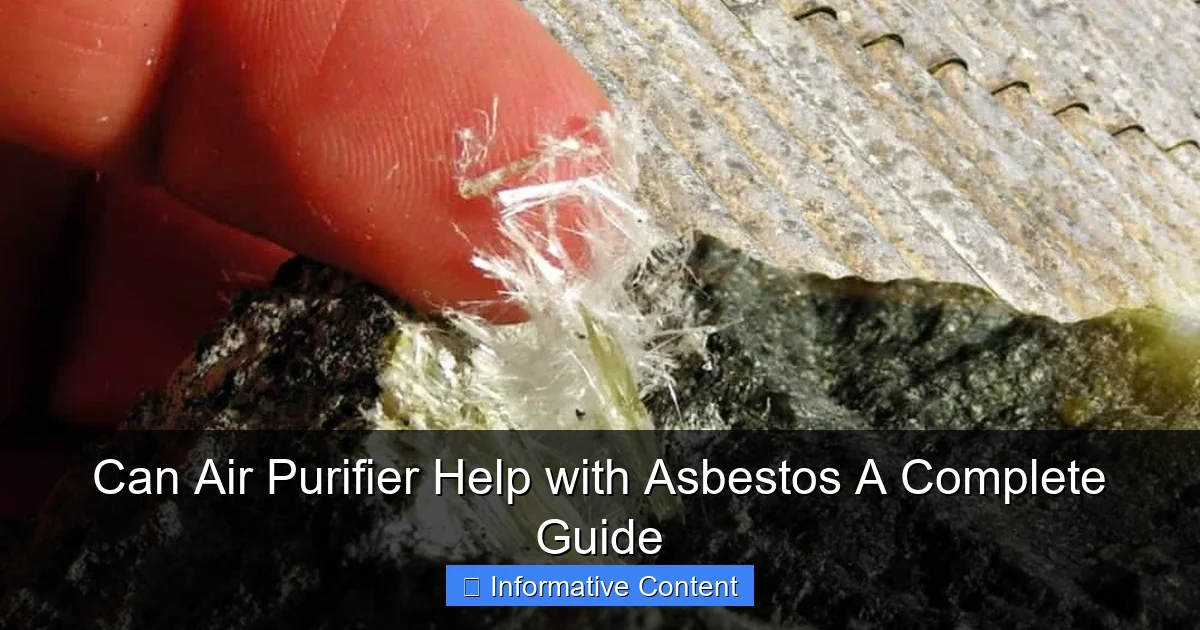
Featured image for can air purifier help with asbestos
Image source: humanfocus.co.uk
Air purifiers cannot remove asbestos fibers from your environment—once disturbed, these microscopic particles require professional remediation to eliminate safely. While HEPA filters in air purifiers can capture airborne asbestos fibers temporarily, they do not address the source or prevent future contamination, making them a supplementary tool, not a solution.
Key Takeaways
- Air purifiers with HEPA filters can trap asbestos fibers effectively when properly maintained.
- Seal asbestos sources first before relying on air purifiers to prevent fiber release.
- Choose a purifier with CADR 300+ for optimal asbestos particle removal in large spaces.
- Regular filter replacements are critical to avoid asbestos recontamination from saturated filters.
- Use purifiers alongside professional abatement—they’re not a standalone asbestos removal solution.
- Monitor air quality post-abatement to confirm purifier effectiveness and fiber clearance.
📑 Table of Contents
- Can Air Purifier Help with Asbestos? A Complete Guide
- What Is Asbestos and Why Is It Dangerous?
- How Asbestos Becomes Airborne and Enters Your Lungs
- Can an Air Purifier Actually Help with Asbestos?
- Choosing the Right Air Purifier for Asbestos
- What You Should Do If You Suspect Asbestos in Your Home
- Final Thoughts: Air Purifiers Are Helpful—But Not Enough on Their Own
Can Air Purifier Help with Asbestos? A Complete Guide
Imagine this: You’ve just moved into an older home, full of charm and character. The hardwood floors creak just right, the windows let in golden afternoon light, and the walls whisper stories from decades past. But then, during a routine home inspection, your inspector drops a word that sends a chill down your spine—asbestos. Suddenly, that cozy vintage vibe feels a little less comforting.
You start researching, and the more you read, the more questions pile up. Is it dangerous? Should you panic? And most importantly—can an air purifier help with asbestos? It’s a question I asked myself when my own family discovered asbestos-containing materials in our basement renovation. Like you, I wanted answers that were clear, honest, and grounded in science—not fear-mongering or overblown marketing claims. The truth? Air purifiers aren’t a magic fix, but they can play a role in managing airborne asbestos fibers—if used correctly and alongside other safety measures.
In this guide, we’ll walk through everything you need to know about asbestos, how it becomes airborne, and whether an air purifier can truly help protect your indoor air quality. We’ll cut through the noise, share real-world examples, and give you practical tips so you can make informed decisions for your home and health.
What Is Asbestos and Why Is It Dangerous?
Asbestos is a naturally occurring mineral made up of tiny, needle-like fibers. For much of the 20th century, it was hailed as a “miracle material” because it’s strong, heat-resistant, and doesn’t conduct electricity. Builders used it in everything from insulation and ceiling tiles to floor adhesives, pipe wrap, and even textured paint. If your home was built before the 1980s, there’s a good chance it contains asbestos somewhere.
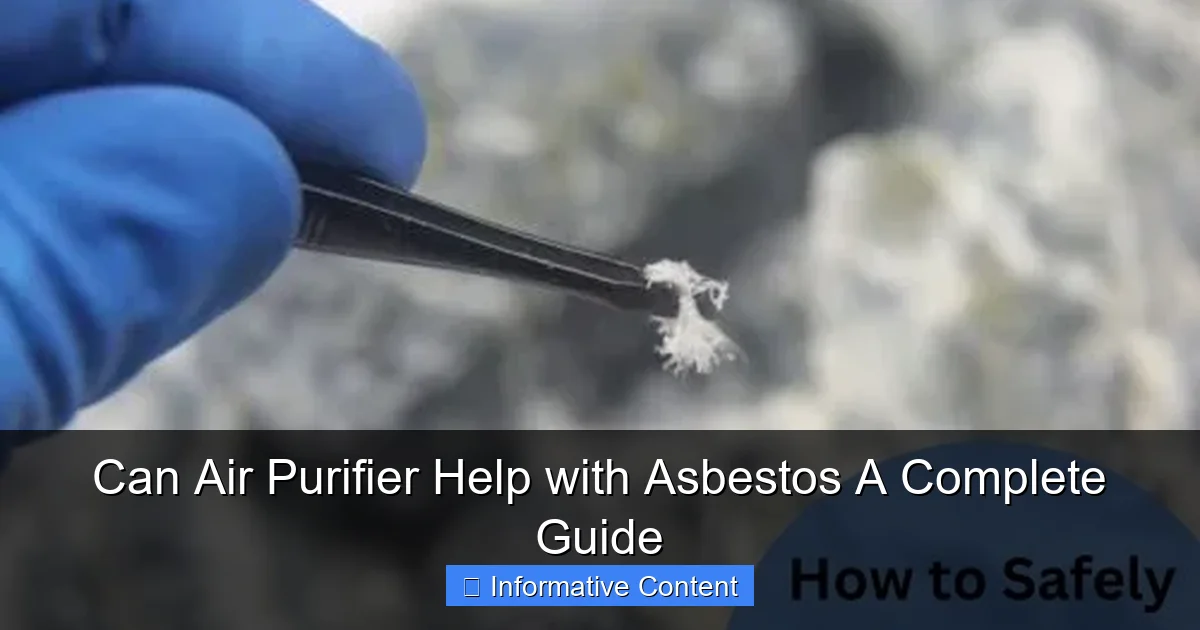
Visual guide about can air purifier help with asbestos
Image source: airtly.com
But here’s the catch: asbestos is only dangerous when it’s disturbed. When materials containing asbestos are damaged, drilled, sanded, or crumbled, they release microscopic fibers into the air. These fibers are so small—about 1/100th the width of a human hair—that you can’t see them, smell them, or feel them. Yet once inhaled, they can lodge deep in your lungs and stay there for years.
Health Risks of Asbestos Exposure
Long-term exposure to airborne asbestos fibers is linked to serious health conditions, including:
- Asbestosis: A chronic lung disease caused by scarring of lung tissue, leading to shortness of breath and reduced lung function.
- Lung cancer: Especially in smokers, asbestos exposure significantly increases the risk of developing lung cancer.
- Mesothelioma: A rare and aggressive cancer that affects the lining of the lungs, abdomen, or heart. It’s almost exclusively caused by asbestos exposure.
What makes asbestos so insidious is the latency period—symptoms can take 10 to 50 years to appear. That means someone exposed as a child might not show signs of illness until decades later. This long delay is why prevention and early detection are so critical.
Common Sources of Asbestos in Homes
Asbestos isn’t hiding in plain sight—it’s often embedded in building materials. Here are some common places to look:
- Popcorn or textured ceilings (common in homes built between 1950 and 1980)
- Vinyl floor tiles and the adhesive used to install them
- Insulation around boilers, furnaces, and pipes
- Roofing and siding shingles
- HVAC duct insulation
- Cement sheets and attic insulation
The key thing to remember: undisturbed asbestos is generally not a threat. It’s only when these materials are damaged or disturbed—during renovations, repairs, or even just aging—that fibers can become airborne.
How Asbestos Becomes Airborne and Enters Your Lungs
Understanding how asbestos fibers get into the air is crucial to knowing how to protect yourself. It’s not just about demolition or major construction. Even everyday activities can stir up fibers if asbestos-containing materials are present and deteriorating.
Common Ways Asbestos Fibers Are Released
Imagine your child is playing with a toy drill and accidentally drills into a ceiling tile. Or you’re replacing a light fixture and the old wiring is wrapped in asbestos insulation. These seemingly small actions can release thousands of invisible fibers into the air. Other common causes include:
- Water damage causing ceiling tiles or insulation to crumble
- HVAC systems blowing air through old duct insulation
- Sanding or scraping old flooring during refinishing
- Removing or replacing old appliances near asbestos-lined walls
- Natural aging and deterioration of materials over time
Once released, these fibers can remain suspended in the air for hours—or even days—especially in poorly ventilated spaces. They’re so lightweight that a gentle breeze from an open window or a passing footstep can stir them up again and again.
How Fibers Enter the Body
When you breathe in, air travels through your nose or mouth, down your windpipe, and into your lungs. Asbestos fibers are so small and sharp that they can bypass your body’s natural defenses—like mucus and cilia (tiny hair-like structures that trap particles). Once in the lungs, they can embed themselves in the delicate tissue.
Over time, the body tries to break down these fibers, but it can’t. The immune system responds with inflammation, which leads to scarring and, eventually, the diseases mentioned earlier. The scary part? You might not even realize you’ve been exposed until it’s too late.
Real-Life Example: The Basement Renovation Gone Wrong
My cousin, Sarah, decided to finish her basement to create a playroom for her kids. She tore down an old wall without testing the insulation. A week later, she started coughing and feeling short of breath. She assumed it was allergies—until her doctor ordered a chest X-ray and found signs of lung scarring. Testing revealed asbestos in the insulation she’d disturbed. The fibers had been circulating in her home for weeks, and her family had been breathing them in.
Her story is a powerful reminder: disturbing asbestos-containing materials without proper precautions can have serious consequences. It’s not just about major construction—small DIY projects can be risky too.
Can an Air Purifier Actually Help with Asbestos?
Now for the big question: Can an air purifier help with asbestos? The short answer is yes, but with important caveats. An air purifier alone won’t eliminate the risk, but it can be a valuable part of a broader safety strategy—especially when asbestos fibers are already in the air.
To understand why, let’s break down how air purifiers work and what they can—and can’t—do.
How Air Purifiers Capture Airborne Particles
Most air purifiers use a combination of filters to trap contaminants. The most effective ones for asbestos use a HEPA (High-Efficiency Particulate Air) filter. These filters are designed to capture 99.97% of particles as small as 0.3 microns in size. Asbestos fibers typically range from 0.7 to 90 microns in length, with many falling well within the HEPA filter’s capture range.
Here’s how it works: Air is drawn into the purifier, passes through the HEPA filter, and clean air is released back into the room. The trapped fibers stay in the filter until it’s replaced or cleaned (depending on the model).
What Air Purifiers Can Do
An air purifier with a true HEPA filter can:
- Reduce the concentration of airborne asbestos fibers in a room
- Help prevent fibers from spreading to other areas of the home
- Improve overall indoor air quality, especially during or after remediation
- Provide peace of mind when used alongside other safety measures
For example, if you’re having a professional asbestos abatement done in your attic, running an air purifier in nearby rooms can help capture any fibers that might escape containment.
What Air Purifiers Cannot Do
It’s important to set realistic expectations. An air purifier cannot:
- Remove asbestos from building materials
- Prevent fibers from being released in the first place
- Replace professional testing or remediation
- Protect you during active disturbance of asbestos-containing materials
In other words, if you’re planning to sand, drill, or remove asbestos materials, an air purifier won’t keep you safe. You need proper containment, protective gear, and professional help.
When an Air Purifier Is Most Useful
Air purifiers are most effective in these scenarios:
- After professional remediation: To help clear any remaining fibers and maintain clean air.
- In homes with deteriorating asbestos materials: If you can’t remove the source yet, a purifier can reduce exposure risk.
- During renovations in adjacent areas: To prevent cross-contamination.
- In high-traffic or poorly ventilated rooms: Where fibers are more likely to become airborne.
Think of an air purifier as a “cleanup crew” for your air—not a “prevention system” for the source.
Choosing the Right Air Purifier for Asbestos
Not all air purifiers are created equal. If you’re serious about reducing airborne asbestos, you need a unit that’s specifically designed for fine particulate capture. Here’s what to look for.
Key Features to Look For
- True HEPA filter: Avoid “HEPA-type” or “HEPA-like” filters. Only true HEPA filters meet the 99.97% efficiency standard.
- High CADR (Clean Air Delivery Rate): Look for a CADR of at least 200 for smoke or dust, which indicates strong particle removal.
- Large coverage area: Choose a model rated for a room size larger than your actual space for better performance.
- Sealed system: Ensures that air doesn’t leak around the filter, which could let fibers escape.
- Low noise level: You’ll want to run it continuously, so quiet operation is a plus.
- Filter replacement indicator: Helps you know when it’s time to change the filter.
Top Air Purifier Options for Asbestos
| Model | Filter Type | Coverage (sq ft) | CADR (Dust) | Noise Level (dB) | Best For |
|---|---|---|---|---|---|
| Blueair Blue Pure 211+ | True HEPA + Carbon | 540 | 350 | ||
| 350 | 31–56 | Large living rooms, open floor plans | |||
| IQAir HealthPro Plus | HyperHEPA (0.003 microns) | 1,125 | 300 | 25–55 | High-risk environments, medical-grade filtration |
| Austin Air HealthMate HM400 | True HEPA + Activated Carbon | 750 | 250 | 45–65 | Bedrooms, basements, long-term use |
| Winix 5500-2 | True HEPA + PlasmaWave | 360 | 243 | 27–50 | Small to medium rooms, budget-friendly |
Note: While no air purifier can guarantee 100% asbestos removal, these models are among the most effective for fine particle capture.
Tips for Using Your Air Purifier Effectively
- Run it continuously: For best results, keep the purifier on 24/7, especially in high-risk areas.
- Place it strategically: Put it in the room where you spend the most time, or near the source of potential contamination.
- Close windows and doors: To prevent outdoor air from bringing in more contaminants.
- Change filters on schedule: Follow the manufacturer’s recommendations—usually every 6–12 months.
- Clean the exterior regularly: Dust and debris on the outside can reduce airflow.
Remember: An air purifier is a tool, not a solution. It works best when part of a comprehensive plan.
What You Should Do If You Suspect Asbestos in Your Home
Discovering asbestos can be unsettling, but panic won’t help. The best approach is calm, informed action. Here’s a step-by-step guide to protect yourself and your family.
Step 1: Don’t Disturb It
The first rule of asbestos safety: leave it alone. If you suspect a material contains asbestos, don’t touch it, drill it, sand it, or move it. Disturbing it is the fastest way to release fibers into the air.
Step 2: Get It Tested
Contact a licensed asbestos inspector to take samples and test them in a certified lab. This is the only way to confirm whether asbestos is present. Many states have lists of certified professionals—check with your local health department or EPA regional office.
Step 3: Assess the Condition
Even if asbestos is present, it’s not an immediate danger if the material is in good condition and unlikely to be disturbed. A professional can help you decide whether to encapsulate (seal), enclose, or remove the material.
Step 4: Hire a Licensed Abatement Contractor
If removal is necessary, never do it yourself. Asbestos abatement requires specialized training, equipment, and disposal methods. A licensed contractor will use containment barriers, negative air machines, and HEPA vacuums to safely remove the material and clean the area.
Step 5: Use an Air Purifier During and After
Once remediation is complete, run your air purifier to help capture any lingering fibers. Continue using it in high-risk areas as a preventive measure.
Step 6: Monitor and Maintain
Regularly inspect areas with known asbestos for signs of damage. Keep records of testing and remediation. And consider retesting every few years, especially if you plan renovations.
Final Thoughts: Air Purifiers Are Helpful—But Not Enough on Their Own
So, can an air purifier help with asbestos? Yes—but only as part of a broader safety strategy. A high-quality HEPA air purifier can significantly reduce airborne asbestos fibers, improve indoor air quality, and give you peace of mind. But it’s not a substitute for professional testing, proper containment, or safe removal.
Think of it this way: An air purifier is like a smoke detector. It won’t prevent a fire, but it can alert you early and help you respond safely. Similarly, an air purifier won’t stop asbestos from being released, but it can help clean the air after fibers are in circulation.
If you’re living in an older home or planning renovations, take asbestos seriously—but don’t let fear control you. With the right knowledge, tools, and professionals on your side, you can protect your family and enjoy your home safely. Start by getting your materials tested, avoid disturbing suspicious materials, and consider investing in a reliable air purifier. Your lungs—and your future self—will thank you.
Frequently Asked Questions
Can an air purifier help with asbestos removal?
While air purifiers cannot remove asbestos fibers already embedded in building materials, they can capture airborne asbestos particles released during disturbances. A HEPA air purifier is essential for trapping these microscopic fibers, reducing inhalation risks.
What type of air purifier is best for asbestos?
For asbestos, a HEPA air purifier is the most effective option, as it captures 99.97% of particles as small as 0.3 microns, including asbestos fibers. Avoid purifiers with only carbon filters, as they don’t trap fine particulates.
How long should I run an air purifier for asbestos safety?
Run a HEPA air purifier continuously in areas where asbestos exposure is suspected, especially during and after renovations. Maintain operation for at least 24–48 hours post-disturbance to clear lingering fibers.
Can air purifiers completely eliminate asbestos risks?
No air purifier can fully eliminate asbestos risks, as they don’t address fibers trapped in materials. However, a high-quality air purifier with HEPA filtration significantly reduces airborne asbestos exposure when used alongside professional abatement.
Do air purifiers with ionizers help with asbestos?
Ionizers alone are ineffective for asbestos, as they charge particles but don’t capture them. For asbestos, pair an ionizer with a HEPA air purifier to safely trap charged fibers and prevent re-circulation.
Can air purifiers detect asbestos in the air?
Most air purifiers cannot detect asbestos, but some advanced models include sensors for particulate matter. For asbestos testing, use professional air sampling kits alongside a HEPA air purifier to monitor and reduce airborne risks.