
Featured image for how to compare air purifiers
Image source: aircaring.com
Choosing the right air purifier in 2026 starts with understanding key performance metrics like CADR, HEPA filtration, and room coverage. Compare noise levels, energy efficiency, and smart features to find a model that fits your space and lifestyle without compromise. With rising air quality concerns, making an informed decision ensures cleaner, healthier air every day.
How to Compare Air Purifiers in 2026 for Cleaner Air
Key Takeaways
- Match purifier size to room dimensions for optimal air cleaning performance.
- Check CADR ratings to compare how fast models remove dust, pollen, and smoke.
- Choose HEPA filters for trapping 99.97% of airborne particles like allergens.
- Compare noise levels measured in decibels to ensure quiet operation.
- Review energy usage to balance air quality with long-term operating costs.
- Look for smart features like air quality sensors and auto mode for convenience.
Why This Matters / Understanding the Problem
Let’s be honest—air quality isn’t something we think about until it hits us. Maybe it’s a sudden allergy flare-up, a musty smell in the basement, or a family member with asthma. Or perhaps you’ve just noticed more dust settling on your shelves than usual. Whatever the trigger, the truth is: indoor air can be up to five times more polluted than outdoor air.
And with wildfires, pollen seasons stretching longer, and new airborne pathogens making headlines, the need for effective air purification is no longer a luxury—it’s a necessity. That’s where knowing how to compare air purifiers in 2026 for cleaner air becomes essential.
I remember when I bought my first air purifier. I was overwhelmed by the choices: HEPA, ionizers, UV-C, smart sensors, “medical-grade” claims. I ended up picking one that looked sleek and had a fancy app. Spoiler: it didn’t do much for my cat’s dander.
The good news? By 2026, air purifier tech has evolved—but so has the noise. With so many models promising “cleaner air,” it’s easy to get lost in marketing fluff. The key is learning how to cut through the hype and focus on what actually works.
This guide will walk you through the real factors that matter—not just specs, but performance, usability, and long-term value. Whether you’re dealing with pet hair, city smog, or just want peace of mind, this is how to compare air purifiers in 2026 for cleaner air without losing your sanity.
What You Need
Before we dive into the comparison process, let’s gather the essentials. You don’t need a lab coat or a degree in environmental science—just a few tools and a clear head.
- A list of your air quality concerns (e.g., allergies, pet dander, smoke, VOCs, odors)
- Room size measurements (length x width x height for each space you want to purify)
- A notebook or digital doc to track comparisons (I use Google Sheets)
- Access to product specs (manufacturer websites, Amazon, Consumer Reports)
- Air quality monitor (optional but helpful)—something like a Kaiterra or Awair to test real-world performance
- Patience and a critical eye—don’t rush this decision
Pro tip: Avoid buying the first purifier you see, even if it’s on sale. The best deals aren’t always the cheapest upfront. We’ll talk about long-term costs later.
Now, let’s get into the step-by-step method for how to compare air purifiers in 2026 for cleaner air.
Step-by-Step Guide to How to Compare Air Purifiers in 2026 for Cleaner Air
Step 1: Identify Your Air Quality Needs
This is the foundation. Not all air purifiers are created equal—and not all pollutants are the same.
Ask yourself:
- Do you have pets? (dander, hair, odors)
- Are allergies or asthma a concern? (pollen, mold spores, dust mites)
- Live in a high-pollution area? (traffic, wildfire smoke)
- Have new furniture or paint? (VOCs like formaldehyde)
- Want to reduce cooking odors or tobacco smoke?
Each of these requires a different filtration strategy. For example:
- Pet owners need strong pre-filters and high CADR (Clean Air Delivery Rate) for particles.
- Smoke or VOC issues require activated carbon or advanced oxidation tech.
- Allergy sufferers benefit most from true HEPA filters.
Personal insight: I once bought a purifier with a “3-stage filtration” system, but the carbon filter was only 1mm thick. Useless for my husband’s cigar smoke. Always check carbon weight—more is better.
When you know your needs, you’ll avoid paying for features you don’t use. This step is crucial for how to compare air purifiers in 2026 for cleaner air—because the best purifier is the one that matches *your* air.
Step 2: Check the Filter Type and Filtration Technology
This is where most people get tripped up. Let’s break it down simply.
1. HEPA Filters (High-Efficiency Particulate Air)
- Must meet True HEPA standard: captures 99.97% of particles 0.3 microns in size.
- Ideal for: dust, pollen, mold spores, pet dander, bacteria.
- Look for “H13” or “H14” grade—these are medical-grade and even more effective.
2. Activated Carbon Filters
- Absorbs gases, odors, VOCs, and smoke.
- Crucial for kitchens, smokers, or new construction.
- Check carbon weight: 1+ pounds is solid; less than 0.5 lbs is likely ineffective.
3. Pre-Filters
- Washable mesh that catches large particles (hair, lint).
- Extends the life of the main filter—always look for one.
4. Additional Technologies (2026 Trends)
- Photocatalytic Oxidation (PCO): Breaks down VOCs and pathogens using UV light + catalyst (like TiO2). Works well but can produce trace ozone—check if it’s certified ozone-free.
- Negative Ion Generators: Can help with dust, but often produce ozone (a lung irritant). I avoid these unless they’re independently certified safe.
- UV-C Light: Kills mold and bacteria, but only if air spends enough time near the bulb. Works best as a supplement to HEPA, not a replacement.
Warning: Some brands use terms like “HEPA-type” or “HEPA-style.” These are not true HEPA. They’re marketing tricks. Stick with “True HEPA” or “H13/H14 HEPA” in the specs.
When comparing air purifiers in 2026, focus on the *combination* of filters. A purifier with HEPA + thick carbon + pre-filter is far more effective than one with just HEPA and a “smart” app.
Step 3: Match the Purifier to Room Size (CADR & ACH)
Size matters. A small purifier in a large room is like using a garden hose to put out a house fire.
Two key metrics:
- CADR (Clean Air Delivery Rate): Measures how fast the purifier removes smoke, dust, and pollen (in cubic feet per minute). The higher, the better.
- ACH (Air Changes per Hour): How many times the purifier cleans the entire room’s air per hour. Aim for 4–6 ACH for best results.
Here’s how to calculate:
- Measure your room: length × width × height = cubic feet.
- Multiply by 4 (for 4 ACH) or 6 (for 6 ACH) → this is the minimum CFM you need.
- Compare that to the purifier’s CADR (usually listed for smoke, dust, pollen).
Example: A 300 sq ft bedroom (8 ft ceiling) = 2,400 cubic feet.
2,400 × 4 = 9,600 cubic feet per hour → 160 CFM minimum.
Look for a purifier with a CADR ≥ 160 for smoke/dust/pollen.
Pro tip: Don’t rely on manufacturer “recommended room size.” They often overstate it. Use the math above. I’ve seen a “500 sq ft” purifier struggle in a 350 sq ft room with two cats.
In 2026, many purifiers list both CADR and ACH—but always verify the numbers. This step is vital for how to compare air purifiers in 2026 for cleaner air: a purifier that’s too small won’t make a difference, no matter how “smart” it is.
Step 4: Evaluate Noise Levels and Energy Use
You might love clean air, but you probably don’t love a loud, power-hungry machine.
Noise:
- Measured in decibels (dB).
- Below 50 dB = quiet (like a whisper).
- 50–60 dB = noticeable (like a conversation).
- Above 60 dB = disruptive (especially at night).
For bedrooms, look for models with a “sleep mode” or “quiet mode” under 45 dB.
Energy Use:
- Check wattage. Most purifiers use 20–100 watts on high.
- At 8 hours/day, 50 watts = ~146 kWh/year → ~$17/year (at $0.12/kWh).
- Energy Star-certified models are more efficient—look for the label.
Personal story: I once ran a purifier on high all night. Woke up to a buzzing sound and a $25 spike in my electric bill. Now I use a timer and keep it on medium.
When comparing air purifiers in 2026, consider long-term costs. A cheaper model with high energy use can cost more over 5 years than a slightly pricier, efficient one.
Step 5: Look at Filter Replacement Costs and Frequency
This is the hidden cost trap. A $100 purifier with $150/year in filters is more expensive than a $200 one with $60/year in filters.
Ask:
- How often do filters need replacing? (HEPA: 6–12 months; carbon: 3–6 months)
- How much do replacements cost?
- Are filters proprietary or generic? (Generic options are cheaper)
- Can the pre-filter be washed?
Some brands (like Levoit, Coway) offer affordable replacements. Others (like Dyson) charge premium prices.
Warning: Never wash a HEPA filter. It ruins the fine fibers. Only pre-filters and some carbon filters are washable.
I once bought a “budget” purifier that used a $200 proprietary filter. After two replacements, I switched to a model with $80 generic HEPA filters. Huge savings.
When learning how to compare air purifiers in 2026 for cleaner air, factor in total cost of ownership—not just the sticker price.
Step 6: Consider Smart Features and Usability
In 2026, “smart” purifiers are everywhere. But are they useful?
Helpful features:
- Air quality sensors (PM2.5, VOC, CO2) with real-time display.
- Auto mode that adjusts fan speed based on air quality.
- App control (remote on/off, filter alerts).
- Voice control (Alexa, Google Assistant).
- Timer and sleep mode.
Overkill or gimmicky:
- “Air quality score” with no explanation.
- Overly complex apps with ads.
- Wi-Fi that constantly disconnects.
Pro tip: I love auto mode, but I disable the app. Why? Because the purifier already does its job. The app just adds complexity. Keep it simple.
Smart features are nice, but not essential. Focus on core performance first. A purifier that cleans well but has no app is better than one with a flashy app that barely cleans.
Step 7: Read Real User Reviews (Not Just the First Page)
Here’s a secret: most 5-star reviews on Amazon are from people who just opened the box. The real story is in the 3- and 4-star reviews.
Look for:
- Long-term performance (6+ months).
- Filter life in real homes (not labs).
- Noise complaints or fan failures.
- Customer service experiences.
Also check:
- Consumer Reports (paid, but reliable).
- YouTube reviews (search “[model] 3-month review”).
- Reddit (r/AirPurifiers, r/Allergies).
My trick: Sort Amazon reviews by “Most Recent.” You’ll see if a model has recurring issues (e.g., “motor died after 8 months”).
When comparing air purifiers in 2026 for cleaner air, user feedback is your best reality check. Don’t trust the marketing—trust the people who’ve lived with it.
Pro Tips & Common Mistakes to Avoid
After testing dozens of models and helping friends pick purifiers, here’s what I’ve learned:
1. Don’t place it in a corner.
- Air purifiers need space to breathe. Keep at least 6 inches from walls and furniture.
- Place near the source of pollution (e.g., litter box, kitchen).
2. Run it 24/7 for best results.
- Air quality fluctuates. Constant circulation prevents buildup.
- Use auto mode to save energy.
3. Change filters on time.
- A clogged filter reduces airflow and efficiency.
- Set a phone reminder or use the purifier’s app.
4. Avoid ozone-producing models.
- Ozone can irritate lungs. Look for CARB (California Air Resources Board) certification.
- Brands like Molekule have been criticized for ozone output—check third-party tests.
5. Don’t expect miracles.
- Purifiers reduce, not eliminate, pollutants.
- Combine with other steps: vacuuming, dusting, opening windows (when air quality is good).
6. Beware of “CADR inflation.”
- Some brands test in tiny rooms and claim high CADR. Always check the test room size.
7. Consider portability.
- If you want to move it between rooms, check weight and handle design.
- Some models have casters—great for larger units.
Final insight: The best purifier is one you’ll actually use. A $500 model you ignore is worse than a $150 one you run daily.
When you know how to compare air purifiers in 2026 for cleaner air, you’re not just buying a device—you’re investing in your health and comfort.
FAQs About How to Compare Air Purifiers in 2026 for Cleaner Air
1. Do I really need an air purifier?
It depends. If you have allergies, asthma, pets, smoke, or live in a polluted area, yes. Even healthy people benefit—especially during pollen season or wildfires. Think of it like a water filter: you don’t *need* it, but clean air feels better.
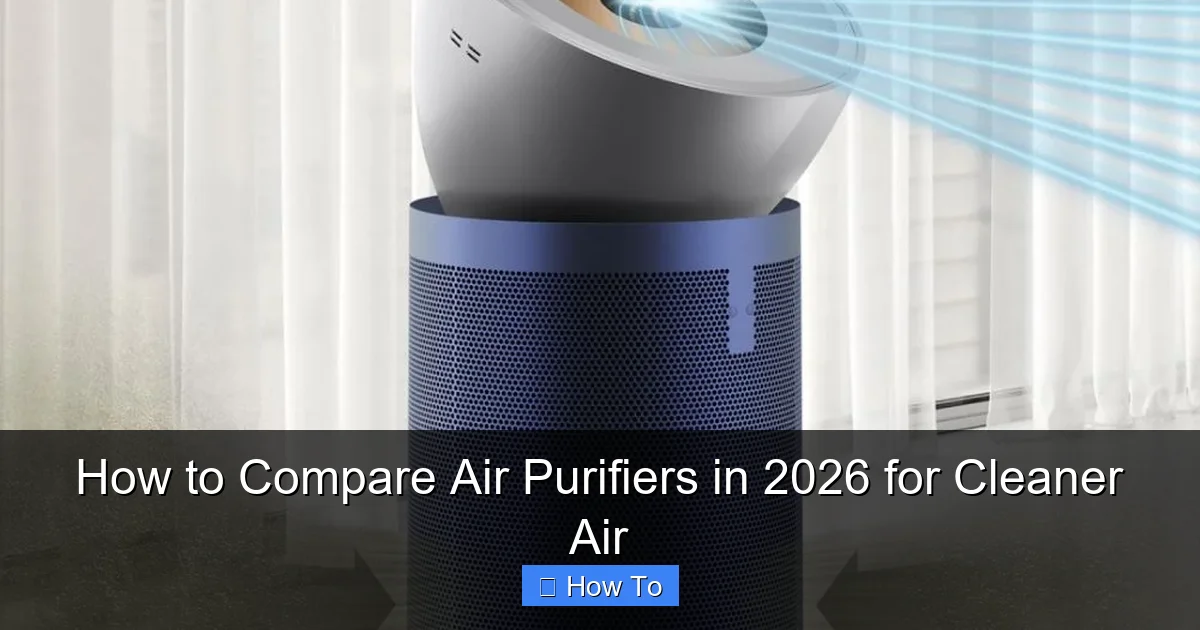
Visual guide about how to compare air purifiers
Image source: dyson-h.assetsadobe2.com
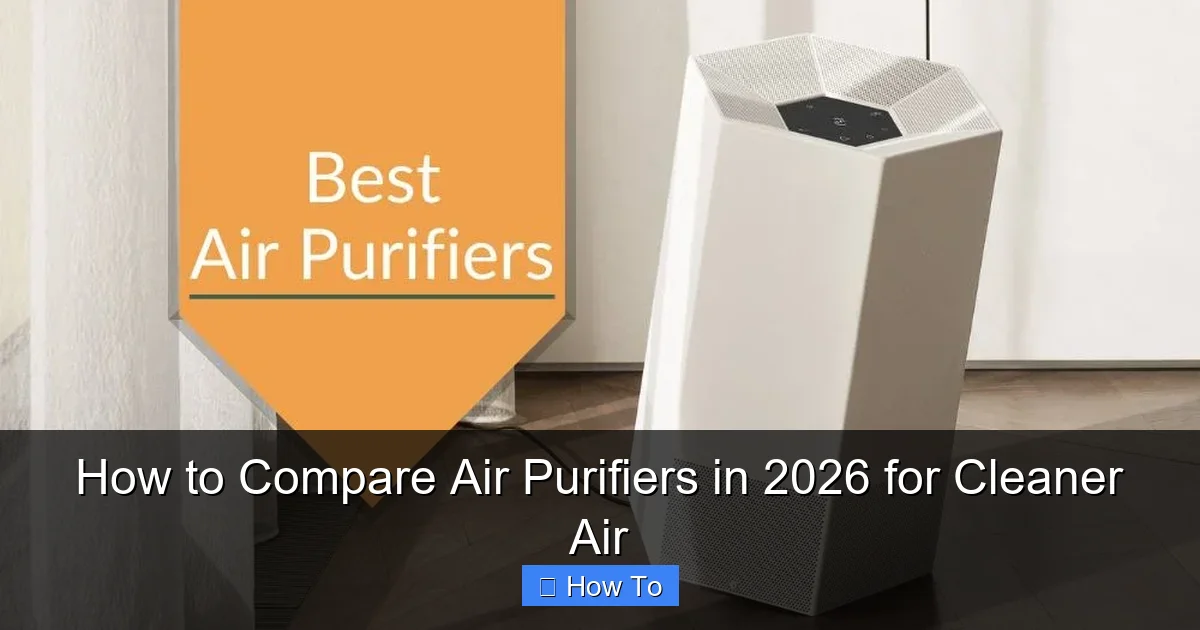
Visual guide about how to compare air purifiers
Image source: bypurify.com
Visual guide about how to compare air purifiers
Image source: panjurlilabs.com
2. Are expensive air purifiers worth it?
Not always. Some $400+ models offer marginal gains over $200 ones. Focus on filtration quality, room size match, and filter costs. A $180 Coway Mighty can outperform a $350 “smart” model with weak filters.
3. Can one purifier clean my whole house?
No. Air doesn’t flow well between rooms. Use one purifier per major space (bedroom, living room, nursery). Or get a larger unit for open-plan areas.
4. Do air purifiers help with viruses?
Yes, if they have a true HEPA filter. HEPA captures virus particles (usually attached to droplets). UV-C or PCO can add extra protection, but HEPA is the foundation. In 2026, many hospitals still rely on HEPA for infection control.
5. How often should I run my air purifier?
Ideally, 24/7. At minimum, 8–12 hours daily. Use auto mode to adjust fan speed based on air quality. Running it less defeats the purpose.
6. Are “natural” or “salt” air purifiers effective?
No. Himalayan salt lamps or “crystal purifiers” don’t clean air. They’re decorative at best. For real purification, stick with mechanical filtration (HEPA, carbon).
7. Can I use an air purifier with a window open?
Yes, but it’s less efficient. Outdoor air can bring in pollen, pollution, or humidity. If you open windows, run the purifier to maintain indoor air quality. In 2026, many models have outdoor air mode that adjusts fan speed accordingly.
Final Thoughts
Choosing an air purifier isn’t about finding the “best” one—it’s about finding the right one for your life.
By following this guide on how to compare air purifiers in 2026 for cleaner air, you’re not just buying a gadget. You’re making a decision that affects your sleep, your health, and your home’s comfort.
Start with your needs. Check the filters. Match the size. Watch the costs. Read real reviews. And don’t be dazzled by tech that doesn’t clean.
My final advice? Start simple. A true HEPA + carbon filter in the right size room will do more than any fancy feature. Run it consistently. Change the filters on time. And enjoy the quiet satisfaction of breathing easier.
Because in 2026, cleaner air isn’t a luxury—it’s a choice. And now, you know exactly how to make it.
So go ahead. Breathe deep. And let your purifier do the rest.