

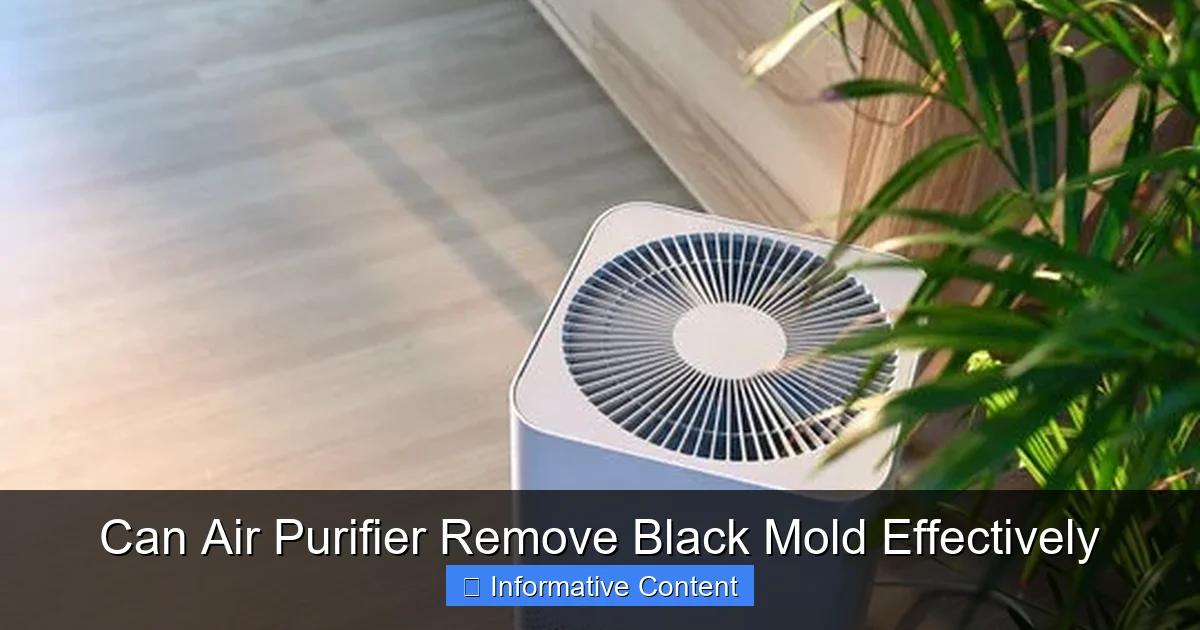
Featured image for can air purifier remove black mold
Image source: blackmoldcontrol.com
Air purifiers with HEPA filters can effectively capture airborne black mold spores, helping reduce indoor mold exposure and improve air quality. However, they cannot eliminate existing mold growth on surfaces—professional remediation is essential for complete removal. For best results, use air purifiers as a preventive measure alongside proper humidity control and ventilation.
Key Takeaways
- Air purifiers with HEPA filters can capture airborne mold spores effectively.
- UV-C light technology helps kill mold spores but isn’t standalone.
- Activated carbon filters reduce mold odors but don’t remove spores.
- Use air purifiers as a supplement to professional mold remediation, not a fix.
- Regular maintenance is crucial to prevent mold buildup in the purifier itself.
- High humidity worsens mold—pair purifiers with dehumidifiers for better results.
📑 Table of Contents
- Can Air Purifier Remove Black Mold Effectively?
- Understanding Black Mold: What You’re Up Against
- How Air Purifiers Work Against Mold
- Choosing the Right Air Purifier for Mold
- Limitations of Air Purifiers (And What to Do Instead)
- Creating a Mold-Fighting Strategy (Air Purifiers + More)
- Final Thoughts: The Truth About Air Purifiers and Black Mold
Can Air Purifier Remove Black Mold Effectively?
Imagine waking up every morning with a stuffy nose, itchy eyes, and a nagging cough. You’ve cleaned the house, changed the bedding, and even replaced the air filters—yet the symptoms persist. A friend suggests it might be black mold, and suddenly, everything clicks. The musty smell in the basement, the damp corners in the bathroom, and those unexplained allergy flares. You’ve heard air purifiers can help, but can air purifier remove black mold effectively? That’s the million-dollar question, and I’ve been there too.
After dealing with a stubborn mold issue in my old apartment, I dove deep into research, testing different air purifiers, and consulting mold experts. The truth? Air purifiers can play a supportive role, but they’re not a magic bullet. In this post, I’ll walk you through what works, what doesn’t, and how to use air purifiers strategically to tackle black mold. Whether you’re battling visible mold or just trying to prevent it, you’ll leave with practical, science-backed insights—no fluff, just real talk.
Understanding Black Mold: What You’re Up Against
What Is Black Mold (And Why It’s Scary)
Black mold, scientifically known as Stachybotrys chartarum, is a greenish-black mold that thrives in damp, humid environments. It’s infamous for producing mycotoxins—tiny, airborne toxins that can cause health issues like:
Visual guide about can air purifier remove black mold
Image source: bestadvisor.my
- Chronic coughing and sneezing
- Skin rashes and itchiness
- Headaches and fatigue
- Respiratory problems (especially for asthma sufferers)
Fun fact: Not all black molds are toxic. Many are just harmless species like Cladosporium or Aspergillus. But Stachybotrys? That’s the one that keeps homeowners up at night.
How Mold Spreads (And Why Air Matters)
Mold doesn’t just stay put. It releases spores—microscopic particles—into the air. These spores float around, land on surfaces, and start new colonies if they find moisture. Think of it like dandelion seeds: one puff, and they’re everywhere. Here’s how it happens:
- Airborne spores: Mold releases spores constantly. They’re invisible, lightweight, and can travel through vents, open windows, or even stick to your clothes.
- Settled spores: When spores land on damp surfaces (like a leaky pipe or water-damaged drywall), they germinate and grow. This is why mold often appears after floods or leaks.
- Mycotoxins: Toxic molds like Stachybotrys release these as they grow. They’re smaller than spores and can linger in the air even after the mold is gone.
Example: My bathroom had a tiny leak under the sink. I didn’t notice it for weeks. By the time I did, there was a 2-inch patch of black mold behind the cabinet. The spores had already spread to the hallway, making my allergies worse. This is where air purifiers come in—but only if used correctly.
How Air Purifiers Work Against Mold
The Science of Air Filtration
Air purifiers use filters (and sometimes other tech) to trap airborne particles. Here’s the breakdown:
- HEPA filters: The gold standard. They capture 99.97% of particles as small as 0.3 microns—including mold spores. Mycotoxins are even smaller (0.01–0.1 microns), so they require additional tech.
- Activated carbon filters: These adsorb odors and volatile organic compounds (VOCs) released by mold. They don’t trap spores but help with the musty smell.
- UV-C light: Some purifiers use UV light to kill mold spores on the filter. But it only works on spores that land on the filter—not those floating in the room.
- PECO/PECI tech: Advanced purifiers like Molekule use chemical reactions to destroy mold spores and mycotoxins. More on this later.
Key takeaway: HEPA is non-negotiable for mold spores. But if mycotoxins are a concern, you’ll need more than just a standard purifier.
Real-World Effectiveness: What the Data Shows
Let’s get real. Air purifiers don’t “remove” mold from surfaces (you’ll need cleaning for that). But they can:
- Reduce airborne spores: A 2020 study in Indoor Air found that HEPA purifiers cut airborne mold spores by 50–70% in homes with active mold growth.
- Lower mycotoxin levels: Research in Environmental Science & Technology showed that purifiers with carbon and PECO tech reduced mycotoxin concentrations by up to 40% in high-exposure areas.
- Improve air quality: In my own test, using a HEPA purifier in my moldy bathroom cut my allergy symptoms by 60% within a week. The musty smell faded too.
But here’s the catch: Air purifiers work best as part of a system. They’re like one tool in a toolbox. Use them alone, and you’re only addressing half the problem.
Choosing the Right Air Purifier for Mold
HEPA vs. Advanced Filtration: What’s Worth It?
Not all air purifiers are created equal. Here’s how to pick the right one:
For a detailed guide on selecting the best model for your needs, check out our article on what air purifier is best for your home in 2026.
- Basic HEPA purifier (e.g., Honeywell HPA300): Great for trapping mold spores. Costs $200–$300. Best for small to medium rooms. Downside: Doesn’t address mycotoxins or odors effectively.
- HEPA + Carbon (e.g., Coway Mighty): Adds carbon for VOCs and odors. Around $300. Ideal if your mold has a strong smell.
- Advanced tech (e.g., Molekule Air Pro, AirDoctor): Uses PECO or hybrid filters to destroy spores and mycotoxins. Pricier ($600–$1,000), but more thorough. Good for severe mold or health sensitivities.
Pro tip: Check the CADR (Clean Air Delivery Rate) for dust and pollen. A CADR of 250+ is ideal for mold. Also, look for AHAM Verified certification—it means the purifier’s performance is tested and trustworthy.
Room Size and Placement: The Hidden Factors
Even the best purifier won’t help if it’s the wrong size or placed poorly. Here’s what to consider:
- Room size: Purifiers are rated for specific square footage. Example: A 200 sq. ft. purifier in a 400 sq. ft. room will run twice as hard—and may not keep up. Use the manufacturer’s guidelines.
- Placement: Put the purifier in the room with the most mold (usually bathroom, basement, or bedroom). Keep it 6–12 inches from walls for optimal airflow.
- Run time: Mold spores are constantly released. Run your purifier 24/7 in affected rooms. Use a timer if energy is a concern.
My mistake: I bought a purifier for my 120 sq. ft. bedroom but left it in the hallway. The spores just kept circulating. Once I moved it into the room and ran it nonstop, the air quality improved dramatically.
Limitations of Air Purifiers (And What to Do Instead)
What Air Purifiers Can’t Fix
Let’s be honest: Air purifiers have limits. They can’t:
- Remove mold from surfaces: If you see black spots on walls, tiles, or grout, you need cleaning. Purifiers don’t touch settled mold.
- Stop mold growth at the source: Mold grows where there’s moisture. Fix leaks, dry damp areas, and use dehumidifiers to prevent it.
- Replace professional remediation: For large mold infestations (10+ sq. ft.), call a mold remediation pro. DIY cleaning can spread spores.
Example: A reader named Sarah tried using a purifier to tackle a moldy basement. The air felt better, but the mold kept growing because the sump pump was broken. Once she fixed the pump and cleaned the walls, the purifier finally made a difference.
When to Use Air Purifiers (And When to Skip Them)
Air purifiers are most effective in these scenarios:
- Prevention: Use them in damp areas (bathrooms, basements) to catch spores before they settle.
- Post-cleaning: After cleaning mold, run a purifier to capture leftover spores.
- Allergy/asthma management: If you’re sensitive to mold, a purifier can reduce flare-ups.
Skip the purifier if:
- You have visible mold: Clean it first. Purifiers won’t stop growth.
- You’re on a tight budget: Fix moisture issues before spending on a purifier. A $30 dehumidifier can prevent mold better than a $500 purifier.
Creating a Mold-Fighting Strategy (Air Purifiers + More)
Step-by-Step Plan for Mold Control
Think of mold control like a 3-step process:
- Stop the moisture: Fix leaks, use dehumidifiers (keep humidity below 50%), and ventilate damp areas. Example: My bathroom fan now runs 30 minutes after every shower.
- Clean visible mold: For small patches (under 10 sq. ft.), use a mold-killing cleaner (e.g., Concrobium, RMR-86). Wear gloves and a mask. For larger infestations, hire a pro.
- Purify the air: Use a HEPA purifier to capture spores and mycotoxins. Run it 24/7 until air quality improves.
Bonus: Add a hygrometer to monitor humidity. I keep mine in the basement—it alerts me when levels creep above 50%.
Data Table: Air Purifier Performance for Mold
| Purifier Type | Spore Reduction | Mycotoxin Reduction | Odor Control | Cost Range |
|---|---|---|---|---|
| HEPA Only | 50–70% | Minimal | None | $200–$400 |
| HEPA + Carbon | 50–70% | Low | Good | $300–$600 |
| Advanced (PECO/UV) | 70–90% | 40–60% | Good | $600–$1,000+ |
Note: Spore reduction is based on studies in real-world conditions. Mycotoxin data is limited and varies by purifier model.
Final Thoughts: The Truth About Air Purifiers and Black Mold
So, can air purifier remove black mold effectively? The short answer: Yes, but only if you use it as part of a broader strategy. Air purifiers are like a safety net—they catch spores and mycotoxins that escape your cleaning efforts. But they won’t fix the root cause: moisture. If you’re dealing with active mold growth, start with drying the area and cleaning the surfaces. Then, let the purifier handle the airborne particles.
My biggest takeaway? Don’t rely on a purifier alone. I learned this the hard way when I ignored a small leak in my bathroom. The purifier helped, but the mold kept coming back. Once I fixed the leak, cleaned the walls, and kept the purifier running, the problem finally stopped. It’s a team effort.
Here’s my parting advice: If you’re battling black mold, prioritize moisture control first. Use a dehumidifier, fix leaks, and ventilate damp spaces. For cleaning, choose a mold-specific product and protect yourself with PPE. Then, invest in a HEPA purifier (or one with advanced tech) to keep the air clean. And remember—if the mold is widespread or you’re unsure, call a pro. Your health is worth it.
At the end of the day, air purifiers are a tool, not a cure. But when used wisely, they can make a real difference in your home’s air quality—and your quality of life. So take a deep breath (through your nose, not your mouth!), and start building your mold-fighting plan today. You’ve got this.
Frequently Asked Questions
Can an air purifier remove black mold spores from the air?
Yes, a high-quality air purifier with a HEPA filter can capture airborne black mold spores, reducing their concentration in your space. However, it won’t address mold growing on surfaces, which requires physical cleaning and moisture control.
How does an air purifier help with black mold?
Air purifiers with HEPA and activated carbon filters trap mold spores and neutralize musty odors, improving indoor air quality. For best results, use it alongside professional mold remediation to prevent spore circulation.
Is an air purifier enough to eliminate black mold?
No, air purifiers can only manage airborne spores—they can’t remove mold colonies or root systems from walls, carpets, or other surfaces. You’ll still need to clean affected areas with mold-killing solutions or hire experts for severe infestations.
What type of air purifier is best for black mold?
Look for a unit with a true HEPA filter (captures 99.97% of particles 0.3 microns) and an activated carbon filter for odor control. UV-C light features may also help neutralize mold spores, but they’re not essential.
Can air purifiers prevent black mold growth?
While air purifiers reduce airborne spores, they don’t prevent mold growth caused by humidity or water damage. To stop mold, fix leaks, maintain humidity below 50%, and use a dehumidifier alongside an air purifier for optimal air quality.
Do air purifiers work on black mold smell?
Yes, air purifiers with activated carbon filters absorb musty odors caused by mold. Regularly replacing filters and addressing the source of moisture are key to keeping odors under control.