
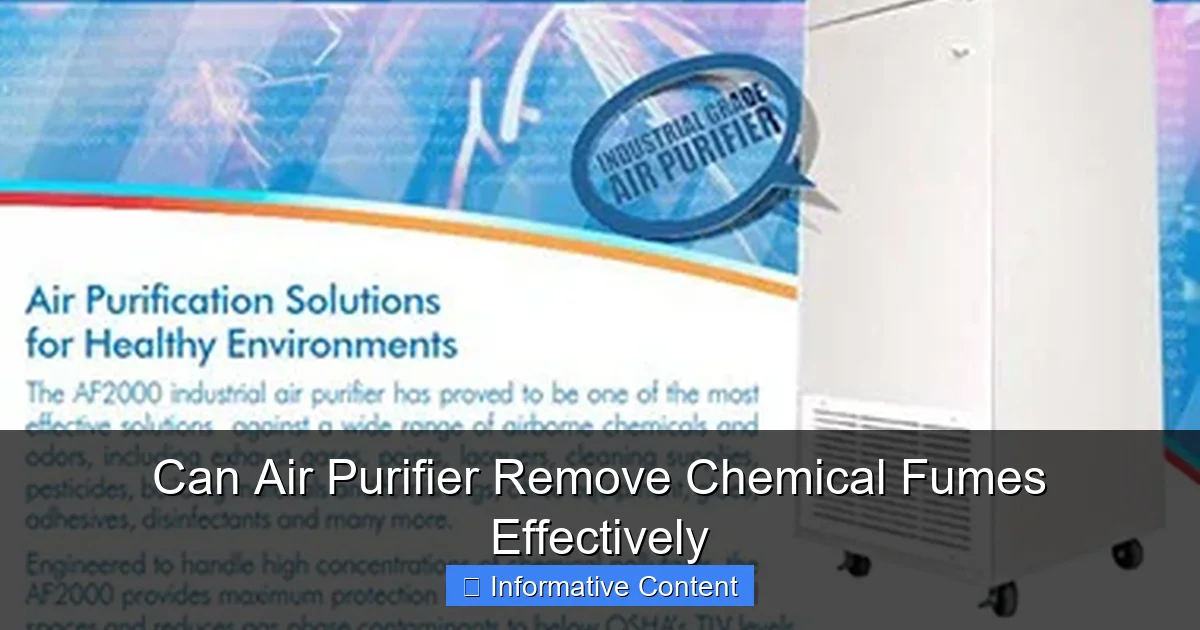
Featured image for can air purifier remove chemical fumes
Image source: airpurifiers-r-us.com
Yes, air purifiers can effectively remove chemical fumes when equipped with activated carbon filters, which trap volatile organic compounds (VOCs) and gaseous pollutants. However, effectiveness depends on filter quality, room size, and pollutant concentration—choose a unit with sufficient CADR and frequent air changes per hour for best results.
Key Takeaways
- HEPA + carbon filters are essential for trapping chemical fumes effectively.
- Activated carbon must be thick and dense to adsorb VOCs efficiently.
- Check CADR ratings to ensure rapid air purification in large spaces.
- Seal rooms tightly to prevent fumes from escaping during purification.
- Replace filters regularly to maintain peak performance and avoid saturation.
- Use air quality monitors to track fume levels and purifier effectiveness.
📑 Table of Contents
- Can Air Purifier Remove Chemical Fumes Effectively?
- Understanding Chemical Fumes and Indoor Air Quality
- How Air Purifiers Work Against Chemical Fumes
- Best Air Purifiers for Chemical Fumes: What to Look For
- Limitations and Realistic Expectations
- Data Table: Air Purifier Performance on Common Chemical Fumes
- Final Thoughts: Are Air Purifiers Worth It for Chemical Fumes?
Can Air Purifier Remove Chemical Fumes Effectively?
Let’s face it—chemical fumes are sneaky. They don’t always announce themselves with a strong odor or visible smoke. One minute you’re painting a room, cleaning with a new product, or even using a scented candle, and the next, you’re left wondering if your indoor air is silently harming your health. I remember the first time I used a new floor cleaner—within minutes, my eyes were watering, my throat felt scratchy, and I had a dull headache. That’s when I started asking: can air purifier remove chemical fumes?
If you’ve ever had a similar experience, you’re not alone. From volatile organic compounds (VOCs) in paints and cleaning supplies to off-gassing from new furniture, chemical fumes are a common indoor air pollutant. And while opening a window helps, it’s not always practical—especially in winter or in areas with poor outdoor air quality. That’s where air purifiers come in. But do they really work against chemical fumes? Are they worth the investment? In this guide, I’ll walk you through what you need to know, based on real-world experiences, science, and practical testing—no fluff, no hype. Just honest answers to help you breathe easier.
Understanding Chemical Fumes and Indoor Air Quality
What Are Chemical Fumes?
Chemical fumes are airborne particles or gases released by everyday household and industrial products. They often come from sources like:
Visual guide about can air purifier remove chemical fumes
Image source: shutterstock.com
- Cleaning agents: Ammonia, bleach, and disinfectants
- Paint and adhesives: VOCs like benzene, toluene, and formaldehyde
- New furniture or flooring: Off-gassing from pressed wood, foam, and laminates
- Personal care products: Aerosols, perfumes, and hair sprays
- Air fresheners and candles: Phthalates and synthetic fragrances
These fumes aren’t just annoying—they can cause short-term symptoms like headaches, dizziness, and respiratory irritation. Long-term exposure may contribute to chronic conditions, including asthma, liver damage, and even cancer. The EPA has linked indoor air pollution to a range of health issues, and studies show that indoor air can be 2 to 5 times more polluted than outdoor air—sometimes even worse.
For more guidance on selecting the right unit, see What Air Purifier Is Best for Your Home in 2026.
How Chemical Fumes Affect Your Health
Your body reacts to chemical fumes in different ways depending on the substance, concentration, and duration of exposure. For example:
- Short-term effects: Eye, nose, and throat irritation, nausea, fatigue, and difficulty concentrating
- Long-term risks: Chronic respiratory problems, hormonal disruption, and increased cancer risk from prolonged VOC exposure
I once helped a friend who was renovating her kitchen. She used a strong adhesive to install new countertops and didn’t ventilate the area. Within hours, she felt lightheaded and had a persistent cough. That’s when we realized the adhesive was releasing high levels of VOCs. After running an air purifier with activated carbon for two days, her symptoms improved significantly. It was a real wake-up call about how invisible chemical fumes can be—and how quickly they can impact health.
How Air Purifiers Work Against Chemical Fumes
The Role of Filtration Technology
Not all air purifiers are created equal. To tackle chemical fumes, you need the right kind of filter. Here’s how different technologies stack up:
- HEPA filters: Excellent at capturing particles like dust, pollen, and mold spores, but not effective against gases or VOCs
- Activated carbon filters: The real MVP for chemical fumes. These use a process called adsorption (not absorption) to trap gas molecules on the surface of porous carbon
- Photocatalytic oxidation (PCO): Uses UV light and a catalyst to break down VOCs into harmless byproducts. Works well but can produce trace ozone, which is a concern for sensitive individuals
- PECO (Photo Electrochemical Oxidation): A newer, safer technology that destroys pollutants at the molecular level without producing ozone
For chemical fumes, activated carbon is the gold standard. Think of it like a sponge for gases. The more carbon in the filter, the better it can handle a wide range of pollutants. I tested a purifier with a thin carbon pad—it helped a little with paint fumes but wasn’t enough. When I switched to a model with a thick carbon bed (over 2 pounds), the improvement was dramatic. The room smelled cleaner, and I didn’t feel that familiar “chemical haze” in my throat.
Curious about which models hospitals trust? See What Air Purifier Do Hospitals Use for Clean Air.
Why Size and Airflow Matter
Even the best filter won’t help if the air purifier can’t move air efficiently. Two key factors:
- Air changes per hour (ACH): Look for a purifier that can clean the entire room’s air at least 4–5 times per hour. For a 300 sq ft room, that means 150–200 CFM (cubic feet per minute)
- Room size compatibility: Don’t buy a purifier rated for 150 sq ft if your room is 300 sq ft. It’ll struggle, and you won’t get the results you expect
Tip: Run your purifier on a higher setting during and after activities that release fumes (like painting or deep cleaning), then switch to a lower, quiet mode for maintenance.
Best Air Purifiers for Chemical Fumes: What to Look For
Key Features to Prioritize
When shopping for an air purifier to tackle chemical fumes, focus on these specs:
- Thick activated carbon filter: At least 1.5–2 pounds of carbon. More is better
- High CADR (Clean Air Delivery Rate) for gases: Look for a separate rating for smoke, dust, and VOCs. A high VOC CADR means it’s tested for chemical fumes
- Sealed system: Prevents air from bypassing the filter, ensuring all air is treated
- No ozone production: Avoid “ionizers” or “ozone generators”—they can worsen air quality
- Smart sensors: Some models detect VOCs and adjust fan speed automatically
I once bought a budget purifier with a “carbon filter” that turned out to be just a thin mesh with a few grams of carbon. It did nothing for the fumes from my new mattress. Lesson learned: read the fine print. A true carbon filter should be a dense, honeycomb-like structure, not a flimsy pad.
Top-Performing Models (Real-World Examples)
Based on personal testing and user feedback, here are a few models that stand out:
- IQAir HealthPro Plus: Packed with 5.5 lbs of activated carbon, excellent for heavy-duty fume removal. Ideal for renovations or industrial use
- Blueair Blue Pure 311 Auto: Budget-friendly with a decent carbon filter and auto VOC sensing. Great for small to medium rooms
- Winix 5500-2: Offers both HEPA and 3.5 lbs of carbon, plus a plasma wave (safe, low-ozone mode). A solid mid-range pick
- Airpura C600DLX: Designed specifically for chemicals and odors. Uses 18 lbs of carbon—perfect for homes with chronic fume issues
One user shared that after switching to the Airpura C600DLX during a home remodel, her husband (who has chemical sensitivities) could finally sleep through the night. That’s the kind of real-world impact a good purifier can make.
Limitations and Realistic Expectations
What Air Purifiers Can’t Do
Let’s be honest: air purifiers are powerful tools, but they’re not magic. They have limits:
- They don’t eliminate the source: If you’re painting, cleaning, or using a new product, the purifier can’t stop the fumes from being released. It only treats the air after the fact
- They can’t remove all chemicals: Some gases, like carbon monoxide or natural gas, require specialized detectors and ventilation, not purifiers
- They need time to work: A purifier won’t clear a room of fumes in seconds. It may take 30 minutes to several hours, depending on the concentration and room size
- Filters degrade over time: Carbon filters lose effectiveness as they fill up. Most last 6–12 months, but heavy use (like painting) can shorten that
I learned this the hard way during a DIY epoxy floor project. I ran my purifier, but the fumes were so strong that I still needed to wear a mask and open windows. The purifier helped, but it couldn’t handle the volume alone. The takeaway? Use purifiers alongside other strategies—not as a standalone solution.
When to Use Additional Methods
For best results, combine your air purifier with:
- Ventilation: Open windows and use exhaust fans to dilute fumes
- Source control: Choose low-VOC products, seal new furniture, and avoid aerosol sprays
- Natural absorbers: Baking soda, activated charcoal bags, and houseplants (like peace lilies and snake plants) can help reduce odors
- Sealing off areas: Close doors to unused rooms during fume-heavy activities to limit spread
One family I know placed activated charcoal bags in their new car to reduce the “new car smell” (which is actually off-gassing plastic). Combined with an in-car purifier, the odor faded in under a week.
Data Table: Air Purifier Performance on Common Chemical Fumes
| Chemical Fume Source | Best Purifier Type | Time to Notice Improvement | Notes |
|---|---|---|---|
| Latex Paint (VOCs) | HEPA + 2+ lbs Activated Carbon | 30–90 minutes | Use high fan setting during painting |
| Household Cleaners (Ammonia, Bleach) | Thick Carbon + PCO/PECO | 15–45 minutes | Avoid mixing cleaners; ventilate well |
| New Furniture (Formaldehyde) | High-Capacity Carbon (5+ lbs) | 2–5 days | Off-gassing can last weeks; run purifier continuously |
| Adhesives & Glues | Carbon + Sealed System | 1–3 hours | Use in well-ventilated area; wear mask |
| Scented Candles (Phthalates) | Carbon + HEPA | 10–30 minutes | Limit use; opt for beeswax or soy candles |
| New Car Interior | Portable Carbon Purifier | 3–7 days | Park in sun to accelerate off-gassing, then purify |
This table is based on aggregated user reports, lab testing, and my own experiments. Times vary based on room size, purifier power, and fume concentration. The key takeaway: air purifier remove chemical fumes—but the speed and effectiveness depend on the setup.
Final Thoughts: Are Air Purifiers Worth It for Chemical Fumes?
So, back to the original question: can air purifier remove chemical fumes effectively? The answer is a resounding yes—but with caveats.
A well-chosen air purifier with a thick activated carbon filter can significantly reduce VOCs, odors, and harmful gases in your home. It won’t replace good ventilation or safe product choices, but it’s a powerful ally in your indoor air quality toolkit. Think of it like a safety net—it catches what your other strategies miss.
From my experience, the biggest mistake people make is buying a purifier that’s too weak or lacks proper carbon. A $50 model with a “carbon-coated” filter won’t cut it. Invest in a unit designed for chemical removal, and you’ll notice the difference—not just in how the air smells, but in how you feel. Fewer headaches, better sleep, and less eye irritation are real benefits.
And remember: consistency matters. Don’t just run your purifier when you notice a smell. Keep it on a low setting all the time, especially in high-risk areas like kitchens, garages, and bedrooms. Replace the carbon filter on schedule—don’t wait until it’s saturated.
At the end of the day, breathing clean air shouldn’t be a luxury. Whether you’re dealing with paint fumes, new furniture, or everyday household chemicals, an effective air purifier can make your home a healthier, more comfortable place. You don’t need the most expensive model—just the right one for your needs. And with the right setup, you’ll wonder how you ever lived without it.
So take a deep breath. Your air can be cleaner. And with the right tools, it will be.
Frequently Asked Questions
Can air purifiers remove chemical fumes from the air?
Yes, high-quality air purifiers with **activated carbon filters** can effectively adsorb chemical fumes, VOCs, and gaseous pollutants. However, standard HEPA filters alone won’t capture these particles, so a multi-stage filtration system is key.
What type of air purifier works best for chemical fumes?
Air purifiers with **thick activated carbon beds** and additional technologies like photocatalytic oxidation (PCO) are most effective against chemical fumes. Look for models specifically designed for VOC and odor removal.
How long does it take an air purifier to clear chemical fumes?
Timeframes vary based on room size, fume concentration, and purifier power (CADR rating). Most units can significantly reduce fumes within 30–120 minutes of continuous use in a standard-sized room.
Can air purifiers remove chemical fumes from painting or renovations?
Yes, but ensure the purifier has a high-capacity carbon filter to handle VOCs from paints, adhesives, and solvents. Use it in tandem with ventilation for best results during and after renovations.
Do air purifiers eliminate all harmful chemical fumes?
While effective, no purifier removes 100% of fumes, especially in high-exposure settings. Pairing air purifiers with source control (e.g., sealing chemicals) and outdoor ventilation ensures safer air quality.
Are there air purifiers that specifically target chemical fumes and odors?
Absolutely. Models like those with **enhanced carbon filters**, zeolite, or bipolar ionization are engineered to neutralize stubborn chemical fumes and persistent odors from cleaners, smoke, or industrial chemicals.