
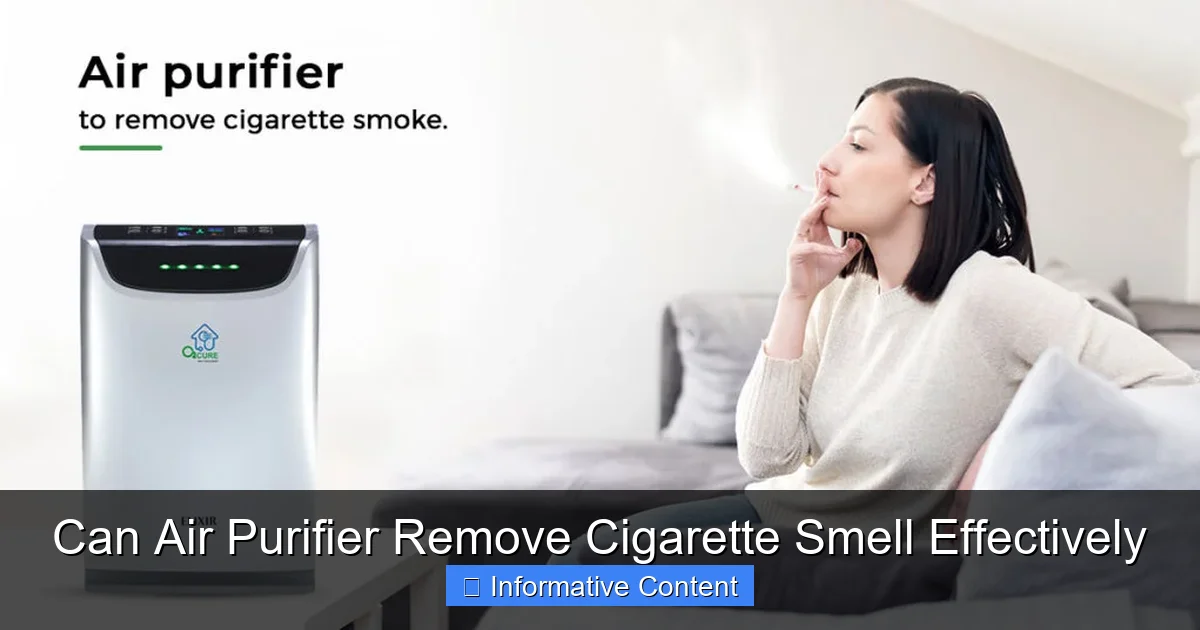
Featured image for can air purifier remove cigarette smell
Image source: o2cure.in
Yes, air purifiers can effectively remove cigarette smell when equipped with a true HEPA filter and activated carbon layer, which capture smoke particles and neutralize stubborn odors. For best results, choose a high-CADR model designed for smoke and run it continuously in the affected space to significantly improve indoor air quality and eliminate lingering tobacco smells.
Key Takeaways
- Air purifiers with HEPA filters can trap smoke particles effectively.
- Activated carbon filters are essential for neutralizing cigarette odor.
- Regular filter replacement maintains optimal odor removal performance.
- Room size matters—choose a purifier rated for your space.
- Combine with ventilation to enhance smoke smell elimination.
- No purifier eliminates all toxins—avoid smoking indoors for best results.
📑 Table of Contents
- The Lingering Ghost of Cigarette Smoke
- Understanding Cigarette Smoke: More Than Just a Smell
- How Air Purifiers Combat Cigarette Odor
- Choosing the Right Air Purifier for Smoke
- Beyond the Purifier: A Complete Smoke Removal Strategy
- Maintaining Your Purifier for Maximum Effectiveness
- Realistic Expectations and Long-Term Solutions
The Lingering Ghost of Cigarette Smoke
Remember that time you walked into a friend’s apartment and caught a whiff of stale smoke, even though no one had lit up in weeks? That’s the sneaky persistence of cigarette smell – a stubborn guest that overstays its welcome. Whether it’s from a previous tenant, a visiting relative, or a past habit, cigarette odor can embed itself into our homes like an unwelcome memory. It clings to curtains, carpets, and even our clothes, creating an atmosphere that feels anything but fresh.
If you’ve ever battled this invisible foe, you’re not alone. Many of us have wondered, “Can an air purifier remove cigarette smell effectively?” The short answer is yes – but with some important caveats. As someone who’s spent countless hours researching air purifiers (and even tested a few in my own home), I’ve learned that not all purifiers are created equal when it comes to tackling smoke odors. In this guide, we’ll explore how these devices work their magic, what to look for in a smoke-busting purifier, and realistic expectations for what they can (and can’t) do.
Understanding Cigarette Smoke: More Than Just a Smell
The Science Behind the Stench
Before we dive into solutions, let’s understand what we’re up against. Cigarette smoke isn’t just a single compound – it’s a complex cocktail of over 7,000 chemicals, including at least 70 known carcinogens. The “smell” we associate with cigarettes comes from volatile organic compounds (VOCs) like benzene, formaldehyde, and acrolein, which evaporate at room temperature and linger in the air.
Visual guide about can air purifier remove cigarette smell
Image source: afresherhome.com
What makes cigarette odor particularly persistent is how it behaves in our environment. The smoke particles range from 0.1 to 1 micron in size, small enough to penetrate deep into fabrics and upholstery but large enough to be trapped by quality filtration systems. Meanwhile, the VOCs create that distinctive “smoky” aroma that seems to seep into everything.
The Three Types of Smoke Residue
When dealing with cigarette smell, we’re actually fighting three types of residue:
- Particulate matter – Tiny smoke particles floating in the air
- Surface residue – Oily films that coat walls, furniture, and carpets
- Embedded odor – VOCs that have been absorbed into materials like drywall, wood, and fabrics
An effective air purifier tackles the first type (particulate matter) but needs help with the other two. This is why comprehensive odor removal requires a multi-pronged approach, which we’ll explore later.
A Real-World Example
My neighbor, Sarah, recently bought an older condo where the previous owner was a heavy smoker. Even after repainting and deep cleaning, the smell persisted. Her first attempt was a basic air purifier from a big-box store, which did little more than circulate the same smoky air. It wasn’t until she invested in a purifier with proper VOC filtration and combined it with surface cleaning that she started noticing real improvement – a journey that took about six weeks of consistent effort.
How Air Purifiers Combat Cigarette Odor
The Power of True HEPA Filtration
The first line of defense against cigarette smoke is a True HEPA filter (High-Efficiency Particulate Air). This type of filter captures at least 99.97% of particles as small as 0.3 microns – more than small enough to trap the majority of smoke particles. Experts recommend choosing a purifier with both HEPA and activated carbon for smoke removal.
When shopping for a purifier, look for “True HEPA” rather than “HEPA-like” or “HEPA-type” filters. The latter are often lower quality and less effective. A quality HEPA filter will have a dense weave of fibers that physically trap smoke particles as air passes through. Think of it like a net catching microscopic fish.
Activated Carbon: The VOC Warrior
Here’s where most people get surprised: HEPA filters alone can’t remove the “smell” of cigarettes – that requires activated carbon. This porous material (often made from coconut shells or bamboo) works through adsorption – a process where VOC molecules chemically bond to the carbon’s surface.
The effectiveness depends on two factors:
- Carbon quantity – More carbon means more surface area for odor molecules to bond to
- Carbon quality – Look for “activated” carbon, which is processed to maximize surface area (often 300-2,000 square meters per gram!)
I learned this the hard way when I bought a purifier with a thin carbon layer. It reduced visible smoke but did nothing for the smell. After upgrading to a model with 5 pounds of activated carbon, the difference was night and day.
Additional Technologies That Help
While HEPA and carbon are the core, some purifiers include bonus features that can help:
- Photocatalytic oxidation (PCO) – Uses UV light to break down VOCs at a molecular level
- Negative ion generators – Can help particles clump together for easier filtration (though some experts question their efficacy)
- Pre-filters – Capture larger particles like ash before they reach the HEPA filter
PCO is particularly interesting – it can actually destroy some smoke compounds rather than just trapping them. However, it’s not a replacement for carbon, as it doesn’t address all VOCs equally.
Choosing the Right Air Purifier for Smoke
Room Size Matters More Than You Think
One of the biggest mistakes people make is undersizing their purifier. Manufacturers often list the “maximum” room size, but for smoke removal, you want a purifier that can handle a room smaller than the one you’re treating. Why? Because cigarette odor removal requires multiple air changes per hour.
Look for the CADR (Clean Air Delivery Rate) number, which measures how quickly a purifier can deliver clean air. For smoke, you want a CADR of at least 200 for a 300 sq ft room. The formula: CADR (smoke) × 1.56 = approximate room size in sq ft.
Carbon Weight: The Hidden Specification
Here’s an insider tip: when comparing purifiers, check the weight of the carbon filter rather than just the presence of “carbon.” A purifier with 1 pound of carbon will be far less effective than one with 5 pounds, even if both claim to have “activated carbon filtration.”
For reference, here’s a rough guide to carbon weights for different scenarios:
| Situation | Recommended Carbon Weight |
|---|---|
| Light occasional smoking (1-2 cigarettes/week) | 1-2 lbs |
| Moderate smoking (1 pack/week) | 3-4 lbs |
| Heavy smoking or persistent odor from past use | 5+ lbs |
| Smoking room/office | 6+ lbs with high airflow |
Noise vs. Performance Trade-Offs
If you’re running the purifier in a bedroom or office, noise becomes a factor. High airflow (which you need for smoke) often means louder operation. Look for models with a “sleep mode” or low-speed setting that’s still effective. Some purifiers are designed to be quiet at high speeds – it’s worth reading reviews about noise levels before buying.
Real-World Comparison
My friend Mark compared three purifiers for his smoker’s apartment:
- Model A: $150, 0.5 lbs carbon, CADR 150 – reduced visible smoke but odor remained
- Model B: $300, 3 lbs carbon, CADR 250 – noticeable odor reduction after 2 weeks
- Model C: $500, 6 lbs carbon, CADR 350 – odor gone in 3 days, but very loud
For him, Model B offered the best balance. He uses it on high during the day and switches to sleep mode at night.
Beyond the Purifier: A Complete Smoke Removal Strategy
The Surface Cleaning Connection
Remember how we talked about smoke residue being in three places? An air purifier only handles the airborne particles. For complete odor removal, you need to address surface residue too:
- Walls and ceilings – Wash with a degreasing cleaner (oil-based smoke leaves a film)
- Floors – Steam clean carpets; mop hard floors with vinegar water (1:1 ratio)
- Furniture – Vacuum upholstery; spot clean with baking soda paste
- Windows – Clean glass and frames where smoke residue collects
One of my clients, a real estate agent, swears by this combo: “I tell sellers to deep clean surfaces first, then run purifiers for a week before showings. The difference in buyer reactions is incredible.”
Ventilation: The Underrated Hero
No purifier can replace fresh air. Open windows when possible (even briefly in cold weather) to dilute smoke concentration. Use exhaust fans in kitchens/bathrooms to create negative pressure that pulls smoky air out. If you’re a smoker trying to quit, step outside for cigarettes and keep doors/windows closed to prevent smoke from drifting inside.
The Power of Ozone (Used Carefully)
Ozone generators can be effective for smoke odor but require extreme caution. Ozone is a lung irritant, so never use these devices in occupied spaces. The proper method:
- Remove all people, pets, and plants from the room
- Run the ozone generator for several hours (follow manufacturer instructions)
- Ventilate thoroughly for at least 4 hours before re-entry
Ozone breaks down odor molecules but isn’t a substitute for cleaning or filtration. I recommend it only for severe cases where other methods have failed.
Case Study: The Rental Apartment
Sarah (from our earlier example) used this comprehensive approach:
- Week 1: Washed all walls, steam cleaned carpets, replaced air filters
- Week 2-3: Ran purifier 24/7 on high, opened windows daily
- Week 4: Added an ozone treatment (over a weekend)
- Week 5-6: Continued purifier use, added houseplants for natural VOC absorption
The result? After six weeks, even her smoking friends couldn’t detect any odor.
Maintaining Your Purifier for Maximum Effectiveness
Filter Replacement: The Non-Negotiable
Here’s a sobering fact: a clogged or exhausted filter can worsen air quality by releasing trapped particles back into the air. Follow these replacement guidelines:
- Pre-filter – Clean monthly, replace every 3-6 months
- HEPA filter – Replace every 12-18 months (sooner if used heavily)
- Carbon filter – Replace every 3-6 months (carbon gets “full” faster with smoke)
Pro tip: Write replacement dates on the filters with a marker. I learned this after my carbon filter sat exhausted for months – my apartment smelled worse than when I first bought the purifier!
Placement Matters More Than You Think
Where you put your purifier dramatically affects its performance:
- Elevation – Place on a table or shelf, not the floor (smoke rises)
- Obstructions – Keep at least 12 inches from walls and furniture
- Location – Position near the odor source (e.g., smoking area) but not directly next to it (to avoid overwhelming the filter)
I keep my purifier on a bookshelf in the living room, angled to pull air from my kitchen where cooking sometimes creates smoke.
Monitoring Progress and Troubleshooting
Track your progress with these methods:
- Odor journal – Note daily smell levels (1-10 scale)
- Smoke test – Light a match and note how long the smell lingers
- Filter inspection – Check pre-filters for visible ash buildup
If you’re not seeing improvement after 2 weeks:
- Verify your purifier is appropriately sized
- Check for air leaks (doors, windows) letting in outside smoke
- Ensure you’re running it enough (24/7 for persistent odor)
- Consider adding a second purifier in the problem area
Realistic Expectations and Long-Term Solutions
Timeframes for Odor Removal
Be patient – cigarette smell removal isn’t instant. Here’s what to expect:
- Light odor (1-2 cigarettes/day): 1-2 weeks with proper purifier
- Moderate odor (1 pack/day): 3-6 weeks with comprehensive approach
- Heavy odor (former smoker’s home): 1-3 months (may require ozone or professional cleaning)
The first few days might feel disappointing – the purifier reduces visible smoke but the smell remains. Stick with it! Carbon takes time to adsorb VOCs.
When to Consider Professional Help
For severe cases, professionals have tools you don’t:
- Thermal foggers – Disperse odor-neutralizing compounds into hard-to-reach areas
- Encapsulation – Seal odor in walls and ceilings with special paint
- HVAC cleaning – Remove smoke residue from ductwork
My friend Tom spent $200 on a pro treatment for his smoker’s rental. “Worth every penny,” he says. “The tenant complaints stopped immediately.”
The Quitting-Smoking Bonus
If you’re a smoker using purifiers to manage odor, consider this: every cigarette you don’t smoke is a step toward eliminating the problem permanently. Purifiers help, but nothing beats removing the source. Many quitters find their purifier becomes unnecessary within months of quitting – a powerful incentive.
The Bottom Line
Can air purifiers remove cigarette smell effectively? Absolutely – but they’re part of a solution, not a magic bullet. The right purifier (HEPA + substantial carbon) combined with surface cleaning, ventilation, and patience can eliminate even stubborn smoke odor. It’s not always quick or easy, but with the right approach, fresh air is possible.
From my own journey and countless conversations with others, I’ve learned that success comes from treating smoke odor as a multi-layered problem with multi-pronged solutions. Start with a quality purifier, commit to the process, and don’t get discouraged by the initial lack of progress. Before you know it, you’ll open your door and be greeted by clean, fresh air instead of the ghost of cigarettes past.
Frequently Asked Questions
Can an air purifier remove cigarette smell from a room?
Yes, a high-quality air purifier with a true HEPA filter and activated carbon can effectively reduce cigarette odor by trapping smoke particles and absorbing volatile organic compounds (VOCs). For best results, run the purifier continuously in the affected space.
How long does it take for an air purifier to eliminate cigarette smoke smell?
The timeframe depends on room size and purifier strength, but noticeable improvement often occurs within 2-4 hours of continuous use. Persistent odors may require 24-48 hours to fully dissipate, especially in heavily smoked areas.
What type of air purifier is best for removing cigarette smell?
For cigarette smell removal, choose an air purifier with both a medical-grade HEPA filter (to capture fine smoke particles) and a thick activated carbon filter (to neutralize odor molecules). Units with higher CADR ratings for smoke work fastest.
Do air purifiers remove thirdhand smoke residue from surfaces?
While air purifiers can’t clean residue from walls or furniture, they help by reducing airborne particles that settle as thirdhand smoke. Combine with thorough surface cleaning for complete odor elimination.
Can air purifier remove cigarette smell from clothes and fabrics?
Air purifiers can reduce lingering smoke odors from fabrics by filtering airborne particles, but direct treatment (like washing or steaming) works better. Place the purifier near upholstered furniture or curtains for improved results.
Why does cigarette smell return after using an air purifier?
Odors often return if the purifier lacks sufficient activated carbon or if smoke residue remains embedded in carpets/walls. Ensure proper filter maintenance and deep-clean surfaces to prevent recontamination.