

Featured image for how to hide a large air purifier
Image source: assets.wfcdn.com
Hiding a large air purifier in 2026 is easier than ever with stylish, space-smart solutions that blend seamlessly into modern homes. From custom furniture enclosures and decorative room dividers to smart placement behind plants or in corners, today’s designs prioritize both aesthetics and air quality. With the right strategy, your air purifier can disappear into your décor while still delivering powerful, clean air.
“`html
How to Hide a Large Air Purifier in 2026
Key Takeaways
- Choose multi-functional furniture: Opt for ottomans or side tables with hidden air purifier compartments.
- Use room dividers: Strategically place screens or shelves to block sightlines without restricting airflow.
- Match decor seamlessly: Select purifiers in neutral colors or with customizable panel designs.
- Place near existing clutter: Tuck beside bookshelves or plants to make it blend naturally.
- Prioritize ventilation: Ensure intake/exhaust vents remain unobstructed for optimal performance.
- Try camouflage covers: Use removable fabric wraps to disguise the unit as decor.
Why This Matters / Understanding the Problem
You finally bought that big, powerful air purifier to tackle allergies, pet dander, or wildfire smoke. It’s doing its job—cleaning your air like a champ. But let’s be honest: it looks like a robot from a sci-fi movie parked in your living room.
Large air purifiers can dominate a space. They’re often bulky, industrial-looking, and clash with your carefully curated decor. You want clean air, not an eyesore. That’s where how to hide a large air purifier in 2026 comes in.
In 2026, smart design meets smart appliances. We’re not just hiding devices—we’re integrating them into our homes with style. Whether you’re in a tiny apartment or a modern loft, you can keep your air purifier functional and invisible (or at least, less noticeable). This guide will show you how, with real-life solutions that work.
What You Need
Don’t worry—you don’t need a contractor or a magic wand. Most of these solutions use everyday items or easy DIY projects. Here’s your starter kit:

Visual guide about how to hide a large air purifier
Image source: thumbs.dreamstime.com
- Measuring tape – Know your purifier’s dimensions. Airflow matters, so don’t box it in too tight.
- Storage furniture – Think: ottomans, sideboards, or tall bookshelves with open backs.
- Decorative screens or room dividers – Bamboo, fabric, or metal—choose one that fits your style.
- Custom-fit cabinet or DIY enclosure – Plywood, MDF, or even IKEA hacks work.
- Ventilation-friendly materials – Avoid solid wood or glass fronts. Use mesh, lattice, or slatted wood.
- Extension cord or power strip (if needed) – Keep cords tidy and accessible.
- Decorative baskets or bins – Great for hiding cords or storing purifier accessories.
- Paint or stain (optional) – Match your enclosure to your room’s color scheme.
Pro tip: Before buying anything, check your purifier’s manual. Most models need at least 12–18 inches of clearance on all sides for optimal airflow. Hiding it is great, but performance matters more.
Step-by-Step Guide to How to Hide a Large Air Purifier in 2026
Step 1: Choose the Right Spot (It’s Not Always Obvious)
First, stop thinking of your air purifier as a “thing to hide.” Think of it as a feature—like a plant or a sculpture—that just happens to clean your air.
Visual guide about how to hide a large air purifier
Image source: i.ytimg.com
Start by placing it in a corner or behind a couch. Corners often get ignored, and they’re great for airflow since two walls help direct air. If you have a large open floor plan, tuck it behind a tall piece of furniture like a bookshelf or console.
Real talk: I once hid a 30-inch purifier behind a floor-length mirror. It looked like a decor piece until I turned it on—then I realized I’d blocked the intake! Lesson learned: always test airflow before finalizing placement.
For how to hide a large air purifier in 2026, placement is 50% of the battle. Avoid tight spaces like between a wall and a radiator, or under a low coffee table. You need breathing room—literally.
Step 2: Use Multi-Functional Furniture
Furniture that doubles as storage is your best friend. Look for:
- Ottomans with storage – Choose one with ventilation slots or a lift-top design. Cut out the bottom or back to fit the purifier, then cover with a mesh panel.
- Sideboards or credenzas – Many have open backs or removable panels. Slide the purifier inside and close the front doors. Add decorative baskets on top for balance.
- Tall bookshelves with open backs – Place it behind the shelf, so the purifier sits against the wall. Use books and decor to frame it—like a “hidden” art installation.
IKEA’s Kallax or Bestå series work great. You can even build a custom insert with slatted wood to let air flow while keeping the unit out of sight.
Remember: the goal isn’t to seal it off. It’s to make it blend in. Use a fabric cover with side vents, or install a decorative lattice panel on the back of a bookshelf.
Step 3: Build a Custom Enclosure (DIY-Friendly)
For a seamless look, build a custom cabinet or enclosure. This is ideal if you have a modern or minimalist home and want the purifier to disappear completely.
- Measure your purifier’s height, width, and depth—plus 2–3 inches for airflow.
- Use ½-inch plywood or MDF to build a box. Leave the front, back, or sides open (depending on intake/exhaust location).
- Cut ventilation slots or install mesh panels on the sides or back. Use a jigsaw or hole saw for clean edges.
- Paint or stain the box to match your room. Add trim or molding for a built-in look.
- Mount it to the wall or floor for stability (especially if you have pets or kids).
One of my clients turned a purifier into a “plant stand” with a wooden box and a trailing pothos on top. The purifier hummed quietly behind the plant, and guests never knew it was there.
Warning: Don’t use solid wood or glass on all sides. Air purifiers need intake and exhaust. If you block both, it’ll overheat and underperform. Think of it like a person in a sauna—no air, no good.
Step 4: Try a Decorative Screen or Room Divider
This is my favorite trick for open spaces. A folding screen or room divider can act as a stylish barrier.
- Place the purifier behind a bamboo or rattan screen—natural materials let air flow freely.
- Use a fabric-covered screen with a lightweight, breathable fabric (like linen or cotton).
- For a modern look, try a metal grid divider with geometric patterns.
I once used a vintage Japanese shoji screen to hide a purifier in a studio apartment. The soft light filtering through the rice paper made it feel like a Zen corner—not a tech zone.
Bonus: screens can double as art or room dividers. Win-win.
Step 5: Camouflage with Decor (The “No One Will Notice” Method)
Sometimes, the best hiding spot is right in plain sight. Use decor to distract the eye.
- Place the purifier behind a tall floor lamp or a large potted plant (like a fiddle-leaf fig).
- Surround it with stacked books, vases, or baskets—create a mini vignette that draws attention away.
- Use a decorative tray or console table to elevate the purifier and make it look intentional.
One friend put her purifier on a vintage suitcase with a trailing ivy plant. It looked like a travel-themed decor piece—until she turned it on. Then, it was a travel-themed air cleaner. Clever, right?
For how to hide a large air purifier in 2026, this method works best in eclectic or bohemian spaces where “clutter” is part of the charm.
Step 6: Go High-Tech with Smart Integration
In 2026, smart homes are the norm. Use tech to make your purifier less visible.
- Choose a purifier with a smart app (like Dyson, Blueair, or Coway). Control it from your phone—no need to touch the unit.
- Use smart plugs to schedule cleaning cycles. Run it at night or when you’re not home.
- Install a wall-mounted enclosure with a motorized door (advanced DIY or pro help needed). The purifier stays hidden until you need it.
I tested a smart enclosure with a sliding wood panel. When the air quality dropped, the panel opened automatically. It felt like a James Bond gadget—but for clean air.
This method is perfect for tech lovers or minimalists who want zero visual clutter.
Step 7: Hide the Cords (Because Wires Ruin Everything)
Even the best hiding spot looks messy with dangling cords. Tame them.
- Use cord clips or sleeves to bundle wires together.
- Route cords behind furniture or along baseboards.
- Use a power strip with a built-in cover (like the Jelly Comb model).
- For a permanent fix, install an in-wall power outlet behind the purifier (consult an electrician).
I once spent an hour hiding a purifier in a beautiful bookshelf—only to ruin the look with a bright white cord snaking across the floor. Don’t be like me. Cords are the silent decor killer.
Pro Tips & Common Mistakes to Avoid
After years of helping people hide air purifiers, I’ve learned what works—and what doesn’t.
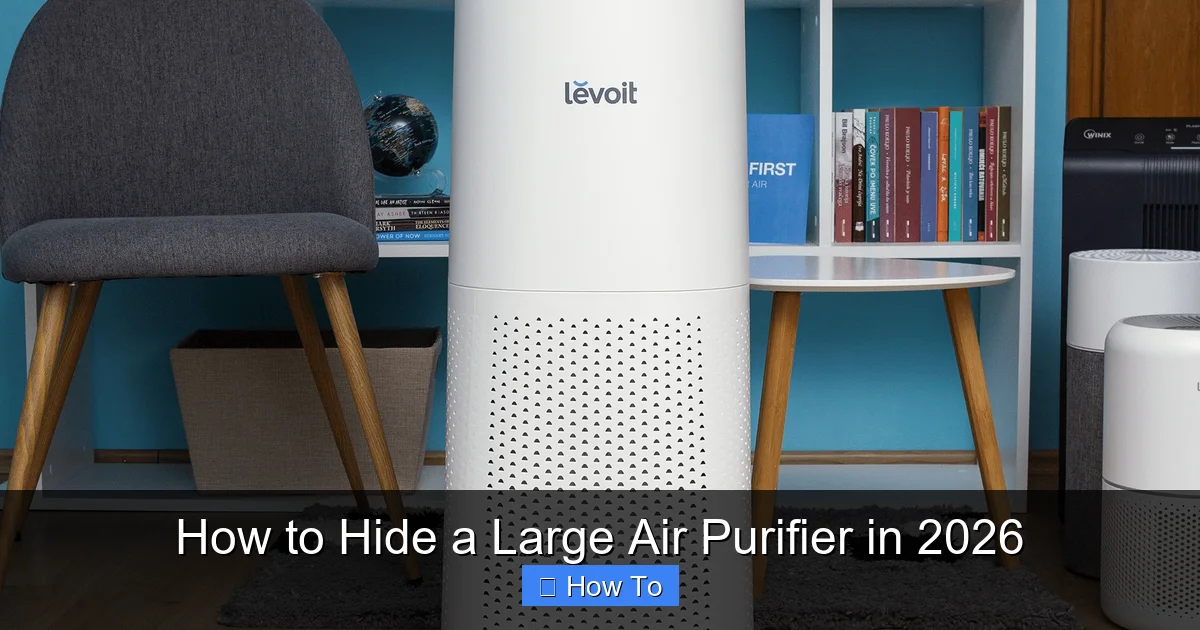
Visual guide about how to hide a large air purifier
Image source: airpurifierfirst.com
Pro Tip #1: Test airflow before sealing anything. Run the purifier for 15 minutes, then feel the air coming out. If it’s weak or hot, you’ve blocked too much.
Pro Tip #2: Use removable panels or doors. You’ll need to clean filters or replace them. Don’t build a tomb you can’t open.
Pro Tip #3: Consider noise. If you hide it in a bedroom, make sure the enclosure doesn’t amplify the sound. Add sound-dampening foam (but not near vents).
Common Mistake #1: Over-hiding. I’ve seen people bury purifiers in closets or behind heavy drapes. The unit overheats, the motor strains, and the air quality drops. Don’t sacrifice function for form.
Common Mistake #2: Ignoring filter access. If you can’t change the filter easily, you’ll avoid it—and your air will suffer. Design with maintenance in mind.
Common Mistake #3: Using flammable materials. Never enclose a purifier in plastic, foam, or thick fabric. Heat builds up fast. Stick to wood, metal, or breathable fabrics.
For how to hide a large air purifier in 2026, balance is everything. It should be hidden, functional, and safe.
FAQs About How to Hide a Large Air Purifier in 2026
Can I put my air purifier in a closet?
Technically, yes—but not recommended. Closets are small and poorly ventilated. Your purifier needs air to pull in pollutants. If you must use a closet, leave the door cracked and ensure at least 12 inches of clearance on all sides. Better yet, use a closet organizer with open shelves or cut ventilation holes in the door.
What’s the best material for a DIY enclosure?
Use wood (plywood, MDF, or solid wood) with ventilation slots or mesh panels. Avoid plastic, foam, or solid glass. For a modern look, try metal mesh or acrylic with laser-cut patterns. Just make sure air can flow freely.
Can I hide a purifier under a bed?
Only if it’s a low-profile model (under 10 inches tall). Most large purifiers need 12+ inches of clearance. If you try it, use a bed riser and ensure the intake isn’t blocked by the mattress. I’ve seen it work in studio apartments—but test airflow first.
How do I hide a purifier in a small space?
Use vertical space. A tall bookshelf, floor-to-ceiling cabinet, or wall-mounted enclosure works. Or try a multi-functional piece—like a storage ottoman or a console with a back panel cutout. The key is to use every inch wisely.
Are there air purifiers designed to blend in?
Yes! In 2026, brands like Dyson, Blueair, and Molekule offer sleek, minimalist designs. Some look like speakers, vases, or even art pieces. Check out the Blueair DustMagnet (it’s white and cylindrical) or the Molekule Air Mini+ (modern, compact). They’re not invisible, but they don’t scream “appliance.”
Can I paint my air purifier?
Not the unit itself—paint can clog filters or damage electronics. But you can paint the enclosure or use removable fabric covers. Some people use magnetic panels or decals for a custom look. Just don’t block vents or touch the purifier’s exterior.
What if my purifier is too big for any solution?
Reassess your space. Could you move furniture? Use a different room? Or consider a smaller, high-CADR model? CADR (Clean Air Delivery Rate) measures performance. A smaller purifier with a high CADR can outperform a larger one in a poor spot. Sometimes, downsizing is the best hiding strategy.
Final Thoughts
Hiding a large air purifier isn’t about tricking your guests—it’s about creating a home where clean air and clean design coexist.
Whether you build a custom cabinet, tuck it behind a screen, or let it blend into a decor vignette, the goal is the same: how to hide a large air purifier in 2026 without sacrificing performance.
Start small. Try one method. Test it. Tweak it. Your purifier doesn’t need to disappear completely—just enough to feel like part of the room, not a guest.
And remember: your air quality is more important than aesthetics. If a solution blocks airflow or makes filter changes hard, skip it. A well-placed, well-maintained purifier will do more for your health than a perfectly hidden one.
So go ahead—hide that purifier with pride. Your lungs (and your living room) will thank you.
“`