
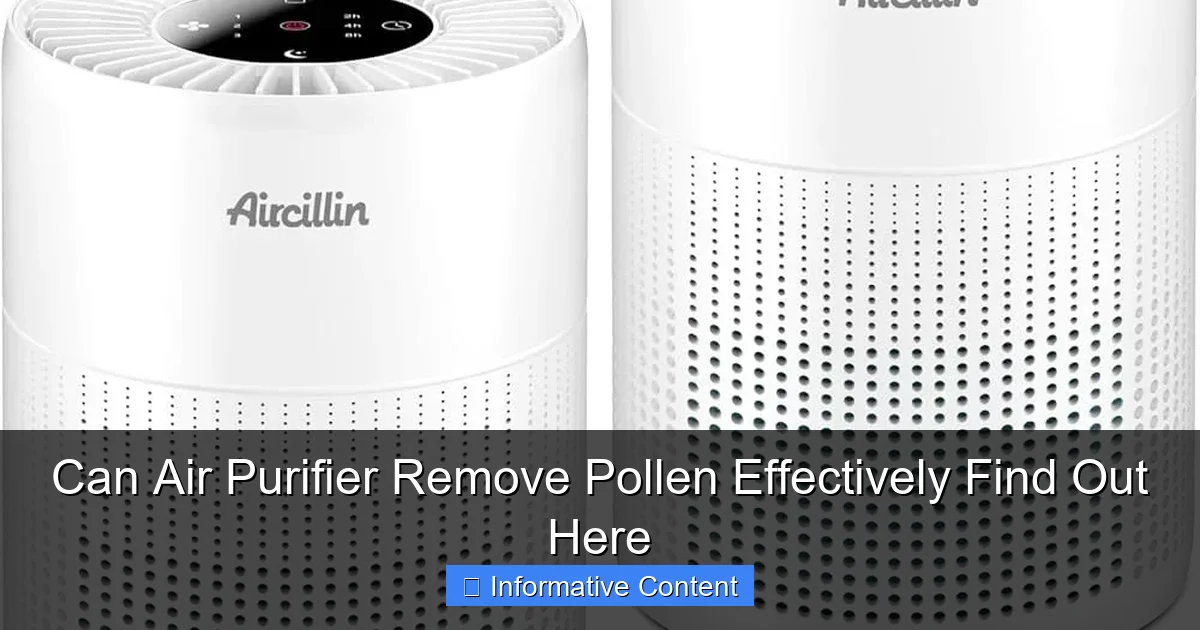
Featured image for can air purifier remove pollen
Image source: airpurifierissues.com
Yes, air purifiers can effectively remove pollen from indoor air, especially those equipped with HEPA filters that capture particles as small as 0.3 microns. By continuously filtering the air, these devices significantly reduce pollen levels, helping allergy sufferers breathe easier—making them a smart, science-backed solution for cleaner indoor environments.
Key Takeaways
- HEPA filters capture 99.97% of pollen particles effectively.
- Run purifiers continuously during high pollen seasons for best results.
- Choose the right size to match your room’s square footage.
- Close windows to prevent new pollen from entering your space.
- Replace filters regularly to maintain peak performance.
- Combine with cleaning to reduce settled pollen on surfaces.
📑 Table of Contents
- Can Air Purifier Remove Pollen Effectively? Find Out Here
- Understanding Pollen and Why It’s Hard to Escape
- How Air Purifiers Work to Capture Pollen
- Top Air Purifier Features for Pollen Removal
- Real-World Examples: Air Purifiers That Excel at Pollen Removal
- Tips to Maximize Pollen Removal at Home
- Air Purifier Performance Comparison: Pollen Removal
- Conclusion: Do Air Purifiers Really Remove Pollen?
Can Air Purifier Remove Pollen Effectively? Find Out Here
Spring is in the air—literally. For millions of people, that means blooming flowers, longer days, and… sneezing, itchy eyes, and a runny nose that just won’t quit. If you’re one of the 25 million Americans who suffer from seasonal allergies, you know how relentless pollen can be. It sneaks into your home through open windows, clings to your clothes, and even rides in on your pet’s fur. You might be wondering: Can an air purifier actually remove pollen from the air? The short answer? Yes—but not all air purifiers are created equal.
I remember the first spring after moving into my new apartment. I woke up every morning with itchy eyes and a stuffy nose, even though I kept my windows closed. I blamed everything—dust, pet dander, even my new couch. But after tracking my symptoms and doing a little research, I realized the culprit was pollen. That’s when I decided to invest in an air purifier. I wasn’t sure if it would help, but I was desperate for relief. Spoiler alert: it worked. Not overnight, but within a few days, my symptoms noticeably improved. That personal experience sparked my curiosity: How exactly do air purifiers tackle pollen, and which ones are actually effective? In this guide, I’ll walk you through everything you need to know—from how pollen behaves in indoor air to what features to look for in a purifier that actually works.
Understanding Pollen and Why It’s Hard to Escape
Pollen is nature’s way of helping plants reproduce, but for allergy sufferers, it’s more of a nuisance than a miracle. These tiny, powdery particles are released by trees, grasses, and weeds, especially during spring and early summer. They’re so small—typically between 10 and 100 micrometers in diameter—that they can float in the air for hours, travel miles on the wind, and easily slip through cracks in windows and doors.
Visual guide about can air purifier remove pollen
Image source: images.nexusapp.co
How Pollen Enters Your Home
Even if you keep your windows shut, pollen finds a way in. It clings to clothing, shoes, and hair when you come inside. Pets are another major carrier—dogs and cats can bring in significant amounts of pollen on their fur after a walk or playtime outdoors. Once inside, pollen settles on surfaces like carpets, furniture, and bedding, only to get stirred back into the air when you walk around or vacuum.
The Health Impact of Indoor Pollen
For people with pollen allergies, even low concentrations can trigger symptoms like sneezing, congestion, itchy eyes, and even asthma flare-ups. Long-term exposure can lead to chronic sinus issues and reduced quality of sleep. What’s worse, many people don’t realize that indoor pollen levels can sometimes be higher than outdoor levels, especially during peak allergy season. That’s why simply staying indoors isn’t always enough—you need a strategy to clean the air you’re breathing.
Why Regular Cleaning Isn’t Enough
Vacuuming and dusting help, but they’re not enough to eliminate airborne pollen. Standard vacuum cleaners can actually worsen the problem by kicking up settled pollen into the air. Similarly, wiping surfaces only removes what’s visible—most pollen particles remain suspended in the air, invisible to the naked eye. This is where air purifiers come in. They’re designed to capture these microscopic invaders before they can trigger your allergies.
How Air Purifiers Work to Capture Pollen
Air purifiers don’t “kill” pollen—they trap it. Think of them like high-tech air filters that continuously cycle the air in a room, pulling in contaminated air and pushing out cleaner air. But not all purifiers use the same technology, and some are far better at catching pollen than others.
HEPA Filters: The Gold Standard for Pollen Removal
The most effective air purifiers for pollen use HEPA (High-Efficiency Particulate Air) filters. True HEPA filters are certified to capture at least 99.97% of particles as small as 0.3 microns—smaller than most pollen grains. That means they’re incredibly efficient at trapping tree, grass, and weed pollen, which typically range from 10 to 100 microns.
For example, a HEPA filter can catch pollen from ragweed (about 18–22 microns), birch trees (20–25 microns), and even smaller grass pollens. Because pollen is relatively large compared to other airborne particles, HEPA filters are especially effective against it. In fact, studies have shown that using a HEPA air purifier can reduce indoor pollen concentrations by up to 90% within a few hours of operation.
Other Filtration Technologies: What Works and What Doesn’t
While HEPA is the gold standard, some air purifiers use alternative technologies. Here’s a quick breakdown:
- Activated Carbon Filters: Great for odors and gases, but not designed to capture pollen. Often used in combination with HEPA filters.
- Ionic Purifiers (Ionizers): Release charged ions that attach to particles like pollen, causing them to fall out of the air. However, they don’t remove the particles—they just make them settle on surfaces, where they can be stirred up again. Some also produce ozone, a lung irritant.
- UV-C Light: Kills bacteria and viruses but has little effect on pollen, which is not a living organism. UV light alone won’t remove pollen from the air.
- Electrostatic Precipitators: Similar to ionizers, they charge particles and collect them on plates. They can be effective but require frequent cleaning and may also produce small amounts of ozone.
For pollen removal, a HEPA-based purifier is your best bet. Look for models that specifically mention “true HEPA” or “HEPA-type” filters—though be cautious, as “HEPA-type” isn’t held to the same standard as true HEPA.
Airflow and Room Size Matter
Even the best filter won’t help if the purifier isn’t moving enough air. The effectiveness of an air purifier depends on its CADR (Clean Air Delivery Rate)—a measure of how quickly it can clean the air in a given space. For pollen, look for a CADR rating of at least 200–300 for a standard bedroom (about 300–400 square feet).
Also, make sure the purifier is sized for your room. A small unit in a large living room will struggle to make a difference. Most manufacturers provide a recommended room size—stick to that or go one size up for better performance.
Top Air Purifier Features for Pollen Removal
Not all air purifiers are built the same, and when it comes to pollen, certain features make a big difference. Here’s what to look for when shopping for a purifier that actually works.
True HEPA Filtration
This is non-negotiable. As mentioned earlier, true HEPA filters are the only ones proven to capture 99.97% of particles down to 0.3 microns. Since most pollen grains are larger than that, they’re easily trapped. Avoid “HEPA-like” or “HEPA-style” filters—they don’t meet the same standards and may let pollen slip through.
High CADR Rating for Pollen
The CADR rating tells you how fast the purifier can remove specific pollutants. Look for a model with a high CADR for pollen—ideally 250 or higher. This ensures the unit can cycle the air in your room multiple times per hour, keeping pollen levels low.
Multiple Fan Speeds and Auto Mode
A purifier with multiple fan speeds lets you adjust the airflow based on need. On high, it can quickly reduce pollen after you’ve been outside. On low, it can run quietly at night. Even better: some models have an auto mode that uses a built-in sensor to detect air quality and adjust fan speed automatically. This is great for maintaining clean air without constant manual adjustments.
Sealed System Design
A well-designed air purifier should have a sealed system, meaning air can only enter and exit through the filter. This prevents unfiltered air from leaking around the edges, which can reduce efficiency. Look for models that advertise a “sealed” or “airtight” design.
Filter Replacement Indicators
HEPA filters don’t last forever—typically 6 to 12 months, depending on usage and air quality. A filter replacement indicator helps you know when it’s time to swap it out. Running a purifier with a clogged filter reduces airflow and effectiveness, so this feature is worth the extra cost.
Quiet Operation
If you plan to run the purifier in your bedroom, noise matters. Look for models with a low decibel rating on the lowest fan setting—ideally under 30 dB, which is about the sound of a whisper. Many modern purifiers are designed to be nearly silent on low, making them perfect for nighttime use.
Real-World Examples: Air Purifiers That Excel at Pollen Removal
Let’s look at a few real-world examples of air purifiers that have proven effective against pollen, based on user reviews, independent testing, and expert recommendations.
Blueair Blue Pure 211+
This popular model uses a combination of a washable pre-filter and a true HEPA filter. It’s designed for rooms up to 540 square feet and has a high CADR of 350 for pollen. Users report noticeable relief from allergy symptoms within days of use. The washable pre-filter helps capture larger particles like pet hair and dust, extending the life of the main HEPA filter.
Levoit Core 300
A budget-friendly option with true HEPA filtration, the Levoit Core 300 is ideal for small to medium rooms (up to 219 square feet). It has a CADR of 141 for pollen and operates quietly on low. Many allergy sufferers praise its effectiveness and value for money. It also includes a filter replacement indicator and three fan speeds.
Winix 5500-2
This mid-range purifier features true HEPA filtration, a washable AOC carbon filter, and PlasmaWave technology (which reduces odors without producing harmful ozone). It’s suitable for rooms up to 360 square feet and has a pollen CADR of 232. Users love the auto mode, which adjusts fan speed based on air quality, and the sleek design that fits well in living rooms or bedrooms.
Dyson Purifier Humidify+Cool Formaldehyde
For those willing to invest in a premium model, this Dyson combines air purification, humidification, and cooling. It uses a sealed HEPA 13 filter (even more efficient than standard HEPA) and can capture pollen, bacteria, and even formaldehyde. It’s ideal for large spaces and includes a real-time air quality display. While pricey, it’s a top performer for serious allergy sufferers.
Tips to Maximize Pollen Removal at Home
An air purifier is a powerful tool, but it works best as part of a comprehensive allergy management plan. Here are some practical tips to reduce pollen exposure and get the most out of your purifier.
Run the Purifier Continuously
Pollen levels can spike throughout the day, especially on windy days. For best results, run your air purifier 24/7 on the lowest setting. This keeps the air consistently clean without overworking the unit. If your model has an auto mode, even better—it will ramp up when needed and conserve energy when air quality is good.
Place It Strategically
Position your purifier in the room where you spend the most time—usually the bedroom or living room. Keep it at least a few feet away from walls and furniture to allow proper airflow. Avoid placing it behind curtains or in corners, where air circulation is limited.
Keep Windows and Doors Closed
During high pollen seasons, keep windows and doors shut, especially on windy days. Use air conditioning instead of opening windows to cool your home. If you must open a window, do so briefly and run the purifier on high afterward to clear the air.
Change Filters on Schedule
A dirty filter is a useless filter. Follow the manufacturer’s recommendation for filter replacement—usually every 6 to 12 months. If you have pets or live in a high-pollen area, you may need to replace it more often. Some models have indicators, but it’s good to check visually every few months.
Combine with Other Allergy-Reducing Habits
- Shower after being outdoors: Pollen clings to your skin and hair. A quick shower before bed can prevent it from transferring to your bedding.
- Wash bedding weekly: Use hot water (at least 130°F) to kill dust mites and remove pollen.
- Use a dehumidifier: While not directly related to pollen, reducing indoor humidity (below 50%) can help prevent mold, another common allergen.
- Vacuum with a HEPA vacuum: Regular vacuums can stir up pollen. Use a vacuum with a HEPA filter to trap particles instead of releasing them back into the air.
Air Purifier Performance Comparison: Pollen Removal
| Air Purifier Model | Filtration Type | CADR (Pollen) | Room Size | Key Features |
|---|---|---|---|---|
| Blueair Blue Pure 211+ | True HEPA + Pre-filter | 350 | 540 sq ft | Washable pre-filter, quiet operation, energy-efficient |
| Levoit Core 300 | True HEPA | 141 | 219 sq ft | Compact, budget-friendly, filter indicator |
| Winix 5500-2 | True HEPA + Carbon | 232 | 360 sq ft | Auto mode, PlasmaWave, washable carbon filter |
| Dyson Purifier Humidify+Cool | HEPA 13 + Activated Carbon | 200+ | 800 sq ft | Sealed system, real-time air quality display, humidifier |
Conclusion: Do Air Purifiers Really Remove Pollen?
So, can an air purifier remove pollen effectively? The answer is a resounding yes—if you choose the right one. Air purifiers with true HEPA filters are scientifically proven to capture pollen particles, significantly reducing indoor allergen levels and providing relief for allergy sufferers. They’re not a cure, but they’re one of the most effective tools you can use to breathe easier during pollen season.
From my own experience, the difference was noticeable within days. I went from waking up congested to sleeping through the night with clear airways. Combined with smart habits like keeping windows closed and showering after outdoor activities, an air purifier became a game-changer for my seasonal allergies.
When shopping, focus on true HEPA filtration, a high CADR for pollen, and a size appropriate for your room. Avoid gimmicks like ionizers or UV lights that promise more than they deliver. And remember: consistency is key. Run your purifier regularly, change the filter on time, and pair it with other allergy-reducing practices.
If you’re tired of sneezing your way through spring, an air purifier might be exactly what you need. It won’t eliminate pollen from the world, but it can make your home a safe, breathable sanctuary—where you can finally enjoy the season without the sniffles.
Frequently Asked Questions
Can an air purifier remove pollen from indoor air?
Yes, an air purifier with a HEPA filter can effectively capture and remove pollen from indoor air. These filters are designed to trap particles as small as 0.3 microns, including most pollen grains, significantly reducing allergens in your home.
What type of air purifier is best for removing pollen?
Air purifiers equipped with true HEPA filters are the most effective at removing pollen. Look for models that specifically mention HEPA filtration, as they can remove up to 99.97% of airborne pollen and other allergens.
Do air purifiers help with seasonal allergies caused by pollen?
Yes, using an air purifier during high pollen seasons can help reduce allergy symptoms by minimizing exposure. By continuously filtering the air, it lowers pollen concentration indoors, providing relief for allergy sufferers.
How quickly can an air purifier reduce pollen levels in a room?
Most air purifiers can significantly reduce pollen levels within 30 minutes to a few hours, depending on the room size and unit power. For best results, run the purifier continuously in frequently used spaces.
Can air purifiers remove pollen from carpets and furniture?
Air purifiers don’t clean surfaces directly, but they can capture pollen particles that become airborne from carpets and furniture. Regular vacuuming combined with an air purifier offers the best defense against pollen buildup.
Is it worth buying an air purifier just for pollen removal?
Yes, especially if you suffer from pollen allergies or live in an area with high pollen counts. An air purifier can greatly improve indoor air quality and provide long-term relief from allergy symptoms.