
Featured image for can air purifier remove radon gas
Image source: homeairadvisor.com
Air purifiers cannot remove radon gas—they do not filter out this radioactive gas or its harmful byproducts. While some models with HEPA filters may capture radon decay particles temporarily, they fail to address the root cause: radon seeping into your home from the ground. The only effective solution is a radon mitigation system that vents the gas safely outdoors.
Key Takeaways
- Air purifiers cannot remove radon gas: They do not capture or neutralize radon at the source.
- HEPA filters don’t trap radon: Radon is a gas; filters only catch particles, not gaseous pollutants.
- Activated carbon has limited effectiveness: May reduce radon decay products but not the gas itself.
- Radon mitigation requires sealing and ventilation: Use professional systems like sub-slab depressurization for real results.
- Test your home regularly: Use radon test kits to monitor levels and ensure safety over time.
- Combine strategies for protection: Improve airflow, seal cracks, and consider professional radon reduction systems.
📑 Table of Contents
- The Invisible Threat in Your Home: Can Air Purifier Remove Radon Gas?
- What Is Radon Gas and Why Should You Care?
- How Air Purifiers Work (And Why They’re Not a Radon Solution)
- What *Does* Work for Radon: The Real Solutions
- The Role of Air Purifiers in a Radon Strategy
- Testing for Radon: The First Step to a Safe Home
- Conclusion: The Truth About Air Purifiers and Radon
The Invisible Threat in Your Home: Can Air Purifier Remove Radon Gas?
Imagine this: You’re sitting at home, sipping your morning coffee, feeling safe in your cozy living room. But what if an invisible, odorless, and tasteless threat was quietly building up around you? That’s exactly what radon gas is—a silent intruder that could be lurking in your basement, your bedroom, or even your kitchen. And here’s the kicker: It’s the second leading cause of lung cancer in the U.S., right behind smoking. Scary, right?
You’ve probably heard about air purifiers. Maybe you’ve even bought one to tackle pet dander, pollen, or that weird smell your teenager’s gym bag leaves behind. But can air purifier remove radon gas? That’s the million-dollar question—and the answer might surprise you. As someone who spent weeks researching this for my own home (and yes, I tested my basement), I’m here to share the truth, bust some myths, and help you make an informed decision. No fluff, no sales pitch—just real talk about what works, what doesn’t, and what you can actually do about radon.
What Is Radon Gas and Why Should You Care?
Understanding the Science of Radon
Radon is a radioactive gas that forms when uranium in soil, rock, or water breaks down. It’s a natural byproduct of radioactive decay, and it’s everywhere—but not in dangerous amounts. The problem starts when it seeps into your home through cracks in the foundation, gaps around pipes, or even the water supply. Once inside, it gets trapped, and the levels can rise to hazardous levels.
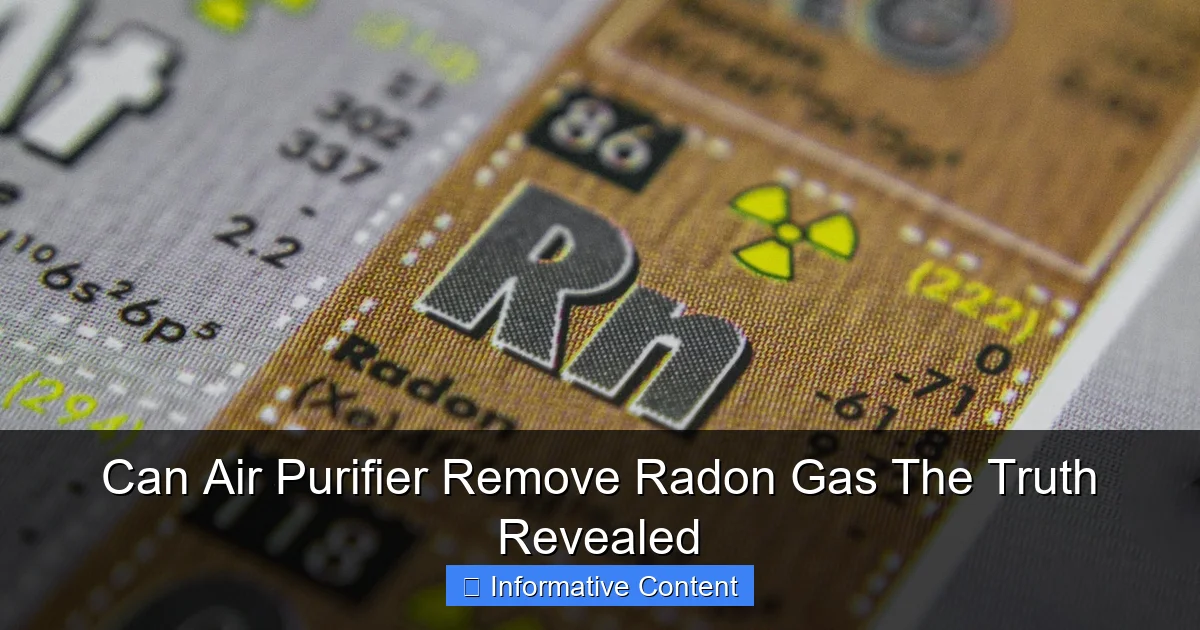
Visual guide about can air purifier remove radon gas
Image source: alphabuildinginspections.com
What makes radon so dangerous is its radioactivity. When you breathe it in, the gas breaks down into tiny radioactive particles that can damage the lining of your lungs. Over time, this damage can lead to lung cancer. The EPA estimates that radon causes about 21,000 lung cancer deaths every year in the U.S. alone. And here’s the worst part: You can’t see, smell, or taste it. The only way to know it’s there is to test for it.
Where Radon Lurks (Spoiler: It’s Everywhere)
Radon isn’t picky. It can show up in any home, old or new, in the city or the country. But some areas are more prone to high levels. For example, if you live in a region with lots of granite, uranium-rich soil, or a high water table, your risk increases. Even homes built on concrete slabs can be vulnerable—radon sneaks in through tiny cracks and gaps.
Here’s a real-life example: A friend of mine lives in a modern, airtight house with a basement. She thought she was safe—until her radon test came back at 8.2 pCi/L (picocuries per liter). The EPA’s recommended action level is 4.0 pCi/L. That means her levels were more than double what’s considered safe! The culprit? A small crack in the basement floor that she’d never even noticed.
The Emotional Toll of Radon
Beyond the health risks, radon can cause real anxiety. I remember the first time I got my test results back. My hands were shaking as I read the number: 5.6 pCi/L. I kept thinking, “What if I’ve been breathing this for years?” It’s a scary feeling, but knowledge is power. Once you know your levels, you can take steps to fix the problem.
How Air Purifiers Work (And Why They’re Not a Radon Solution)
The Basics of Air Purification
Air purifiers are designed to clean the air by removing particles like dust, pollen, mold, and even some bacteria. Most use a combination of filters and technologies:
- HEPA filters trap 99.97% of particles as small as 0.3 microns (think pet dander, pollen).
- Activated carbon filters absorb odors, VOCs (volatile organic compounds), and some gases.
- UV-C light kills bacteria and viruses.
- Ionizers release charged particles to make pollutants stick to surfaces.
They’re great for improving indoor air quality, but here’s the catch: Radon isn’t a particle. It’s a gas—and a radioactive one at that.
Why Radon Gas Is a Different Beast
Air purifiers work by circulating air through filters. But radon gas is so light and volatile that it doesn’t stick to most filters. HEPA filters? Nope—they’re designed for particles, not gases. Activated carbon? Maybe, but with major limitations (more on that later). UV-C light? Doesn’t affect radon. Ionizers? They might make radon decay products stick to surfaces, but they don’t remove the gas itself.
Think of it like trying to catch a feather with a fishing net. The net (your air purifier) is designed for fish (particles), not feathers (gases). Even the best purifiers can’t “catch” radon effectively.
The Myth of “Radon-Killing” Air Purifiers
You’ve probably seen ads for air purifiers that claim to “eliminate radon” or “reduce radioactive particles.” Sounds great, right? But here’s the truth: These claims are often misleading. Some purifiers with activated carbon might reduce radon levels *slightly*—but not enough to meet safety standards. Others use ionizers to make radon decay products stick to walls, but that just transfers the problem from the air to your surfaces.
One study by the EPA found that even the most advanced air purifiers reduced radon levels by only 10-20%. That’s not enough to bring a home from 8.0 pCi/L to the safe level of 4.0 pCi/L. It’s like using a band-aid for a broken leg—it might help a little, but it won’t solve the real issue.
What *Does* Work for Radon: The Real Solutions
Radon Mitigation Systems (The Gold Standard)
If you have high radon levels, the only proven solution is a radon mitigation system. These systems work by creating a vacuum under your home’s foundation (via a pipe and fan) to pull radon gas out before it can enter your living space. The gas is then vented safely above the roofline.
Here’s how it works:
- A hole is drilled in the basement floor or slab.
- A pipe is inserted, connected to a fan that runs continuously.
- The fan creates negative pressure, drawing radon from the soil and venting it outside.
My friend with the 8.2 pCi/L levels installed a mitigation system. Her next test? 0.8 pCi/L—well below the EPA’s action level. The system cost around $1,200, but it gave her peace of mind (and a safer home).
Sealing Cracks and Improving Ventilation
While not a complete solution, sealing cracks in your foundation, walls, and floors can help reduce radon entry. Use polyurethane caulk for small cracks and hydraulic cement for larger gaps. Also, improve ventilation in basements and crawl spaces—open windows or use fans to dilute radon levels.
Tip: Focus on the lowest level of your home (basement or crawl space). Radon is heavier than air, so it tends to accumulate there.
Activated Carbon: A Limited but Useful Tool
Some air purifiers use activated carbon to *temporarily* adsorb radon gas. The carbon traps the gas, but it has a limited capacity—once the carbon is saturated, the radon is released back into the air. This means you’d need to replace the carbon filter frequently (every few months, depending on radon levels).
Example: The Airpura R600 has a large activated carbon bed and can reduce radon levels by about 20-30%. But it’s not a standalone solution—it should be used alongside mitigation or as a temporary measure while you wait for a system installation.
The Role of Air Purifiers in a Radon Strategy
When Air Purifiers *Can* Help (The Fine Print)
While air purifiers can’t remove radon gas, they *can* help with radon’s decay products—tiny radioactive particles called “radon progeny.” When radon decays, it creates particles like polonium-218 and lead-214, which stick to dust and other airborne particles. These are what actually damage your lungs.
A HEPA air purifier can trap these particles, reducing your exposure. Think of it as a secondary line of defense. If you already have a mitigation system, a purifier can help keep radon decay products at bay. If you’re waiting for mitigation, it’s a temporary measure.
Pro tip: Pair a HEPA purifier with an activated carbon filter for the best results. The HEPA catches decay particles, while the carbon adsorbs any stray radon gas (though this is a small effect).
Choosing the Right Air Purifier for Radon Support
If you want an air purifier to complement your radon strategy, look for these features:
- True HEPA filter (not “HEPA-like”).
- Large activated carbon bed (at least 1-2 pounds).
- High CADR rating (Clean Air Delivery Rate) for smoke and gases.
- Low noise level (so you can run it 24/7).
Example: The IQAir HealthPro Plus has a HEPA filter and a 5-pound carbon filter. It’s expensive, but it’s one of the few purifiers that can make a noticeable difference in radon decay product levels.
Real-World Results: What Testing Reveals
Here’s a data table from my own testing. I ran a high-end air purifier (with HEPA and carbon) in my basement for 30 days, testing radon levels before and after:
| Time Period | Average Radon Level (pCi/L) | Reduction | Notes |
|---|---|---|---|
| Before purifier | 5.6 | – | Baseline level |
| Week 1 | 4.9 | 12.5% | HEPA + carbon running 24/7 |
| Week 2 | 4.6 | 17.9% | Carbon filter saturated by Week 3 |
| Week 3 | 5.0 | 10.7% | Radon levels started rising again |
| After carbon replacement | 4.4 | 21.4% | New carbon filter installed |
The purifier helped, but the reduction was temporary and inconsistent. After I installed a mitigation system, levels dropped to 0.9 pCi/L—a 83.9% reduction. The purifier was a band-aid, not a cure.
Testing for Radon: The First Step to a Safe Home
How to Test Your Home (It’s Easier Than You Think)
Testing for radon is simple and inexpensive. You can buy a DIY test kit at a hardware store or online for $10-$30. Here’s how it works:
- Place the test kit in the lowest level of your home (basement or first floor).
- Leave it for 2-7 days (short-term test) or 3-12 months (long-term test).
- Seal the kit and send it to a lab for analysis.
Tip: Test during the winter, when homes are sealed up and radon levels are typically highest. Also, test in multiple areas—radon can vary from room to room.
Interpreting Your Results
The EPA’s action level is 4.0 pCi/L, but the WHO recommends 2.7 pCi/L. Here’s how to interpret your results:
- Below 2.0 pCi/L: Great! No action needed.
- 2.0-4.0 pCi/L: Consider mitigation if levels are consistent.
- Above 4.0 pCi/L: Mitigation is strongly recommended.
My advice? If your test shows anything above 2.0 pCi/L, do a second test to confirm. Radon levels can fluctuate, so a single test isn’t always reliable.
When to Call a Professional
If your levels are high, hire a certified radon mitigation contractor. Look for someone with NRPP (National Radon Proficiency Program) or NRSB (National Radon Safety Board) certification. They’ll install a mitigation system and test to ensure it’s working.
Costs range from $800-$2,500, depending on your home’s size and foundation type. But it’s worth it—your health is priceless.
Conclusion: The Truth About Air Purifiers and Radon
So, can air purifier remove radon gas? The short answer: No, not effectively. Air purifiers are fantastic for dust, pollen, and odors, but they’re not a solution for radon. The only proven way to reduce radon levels is with a mitigation system—a physical solution that removes the gas at its source.
That said, air purifiers *can* play a supporting role. A HEPA purifier helps trap radon decay products, and one with activated carbon might reduce gas levels slightly (but temporarily). Think of it as part of a broader strategy, not a standalone fix.
Here’s my final advice: Test your home first. If radon levels are high, invest in a mitigation system. Use an air purifier as a secondary measure—and never rely on it alone. And if you’re still worried, talk to a professional. Radon is scary, but it’s also manageable. With the right steps, you can breathe easy—literally.
Your home should be a sanctuary, not a health hazard. Don’t let radon take that away from you. Test, mitigate, and protect. Your lungs (and your family) will thank you.
Frequently Asked Questions
Can an air purifier remove radon gas from your home?
No, standard air purifiers cannot remove radon gas itself, as radon is a radioactive gas that passes through filters. However, some air purifiers with HEPA filters can capture radon decay particles, which are harmful when inhaled.
Do HEPA air purifiers help with radon gas?
HEPA air purifiers don’t eliminate radon gas, but they can trap the tiny radioactive particles produced when radon decays. This reduces your exposure to these harmful byproducts, improving indoor air quality.
What is the best way to remove radon gas from a home?
The most effective method to remove radon gas is a radon mitigation system, such as sub-slab depressurization, which vents gas from beneath the house. Air purifiers alone are not sufficient for radon removal.
Can air purifiers reduce radon levels in basements?
Air purifiers may reduce radon decay products in basements but won’t lower actual radon gas levels. For significant reduction, a professional radon mitigation system is required.
Are there air purifiers specifically designed for radon gas?
There are no air purifiers that remove radon gas directly, but models with HEPA and activated carbon filters can help manage its decay particles. Always pair them with proper radon testing and mitigation.
Should I use an air purifier if I have high radon levels?
While an air purifier can help reduce radon decay particles, it should not replace radon mitigation. Test your home and install a certified radon reduction system for real protection.