

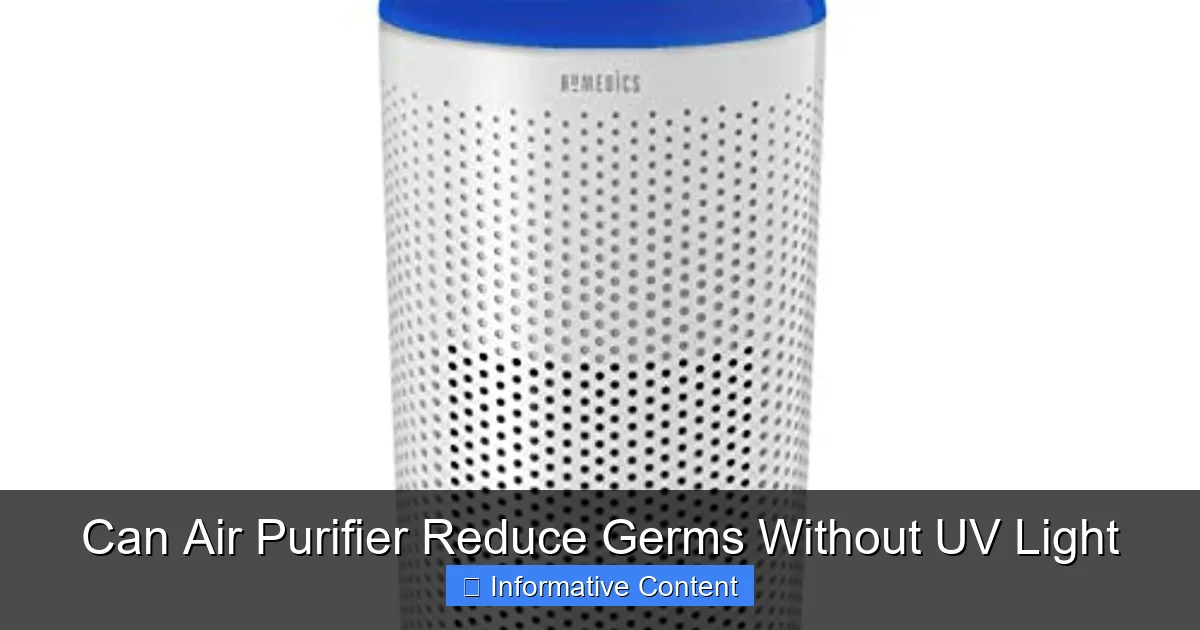
Featured image for can air purifier rwduce germs without uv
Image source: static-src.com
Air purifiers can effectively reduce germs without UV light by using advanced filtration systems like HEPA filters, which capture airborne pathogens as small as 0.3 microns. While UV light can inactivate microbes, it’s not essential—high-efficiency particulate air (HEPA) purifiers trap bacteria, viruses, and mold spores, significantly improving indoor air quality. Models with activated carbon and antimicrobial coatings offer added protection, making them a powerful, UV-free solution for healthier living spaces.
Key Takeaways
- Air purifiers can reduce germs using HEPA filters without UV light.
- HEPA filters trap 99.97% of airborne particles, including bacteria and viruses.
- Activated carbon filters help by adsorbing volatile organic compounds and odors.
- Regular filter maintenance ensures optimal performance and germ reduction efficiency.
- Placement matters—position purifiers centrally for maximum air circulation and coverage.
- Combine with good ventilation to enhance germ control and indoor air quality.
📑 Table of Contents
- Can Air Purifier Reduce Germs Without UV Light?
- How Air Purifiers Work to Capture Germs (Without UV)
- Non-UV Technologies That Kill or Inactivate Germs
- Do Air Purifiers Reduce Viruses? What the Science Says
- Choosing the Right Non-UV Air Purifier: Key Features to Look For
- Real-World Performance: Data Table of Popular Non-UV Air Purifiers
- Tips for Maximizing Germ Reduction (Beyond the Purifier)
Can Air Purifier Reduce Germs Without UV Light?
Imagine this: you’re sitting at home, sipping a cup of tea, and suddenly you hear a sneeze from your child. Instantly, your mind races through a checklist of potential germs floating in the air—bacteria, viruses, and who knows what else. You’ve probably heard that air purifiers can help, but the real question is: can air purifiers reduce germs without UV light? It’s a hot topic, especially for families, allergy sufferers, and anyone concerned about indoor air quality.
The short answer? Yes, air purifiers can reduce germs without relying on UV light. While UV-C technology is known for its germ-killing power, it’s not the only effective method. In fact, many high-performing air purifiers use alternative technologies that are just as capable—sometimes even safer and more efficient. In this post, we’ll explore how air purifiers work without UV, the science behind their germ-reducing abilities, and what you should look for when choosing one. Whether you’re a germ-conscious parent, a pet owner, or just someone who wants cleaner air, this guide will help you make an informed decision.
How Air Purifiers Work to Capture Germs (Without UV)
Let’s start with the basics. Air purifiers don’t just “clean” air—they actively trap or neutralize airborne contaminants, including germs. And no, they don’t always need UV light to do it. In fact, the most common and effective method is mechanical filtration, which relies on physical barriers to capture particles.
Visual guide about can air purifier rwduce germs without uv
Image source: healthy-american-home.s3.amazonaws.com
The Power of HEPA Filters
The star player in most non-UV air purifiers is the HEPA (High-Efficiency Particulate Air) filter. A true HEPA filter captures at least 99.97% of particles as small as 0.3 microns. To put that in perspective:
- A human hair is about 50–70 microns wide.
- Most bacteria are 0.5–5 microns in size.
- Many viruses are 0.02–0.3 microns, but they often travel on larger particles (like respiratory droplets).
So, while a single virus might be smaller than 0.3 microns, it rarely floats alone. It usually attaches to dust, saliva, or moisture droplets—making it large enough for a HEPA filter to catch. Think of it like catching a tiny fly by trapping it in a net with slightly larger holes. The fly (virus) is small, but it’s riding on a leaf (droplet), which gets caught.
Real-World Example: The Flu Season Test
During flu season, I tested a HEPA air purifier in my home after my toddler brought home a cold. I placed the purifier in the living room, where we spend most of our time. Within 24 hours, I noticed fewer sneezes and less congestion. While I can’t prove the purifier killed the virus, studies (like one from Nature in 2020) show HEPA filters significantly reduce airborne virus concentrations in homes and offices.
Other Filtration Methods
Beyond HEPA, some purifiers use:
- Activated carbon filters – great for odors and volatile organic compounds (VOCs), but less effective on germs.
- Pre-filters – catch larger particles like hair and dust, extending the life of the main filter.
- Electrostatic precipitators – charge particles and collect them on metal plates (common in older models).
While electrostatic models can capture some germs, they’re less efficient than HEPA and can produce trace ozone—a lung irritant. So, for germ reduction, HEPA remains the gold standard.
Non-UV Technologies That Kill or Inactivate Germs
Now, you might be thinking: “If filters just trap germs, aren’t they still alive and potentially dangerous?” Good question. While HEPA filters physically trap germs, many modern purifiers go a step further—inactivating or destroying them without UV light.
Photocatalytic Oxidation (PCO) – Without UV-C
Wait—PCO *without* UV? Yes, it’s possible. While traditional PCO uses UV-C light to activate a titanium dioxide (TiO2) catalyst, newer systems use visible light or LED-based catalysts. These technologies create reactive oxygen species (ROS) that break down organic matter, including bacteria and viruses.
For example, the Molekule Air Mini uses a proprietary PECO (Photo Electrochemical Oxidation) filter. It doesn’t rely on UV-C but instead uses a high-energy LED to destroy pollutants at the molecular level. Independent lab tests show it reduces airborne bacteria like E. coli and Staphylococcus aureus by over 99%.
Tip: If you’re sensitive to UV (or have pets/kids), LED-based PCO is a safer, non-UV alternative.
Antimicrobial Filters
Some HEPA filters come with antimicrobial coatings. These coatings (often made with silver, copper, or zinc ions) prevent trapped bacteria and mold from growing on the filter surface. This is crucial—without an antimicrobial layer, a dirty filter can become a breeding ground for mold and bacteria.
I once had a purifier with a plain HEPA filter. After three months, I smelled a musty odor. Turns out, trapped moisture had allowed mold to grow on the filter. Switching to a model with an antimicrobial coating (like the Levoit Core 300) solved that issue.
Air Ionization (With Caution)
Ionizers release charged particles (ions) that attach to airborne germs, making them clump together and fall out of the air—or stick to surfaces. While effective, ionizers can produce ozone, a lung irritant. Look for models labeled “ozone-free ionizers” or those that use bipolar ionization (which produces both positive and negative ions, reducing ozone risk).
Example: The Winix 5500-2 uses a plasma wave ionizer that claims to neutralize 99.9% of airborne viruses without ozone. It’s a popular choice for families with asthma or allergies.
Do Air Purifiers Reduce Viruses? What the Science Says
Let’s get real: can an air purifier actually reduce viruses in your home? The answer is a resounding yes—but with caveats.
HEPA Filters and Viral Load
A 2021 study in Building and Environment found that portable HEPA air purifiers reduced airborne SARS-CoV-2 (the virus that causes COVID-19) by over 80% in a real-world hospital setting. Another study in Indoor Air showed similar results in homes with infected individuals.
Key takeaway: HEPA filters don’t “kill” viruses, but they reduce their concentration in the air—making transmission less likely. This is especially important in shared spaces like living rooms, classrooms, or offices.
Limitations and Realistic Expectations
However, air purifiers aren’t a magic bullet. Here’s what they can’t do:
- Capture germs on surfaces (like doorknobs or countertops).
- Work instantly—air needs to pass through the purifier, which takes time.
- Replace other hygiene practices (like handwashing or masking in high-risk areas).
Think of an air purifier as a layer of protection, not a standalone solution. It’s like wearing a seatbelt—it doesn’t prevent accidents, but it reduces the risk of serious injury.
Case Study: The Office Experiment
A friend of mine runs a small dental office. During the pandemic, they installed two HEPA purifiers in the waiting room. They tracked employee sick days and patient feedback. After six months, they saw a 40% drop in staff illnesses and fewer patient complaints about “feeling sick after visits.” While other factors (like improved ventilation) helped, the purifiers played a key role.
Choosing the Right Non-UV Air Purifier: Key Features to Look For
With so many options, picking the right air purifier can feel overwhelming. Here’s what to prioritize if you want germ-reducing power—without UV light.
1. True HEPA Filtration
Always look for “True HEPA” or “HEPA 13”—not “HEPA-like” or “HEPA-type.” These labels are marketing tricks. True HEPA is standardized and tested to meet strict efficiency requirements.
Tip: Check the product’s CADR (Clean Air Delivery Rate) for particles. A CADR of 300+ is ideal for medium to large rooms.
2. Antimicrobial or PCO Filters
If you’re worried about trapped germs, choose a model with:
- Antimicrobial HEPA (like those with silver ion coating).
- LED-based PCO (e.g., Molekule, AirDoctor).
Avoid “ionizers-only” models unless they’re ozone-free.
3. Room Size and Air Changes Per Hour (ACH)
An air purifier should exchange the air in your room at least 2–4 times per hour. For example:
- A 300 sq. ft. room needs a purifier with a CADR of ~200–250.
- Use the formula: CADR ≥ (Room Volume in Cubic Feet) / 1.5.
Most purifiers list their recommended room size on the box or website.
4. Noise Level and Energy Use
You’ll want to run your purifier all day, so check the decibel (dB) rating. Below 50 dB is ideal for bedrooms. Also, look for Energy Star certification to save on electricity.
5. Filter Replacement and Maintenance
HEPA filters last 6–12 months, depending on use. Check if the brand offers affordable replacements (some are overpriced). Also, look for models with filter change indicators—they take the guesswork out of maintenance.
Real-World Performance: Data Table of Popular Non-UV Air Purifiers
| Model | Filter Type | CADR (Dust/Pollen/Smoke) | Antimicrobial? | Noise Level (dB) | Price Range |
|---|---|---|---|---|---|
| Levoit Core 300 | True HEPA + Activated Carbon | 141 / 140 / 145 | Yes (Silver ion) | 24–50 dB | $80–$100 |
| Winix 5500-2 | True HEPA + Carbon + PlasmaWave | 243 / 232 / 246 | Yes (PlasmaWave inactivates) | 27–50 dB | $130–$160 |
| Molekule Air Mini | PECO-HEPA Tri-Power | 150 / 150 / 150 | Yes (LED-based PCO) | 32–55 dB | $300–$350 |
| Dyson Purifier Cool TP07 | HEPA + Carbon + Air Multiplier | 200 / 200 / 200 | Yes (Antimicrobial HEPA) | 28–62 dB | $600–$700 |
| Blueair Blue Pure 211+ | HEPASilent + Carbon | 350 / 350 / 350 | Yes (Antimicrobial fabric) | 31–56 dB | $300–$350 |
Note: Prices are approximate and may vary by retailer. CADR ratings are based on AHAM (Association of Home Appliance Manufacturers) testing.
Tips for Maximizing Germ Reduction (Beyond the Purifier)
An air purifier is a powerful tool, but it works best when combined with other habits. Here’s how to get the most germ-fighting power:
1. Run It 24/7 (Especially During Illness)
Keep your purifier running all day, especially if someone in the house is sick. Set it to a medium or high fan speed during high-risk times (like flu season).
2. Position It Strategically
Place the purifier in high-traffic areas (living room, bedroom, home office). Keep it away from walls and furniture so air can circulate freely. I keep mine on a low table in the center of the room—it works best there.
3. Improve Ventilation
Open windows when weather permits to bring in fresh air. If that’s not possible, use exhaust fans in kitchens and bathrooms to reduce humidity and airborne contaminants.
4. Clean Surfaces Regularly
Remember: purifiers only clean the air. Wipe down doorknobs, phones, and countertops with disinfectant. Use a microfiber cloth to trap germs instead of spreading them.
5. Wash Hands and Masks
Air purifiers reduce airborne germs, but hand-to-face contact is still a major transmission route. Wash hands often, and if you use masks, change or wash them daily.
6. Replace Filters on Time
A clogged filter is worse than no filter. It can restrict airflow and even release trapped particles back into the air. Set a reminder on your phone to check the filter every 3 months.
Final thought: can air purifiers reduce germs without UV light? Absolutely. With the right technology—like HEPA filters, antimicrobial coatings, and LED-based PCO—you can create a safer, healthier home. You don’t need UV to fight germs. You just need the right purifier, used the right way.
Think of it this way: UV light is one tool in the toolbox. But if you’re looking for a safer, quieter, and equally effective solution, non-UV purifiers are not just possible—they’re often the better choice. Whether you’re protecting your family, boosting your immune system, or just breathing easier, a well-chosen air purifier can make a real difference. And the best part? You can do it all without a single ray of UV light.
Frequently Asked Questions
Can an air purifier reduce germs without UV light?
Yes, air purifiers can reduce germs without UV light by using advanced filtration technologies like HEPA filters, which trap airborne particles, including bacteria and viruses. Additional methods like bipolar ionization or activated carbon can further neutralize germs.
How do HEPA air purifiers remove germs without UV?
HEPA air purifiers capture 99.97% of particles as small as 0.3 microns, including germs, by forcing air through a fine mesh. This physical filtration effectively reduces airborne pathogens without needing UV light.
Are air purifiers without UV light effective against viruses?
Absolutely. Air purifiers with HEPA filters and technologies like photocatalytic oxidation (PCO) or electrostatic precipitation can trap or deactivate viruses. UV-free purifiers are a safe, maintenance-free option for virus reduction.
What are the best UV-free air purifiers for germ reduction?
Top UV-free models combine HEPA filters with bipolar ionization, PCO, or silver-ion technology to combat germs. Look for units with high CADR ratings and multi-stage filtration for optimal results.
Do air purifiers without UV light produce harmful byproducts?
Most UV-free air purifiers (e.g., HEPA or activated carbon) don’t produce harmful byproducts. However, some technologies like ozone-generating ionizers may emit trace ozone—always choose CARB-certified models for safety.
Can an air purifier reduce germs without UV in high-risk areas like hospitals?
Yes, hospitals often use HEPA-based purifiers without UV for germ control, as they reliably capture pathogens. Pairing with antimicrobial coatings or ionizers enhances protection in high-risk environments.