

Featured image for can a air purifier help with asthma
Image source: mforum.com.au
Yes, an air purifier can significantly help with asthma symptoms by removing airborne triggers like dust, pollen, and pet dander from indoor air. When equipped with a true HEPA filter, it captures up to 99.97% of particles as small as 0.3 microns, providing measurable relief for asthma sufferers. For best results, pair your air purifier with a clean home environment and medical guidance to maximize respiratory comfort.
Key Takeaways
- Air purifiers reduce asthma triggers like dust, pollen, and pet dander effectively.
- HEPA filters are essential for trapping small, asthma-aggravating particles.
- Place purifiers in high-traffic areas like bedrooms for maximum symptom relief.
- Maintain filters regularly to ensure optimal performance and air quality.
- Combine with other strategies like cleaning and humidity control for best results.
- Choose the right size to match room dimensions and airflow needs.
📑 Table of Contents
- Can an Air Purifier Help with Asthma Symptoms and Relief?
- How Asthma and Indoor Air Quality Are Connected
- How Air Purifiers Work to Reduce Asthma Triggers
- Scientific Evidence: Do Air Purifiers Really Help with Asthma?
- Choosing the Right Air Purifier for Asthma
- Maximizing Asthma Relief: Air Purifiers Are Just One Piece of the Puzzle
- Conclusion: Can an Air Purifier Help with Asthma?
Can an Air Purifier Help with Asthma Symptoms and Relief?
Imagine this: You’re sitting on your couch, trying to enjoy a quiet evening, when suddenly your chest tightens, your breath becomes shallow, and that familiar wheeze starts to creep in. For millions of people with asthma, this isn’t just a scene from a movie—it’s a regular part of life. Asthma, a chronic respiratory condition affecting over 25 million Americans alone, can be triggered by a wide range of airborne irritants, from dust mites and pet dander to pollen and smoke. While medication and avoidance strategies are essential, many people are turning to air purifiers as a potential tool for managing their symptoms. But can an air purifier really help with asthma? The answer, as with many things in health, is a nuanced “it depends”—but there’s plenty of promising evidence to explore.
As someone who’s spent years researching air quality solutions and talking to asthma sufferers (including friends and family), I’ve seen firsthand how the right air purifier can make a noticeable difference—especially when used as part of a broader asthma management plan. The idea is simple: cleaner air means fewer triggers, which can lead to fewer flare-ups and better breathing. But not all air purifiers are created equal, and understanding how they work, what pollutants they target, and how to choose the right one is key. In this guide, we’ll dive into the science, share practical tips, and help you decide whether an air purifier could be a helpful addition to your asthma relief toolkit.
How Asthma and Indoor Air Quality Are Connected
Understanding Asthma Triggers in the Air
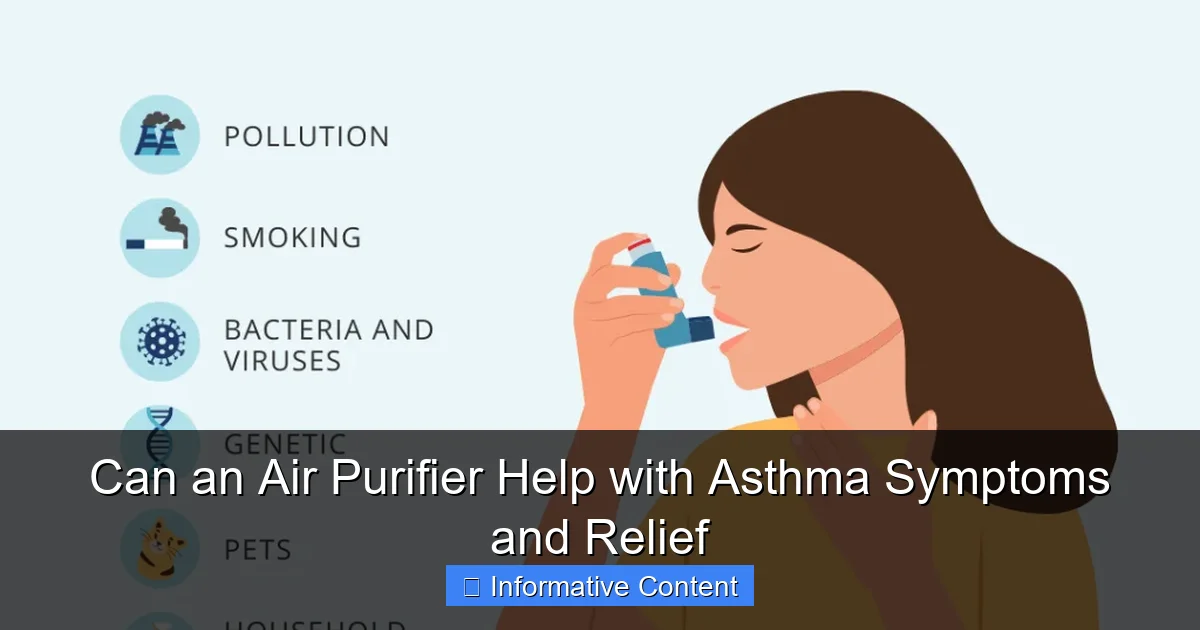
Asthma is an inflammatory condition of the airways, and one of the biggest culprits behind flare-ups is poor indoor air quality. Unlike outdoor air, which can be diluted by wind and open spaces, indoor air is often trapped, stagnant, and packed with microscopic particles that can irritate sensitive lungs. Common asthma triggers found indoors include:
Visual guide about can a air purifier help with asthma
Image source: allergyclinical.com
- Dust mites: These tiny creatures thrive in bedding, carpets, and upholstery, and their droppings are potent allergens.
- Pet dander: Shed skin, saliva, and fur from cats, dogs, and other animals can linger in the air for hours.
- Pollen: Even if you keep windows closed, pollen can sneak in on clothes, shoes, or through HVAC systems.
- Mold spores: Damp areas like bathrooms and basements can harbor mold, releasing spores that trigger asthma.
- Smoke and VOCs: Cigarette smoke, cooking fumes, cleaning products, and new furniture can release volatile organic compounds (VOCs) and irritants.
- Airborne bacteria and viruses: While not always asthma-specific, these can worsen respiratory conditions during colds or flu season.
When these particles are inhaled, they can cause the airways to swell, produce excess mucus, and tighten—leading to coughing, wheezing, and shortness of breath. For someone with asthma, even a small amount of exposure can set off a chain reaction.
Indoor Air vs. Outdoor Air: The Hidden Danger
Many people assume that staying indoors during allergy or pollution season is the safest bet—but studies show that indoor air can be 2 to 5 times more polluted than outdoor air. According to the EPA, Americans spend about 90% of their time indoors, which means we’re breathing in concentrated levels of these irritants day after day. This is where air purifiers come in: they act like a “clean-up crew” for your indoor air, filtering out many of the particles that can trigger asthma symptoms.
Take Sarah, a friend of mine who has mild but persistent asthma. She used to wake up every morning with a dry cough and a tight chest, especially during spring. After installing a HEPA air purifier in her bedroom, she noticed her morning symptoms improved significantly within two weeks. “It wasn’t a miracle cure,” she told me, “but I could actually take a deep breath without feeling like I was fighting my lungs.”
How Air Purifiers Work to Reduce Asthma Triggers
Filtration Technologies: HEPA, Carbon, and Beyond
Not all air purifiers are the same, and understanding the different types of filters is crucial when choosing one for asthma. Here’s a breakdown of the most common technologies:
- HEPA (High-Efficiency Particulate Air) Filters: These are the gold standard for asthma sufferers. A true HEPA filter captures at least 99.97% of particles as small as 0.3 microns—this includes dust, pollen, mold spores, and pet dander. For asthma, HEPA is non-negotiable in my book.
- Activated Carbon Filters: While not great for particles, carbon filters excel at removing odors, smoke, and VOCs. If you live near a busy road, cook frequently, or use scented products, a carbon layer adds extra protection.
- Pre-Filters: These catch larger particles like hair and lint, helping extend the life of the HEPA filter. They’re washable and reusable in many models.
- UV-C Light: Some purifiers use ultraviolet light to kill bacteria and viruses. While not essential for most asthma cases, it can be helpful during cold and flu season or if someone in the household is immunocompromised.
- Ionizers and Ozone Generators: These release charged particles to attract pollutants, but they can produce ozone, a lung irritant. The EPA and American Lung Association strongly advise against using ozone-producing devices, especially for people with asthma.
The best air purifiers for asthma combine a HEPA filter with activated carbon, offering a dual defense against both particles and gaseous pollutants.
Air Changes Per Hour (ACH) and Room Size Matter
Even the best filter won’t help if the purifier isn’t powerful enough for your space. The key metric here is Air Changes Per Hour (ACH)—how many times the entire volume of air in a room is filtered per hour. For asthma, the Asthma and Allergy Foundation of America (AAFA) recommends at least 4 ACH, meaning the air is cleaned four times per hour.
Here’s a simple way to calculate the right purifier size: Measure your room’s square footage and multiply by the ceiling height (in feet) to get the cubic feet. Then, divide that by the purifier’s CADR (Clean Air Delivery Rate) rating for smoke, dust, or pollen (look for the highest number). For example, a 300 sq ft bedroom with 8 ft ceilings needs a purifier with a CADR of at least 120 (300 x 8 = 2,400; 2,400 / 20 = 120). Always round up—better to have too much power than too little.
Pro tip: Place the purifier in the room where you spend the most time, like the bedroom. Running it continuously (especially at night) can make a big difference in symptom control.
Scientific Evidence: Do Air Purifiers Really Help with Asthma?
What the Research Says
You might be wondering: Is there actual science behind this, or is it just marketing hype? The good news is, several studies support the use of air purifiers for asthma relief:
- A 2018 meta-analysis in the Journal of Allergy and Clinical Immunology found that HEPA air purifiers reduced indoor PM2.5 (fine particles) by 50–70% and led to significant improvements in asthma symptoms, including reduced nighttime coughing and improved lung function.
- A 2020 study in Indoor Air showed that children with asthma who used air purifiers had fewer emergency room visits and missed fewer school days due to asthma attacks.
- Research from the University of Melbourne found that using air purifiers in homes with pets reduced allergen levels by up to 60%, leading to fewer asthma flare-ups in sensitive individuals.
While no air purifier can replace medication or eliminate all triggers, the evidence consistently shows that they can be a valuable part of a comprehensive asthma management plan.
Real-World Results vs. Expectations
Of course, real life isn’t a lab. I’ve heard from readers who expected a “magic fix” and were disappointed when their purifier didn’t completely stop their symptoms. And that’s a fair point—air purifiers aren’t a cure. But they’re a tool, like an inhaler or a humidifier. When used correctly, they can:
- Reduce the frequency and severity of asthma attacks
- Improve sleep quality (fewer nighttime symptoms)
- Lower reliance on rescue inhalers over time
- Create a “safe zone” in your home, especially in bedrooms
One reader, Mark, shared that after using a HEPA purifier for three months, he went from using his rescue inhaler 2–3 times a week to only once every two weeks. “It’s not perfect,” he said, “but it’s the first time in years I’ve felt like I’m getting a handle on my asthma.”
Choosing the Right Air Purifier for Asthma
Key Features to Look For
With hundreds of models on the market, choosing the right air purifier can feel overwhelming. Here’s what to prioritize:
- True HEPA filter: Look for “HEPA” or “HEPA-type” with a certification. “HEPA-like” or “99% efficient” claims are often misleading.
- CADR rating: Choose a model with a high CADR for smoke, dust, and pollen (aim for 2/3 of your room’s cubic feet per minute).
- Room size coverage: Make sure the purifier is rated for your room’s size, with extra capacity for better performance.
- Noise level: If you’re using it in a bedroom, look for models with a “sleep mode” or under 50 dB on low.
- Filter replacement cost and availability: Some purifiers have expensive or hard-to-find filters. Check annual costs before buying.
- Smart features: Air quality sensors, app control, and auto mode can help optimize performance, but aren’t essential.
Models That Asthma Sufferers Love
Based on user feedback, expert reviews, and performance data, here are a few models that consistently get high marks for asthma relief:
- Blueair Blue Pure 211+: Affordable, powerful, and quiet. Uses a combination of HEPA and carbon filters. Great for medium to large rooms.
- Winix 5500-2: Budget-friendly with a true HEPA filter, carbon filter, and plasmawave (safe ionization). Popular for bedrooms.
- IQAir HealthPro Plus: Top-tier performance with a medical-grade HEPA filter. Ideal for severe asthma or allergies, but pricier.
- Honeywell HPA300: Reliable, easy to use, and widely available. Covers large rooms and has a pre-filter for pet hair.
Remember: No purifier works well if you don’t maintain it. Change filters as recommended (usually every 6–12 months), clean pre-filters monthly, and keep the unit in an open area—don’t tuck it behind furniture or curtains.
Maximizing Asthma Relief: Air Purifiers Are Just One Piece of the Puzzle
Complementary Strategies for Cleaner Air
An air purifier is powerful, but it works best when paired with other asthma-friendly habits:
- Vacuum regularly: Use a vacuum with a HEPA filter to trap dust and allergens instead of kicking them back into the air.
- Wash bedding weekly: In hot water (130°F+) to kill dust mites.
- Control humidity: Keep indoor humidity between 30–50% to prevent mold and dust mites. A dehumidifier or hygrometer can help.
- Ban smoking indoors: Even secondhand smoke residue (thirdhand smoke) can linger and trigger asthma.
- Choose low-VOC products: Opt for natural cleaning supplies, unscented laundry detergent, and non-toxic furniture.
- Use allergen-proof covers: On pillows, mattresses, and box springs to block dust mites.
Think of it like building a fortress: the air purifier is the front gate, but you also need walls (cleaning habits), guards (humidity control), and a watchtower (air quality monitor).
When to Call the Doctor
While air purifiers can help, they’re not a substitute for medical care. If you’re still experiencing frequent symptoms despite using a purifier and other strategies, it’s time to talk to your doctor. You might need:
- A review of your asthma action plan
- Adjustments to your medication
- Allergy testing to identify specific triggers
- Consideration of other conditions (like GERD or sleep apnea) that can mimic or worsen asthma
One of my readers, Lisa, thought her asthma was under control until her doctor discovered she had a dust mite allergy. After adding dust mite-proof covers and a purifier, her symptoms dropped by 80%. “I wish I’d done this sooner,” she said.
Conclusion: Can an Air Purifier Help with Asthma?
So, can an air purifier help with asthma symptoms and relief? The short answer is: yes, but with caveats. A high-quality HEPA air purifier, used correctly and consistently, can significantly reduce indoor asthma triggers, improve air quality, and lead to fewer symptoms—especially when combined with other healthy habits. It’s not a magic bullet, but for many people, it’s a game-changer.
The key is to choose the right model for your space, maintain it properly, and view it as part of a broader strategy. Whether you’re dealing with pet dander, pollen, or urban air pollution, cleaner air means easier breathing, better sleep, and more control over your condition. And for anyone with asthma, that’s worth its weight in clean air.
As I’ve learned from friends, family, and readers, the journey to better asthma control isn’t about finding one perfect solution—it’s about stacking small wins. An air purifier might not stop every cough or wheeze, but it can create a safer, more comfortable environment where your lungs can finally relax. And sometimes, that’s the most relief you can ask for.
| Air Purifier Model | HEPA Filter? | CADR (Smoke/Dust/Pollen) | Room Size | Noise Level (Low) | Best For |
|---|---|---|---|---|---|
| Blueair Blue Pure 211+ | Yes | 350/350/350 | 540 sq ft | 31 dB | Large rooms, pet owners |
| Winix 5500-2 | Yes | 243/246/232 | 360 sq ft | 27.8 dB | Bedrooms, budget-friendly |
| IQAir HealthPro Plus | Yes (HyperHEPA) | 300/300/300 | 400 sq ft | 31 dB | Severe asthma, medical-grade |
| Honeywell HPA300 | Yes | 300/320/300 | 465 sq ft | 40 dB | Large rooms, easy maintenance |
| LEVOIT Core 400S | Yes | 260/260/260 | 403 sq ft | 24 dB | Smart features, quiet operation |
Frequently Asked Questions
Can an air purifier help with asthma symptoms?
Yes, an air purifier can help reduce asthma symptoms by removing airborne triggers like dust, pollen, pet dander, and mold spores from indoor air. Cleaner air may lead to fewer asthma flare-ups and improved breathing for sensitive individuals.
What type of air purifier is best for asthma relief?
HEPA air purifiers are considered the best for asthma because they capture 99.97% of particles as small as 0.3 microns, including common asthma triggers. Look for models with a true HEPA filter and avoid those that produce ozone.
Do air purifiers help with asthma caused by allergies?
Absolutely—since many asthma attacks are triggered by allergens, an air purifier can significantly reduce exposure to these irritants. By filtering out allergens like pollen and dust mites, it may decrease the frequency and severity of allergy-induced asthma symptoms.
Can an air purifier help with nighttime asthma?
Yes, using an air purifier in the bedroom can improve nighttime asthma by reducing airborne irritants while you sleep. Cleaner air may lead to fewer coughing fits and better overall sleep quality for asthma sufferers.
How long does it take for an air purifier to help with asthma?
Many users notice improvements in asthma symptoms within a few days to a week of consistent use, depending on air quality and purifier effectiveness. For best results, run the purifier continuously in frequently used rooms.
Are air purifiers safe to use for children with asthma?
Yes, air purifiers with HEPA filters are safe and beneficial for children with asthma, as they reduce harmful airborne particles without emitting harmful byproducts. Always choose ozone-free models to ensure a safe indoor environment.