

Featured image for can a air purifier help with coronavirus
Image source: patch.com
Yes, a high-quality air purifier with a HEPA filter can help reduce airborne coronavirus particles, especially in poorly ventilated indoor spaces. While it’s not a standalone solution, it significantly lowers transmission risk when combined with masking, distancing, and proper ventilation—making it a smart layer of protection in homes, offices, and public settings.
Key Takeaways
- Air purifiers with HEPA filters can capture virus-laden particles, reducing airborne virus concentration indoors.
- Not a standalone solution—combine with masks, ventilation, and hand hygiene for best protection.
- Choose a properly sized unit for your room to ensure effective air cleaning and circulation.
- Look for MERV-13 or higher filters in HVAC systems as an alternative or supplement to portable purifiers.
- Run purifiers continuously during high-risk periods to maintain cleaner air and lower exposure risk.
- Avoid ionizers and ozone generators—they may produce harmful byproducts and are less effective.
📑 Table of Contents
- Can an Air Purifier Help With Coronavirus? What You Need to Know
- How the Coronavirus Spreads Through the Air
- How Air Purifiers Work Against Coronavirus
- Choosing the Right Air Purifier for Coronavirus Protection
- How to Use an Air Purifier Effectively (Tips & Tricks)
- What Science Says: Evidence and Limitations
- Data Table: Air Purifier Comparison for Virus Protection
- Final Thoughts: Air Purifiers as Part of a Smarter Strategy
Can an Air Purifier Help With Coronavirus? What You Need to Know
When the coronavirus pandemic swept across the world, it changed the way we think about air quality. Suddenly, every cough, sneeze, or even a deep breath made us wonder: Could that tiny virus be floating in the air around me? If you’ve ever felt that unease, you’re not alone. Many of us turned to air purifiers, hoping they could be a shield against the virus. But here’s the honest truth: air purifiers can help, but they’re not a magic bullet. They’re one piece of a much bigger puzzle.
I remember the early days of the pandemic, when my neighbor, a nurse, pulled me aside and said, “Get an air purifier—especially if someone in your house is at high risk.” I did. But I also learned that not all purifiers are created equal, and using one the wrong way might give you a false sense of security. In this guide, we’ll break down exactly how air purifiers work against coronavirus, which features to look for, and—most importantly—how to use them as part of a smarter, layered approach to staying safe.
How the Coronavirus Spreads Through the Air
Understanding Airborne Transmission
The coronavirus primarily spreads when an infected person breathes, talks, coughs, or sneezes. These actions release tiny respiratory droplets and aerosols—microscopic particles that can stay suspended in the air for minutes to hours, depending on ventilation. Unlike larger droplets that fall quickly, aerosols can linger and travel farther, especially in poorly ventilated spaces.
Visual guide about can a air purifier help with coronavirus
Image source: cdn.shopify.com
Think of it like smoke from a campfire. The big puffs fall fast, but the fine smoke hangs in the air. Coronavirus aerosols behave similarly. In crowded, enclosed spaces like classrooms, offices, or even your living room during a small gathering, these particles can build up, increasing the risk of infection—even if you’re standing six feet away.
Why Ventilation Matters
Good ventilation—like opening windows or using fans—helps dilute and remove these airborne particles. But what if you live in a city with high pollution? Or it’s too cold outside to open windows? That’s where air purifiers come in. They act as a mechanical way to “clean” the air when natural ventilation isn’t enough.
For example, my friend Sarah lives in a small apartment in New York with no windows in her bedroom. She runs an air purifier on high all night, especially when her elderly parents visit. “It’s not just about coronavirus,” she told me. “It’s about peace of mind. I know the air is being filtered, even when we’re all sleeping.”
Real-World Scenario: The Office Break Room
Imagine a small office break room where four people gather for coffee. One is unknowingly infected. Without proper ventilation, the virus can build up over 30 minutes. But with an air purifier running, those aerosols are pulled in, filtered, and replaced with clean air—reducing the concentration of virus particles significantly. Studies show that proper air filtration can reduce airborne virus levels by up to 90% in well-designed systems.
How Air Purifiers Work Against Coronavirus
Filtration: The Core Mechanism
Most air purifiers use a multi-stage system to trap and remove particles. The key player? The HEPA filter (High-Efficiency Particulate Air). To qualify as HEPA, a filter must capture at least 99.97% of particles that are 0.3 microns in size. The coronavirus is about 0.1 microns in diameter, but it doesn’t travel alone. It’s usually attached to larger droplets or aerosols (0.5 to 5 microns), which HEPA filters trap easily.
Here’s a simple analogy: imagine trying to catch dust with a fishing net. A HEPA filter is like a super-fine net that catches even the tiniest specks, including those carrying the virus. My own purifier uses a True HEPA filter, and I noticed a difference within days—less dust on my bookshelves, and fewer allergy flare-ups.
Beyond HEPA: Other Technologies
- Activated Carbon Filters: These remove odors and gases (like VOCs) but don’t trap viruses. However, they’re great for improving overall air quality, especially if someone smokes or cooks with strong spices.
- UV-C Light: Some purifiers use ultraviolet light to kill viruses and bacteria. UV-C can inactivate the virus on contact, but it only works if the virus passes directly through the light. It’s a helpful add-on, but not a replacement for filtration.
- Negative Ionizers: These release charged particles that make viruses and dust clump together and fall out of the air. Sounds cool, but be cautious—some ionizers produce ozone, a lung irritant. Avoid models that generate ozone if you have asthma or respiratory issues.
What Doesn’t Work (And What to Avoid)
Not all “air cleaning” devices are equal. I once bought a cheap purifier that claimed to “kill 99.9% of germs” with “plasma technology.” It turned out to be an ionizer with no HEPA filter. After reading the manual, I realized it didn’t even remove particles—it just made them fall onto surfaces, where they could still be picked up. That’s not protection; it’s a false sense of security.
Stick to purifiers with True HEPA filters and avoid those that rely solely on ionization, ozone, or “photocatalytic oxidation” without solid filtration backup. If a company makes bold claims with no scientific backing, it’s a red flag.
Choosing the Right Air Purifier for Coronavirus Protection
Key Features to Look For
When shopping for an air purifier, focus on these essentials:
- HEPA Filter: Must be labeled “True HEPA” or “HEPA 13” (used in hospitals). Avoid “HEPA-like” or “HEPA-type” filters—they don’t meet the standard.
- CADR Rating: Clean Air Delivery Rate tells you how fast the purifier cleans air. For viruses, look for a CADR of at least 300 for dust, pollen, and smoke. Higher is better.
- Room Size: Check the manufacturer’s recommended coverage. A purifier for a 200 sq ft room won’t work well in a 500 sq ft living room. I made this mistake once—my purifier ran 24/7 but barely made a dent in the air quality.
- Air Changes Per Hour (ACH): Aim for 4–6 ACH in high-risk areas. This means the purifier should exchange the room’s air 4–6 times per hour. For a 500 sq ft room with 8 ft ceilings, you need a purifier with a minimum airflow of 267 CFM (cubic feet per minute).
Top Brands and Models (With Real-World Insights)
Based on independent testing and user reviews, these models stand out:
- Blueair Blue Pure 211+: High CADR (350), great for large rooms, but the filter is expensive to replace. I use one in my living room and love how quiet it is on low.
- Winix 5500-2: Budget-friendly, includes a True HEPA filter and carbon layer, plus a plasma ionizer (optional). My sister uses it in her home office and says it’s “a game-changer during flu season.”
- Dyson Pure Cool TP04: Stylish, with HEPA and carbon filters, plus a fan function. But it’s pricey, and the filter replacement cost adds up.
- Airpura V600: Medical-grade filtration, ideal for homes with immunocompromised members. Overkill for most, but worth it if health is a top concern.
What About DIY Purifiers?
You’ve probably seen the “Corsi-Rosenthal box” online—a DIY purifier made from a box fan and four furnace filters. It’s surprisingly effective. I built one for my basement (where we host small gatherings) using MERV 13 filters. Cost? About $60. Performance? It moves a lot of air, though it’s louder than commercial models. Great for temporary use or budget setups.
How to Use an Air Purifier Effectively (Tips & Tricks)
Placement Matters More Than You Think
Putting your purifier in the wrong spot can slash its effectiveness. Here’s how to get it right:
- Near the Source: If someone in your home is sick, place the purifier close to them (but not too close—it needs airflow). In shared spaces, position it where people spend the most time.
- Clear Airflow: Keep it at least 6 inches from walls and furniture. Blocking airflow is like trying to drink through a clogged straw.
- Height: Viruses tend to hover at breathing level (3–6 feet). Place the purifier on a table or shelf, not the floor—unless it has bottom intake.
I once placed my purifier behind a bookshelf. Big mistake. It took weeks to realize why it wasn’t helping. Once I moved it to the center of the room, the difference was night and day.
Run It 24/7 (Yes, Really)
Air purifiers work best when they’re running constantly. Viruses don’t take breaks, and neither should your purifier. Most modern models are energy-efficient—my Blueair costs about $10 a year to run nonstop.
Pro tip: Use a timer or smart plug to schedule it. For example, run it on high when people are home, then switch to low at night. Some models have built-in sensors that adjust speed based on air quality.
Maintain Your Filter (Don’t Skip This!)
A clogged filter is worse than no filter. Over time, dust and particles build up, reducing airflow and efficiency. Follow the manufacturer’s guidelines:
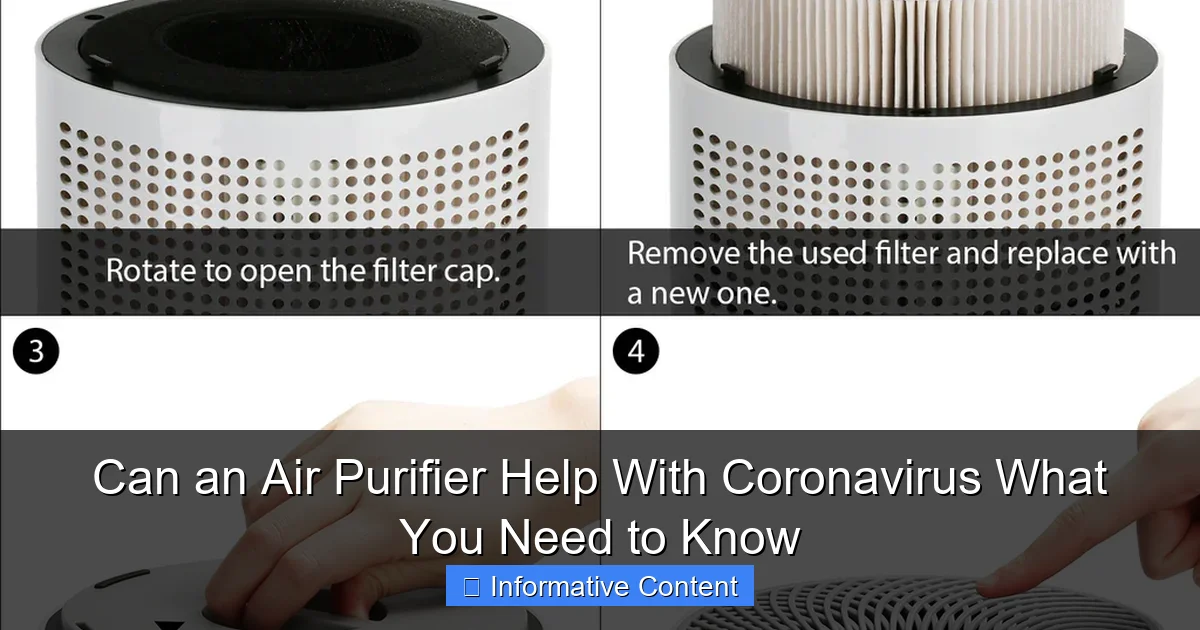
- Replace HEPA filters every 6–12 months (sooner in dusty or smoky environments).
- Vacuum the pre-filter (if your model has one) monthly.
- Never wash a HEPA filter—it damages the fibers.
My neighbor learned this the hard way. He hadn’t changed his filter in two years. When he finally did, the new one was black with grime. “I was basically blowing dirty air around,” he said.
Combine With Other Safety Measures
An air purifier is just one layer. For real protection, pair it with:
- Masks: N95 or KN95 masks filter 95% of particles, including viruses.
- Ventilation: Open windows when possible, even just a crack.
- Humidity Control: Aim for 40–60% humidity. Dry air helps viruses survive longer.
- Hand Hygiene: Wash hands frequently—viruses can land on surfaces and transfer to your face.
What Science Says: Evidence and Limitations
Studies on Air Purifiers and Viruses
Research shows air purifiers with HEPA filters can reduce airborne virus levels. A 2021 study in the Journal of Infectious Diseases found that portable HEPA purifiers reduced aerosolized coronavirus by over 90% in a controlled classroom setting. Another study in Building and Environment showed that adding purifiers to a hospital room cut virus concentration in half within 10 minutes.
But—and this is important—these studies were conducted in controlled environments. Real-world results depend on room size, airflow, and how people behave. A purifier can’t stop someone from coughing directly in your face, nor can it filter air that hasn’t been drawn into the unit.
Limitations You Should Know
- No Surface Cleaning: Air purifiers don’t clean surfaces. If someone sneezes on a table, the virus can still spread via touch.
- Short-Range Effect: A purifier only cleans the air in its immediate area. It won’t help if the virus is across the room and not in the airflow.
- No Protection from Close Contact: If you’re within 3 feet of an infected person, even the best purifier won’t stop all virus particles from reaching you.
Think of it like an umbrella. It keeps you dry in the rain, but if someone pours a bucket of water over your head, it won’t help. Air purifiers are great for reducing risk, but they’re not 100% protection.
When Air Purifiers Make the Biggest Difference
They shine in these scenarios:
- Homes with a sick member (isolation room).
- Small, poorly ventilated rooms (like home offices or classrooms).
- During high-risk events (family gatherings, travel).
- For people with asthma, allergies, or weakened immune systems.
Data Table: Air Purifier Comparison for Virus Protection
| Model | Filter Type | CADR (Dust/Smoke) | Room Size (sq ft) | ACH (4-6) | Special Features |
|---|---|---|---|---|---|
| Blueair 211+ | True HEPA + Carbon | 350 | 540 | 5.8 | Washable pre-filter |
| Winix 5500-2 | True HEPA + Carbon | 243 | 360 | 5.2 | PlasmaWave (optional) |
| Dyson TP04 | HEPA + Carbon | 290 | 400 | 4.5 | Fan + app control |
| Airpura V600 | Medical-grade HEPA | 400 | 780 | 6.0 | 18 lbs carbon, hospital-grade |
| Corsi-Rosenthal Box (DIY) | MERV 13 (4x) | ~300 | 500 | 4.0–5.0 | Low cost, high airflow |
Final Thoughts: Air Purifiers as Part of a Smarter Strategy
So, can an air purifier help with coronavirus? Yes—but with caveats. It’s a powerful tool for reducing airborne virus particles, especially in enclosed spaces. When paired with masks, ventilation, and hygiene, it can significantly lower your risk. But it’s not a standalone solution. No single measure is perfect, and relying on just one can leave you vulnerable.
Think of it like a seatbelt. It won’t prevent every accident, but it greatly improves your chances of walking away unharmed. An air purifier does the same for your lungs. It’s not about fear—it’s about smart, practical protection.
My advice? If you’re considering one, focus on quality: a True HEPA filter, the right size for your room, and consistent use. And remember—air purifiers are just one part of the puzzle. Stay informed, stay cautious, and keep breathing easy.
Frequently Asked Questions
Can an air purifier help with coronavirus by removing airborne particles?
Yes, high-efficiency air purifiers with HEPA filters can capture airborne particles containing viruses, including the coronavirus, reducing their concentration in indoor air. However, they should be used alongside other precautions like masking and ventilation.
How does a HEPA air purifier help with COVID-19 protection?
HEPA air purifiers trap at least 99.97% of particles as small as 0.3 microns, including respiratory droplets that may carry the coronavirus. This can lower infection risk in enclosed spaces when combined with other safety measures.
Do air purifiers kill the coronavirus, or just trap it?
Most air purifiers with HEPA filters trap the virus rather than kill it. Some advanced models use UV-C light or bipolar ionization to deactivate pathogens, but effectiveness varies by product and usage conditions.
What type of air purifier is best for coronavirus protection?
Air purifiers with true HEPA filters are the gold standard for coronavirus protection. Look for models with high CADR ratings and features like activated carbon filters to address both particles and odors.
Can an air purifier help with coronavirus in high-risk settings like hospitals?
Yes, medical-grade air purifiers with HEPA or ULPA filters are widely used in healthcare settings to reduce airborne virus transmission. Portable units can supplement HVAC systems in clinics or waiting areas.
How long should I run an air purifier to help with COVID-19 safety?
Run your air purifier continuously in occupied rooms to maintain clean air. For best results, ensure the unit’s coverage area matches the room size and replace filters as recommended by the manufacturer.