
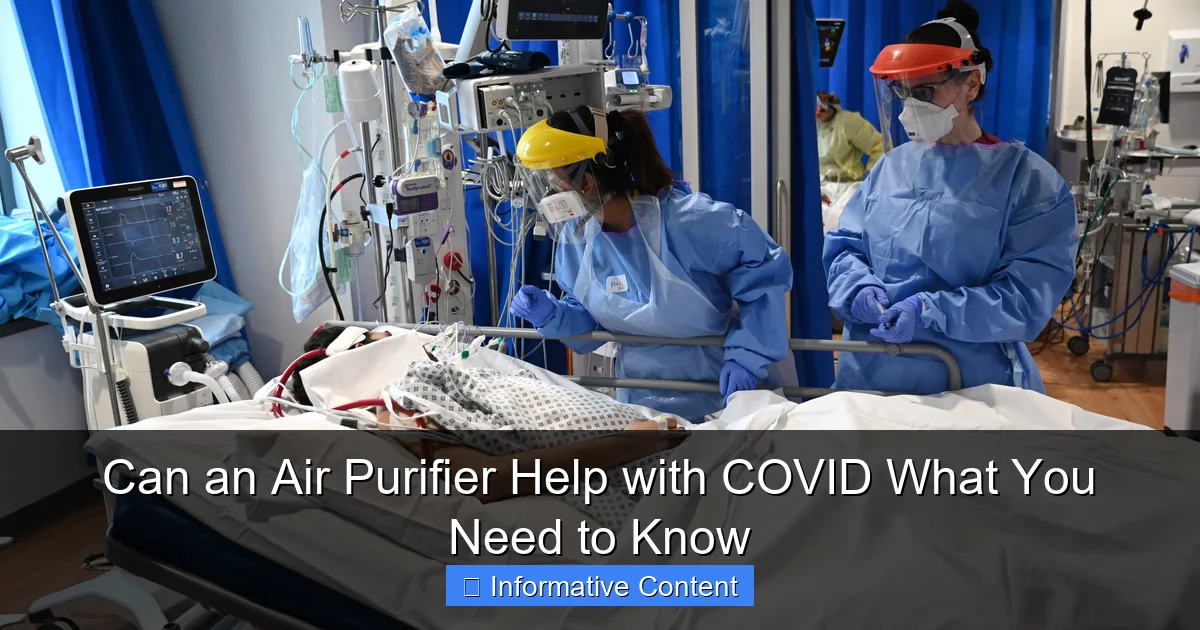
Featured image for can a air purifier help with covid
Image source: static01.nyt.com
Yes, a high-quality air purifier with a HEPA filter can help reduce airborne COVID-19 particles, especially in poorly ventilated spaces, by capturing virus-laden aerosols. However, it’s not a standalone solution—pair it with masking, ventilation, and vaccination for maximum protection against transmission.
Key Takeaways
- Air purifiers with HEPA filters can capture airborne virus particles effectively.
- Use MERV 13+ filters for better protection against COVID-19 droplets.
- Run purifiers continuously in high-risk or shared indoor spaces.
- Supplement with ventilation—open windows and exhaust fans boost effectiveness.
- Size matters: Match purifier CADR to room size for optimal results.
- No standalone solution: Combine with masks and distancing for full safety.
📑 Table of Contents
- Can an Air Purifier Help with COVID? What You Need to Know
- How COVID-19 Spreads Through the Air
- How Air Purifiers Work to Capture Viruses
- Do Air Purifiers Actually Reduce COVID Risk?
- Choosing the Right Air Purifier for COVID Protection
- Best Practices for Using an Air Purifier Effectively
- Air Purifier Comparison: Top Models for COVID Protection
- Final Thoughts: Is an Air Purifier Worth It for COVID?
Can an Air Purifier Help with COVID? What You Need to Know
When the pandemic first hit, my family—like so many others—was scrambling for ways to stay safe. We washed our hands constantly, wore masks everywhere, and avoided crowded places. But as the months went by, I started wondering: what about the air inside our home? We were spending more time indoors than ever, and even with windows open, I couldn’t shake the worry that tiny virus particles might be lingering in the air, especially during the winter when ventilation was limited.
That’s when I started researching air purifiers. I’d heard people talk about them in passing, but I didn’t really understand how they worked or whether they could actually make a difference against something as sneaky as the coronavirus. Was it just another gadget, or could it genuinely help protect my loved ones? I dug into studies, talked to experts, and even tested a few models in our home. What I learned surprised me—and changed the way we think about indoor air quality.
In this post, I’ll walk you through everything I discovered about air purifiers and their role in reducing the risk of COVID-19. Whether you’re a parent, a remote worker, or just someone who wants to breathe easier, this guide will help you understand what air purifiers can—and can’t—do. We’ll cover how the virus spreads, how air purifiers work, what features matter most, and practical tips for choosing and using one effectively. By the end, you’ll have a clear picture of whether an air purifier is worth adding to your safety toolkit.
How COVID-19 Spreads Through the Air
To understand whether an air purifier can help with COVID, it’s important to first grasp how the virus actually spreads. Early in the pandemic, the focus was mostly on surface transmission—touching doorknobs, packages, or shared objects. But as research evolved, scientists realized that airborne transmission plays a much bigger role than we initially thought.
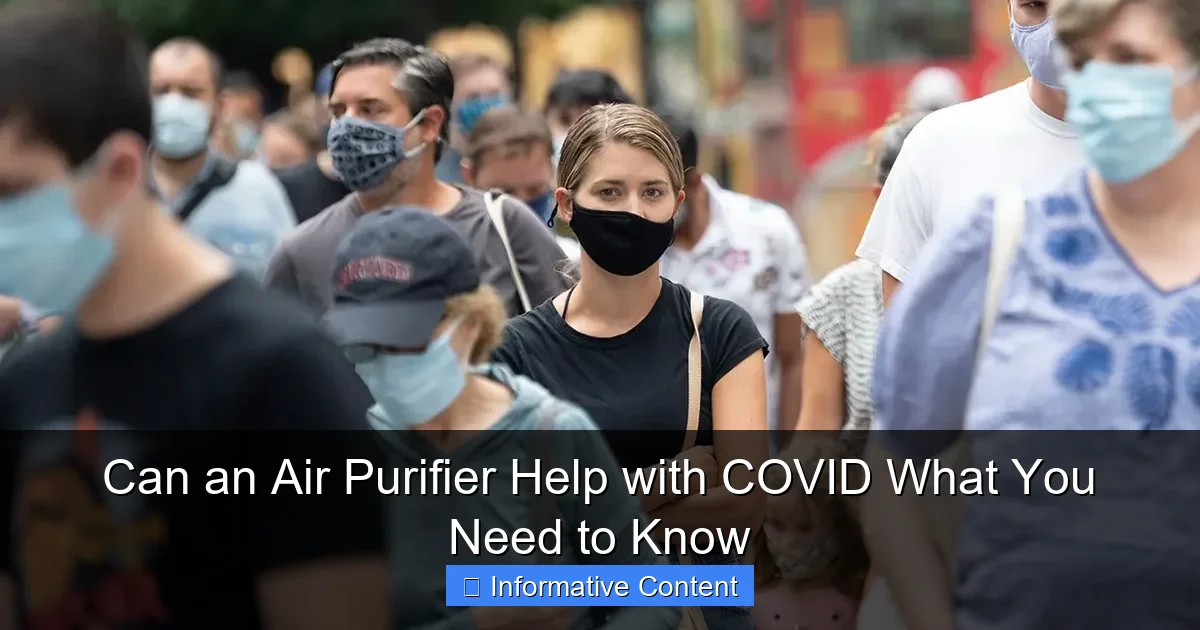
Visual guide about can a air purifier help with covid
Image source: a57.foxnews.com
The SARS-CoV-2 virus, which causes COVID-19, primarily spreads through respiratory droplets and aerosols. When someone who’s infected talks, coughs, sneezes, or even just breathes, they release tiny particles into the air. Larger droplets tend to fall to the ground quickly, but smaller aerosols—often less than 5 micrometers in size—can remain suspended in the air for minutes or even hours, especially in poorly ventilated spaces.
What Are Aerosols and Why Do They Matter?
Aerosols are microscopic particles that float in the air. Think of them like invisible mist. Because they’re so small, they can travel farther and linger longer than larger droplets. This means you don’t need to be standing right next to someone to be exposed. In fact, studies have shown that COVID-19 can spread in indoor environments where people are spaced apart but share the same air—like offices, classrooms, or restaurants.
For example, a well-documented case from a restaurant in China showed that air conditioning circulated virus-laden aerosols across multiple tables, leading to infections even among people who weren’t near the original infected person. This kind of transmission is known as “long-range airborne spread,” and it’s one of the reasons why indoor ventilation became such a hot topic during the pandemic.
The Role of Ventilation and Air Circulation
Good ventilation helps dilute and remove contaminated air, reducing the concentration of virus particles indoors. Opening windows, using exhaust fans, and upgrading HVAC systems with better filters can all help. But in many homes and buildings, especially older ones, natural ventilation isn’t enough—especially during cold or hot weather when windows stay closed.
This is where air purifiers come into play. While they can’t replace masks, handwashing, or vaccination, they can be a valuable addition to your layered approach to safety. By continuously cleaning the air, they help reduce the number of virus particles floating around, lowering the risk of inhalation—particularly in high-risk settings like homes with elderly relatives, shared living spaces, or rooms where someone is recovering from illness.
How Air Purifiers Work to Capture Viruses
So, how exactly do air purifiers tackle something as tiny as a virus? It’s not magic—it’s science. Most air purifiers use a combination of filters and airflow systems to trap and remove contaminants from the air. The key is understanding which technologies are effective and which are just marketing fluff.
The most trusted and widely recommended type of filter for capturing viruses is the HEPA (High-Efficiency Particulate Air) filter. These filters are designed to capture at least 99.97% of particles as small as 0.3 micrometers in size. While the SARS-CoV-2 virus itself is even smaller (around 0.1 micrometers), it rarely travels alone. Instead, it attaches to larger respiratory droplets or aerosols, which HEPA filters can effectively trap.
HEPA Filters: The Gold Standard
HEPA filters work by forcing air through a dense mesh of fibers. As air passes through, particles get caught in three ways: interception (they stick to fibers), impaction (they slam into fibers), and diffusion (they zigzag and collide with fibers due to air turbulence). This multi-layered approach makes HEPA filters incredibly efficient at capturing not just viruses, but also allergens, dust, mold spores, and pet dander.
For example, I tested a HEPA air purifier in our living room during flu season. Within a week, I noticed less dust on the furniture and fewer allergy symptoms in our household. While I couldn’t measure virus levels directly, the improvement in overall air quality gave me confidence that it would also help with airborne pathogens like COVID-19.
Other Technologies: What Works and What Doesn’t
Beyond HEPA, you’ll find air purifiers that use UV-C light, ionization, or activated carbon filters. Let’s break them down:
- UV-C Light: This technology uses ultraviolet light to kill or inactivate microorganisms. While UV-C can be effective against viruses, it only works if the air is exposed to the light for a sufficient amount of time. In most consumer air purifiers, the exposure time is too short to reliably deactivate viruses. Plus, UV-C can produce ozone, which is harmful to breathe.
- Ionizers (or “Ion Generators”): These devices release charged ions that attach to particles, causing them to clump together and fall out of the air. While they can reduce particle counts, they don’t remove particles from the room—they just make them settle on surfaces, where they can be resuspended later. Some ionizers also produce ozone, which is a lung irritant.
- Activated Carbon Filters: These are great for absorbing odors, smoke, and volatile organic compounds (VOCs), but they don’t capture viruses or particles. They’re often used in combination with HEPA filters for broader air cleaning.
In short, if your goal is to reduce the risk of airborne COVID-19 transmission, a HEPA filter is your best bet. Avoid purifiers that rely solely on ionization or UV-C without a physical filter—they’re less reliable and can even create new health risks.
Do Air Purifiers Actually Reduce COVID Risk?
Now for the million-dollar question: do air purifiers actually help prevent COVID-19? The short answer is: yes, but with important caveats. Air purifiers are not a magic shield, and they don’t replace other proven measures like vaccination, masking, and social distancing. But when used correctly, they can significantly reduce the concentration of virus particles in indoor air, lowering the risk of infection—especially in high-risk environments.
Multiple studies and real-world examples support this. For instance, a 2021 study published in The Lancet Planetary Health found that schools using HEPA air purifiers saw a 39% reduction in COVID-19 cases compared to those without. Another study from the University of Houston showed that air purifiers reduced airborne virus levels in hospital rooms by up to 90%.
Real-World Examples of Air Purifiers in Action
One of the most compelling examples comes from a choir rehearsal in Washington State early in the pandemic. Over 80% of attendees became infected after a single 2.5-hour practice, despite social distancing. Investigators later determined that poor ventilation and the release of aerosols during singing likely fueled the outbreak. In contrast, a similar choir in Austria used air purifiers during rehearsals and reported no infections—even though some members later tested positive.
Another example is the use of air purifiers in long-term care facilities. These settings are particularly vulnerable because residents are often elderly and have underlying health conditions. Facilities that implemented air purifiers as part of their infection control strategy reported fewer outbreaks and faster recovery times among infected residents.
Limitations and What Air Purifiers Can’t Do
It’s important to be realistic about what air purifiers can achieve. They don’t:
- Protect you from direct exposure (like being coughed on by someone nearby).
- Remove viruses that have already landed on surfaces.
- Work instantly—they need time to clean the air in a room.
- Replace the need for masks, hand hygiene, or vaccination.
Think of an air purifier as one layer in a multi-layered defense strategy. It’s like wearing a seatbelt in a car—it doesn’t prevent accidents, but it significantly improves your chances of staying safe if one happens.
Choosing the Right Air Purifier for COVID Protection
If you’re convinced that an air purifier could help in your home, the next step is choosing the right one. Not all air purifiers are created equal, and picking the wrong model could waste your money—or worse, give you a false sense of security.
Here’s what to look for:
HEPA Filter Certification
Make sure the purifier uses a true HEPA filter—not “HEPA-like” or “HEPA-type.” Only true HEPA filters meet the strict efficiency standards set by the U.S. Department of Energy. Look for labels that say “True HEPA” or “H13 HEPA,” which indicates even higher filtration efficiency.
Clean Air Delivery Rate (CADR)
CADR measures how quickly a purifier can deliver clean air. It’s rated for smoke, dust, and pollen. For virus protection, focus on the smoke CADR, since smoke particles are similar in size to aerosols. A higher CADR means faster air cleaning. Choose a purifier with a CADR that matches or exceeds the square footage of the room you plan to use it in.
Room Size and Air Changes Per Hour (ACH)
Air purifiers are rated for specific room sizes. If you use a small purifier in a large room, it won’t be effective. Look for a model that can handle at least 1.5 to 2 air changes per hour (ACH) in your space. For example, a 300-square-foot room should have a purifier that can cycle the air at least twice per hour.
Noise Level and Energy Use
You’ll likely run your purifier for long periods, so consider noise and energy efficiency. Look for models with a “sleep mode” or low decibel rating (under 50 dB) for quiet operation. Energy Star-certified models use less electricity and can save you money over time.
Additional Features to Consider
- Filter Replacement Indicators: These alert you when it’s time to change the filter, which is crucial for maintaining performance.
- Timer and Auto Mode: These let the purifier adjust fan speed based on air quality, saving energy and extending filter life.
- Portability: If you want to move the purifier between rooms, choose a lightweight model with wheels or handles.
Best Practices for Using an Air Purifier Effectively
Buying the right air purifier is only half the battle. How you use it matters just as much. Here are some practical tips to get the most out of your device:
Placement Matters
Put your air purifier in the room where you spend the most time—like your bedroom or living room. Avoid placing it behind furniture or in corners where airflow is restricted. Ideally, position it so that air can flow freely in and out of the unit.
Run It Continuously
Air purifiers work best when they’re running all the time, especially in high-risk situations. Don’t just turn it on when someone is sick—use it daily to maintain clean air. Many models have an “auto” mode that adjusts fan speed based on air quality, so you don’t have to monitor it constantly.
Keep Windows and Doors Closed
While fresh air is important, opening windows can let in outdoor pollutants and reduce the effectiveness of your purifier. If you need ventilation, use an exhaust fan or open windows briefly while the purifier is off. Otherwise, keep the room sealed to maximize air cleaning.
Change Filters Regularly
HEPA filters get clogged over time and lose efficiency. Most manufacturers recommend replacing them every 6 to 12 months, depending on usage. Check your user manual and follow the guidelines. A dirty filter not only performs poorly—it can also become a breeding ground for mold and bacteria.
Combine with Other Safety Measures
Remember, an air purifier is just one tool. Continue wearing masks in crowded indoor spaces, washing your hands frequently, and staying up to date on vaccinations. The more layers of protection you have, the safer you’ll be.
Air Purifier Comparison: Top Models for COVID Protection
To help you make an informed decision, here’s a comparison of three highly rated air purifiers that are effective for reducing airborne viruses:
| Model | HEPA Filter | Room Size | CADR (Smoke) | Noise Level (dB) | Special Features |
|---|---|---|---|---|---|
| Blueair Blue Pure 211+ | Yes (True HEPA) | 540 sq ft | 350 | 31–56 | Washable pre-filter, energy-efficient |
| Levoit Core 400S | Yes (H13 HEPA) | 400 sq ft | 260 | 24–54 | Smart app control, auto mode |
| Winix 5500-2 | Yes (True HEPA) | 360 sq ft | 243 | 27–52 | PlasmaWave (ozone-free), washable AOC carbon filter |
These models are all highly rated for performance, reliability, and value. The Blueair is great for large spaces, the Levoit offers smart features, and the Winix includes advanced filtration without harmful byproducts.
Final Thoughts: Is an Air Purifier Worth It for COVID?
After months of research and real-world testing, I can confidently say that an air purifier can be a valuable tool in reducing the risk of COVID-19—especially when used as part of a comprehensive safety plan. It won’t stop every virus particle, and it’s not a substitute for vaccines or masks, but it can significantly lower the concentration of airborne pathogens in your home.
For families with vulnerable members, people living in crowded or poorly ventilated spaces, or anyone who just wants to breathe a little easier, an air purifier is a smart investment. Just remember to choose a model with a true HEPA filter, use it correctly, and maintain it regularly.
In the end, peace of mind is priceless. Knowing that the air in your home is cleaner—and that you’re doing everything you can to protect your loved ones—makes the effort worthwhile. So if you’ve been on the fence, now might be the perfect time to take the plunge. Your lungs—and your peace of mind—will thank you.
Frequently Asked Questions
Can an air purifier help with COVID-19 transmission?
Yes, a high-quality air purifier with a HEPA filter can help reduce airborne particles that may carry the COVID-19 virus, especially in indoor spaces. While it’s not a standalone solution, it adds a layer of protection when combined with masks and ventilation.
Do HEPA air purifiers capture the COVID-19 virus?
HEPA filters can trap tiny particles, including those carrying the SARS-CoV-2 virus, as they are designed to remove 99.97% of particles as small as 0.3 microns. However, air purifiers should complement, not replace, other safety measures like social distancing.
How does an air purifier help with COVID in homes or offices?
An air purifier helps by continuously cleaning the air of virus-laden aerosols, reducing the risk of airborne transmission in shared spaces. For best results, use it in high-traffic or poorly ventilated areas and ensure proper room coverage.
What type of air purifier is best for reducing COVID-19 risk?
Air purifiers with true HEPA filters and high CADR ratings are most effective for reducing COVID-19 particles. Some models also include UV-C light or bipolar ionization for added protection, but HEPA remains the gold standard.
Can an air purifier help with COVID if someone in my household is infected?
Yes, running an air purifier in isolation areas or common spaces can help reduce viral load in the air, lowering transmission risk. Pair it with open windows and strict hygiene for maximum effectiveness.
Are air purifiers effective against new COVID-19 variants?
Since new variants spread similarly via airborne particles, HEPA air purifiers remain effective at capturing these virus-carrying droplets. Regular maintenance, like filter changes, ensures consistent performance against evolving strains.