
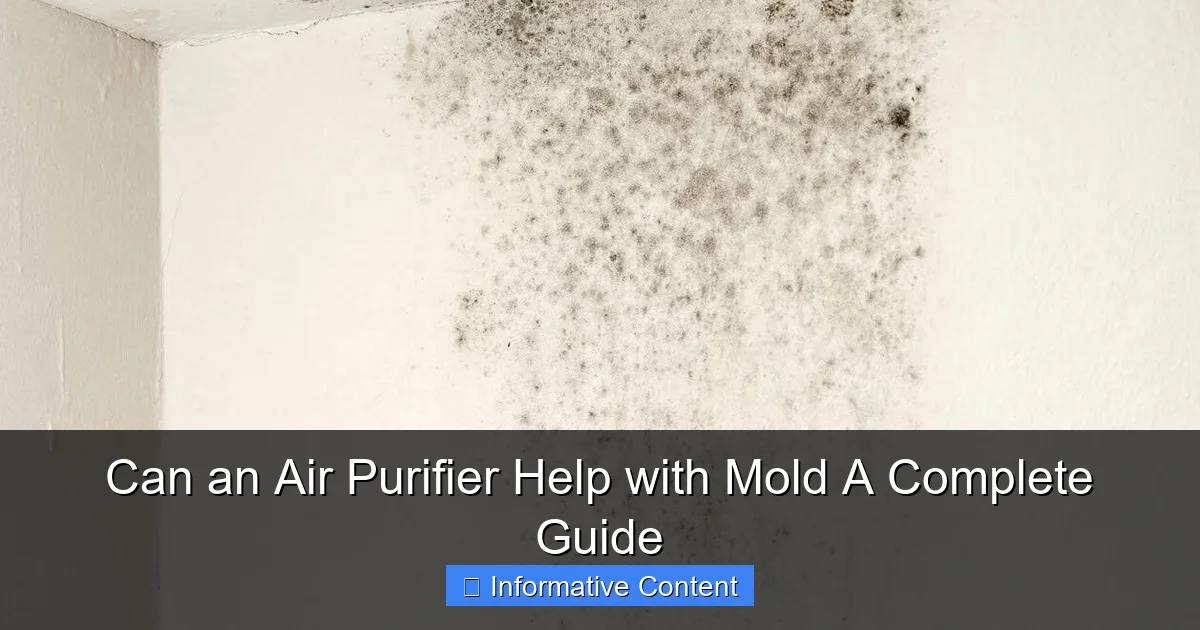
Featured image for can a air purifier help with mold
Image source: hometeat.com
Yes, an air purifier can help with mold by capturing airborne mold spores and improving indoor air quality, especially when equipped with a HEPA filter. While it won’t eliminate existing mold growth, it significantly reduces spore circulation, helping prevent further spread and health risks—making it a vital tool in mold remediation efforts.
Key Takeaways
- Air purifiers with HEPA filters capture mold spores effectively.
- Activated carbon filters reduce musty odors from mold growth.
- Run purifiers continuously in mold-prone areas for best results.
- Combine with humidity control to prevent mold recurrence.
- Replace filters regularly to maintain spore-catching efficiency.
- Purifiers don’t kill mold; use alongside professional remediation.
📑 Table of Contents
- Can an Air Purifier Help with Mold? A Complete Guide
- Understanding Mold and Why It’s a Problem
- How Air Purifiers Work Against Mold
- Choosing the Right Air Purifier for Mold
- Limitations of Air Purifiers for Mold
- Complementary Strategies to Control Mold
- Air Purifier Performance Comparison for Mold
- Final Thoughts: Can an Air Purifier Help with Mold?
Can an Air Purifier Help with Mold? A Complete Guide
Imagine walking into your basement after a rainy week and catching that unmistakable musty smell—the kind that makes you wrinkle your nose and wonder, “Is that mold?” You’re not alone. Mold is one of those sneaky household problems that can grow quietly behind walls, under sinks, or in damp corners, often going unnoticed until it starts affecting your health or your home’s air quality. If you’ve ever dealt with mold—or even just suspected its presence—you’ve probably asked yourself: Can an air purifier help with mold?
The short answer? Yes, but with important caveats. Air purifiers aren’t a magic cure-all, and they won’t eliminate mold at its source. However, they can play a valuable role in reducing airborne mold spores, improving indoor air quality, and helping you breathe easier—especially if you’re sensitive to allergens or have respiratory conditions like asthma. In this guide, we’ll walk you through everything you need to know about how air purifiers work against mold, what types are most effective, and what steps you should take alongside using one to truly tackle a mold problem. Think of this as your friendly, no-nonsense roadmap to cleaner, healthier air—without the fluff or sales pitches.
Understanding Mold and Why It’s a Problem
Mold is a type of fungus that thrives in warm, moist environments. It reproduces by releasing tiny, lightweight spores into the air—so small you can’t see them without a microscope. These spores float around your home, landing on surfaces where they can grow if conditions are right. Common indoor mold hotspots include bathrooms, basements, laundry rooms, and areas near leaky pipes or windows.

Visual guide about can a air purifier help with mold
Image source: breezeboss.com
How Mold Affects Your Health
For many people, mold exposure causes little more than a mild allergic reaction—sneezing, itchy eyes, or a runny nose. But for others, especially those with asthma, allergies, or weakened immune systems, mold can trigger more serious issues. According to the Centers for Disease Control and Prevention (CDC), prolonged exposure to mold may lead to chronic respiratory problems, worsened asthma symptoms, and even infections in rare cases.
Even if you don’t have allergies, mold can still affect your well-being. That “stuffy” feeling in your home, headaches, or unexplained fatigue could be linked to poor indoor air quality caused by mold spores. The problem isn’t just the visible patches of mold on your shower curtain or basement wall—it’s the invisible spores circulating in the air you breathe every day.
Why Mold Keeps Coming Back
One of the biggest frustrations with mold is that it often returns, even after cleaning. That’s because mold spores are everywhere—outdoors and indoors. They’re naturally present in the environment, and they only need moisture and organic material (like drywall, wood, or dust) to grow. Simply wiping away visible mold doesn’t address the root cause: excess moisture.
For example, if you’ve had a leaky roof or a flooded basement, the water may have seeped into walls or insulation, creating a hidden breeding ground for mold. Even high humidity levels—above 60%—can encourage mold growth over time. This is why solving a mold problem requires more than just surface cleaning. You need to control moisture, improve ventilation, and reduce airborne spores.
How Air Purifiers Work Against Mold
Now that we understand the mold problem, let’s talk about how air purifiers fit into the solution. At their core, air purifiers are designed to clean the air by capturing pollutants—including mold spores—before you inhale them. But not all air purifiers are created equal, and understanding how they work will help you choose the right one for your needs.
The Role of Filters in Mold Removal
Most air purifiers use filters to trap airborne particles. The most effective type for mold is a HEPA (High-Efficiency Particulate Air) filter. True HEPA filters can capture 99.97% of particles as small as 0.3 microns—smaller than the average mold spore, which ranges from 1 to 30 microns. This means HEPA filters are highly effective at removing mold spores from the air.
For example, if you run a HEPA air purifier in your bedroom overnight, it can significantly reduce the number of mold spores circulating while you sleep. This is especially helpful if you wake up with a stuffy nose or itchy eyes—symptoms often linked to nighttime allergen exposure.
Additional Technologies: UV-C Light and Ionizers
Some air purifiers go beyond filtration by incorporating additional technologies like UV-C light or ionizers. UV-C light is designed to kill mold spores by damaging their DNA, preventing them from reproducing. While this sounds promising, the effectiveness depends on how long the spores are exposed to the light and the intensity of the UV-C source. In most home units, the exposure time is too short to fully neutralize mold, so UV-C is best used as a supplement—not a standalone solution.
Ionizers, on the other hand, release charged particles that cause mold spores to clump together and fall out of the air. While this can reduce airborne spores, it doesn’t remove them from your home—they just settle on surfaces, where they can still be stirred up later. Plus, some ionizers produce ozone, a lung irritant that can worsen respiratory issues. For these reasons, HEPA filters are generally the safer and more reliable choice.
Real-World Example: A Family’s Experience
Take Sarah, a mom of two from Portland, Oregon. After noticing a persistent musty smell in her kids’ playroom, she discovered a small patch of mold behind a bookshelf. She cleaned it thoroughly, but her youngest son, who has asthma, continued to have nighttime coughing fits. She decided to try a HEPA air purifier in the room. Within a week, the coughing improved, and the air felt noticeably fresher. “It didn’t fix the mold,” she said, “but it made a huge difference in how we felt.”
Sarah’s story highlights an important point: air purifiers won’t remove mold from surfaces, but they can reduce your exposure to airborne spores, which is a critical step in protecting your health.
Choosing the Right Air Purifier for Mold
Not all air purifiers are equally effective against mold, so it’s important to know what to look for. Here’s a breakdown of key features to consider when shopping for an air purifier to combat mold.
Look for a True HEPA Filter
This is non-negotiable. Avoid products that claim “HEPA-like” or “HEPA-type” filtration—these don’t meet the same standards. Only a true HEPA filter can reliably capture mold spores. Check the product specifications to confirm it’s certified to capture 99.97% of particles at 0.3 microns.
Consider the Room Size and CADR Rating
Air purifiers are rated for specific room sizes. If you buy one that’s too small for your space, it won’t circulate air effectively. Look for the Clean Air Delivery Rate (CADR), which measures how quickly the purifier can clean the air. A higher CADR means faster filtration. For a 300-square-foot room, aim for a CADR of at least 200 for smoke, dust, and pollen—mold spores fall into this category.
Noise Level and Energy Use
You’ll likely run your air purifier continuously, especially in high-moisture areas like basements. Choose a model with a quiet sleep mode (under 30 decibels) so it won’t disturb your rest. Also, check the energy consumption—some models use as little as 50 watts on low, making them cost-effective to run 24/7.
Additional Features to Consider
- Filter replacement indicators: These remind you when it’s time to change the filter, which is crucial for maintaining performance.
- Auto mode: Adjusts fan speed based on air quality sensors, saving energy when air is clean.
- Washable pre-filters: Capture larger particles like dust and pet hair, extending the life of the HEPA filter.
For example, the Levoit Core 300 is a popular choice for mold-prone homes. It features a true HEPA filter, covers up to 219 square feet, and operates quietly at 24 decibels. Users report noticeable improvements in air quality, especially in damp basements or bathrooms.
Limitations of Air Purifiers for Mold
While air purifiers are a helpful tool, it’s important to understand their limitations. Relying on one alone won’t solve a mold problem—especially if the source of moisture isn’t addressed.
Air Purifiers Don’t Remove Mold from Surfaces
An air purifier can’t scrub your walls or clean behind your washing machine. If you have visible mold, you must clean it properly using appropriate cleaning solutions (like a mix of water and vinegar or a commercial mold cleaner) and protective gear. Scrubbing without containment can actually release more spores into the air, making the problem worse.
They Can’t Fix the Root Cause
Mold grows because of moisture. If you don’t fix leaks, reduce humidity, or improve ventilation, mold will keep coming back—no matter how powerful your air purifier is. For instance, if your basement floods every spring due to poor drainage, running an air purifier won’t stop new mold from forming. You need to address the water issue first.
Effectiveness Depends on Air Circulation
Air purifiers only clean the air that passes through them. If your home has poor airflow—like sealed rooms or closed doors—the purifier may not reach all areas. For best results, place the unit in a central location and keep doors open when possible. Some people use multiple smaller units in different rooms for better coverage.
Filter Maintenance Is Crucial
A dirty or clogged filter won’t capture mold spores effectively. Most HEPA filters need replacing every 6 to 12 months, depending on usage and air quality. Neglecting maintenance turns your air purifier into a dust collector—not a clean-air machine. Set calendar reminders to check and replace filters regularly.
Think of an air purifier like a sponge: it can soak up moisture (in this case, airborne spores), but it has a limited capacity. Once it’s full, it stops working. Regular maintenance ensures it keeps performing at its best.
Complementary Strategies to Control Mold
To truly tackle mold, you need a multi-pronged approach. An air purifier is just one piece of the puzzle. Here are other essential steps to keep your home mold-free.
Control Indoor Humidity
The ideal indoor humidity level is between 30% and 50%. Use a hygrometer to monitor levels, and consider a dehumidifier in damp areas like basements. Running a dehumidifier alongside an air purifier creates a powerful one-two punch: the dehumidifier reduces moisture (preventing mold growth), while the purifier removes airborne spores.
Fix Leaks and Improve Ventilation
Inspect your home for leaks in roofs, pipes, and windows. Repair them promptly. Use exhaust fans in bathrooms and kitchens to vent moisture outside. If you don’t have fans, open windows when showering or cooking to let steam escape.
Clean and Dry Wet Areas Immediately
Mold can start growing within 24 to 48 hours of water exposure. If you spill water or experience a flood, dry the area thoroughly as soon as possible. Use fans and dehumidifiers to speed up the process. Remove and replace water-damaged materials like carpet or drywall if they can’t be fully dried.
Use Mold-Resistant Products
When renovating or building, choose mold-resistant drywall, paint, and insulation. These materials are treated to resist moisture and inhibit mold growth, giving you long-term protection.
Regular Cleaning and Maintenance
Vacuum with a HEPA-filter vacuum cleaner to capture mold spores from carpets and upholstery. Wash bedding and curtains regularly in hot water. Clean bathroom tiles and grout with mold-killing solutions to prevent buildup.
For example, James, a homeowner in Florida, combined a HEPA air purifier with a dehumidifier and weekly cleaning routines. “After six months, the musty smell was gone, and my allergy symptoms improved dramatically,” he said. “It wasn’t just one thing—it was the combination.”
Air Purifier Performance Comparison for Mold
To help you make an informed decision, here’s a comparison of popular air purifiers known for their effectiveness against mold and airborne allergens. All models listed feature true HEPA filters and are suitable for home use.
| Model | Room Coverage (sq ft) | CADR (Dust/Pollen/Smoke) | Noise Level (dB) | Key Features | Best For |
|---|---|---|---|---|---|
| Levoit Core 300 | 219 | 141/140/138 | 24 | True HEPA, 3-stage filtration, quiet operation | Small to medium rooms, bedrooms |
| Winix 5500-2 | 360 | 243/246/232 | 27 | True HEPA, washable AOC carbon filter, auto mode | Larger rooms, living areas |
| Blueair Blue Pure 211+ | 540 | 350/350/350 | 31 | True HEPA, washable pre-filter, energy-efficient | Open floor plans, high-traffic areas |
| Honeywell HPA300 | 465 | 300/300/300 | 35 | True HEPA, 3 cleaning levels, turbo mode | Large rooms, basements |
| Dyson Purifier Humidify+Cool | 400 | Not rated (uses different system) | 30 | HEPA + carbon filter, humidifies and cools, app control | Multi-functional use, modern homes |
This table shows that while all these models use true HEPA filtration, their performance varies by room size, noise, and additional features. Choose based on your specific needs—whether it’s quiet operation for a bedroom or high coverage for a basement.
Final Thoughts: Can an Air Purifier Help with Mold?
So, can an air purifier help with mold? The answer is a qualified yes. An air purifier with a true HEPA filter can significantly reduce airborne mold spores, improving your indoor air quality and helping you breathe easier—especially if you’re sensitive to allergens. It’s a valuable tool in your mold-fighting toolkit, but it’s not a standalone solution.
To truly win the battle against mold, you need to combine an air purifier with moisture control, proper cleaning, and preventive maintenance. Fix leaks, keep humidity in check, and clean mold promptly. Think of the air purifier as your first line of defense—catching spores before they reach your lungs—while other strategies tackle the root cause.
If you’re dealing with a serious mold problem, especially in large areas or hidden spaces, consider consulting a professional mold remediation service. They can identify hidden growth, safely remove contaminated materials, and help prevent future outbreaks.
At the end of the day, your home should be a place of comfort and safety—not a source of stress or health concerns. By understanding how mold works and using the right tools, including a quality air purifier, you can create a cleaner, healthier environment for you and your family. Breathe easy, knowing you’re taking proactive steps toward better air and peace of mind.
Frequently Asked Questions
Can an air purifier help with mold in my home?
Yes, an air purifier can help reduce airborne mold spores, which are a common trigger for allergies and respiratory issues. While it won’t eliminate mold growing on surfaces, it can significantly improve indoor air quality by capturing mold particles.
What type of air purifier is best for mold?
An air purifier with a HEPA filter is most effective for mold, as it can capture 99.97% of particles as small as 0.3 microns, including mold spores. For added protection, consider models with activated carbon filters to reduce musty odors caused by mold.
Will an air purifier kill mold?
No, an air purifier does not kill mold growing on walls, ceilings, or other surfaces. It only removes mold spores from the air, helping to prevent further spread and reducing exposure.
How long does it take for an air purifier to reduce mold spores?
Depending on the room size and purifier strength, noticeable improvements in air quality can occur within a few hours to a couple of days. Consistent use is key to maintaining low mold spore levels.
Can an air purifier help with mold allergies?
Yes, by removing mold spores from the air, an air purifier can reduce allergy symptoms like sneezing, coughing, and itchy eyes. Pairing it with proper mold remediation offers the best relief.
Do I still need to clean mold if I use an air purifier?
Absolutely. An air purifier complements but does not replace mold cleaning. You must address the source of mold growth with proper cleaning and moisture control to prevent recurrence.