
Featured image for can a air purifier help with smoke
Image source: m.media-amazon.com
Yes, an air purifier can significantly reduce smoke particles and odors in your home, improving indoor air quality during wildfires, cooking, or tobacco use. Look for models with HEPA filters to capture fine smoke particles and activated carbon filters to absorb gases and smells for the most effective results.
Key Takeaways
- Air purifiers reduce smoke particles effectively with HEPA filters.
- Activated carbon filters absorb odors from smoke and VOCs.
- Proper sizing ensures optimal performance for your room dimensions.
- Run purifiers continuously during smoke events for best results.
- Combine with source control like sealing windows for greater impact.
- Replace filters regularly to maintain efficiency and air quality.
📑 Table of Contents
- Can an Air Purifier Help with Smoke? A Complete Guide
- Understanding Smoke and Why It’s Harmful
- How Air Purifiers Work to Remove Smoke
- Choosing the Right Air Purifier for Smoke
- Real-World Examples: When Air Purifiers Shine
- Maintenance and Best Practices
- Comparing Air Purifier Models for Smoke
- Final Thoughts: Is an Air Purifier Worth It for Smoke?
Can an Air Purifier Help with Smoke? A Complete Guide
Imagine this: You’re sitting in your cozy living room, sipping tea and enjoying a quiet evening. Suddenly, a faint, acrid smell creeps in—smoke. Maybe it’s from a neighbor’s barbecue, a nearby wildfire, or even a burnt dinner you forgot about in the kitchen. Your eyes start to water, your throat feels scratchy, and you can’t help but wonder: Is the air inside your home safe to breathe?
If you’ve ever experienced smoke indoors—whether from wildfires, cooking mishaps, or secondhand cigarette smoke—you’re not alone. Millions of people around the world face this issue daily, especially during wildfire season or in urban areas with high pollution. And while opening a window might seem like a quick fix, it often lets more smoke in. That’s where air purifiers come into play. But do they actually work? Can an air purifier help with smoke? The short answer is yes—but not all air purifiers are created equal. In this guide, we’ll dive deep into how air purifiers tackle smoke, what features to look for, and how to choose the right one for your needs.
Understanding Smoke and Why It’s Harmful
Before we talk about solutions, it’s important to understand what smoke actually is—and why it’s more than just an unpleasant smell. Smoke is a complex mixture of tiny particles, gases, and chemicals released when something burns. Whether it’s wood, tobacco, plastic, or food, the combustion process creates pollutants that can linger in the air and settle on surfaces.
Visual guide about can a air purifier help with smoke
Image source: swingdesign.com
Types of Smoke and Their Sources
Not all smoke is the same. Here are the most common types you might encounter:
- Wildfire smoke: Contains fine particulate matter (PM2.5), carbon monoxide, volatile organic compounds (VOCs), and other toxic substances. It can travel hundreds of miles and significantly degrade indoor air quality.
- Cooking smoke: Often caused by high-heat cooking methods like frying or grilling. It releases grease particles, smoke, and odors that can cling to walls and furniture.
- Tobacco smoke: Includes both mainstream smoke (inhaled by the smoker) and sidestream smoke (released from the burning end). It contains over 7,000 chemicals, hundreds of which are toxic and about 70 that are known carcinogens.
- Incense and candle smoke: While often used for relaxation or ambiance, burning incense or candles can release soot and VOCs, especially if they’re made with synthetic fragrances or low-quality wax.
Health Risks of Smoke Exposure
Even short-term exposure to smoke can cause irritation and discomfort. Common symptoms include:
- Watery or burning eyes
- Sore throat or coughing
- Headaches or dizziness
- Shortness of breath
For people with asthma, allergies, or respiratory conditions like COPD, smoke can trigger severe attacks or worsen symptoms. Long-term exposure increases the risk of heart disease, lung cancer, and other chronic illnesses. Children, the elderly, and pregnant women are especially vulnerable.
According to the Environmental Protection Agency (EPA), indoor air can be 2 to 5 times more polluted than outdoor air—and smoke is a major contributor. That’s why taking steps to clean the air in your home isn’t just about comfort—it’s about health.
How Air Purifiers Work to Remove Smoke
So, how exactly do air purifiers help with smoke? At their core, air purifiers are designed to pull in contaminated air, filter out pollutants, and release cleaner air back into the room. But not all purifiers are equipped to handle smoke effectively. Let’s break down the technology behind them.
Key Filtration Technologies
Most effective air purifiers use a combination of filters to capture different types of smoke-related pollutants. Here are the most important ones:
- HEPA filters: High-Efficiency Particulate Air filters are the gold standard for trapping particles. They can capture 99.97% of particles as small as 0.3 microns—including smoke particles, dust, pollen, and pet dander. This makes them highly effective against wildfire smoke and cooking soot.
- Activated carbon filters: These are essential for removing odors and gases. Activated carbon has a porous structure that adsorbs (not absorbs) smoke odors, VOCs, and chemical fumes. Without a carbon filter, an air purifier might trap particles but leave the smell behind.
- Pre-filters: These catch larger particles like hair and lint, helping extend the life of the main filters. Some models have washable pre-filters, which can save money over time.
- Optional: UV-C light or ionizers: Some purifiers include UV light to kill bacteria or ionizers to charge particles so they stick to surfaces. However, these features are less effective against smoke and can sometimes produce ozone, a lung irritant. We’ll discuss this more in a moment.
How Smoke Particles Are Captured
Smoke contains both solid particles and gaseous pollutants. HEPA filters excel at trapping the solid bits—like soot and ash—while activated carbon handles the odors and chemicals. For example, if you burn toast and your kitchen fills with smoke, a HEPA filter will catch the tiny black particles floating in the air, while the carbon filter will neutralize the burnt smell.
It’s important to note that air purifiers don’t “destroy” smoke—they remove it from the air. That means they need to run continuously or frequently to maintain clean air, especially during heavy smoke events like wildfires.
Limitations of Air Purifiers
While air purifiers are powerful tools, they’re not magic. Here are a few things they can’t do:
- Remove smoke that has settled on surfaces: If smoke has coated your walls, curtains, or furniture, an air purifier won’t clean those. You’ll need to wipe down surfaces and wash fabrics.
- Replace proper ventilation: During wildfires, it’s crucial to keep windows and doors closed. But if you’re cooking, you still need a range hood or open window to vent grease and moisture.
- Filter out all gases: While carbon filters help with odors and some chemicals, they may not capture all toxic gases like carbon monoxide. For that, you need a dedicated CO detector.
Bottom line: Air purifiers are a critical part of your defense against smoke, but they work best as part of a broader strategy that includes sealing your home, avoiding indoor burning, and monitoring air quality.
Choosing the Right Air Purifier for Smoke
Now that you know how air purifiers work, the next step is picking the right one. With so many models on the market, it’s easy to feel overwhelmed. Here’s what to look for when shopping for an air purifier to help with smoke.
Must-Have Features
When it comes to smoke, not all air purifiers are created equal. Here are the non-negotiable features:
- True HEPA filter: Avoid “HEPA-type” or “HEPA-like” filters—they don’t meet the same standards. Look for “True HEPA” or “H13 HEPA” for maximum particle capture.
- Thick activated carbon filter: The more carbon, the better. Look for purifiers with several pounds of activated carbon, ideally in a dense block or pellet form. This ensures longer-lasting odor removal.
- High CADR rating: Clean Air Delivery Rate (CADR) measures how quickly a purifier can clean the air. For smoke, look for a CADR of at least 200–300 for a medium-sized room. Higher is better, especially for wildfire smoke.
- Appropriate room size coverage: Check the manufacturer’s recommended room size. If your living room is 300 square feet, don’t buy a purifier rated for 150 square feet—it won’t keep up.
Room Size and Placement
Air purifiers work best when matched to the size of the room. A small desktop model might help with cigarette smoke in a bedroom, but it won’t make a dent in a smoky living room during a wildfire.
Here’s a quick guide:
- Small rooms (up to 200 sq ft): A compact purifier with a HEPA and carbon filter will do the trick.
- Medium rooms (200–400 sq ft): Look for a mid-sized model with a higher CADR and stronger fan.
- Large rooms or open floor plans (400+ sq ft): Consider a high-capacity purifier or use multiple units in different areas.
Placement matters too. Put the purifier in the room where you spend the most time—like the bedroom or living room. Keep it away from walls and furniture so air can flow freely. And remember: it works best when windows and doors are closed.
Noise Level and Energy Use
Air purifiers run for hours—or even 24/7—so noise and energy efficiency are important. Look for models with a “sleep mode” or low-speed setting that’s quiet enough for nighttime use. Many modern purifiers use less than 50 watts on low, which is about the same as a light bulb.
Some models also have air quality sensors that automatically adjust fan speed based on pollution levels. This can save energy and reduce noise when the air is clean.
Avoid These Features
While some air purifiers come with extra features, not all are helpful—and some can even be harmful:
- Ozone generators: These produce ozone, a lung irritant that can worsen asthma and other respiratory conditions. The EPA strongly advises against them.
- Ionizers: While they can help particles clump together and fall out of the air, many ionizers also produce small amounts of ozone. If you want ionization, choose a purifier with a “safe” or “ozone-free” ionizer—but a HEPA filter is still more important.
- “Air sanitizers” without filters: Devices that claim to “clean” the air with UV light or plasma alone are not effective against smoke particles. They may kill germs, but they won’t remove soot or odors.
Stick to purifiers with proven filtration technology—HEPA and carbon—and avoid gimmicks.
Real-World Examples: When Air Purifiers Shine
Let’s look at a few real-life scenarios where an air purifier can make a big difference in managing smoke.
Wildfire Season: Protecting Your Home
During the 2020 wildfire season in California, air quality reached hazardous levels for weeks. Many residents turned to air purifiers to keep their homes safe. One study by the University of California found that homes with HEPA air purifiers had up to 50% lower levels of PM2.5 (fine particulate matter) compared to those without.
For example, Sarah, a mother of two in Oregon, bought a HEPA air purifier with a carbon filter when smoke from nearby fires blanketed her town. “Within an hour, the air felt cleaner,” she said. “My kids stopped coughing, and we could finally sleep through the night.”
Tip: During wildfires, run your purifier on high and keep it going 24/7. Seal windows with weather stripping and use damp towels to block gaps under doors.
Cooking Smoke: Keeping the Kitchen Fresh
Even everyday cooking can create smoke, especially if you fry, grill, or use a wok. A good air purifier placed near the kitchen can help reduce grease buildup and lingering odors.
James, a home chef in Texas, noticed his kitchen smelled like fried food for days after cooking. After installing a purifier with a washable pre-filter and activated carbon, he said, “The difference was night and day. No more greasy walls or smoky clothes.”
Tip: Use your range hood when cooking, but also run an air purifier nearby to catch what the hood misses.
Secondhand Smoke: Creating a Smoke-Free Home
If someone in your household smokes indoors, an air purifier can help reduce exposure—but it’s not a substitute for quitting or smoking outside. Still, it can make a noticeable difference.
Maria, whose husband smoked in the garage, placed a purifier in the adjacent laundry room. “The smell used to seep into our clothes,” she said. “Now, it’s barely noticeable.”
Tip: Combine an air purifier with strict no-smoking rules indoors and regular cleaning of fabrics and surfaces.
Maintenance and Best Practices
An air purifier is only as good as its maintenance. Even the best model won’t help with smoke if the filters are clogged or outdated.
Filter Replacement Schedule
Most manufacturers recommend replacing HEPA filters every 6 to 12 months and carbon filters every 3 to 6 months. However, if you’re dealing with heavy smoke—like during wildfires—you may need to replace them more often.
Signs it’s time to change the filter:
- The air doesn’t feel as clean
- Odors return quickly
- The purifier is running louder or less efficiently
- Visible dirt or discoloration on the filter
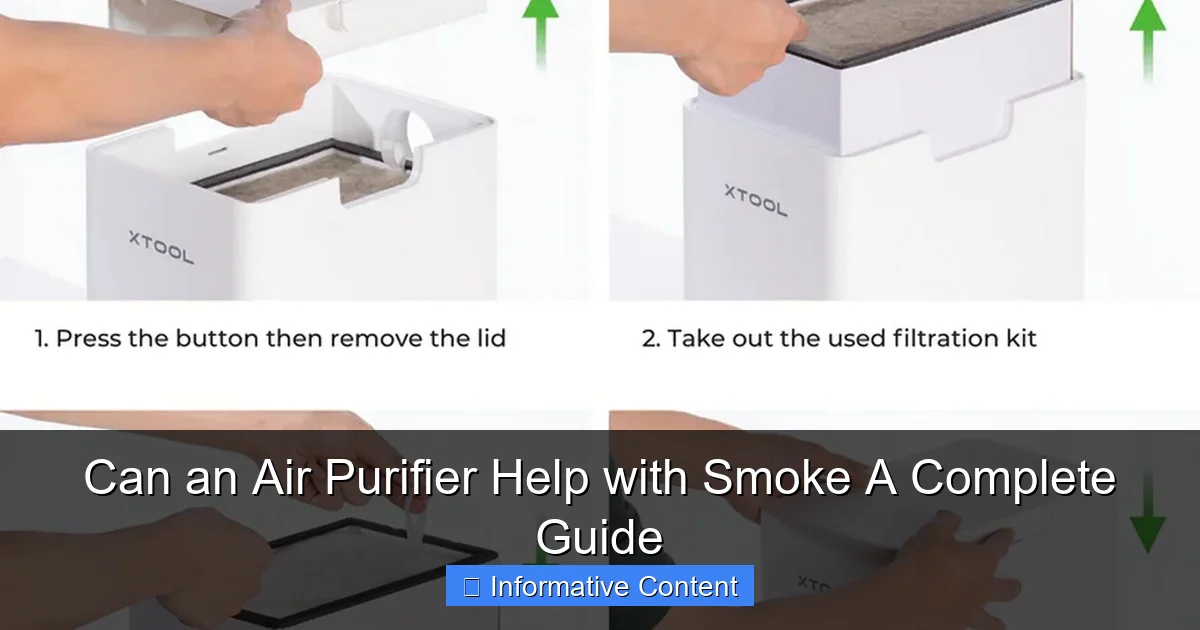
Always check the manufacturer’s guidelines and use genuine replacement filters for best performance.
Cleaning and Care
Washable pre-filters should be cleaned every 2 to 4 weeks. Simply rinse them under water, let them dry completely, and reinstall. Never run the purifier with a wet filter.
Wipe down the exterior with a damp cloth to remove dust. Avoid using harsh chemicals that could damage the unit.
Running Your Purifier Effectively
To get the most out of your air purifier:
- Run it continuously during smoke events
- Close windows and doors to prevent new smoke from entering
- Use the highest fan setting when smoke levels are high, then switch to lower settings for maintenance
- Place the purifier in the center of the room for optimal airflow
Pro tip: Use a portable air quality monitor to track PM2.5 levels and see how well your purifier is working.
Comparing Air Purifier Models for Smoke
To help you make an informed decision, here’s a comparison of three popular air purifiers known for their effectiveness against smoke:
| Model | HEPA Filter | Carbon Filter | Room Size | CADR (Smoke) | Noise Level (Low) | Price Range |
|---|---|---|---|---|---|---|
| Winix 5500-2 | True HEPA | Advanced Carbon | 360 sq ft | 243 | 27 dB | $150–$200 |
| Levoit Core 400S | H13 HEPA | High-Efficiency Carbon | 400 sq ft | 260 | 25 dB | $250–$300 |
| Blueair Blue Pure 211+ | HEPASilent | Activated Carbon | 540 sq ft | 350 | 31 dB | $300–$350 |
All three models are highly rated for smoke removal, but the Blueair offers the highest CADR and largest coverage, making it ideal for open spaces. The Winix is a great budget-friendly option, while the Levoit includes smart features like app control and air quality monitoring.
Final Thoughts: Is an Air Purifier Worth It for Smoke?
So, can an air purifier help with smoke? Absolutely. When equipped with a True HEPA filter and a robust activated carbon filter, an air purifier can significantly reduce smoke particles and odors in your home. It won’t eliminate all risks—especially if smoke has settled on surfaces or if you’re exposed to high levels of outdoor pollution—but it’s one of the most effective tools you can use to protect your indoor air quality.
Whether you’re dealing with wildfire smoke, cooking fumes, or secondhand tobacco, the right air purifier can make your home feel safer and more comfortable. Just remember to choose a model suited to your room size, maintain it regularly, and use it as part of a broader strategy that includes sealing your home and avoiding indoor burning.
Your lungs—and your peace of mind—will thank you.
Frequently Asked Questions
Can an air purifier help with smoke from wildfires?
Yes, a high-quality air purifier with a HEPA filter can effectively capture smoke particles from wildfires, reducing indoor air pollution. Look for models with a high CADR (Clean Air Delivery Rate) for smoke to ensure optimal performance.
How does an air purifier work for smoke removal?
Air purifiers draw in smoke-filled air and pass it through filters, typically HEPA and activated carbon, trapping fine particles and absorbing odors. This process significantly improves indoor air quality during smoke events.
Are all air purifiers effective against smoke?
No, not all air purifiers can handle smoke. Only models with true HEPA filters (capturing 99.97% of particles as small as 0.3 microns) and activated carbon filters (for gases and odors) are effective for smoke.
What features should I look for in an air purifier for smoke?
For smoke, prioritize an air purifier with a HEPA filter, activated carbon filter, and a high CADR rating for smoke (ideally 300+). Additional features like real-time air quality sensors can help monitor improvements.
Can an air purifier help with cigarette smoke?
Absolutely. An air purifier with a HEPA filter captures cigarette smoke particles, while the activated carbon layer absorbs the lingering odor, making it a practical solution for smokers or secondhand smoke.
How long does it take for an air purifier to clear smoke?
The time depends on the purifier’s power and room size, but most effective models can reduce smoke levels noticeably within 30–60 minutes. Continuous operation ensures sustained air quality improvement.