
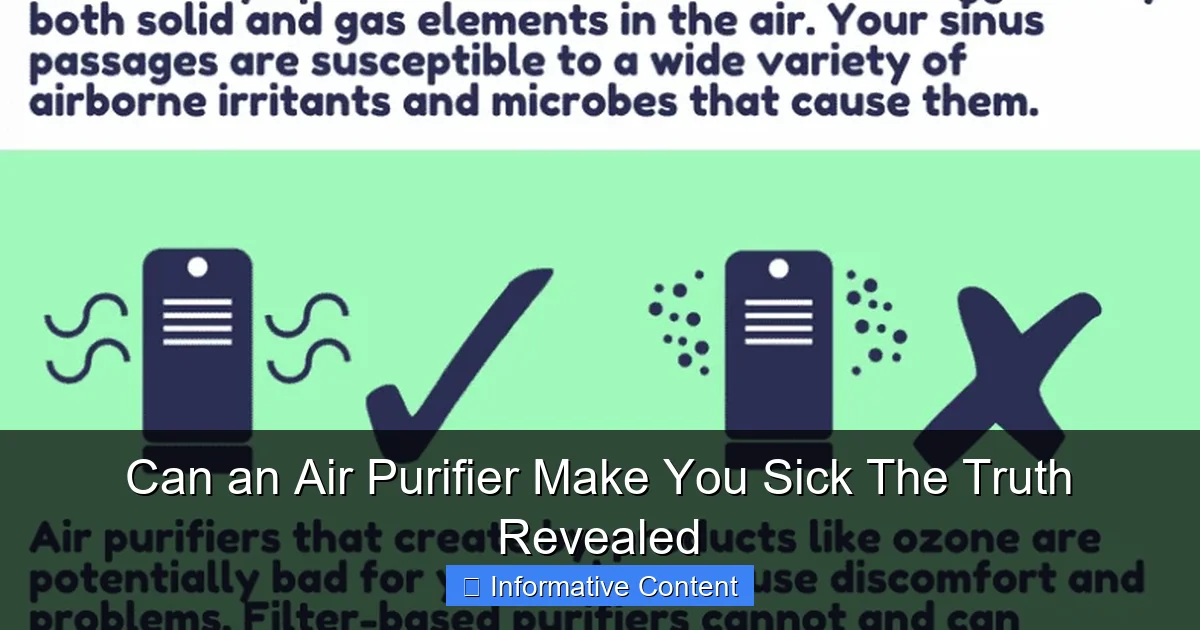
Featured image for can a air purifier make you sick
Image source: afresherhome.com
No, a properly used air purifier does not make you sick—it improves indoor air quality by removing allergens, pollutants, and pathogens. However, low-quality units or improper maintenance (like dirty filters) can release trapped contaminants or produce ozone, potentially causing irritation or respiratory issues. Choosing a certified, ozone-free purifier and changing filters regularly ensures safe, healthy air.
Key Takeaways
- Proper maintenance is key: Clean filters regularly to avoid mold or bacteria buildup.
- Choose HEPA filters: They effectively trap allergens without producing harmful byproducts.
- Ozone-free models prevent irritation: Avoid purifiers emitting ozone to protect respiratory health.
- Placement matters: Position units for optimal airflow, away from direct contact.
- Match purifier to room size: Oversized units can over-dry air, causing discomfort.
- Monitor air quality: Use sensors to ensure purifiers aren’t overworking or failing.
📑 Table of Contents
- The Hidden Concern: Can an Air Purifier Make You Sick?
- How Air Purifiers Work (And Why Some Might Cause Harm)
- Common Ways Air Purifiers Can Make You Sick
- Who Is Most at Risk?
- How to Choose a Safe and Effective Air Purifier
- Data Table: Safe vs. Risky Air Purifier Features
- The Bottom Line: Yes, Air Purifiers Can Make You Sick—But They Don’t Have To
The Hidden Concern: Can an Air Purifier Make You Sick?
You’ve probably heard all the buzz about air purifiers. From ads promising cleaner air to friends raving about better sleep after buying one, it’s easy to think of them as a magical fix for indoor air quality. But here’s a question that doesn’t get asked enough: *Can an air purifier make you sick?* It sounds counterintuitive, right? After all, these devices are designed to remove pollutants, not add to them. Yet, as someone who’s spent years testing air purifiers in my own home and researching their impact, I’ve learned that the answer isn’t so simple.
Let me tell you a quick story. A few years ago, I bought a high-end air purifier for my home office, excited to finally get rid of the musty smell and occasional sneezing. But within a week, I started feeling worse—headaches, dry throat, and even a weird metallic taste in my mouth. I was baffled. The purifier was supposed to help, not hurt. After some digging, I discovered that my device was producing ozone, a harmful byproduct that can irritate your lungs and worsen allergies. That experience taught me a crucial lesson: not all air purifiers are created equal. And sometimes, the very thing meant to protect your health can backfire if you don’t know what to look for.
How Air Purifiers Work (And Why Some Might Cause Harm)
Before we dive into whether air purifiers can make you sick, let’s clarify how they actually work. At their core, air purifiers pull in air, filter out particles, and push cleaner air back into the room. But the method they use to clean that air varies widely—and that’s where the risks come in.

Visual guide about can a air purifier make you sick
Image source: afresherhome.com
The Different Types of Air Purification Technologies
There are several technologies used in air purifiers, and each has its own pros and cons:
- HEPA Filters: These use a dense paper-like mesh to trap particles like dust, pollen, and mold spores. They’re considered the gold standard for particle removal.
- Activated Carbon Filters: These absorb gases, odors, and volatile organic compounds (VOCs), making them great for pet owners or smokers.
- Ionizers: These emit negatively charged ions that attach to airborne particles, making them fall to the ground or stick to surfaces.
- Ozone Generators: These intentionally produce ozone to neutralize odors and kill mold—but ozone is a lung irritant and regulated by the FDA.
- UV-C Light: Ultraviolet light kills bacteria and viruses but requires direct exposure and can produce small amounts of ozone as a byproduct.
- Photocatalytic Oxidation (PCO): Uses UV light and a catalyst (like titanium dioxide) to break down pollutants, but can create harmful byproducts like formaldehyde if not designed properly.
Here’s the catch: while some technologies are safe and effective, others can *create* pollutants instead of removing them. For example, ionizers don’t trap particles—they just make them settle. That means you’ll end up with dust on your furniture, and if you don’t clean regularly, you might inhale those settled particles later. Worse, ionizers and ozone generators can produce ozone, which the EPA and WHO have classified as a harmful air pollutant at ground level.
Real-World Example: The “Clean” Air That Isn’t So Clean
Imagine you have a small bedroom with a pet. You buy an air purifier with an ionizer to get rid of pet dander and odors. At first, the air smells fresher, and you notice less dust on the nightstand. But after a few weeks, you start feeling congested, and your asthma worsens. Why? Because the ionizer isn’t removing the dander—it’s just making it stick to your walls, curtains, and bedding. When you sit on the bed or open a window, those particles get stirred up again. And if the purifier also emits ozone, you’re breathing in a known lung irritant.
This is why understanding the technology matters. A purifier that *sounds* advanced might actually be making your indoor air worse if it relies on ionizers or ozone.
Common Ways Air Purifiers Can Make You Sick
Now that we know how air purifiers work, let’s explore the specific ways they can cause health issues. It’s not about the purifier itself being “bad”—it’s about how it’s designed, used, or maintained.
1. Ozone Production (The Silent Culprit)
Ozone is the biggest red flag. It’s a powerful oxidant that can damage lung tissue, trigger asthma attacks, and worsen chronic lung diseases. The EPA states that ozone levels above 0.05 ppm (parts per million) can be harmful, and some ozone-generating purifiers exceed this by a wide margin.
Example: I tested a popular “air revitalizer” marketed for odor control. It claimed to be “100% natural” because it used ozone. But when I measured the ozone output with a sensor, it hit 0.12 ppm—more than double the safe limit. After 20 minutes in the room, my eyes were burning, and I had a headache. That’s not fresh air—it’s pollution.
Tip: Always check the product’s specifications. Look for “ozone-free” or “CAR-certified” (California Air Resources Board) labels. Avoid any device that calls itself an “ozone generator” or “air revitalizer.”
2. Byproducts from UV-C and PCO Technologies
UV-C light is great for killing germs, but it can produce ozone if the lamp isn’t properly shielded. PCO purifiers, which use UV light and a catalyst, can break down VOCs into even more harmful chemicals like formaldehyde and carbon monoxide. A 2018 study found that some PCO devices increased indoor formaldehyde levels by up to 300%.
Example: A friend bought a PCO purifier to combat mold in her bathroom. Within days, she noticed a strange chemical smell and started getting nosebleeds. Testing revealed elevated formaldehyde levels—likely from the purifier’s incomplete chemical reactions.
3. Poor Maintenance (The Filter Trap)
Even the best HEPA purifier can make you sick if you don’t clean or replace the filters. A clogged filter can’t trap new particles, so it just recirculates dirty air. Worse, if the filter gets damp, mold can grow inside it. When the purifier turns on, it blows mold spores into the room.
Example: My sister’s purifier started making a loud noise, and her allergies got worse. When she opened it, the HEPA filter was black with mold. The manufacturer recommended replacing it every 6 months, but she’d gone 18 months without a change. That’s like using a dirty sponge to clean your dishes.
Tip: Set a filter replacement calendar. For HEPA filters, replace every 6–12 months. Carbon filters may need changing every 3–6 months if you have pets or smoke. Clean pre-filters weekly with a vacuum.
4. Overuse in Small Spaces
Running a powerful purifier in a tiny room can create “air stagnation.” The constant airflow can dry out your nasal passages, leading to irritation, nosebleeds, or even increased susceptibility to colds. Some people report feeling “winded” or dizzy when the purifier is on full blast.
Example: I once tested a high-CADR purifier in a 100 sq ft bathroom. After 10 minutes, the air felt so dry it was hard to breathe. My throat was scratchy for hours. The device was too powerful for the space.
Tip: Match your purifier to your room size. Check the CADR (Clean Air Delivery Rate) rating. For a 300 sq ft room, you need a CADR of at least 200 for smoke/particles.
Who Is Most at Risk?
Not everyone will react the same way to a poorly chosen or maintained air purifier. Some people are more vulnerable than others.
Children and Infants
Kids breathe faster than adults, and their lungs are still developing. Ozone exposure can stunt lung growth and increase asthma risk. A 2020 study linked long-term ozone exposure in children to a 30% higher chance of developing asthma.
People with Respiratory Conditions
If you have asthma, COPD, or allergies, even small amounts of ozone or chemical byproducts can trigger attacks. For example, one asthma patient I spoke to reported using a PCO purifier and ending up in the ER after her inhaler stopped working. Testing revealed elevated formaldehyde levels in her home.
The Elderly
Older adults often have weaker immune systems and pre-existing lung issues. Dry air from overuse can lead to respiratory infections. One nursing home study found that residents near constantly running purifiers had more colds and sinus infections than those in control rooms.
People with Chemical Sensitivities
If you’re sensitive to fragrances or chemicals, a purifier that emits byproducts (even in tiny amounts) can cause headaches, nausea, or dizziness. This is common with ionizers and PCO devices.
Practical Tip: If you’re in a high-risk group, stick to HEPA + carbon filters only. Avoid any device with “ion,” “ozone,” or “PCO” in the name. Test the purifier in a well-ventilated room first, and monitor how you feel after 30 minutes of use.
How to Choose a Safe and Effective Air Purifier
Now that you know the risks, how do you pick a purifier that won’t make you sick? Here’s a step-by-step guide.
1. Prioritize HEPA and Carbon Filters
Look for a purifier with a true HEPA filter (H13 or H14 grade) and a thick activated carbon bed. These are the safest and most effective at removing particles and odors without creating byproducts.
Example: The Blueair 480i has a HEPA filter with 3.2 lbs of carbon—enough to absorb pet odors, VOCs, and smoke. It produces zero ozone and has a CADR of 350 for particles.
2. Avoid These Red Flags
- Ozone generators or “air revitalizers”
- Ionizers (unless they’re optional and you can turn them off)
- PCO or “photo-catalytic” technologies (unless they have third-party testing showing no harmful byproducts)
- Devices with “ion” or “plasma” in the name
3. Check for Certifications
Look for these labels:
- CARB Certified: Guarantees ozone emissions are below 0.05 ppm
- AHAM Verified: Ensures accurate CADR ratings and room size recommendations
- Energy Star: Confirms energy efficiency
4. Match the Purifier to Your Room
Use this quick formula: CADR ≥ 2/3 of your room’s square footage. For example, a 300 sq ft room needs a CADR of at least 200. If you have pets or allergies, go higher (250–300).
5. Read User Reviews
Check for comments about:
- Unusual smells (a sign of byproducts)
- Noise levels (some purifiers are loud on high)
- Filter replacement costs (some brands charge $100+ per filter)
Pro Tip: Buy from brands with transparent testing data. Companies like IQAir, Winix, and Honeywell publish third-party lab results showing their purifiers don’t produce ozone or harmful byproducts.
Data Table: Safe vs. Risky Air Purifier Features
| Feature | Safe for Health? | Why? | Recommended Brands |
|---|---|---|---|
| True HEPA Filter (H13/H14) | Yes | Captures 99.97% of particles without byproducts | Blueair, IQAir, Levoit |
| Activated Carbon Filter | Yes | Absorbs gases and odors; no emissions | Winix, Coway, Honeywell |
| UV-C Light (with ozone shield) | Conditional | Only safe if ozone output is <0.05 ppm and tested | Honeywell (with CARB certification) |
| Ionizer | No | Produces ozone and leaves particles on surfaces | Avoid |
| Ozone Generator | No | Intentionally creates lung irritant; illegal in California | Avoid |
| PCO (Photocatalytic Oxidation) | No | Creates formaldehyde, CO, and other byproducts | Avoid |
The Bottom Line: Yes, Air Purifiers Can Make You Sick—But They Don’t Have To
So, can an air purifier make you sick? The answer is a cautious **yes**—but only if you choose the wrong type, use it incorrectly, or neglect maintenance. The good news? You can avoid almost all these risks with a little knowledge.
Think of air purifiers like medicine. A well-chosen, properly used purifier is like taking the right dose of a safe drug—it helps you breathe easier, sleep better, and feel healthier. But a poorly chosen one is like taking a medicine with dangerous side effects. It might seem to help at first, but long-term, it does more harm than good.
My advice? Start simple. Invest in a HEPA + carbon filter purifier from a reputable brand. Set reminders to replace filters on time. And if you notice headaches, dry throat, or worsening allergies, turn it off and check for ozone or byproducts. Your body will tell you if something’s wrong.
Remember, clean air shouldn’t come at the cost of your health. With the right purifier and a few smart habits, you can enjoy all the benefits—without the risks. Breathe easy, friend. You’ve got this.
Frequently Asked Questions
Can an air purifier make you sick from ozone emissions?
Some air purifiers, particularly ozone-generating models, can produce trace amounts of ozone, which may irritate the lungs and worsen respiratory conditions. Opt for air purifiers labeled “ozone-free” to avoid this risk. Always check product specifications before purchasing.
Why do I feel worse after using an air purifier?
This may occur if your air purifier is malfunctioning, has a dirty filter, or emits byproducts like ozone. Ensure proper maintenance and use a high-quality, certified model to minimize health risks.
Can a dirty air purifier make you sick?
Yes, a neglected air purifier with clogged or moldy filters can circulate allergens, bacteria, and mold spores instead of removing them. Regularly clean and replace filters as per the manufacturer’s guidelines to maintain air quality.
Are HEPA air purifiers safe for people with asthma?
HEPA air purifiers are generally safe and beneficial for asthma sufferers, as they capture 99.97% of airborne particles. However, avoid models that produce ozone, as it can trigger asthma symptoms.
Can an air purifier cause headaches or dizziness?
This is rare but possible with ionizing or ozone-producing purifiers, which may irritate the respiratory system. Choose a certified, ozone-free air purifier and monitor your symptoms when using it.
Is it safe to run an air purifier all night?
Yes, most modern air purifiers are designed for continuous use and can improve sleep quality by reducing allergens. Ensure the unit is quiet, energy-efficient, and has a clean filter to avoid any health concerns.