

Featured image for can a air purifying respirator use negative pressure
Image source: i.pinimg.com
Yes, an air purifying respirator (APR) can use negative pressure to draw air through its filters via the wearer’s inhalation, relying on a tight seal to ensure contaminants are filtered before entering the breathing zone. However, this design demands rigorous fit testing and proper filter selection to maintain safety, as any leakage compromises protection in hazardous environments.
Key Takeaways
- Yes, many air-purifying respirators use negative pressure to draw air through filters via inhalation.
- Negative pressure respirators rely on a tight seal to prevent unfiltered air from entering the mask.
- Proper fit testing is essential to ensure effective protection in negative pressure systems.
- Filter efficiency determines protection level since contaminants are removed during inhalation.
- Not suitable for oxygen-deficient environments as they don’t supply clean air, only filter ambient air.
- Regular maintenance and filter replacement are critical to maintain performance and safety.
- Choose the right cartridge type based on specific airborne hazards for optimal protection.
📑 Table of Contents
- Understanding Air Purifying Respirators and Negative Pressure
- How Negative Pressure Works in Respirators
- Types of Air Purifying Respirators That Use Negative Pressure
- When Negative Pressure Respirators Are (and Aren’t) Appropriate
- Key Safety Tips for Using Negative Pressure Respirators
- Comparing Negative Pressure vs. Positive Pressure Respirators
- Final Thoughts: Making the Right Choice for Your Safety
Understanding Air Purifying Respirators and Negative Pressure
Imagine this: you’re working in a dusty attic, painting a room, or cleaning up after a wildfire. The air is thick with particles, and you’re wearing a mask to protect yourself. But have you ever stopped to wonder how that mask actually works? More specifically, can an air purifying respirator use negative pressure? It’s a question that pops up often, especially among DIY enthusiasts, industrial workers, and even health-conscious homeowners. The short answer? Yes, but there’s a lot more to it than that.
Air purifying respirators (APRs) are designed to filter out harmful particles, gases, or vapors from the air you breathe. They come in many forms—from simple N95 masks to more advanced half-face or full-face respirators. The concept of “negative pressure” might sound like something out of a science fiction movie, but it’s actually a core principle in how many of these devices function. In simple terms, negative pressure means the air pressure inside the respirator mask is lower than the air pressure outside. This creates a suction effect, drawing clean air through the filters and into your lungs. But here’s the catch: not all respirators work this way, and not all negative pressure respirators are created equal. Understanding the mechanics behind this can help you choose the right protection for your needs—and avoid potentially dangerous misunderstandings.
How Negative Pressure Works in Respirators
The Science Behind Negative Pressure
Let’s break it down: when you breathe in, your diaphragm contracts, expanding your lungs and creating a slight vacuum inside your chest. This drop in internal pressure causes air to rush in from the outside. In a negative pressure respirator, this same principle is harnessed. When you inhale, the air pressure inside the mask drops below the ambient air pressure outside. This pressure difference pulls air through the respirator’s filter material, trapping contaminants before they reach your lungs.
Visual guide about can a air purifying respirator use negative pressure
Image source: pesticidestewardship.org
Think of it like drinking through a straw. When you suck on the straw, you create negative pressure in your mouth, which pulls the liquid up. In the same way, your lungs create negative pressure, and the respirator filter acts like the straw’s mesh—allowing clean air through while blocking the bad stuff.
Why Negative Pressure Matters
Negative pressure isn’t just a cool science fact—it’s essential for ensuring your respirator actually protects you. If the mask doesn’t seal properly, outside air can leak in around the edges. This “face seal leakage” bypasses the filter, defeating the purpose of wearing the respirator in the first place. That’s why fit is so critical. A poorly fitted negative pressure respirator is like a sieve—it might look like it’s doing its job, but it’s not.
For example, if you’re using an N95 mask while sanding wood, and the mask is loose around your nose or chin, sawdust can sneak in through the gaps. The negative pressure still pulls air in, but it’s pulling unfiltered air from around the edges, not through the filter. This is why OSHA (Occupational Safety and Health Administration) and NIOSH (National Institute for Occupational Safety and Health) emphasize fit testing for all negative pressure respirators.
Pro tip: Always perform a user seal check before using a negative pressure respirator. Cover the filters with your hands and inhale sharply. If the mask collapses slightly and no air leaks in around the edges, you’re good to go. If air sneaks in, adjust the straps or try a different size.
Types of Air Purifying Respirators That Use Negative Pressure
Filtering Facepiece Respirators (FFRs) – Like N95s
These are the most common type of negative pressure respirators you’ll see. Think N95, KN95, or P100 masks. They’re lightweight, disposable, and rely entirely on the wearer’s breathing to create negative pressure. The filter material itself forms the mask, so there are no separate cartridges or fans.
For instance, during the pandemic, millions of people wore N95s. When you inhaled, the mask would press slightly against your face as air was pulled through the dense filter fibers. This is classic negative pressure in action. However, these masks have limitations. They don’t protect against gases or vapors (like paint fumes or carbon monoxide), and they require a tight seal, which can be tough for people with facial hair or certain face shapes.
Half-Face and Full-Face Elastomeric Respirators
These are reusable respirators made of flexible silicone or rubber, with replaceable filter cartridges. Half-face models cover the nose and mouth, while full-face versions also protect the eyes and face. Both rely on negative pressure created by inhalation to draw air through the cartridges.
Imagine you’re refinishing a deck with a strong chemical stain. A half-face respirator with organic vapor cartridges would filter out harmful fumes. As you breathe in, the negative pressure pulls air through the cartridge, where activated carbon traps the chemicals. When you exhale, the air is released through a one-way valve, preventing moisture buildup and filter contamination.
One major advantage? These respirators can be used repeatedly, just replace the cartridges when they’re saturated. But they require proper cleaning, storage, and regular fit checks. A friend of mine, a professional painter, swears by his half-face respirator. “I used to get headaches from fumes,” he told me. “Now, with the right cartridges and a tight seal, I can work all day without feeling dizzy.”
Powered Air-Purifying Respirators (PAPRs) – The Exception
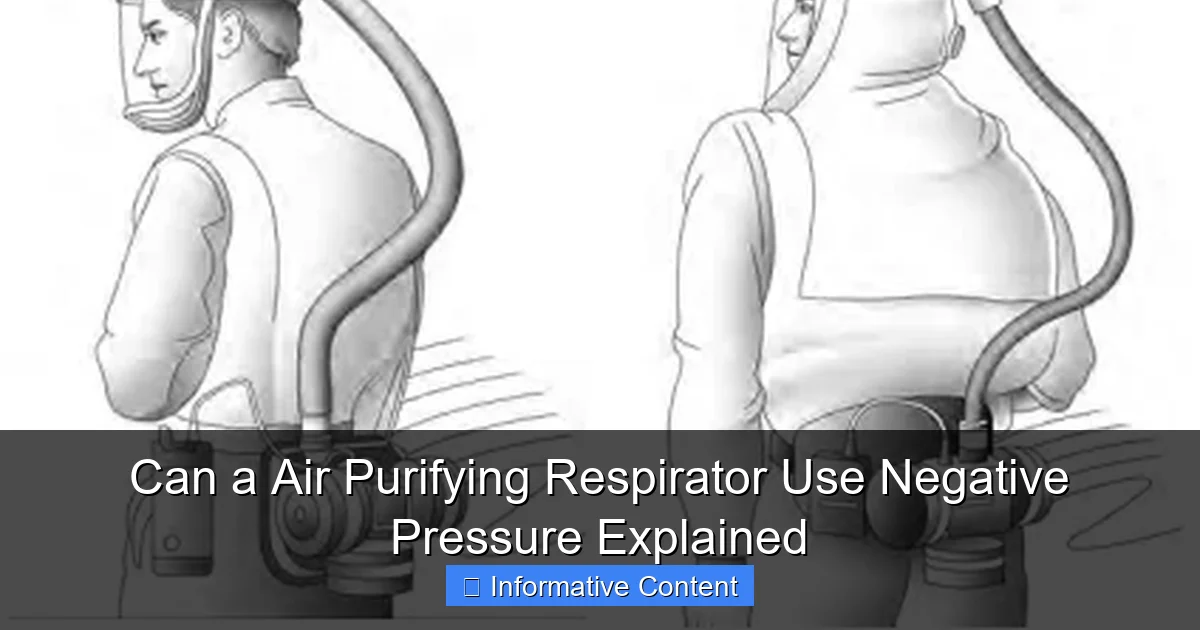
Now, here’s where things get interesting. PAPRs also filter air, but they don’t use negative pressure. Instead, a battery-powered fan pushes air through the filter and into the mask or hood. This creates positive pressure inside the breathing zone, meaning the air pressure inside the mask is higher than outside. This prevents contaminants from leaking in, even if the mask isn’t perfectly sealed.
So, to clarify: can an air purifying respirator use negative pressure? Yes, but not all do. PAPRs are air-purifying respirators, but they operate under positive pressure. This makes them ideal for people with facial hair, sensitive skin, or those working in extremely hazardous environments. For example, healthcare workers dealing with airborne pathogens often use PAPRs because they offer a higher level of comfort and protection over long shifts.
When Negative Pressure Respirators Are (and Aren’t) Appropriate
Best Use Cases for Negative Pressure APRs
Negative pressure respirators shine in environments where particulate matter is the main threat, and the air isn’t oxygen-deficient. Here are some practical scenarios:
- Construction sites: Dust from concrete cutting, drywall sanding, or woodworking. N95 or P100 masks are perfect here.
- Healthcare settings (pre-pandemic or for non-aerosol procedures): N95s are used to filter out bacteria and viruses in the air.
- DIY home projects: Painting, staining, or using adhesives in a garage. A half-face respirator with organic vapor cartridges works great.
- Agriculture: Handling pesticides or working in grain silos. A respirator with pesticide-specific cartridges is essential.
Take my neighbor, Sarah, who runs a small woodworking business. She uses a half-face respirator with particulate filters when sanding. “I used to sneeze all day and feel congested,” she said. “Now, with the respirator, I can work for hours without a single sniffle.”
When to Avoid Negative Pressure Respirators
Despite their effectiveness, negative pressure respirators have clear limitations:
- In oxygen-deficient environments: Like sewers, tanks, or confined spaces. Here, you need a supplied-air respirator (SAR), which delivers clean air from an external source.
- With high concentrations of toxic gases: If the contaminant level is so high that even a tight seal can’t prevent leakage, a positive pressure respirator (like a PAPR) or SAR is safer.
- For people with respiratory conditions: Negative pressure requires effort to breathe through filters. For someone with asthma or COPD, this can be uncomfortable or even dangerous.
- When facial hair is present: Beards or mustaches can break the seal. NIOSH estimates that facial hair can reduce the effectiveness of an N95 by up to 50%.
For example, a firefighter entering a smoke-filled building wouldn’t rely on a negative pressure respirator. The smoke contains carbon monoxide, hydrogen cyanide, and other deadly gases. Instead, they use a self-contained breathing apparatus (SCBA), which supplies clean air from a tank and maintains positive pressure inside the mask.
Key Safety Tips for Using Negative Pressure Respirators
Proper Fit and Seal Are Everything
You can have the best respirator on the market, but if it doesn’t fit right, it’s useless. Here’s how to ensure a proper seal:
- Choose the right size: Most respirators come in small, medium, and large. Try them on before buying.
- Adjust the straps: Tighten the top and bottom straps until the mask feels snug but comfortable.
- Perform a user seal check: As mentioned earlier, cover the filters and inhale. The mask should collapse slightly and stay tight.
- Check for facial hair: If you have a beard, consider trimming it or switching to a PAPR.
One of my coworkers, Mark, learned this the hard way. He wore a half-face respirator while spray painting but didn’t realize his mustache was causing leaks. “I started feeling dizzy halfway through,” he said. “I switched to a PAPR, and the dizziness stopped immediately.”
Filter Selection and Maintenance
Not all filters are created equal. Make sure you’re using the right type for your hazard:
- Particulate filters (N, R, P series): For dust, smoke, or aerosols. N95 filters 95% of particles, P100 filters 99.97%.
- Gas and vapor cartridges: Use organic vapor cartridges for paint fumes, acid gas cartridges for ammonia, etc.
- Combination filters: Some cartridges handle both particulates and gases.
Also, don’t forget maintenance. Replace filters when they’re clogged, saturated, or damaged. Store respirators in a cool, dry place, and clean reusable masks with mild soap and water after each use.
Know When to Retire the Respirator
Even the best respirators have a lifespan. Signs it’s time to replace yours:
- The mask is cracked, torn, or deformed.
- Straps are stretched or broken.
- Filters are discolored or smell bad.
- Breathing feels harder than usual (indicates clogged filters).
My dad, a retired mechanic, kept his respirator for over a decade. “It still works,” he’d say. But one day, he started feeling short of breath while using it. Turns out, the silicone was brittle, and the filters were long past their prime. He finally replaced it—and felt much better afterward.
Comparing Negative Pressure vs. Positive Pressure Respirators
To help you decide which type is right for you, here’s a quick comparison of key factors:
| Feature | Negative Pressure Respirator | Positive Pressure Respirator (e.g., PAPR) |
|---|---|---|
| How It Works | Breathing creates suction to pull air through filters | Fan pushes filtered air into the mask |
| Seal Requirement | Critical – must be airtight | Less critical – positive pressure prevents leaks |
| Comfort | Can be harder to breathe through | Easier breathing, less fatigue |
| Facial Hair Compatibility | Not recommended | Works well |
| Cost | Lower upfront cost | Higher initial cost, but reusable |
| Best For | Particulate hazards, short-term use | Long shifts, high-risk environments, sensitive users |
As you can see, negative pressure respirators are great for many everyday tasks, but they’re not a one-size-fits-all solution. If you’re working long hours, have facial hair, or face high-risk exposures, a PAPR might be a better investment.
Final Thoughts: Making the Right Choice for Your Safety
So, can an air purifying respirator use negative pressure? Absolutely. In fact, most of the respirators you’ll encounter—N95s, half-face masks, and full-face elastomerics—rely on negative pressure to function. But understanding how and when to use them is just as important as wearing them.
Remember, the goal isn’t just to wear a respirator—it’s to wear the right respirator, used the right way. That means choosing the correct type for your hazard, ensuring a proper fit, using the right filters, and replacing equipment when needed. It also means recognizing when negative pressure isn’t enough and upgrading to a positive pressure system or supplied-air respirator.
Whether you’re a weekend DIYer, a construction pro, or a healthcare worker, your lungs deserve protection. Don’t rely on guesswork or outdated gear. Take the time to learn how your respirator works, test its fit, and stay informed about new technologies. After all, breathing clean air isn’t a luxury—it’s a necessity. And with the right knowledge, you can make sure every breath you take is a safe one.
Frequently Asked Questions
Can an air purifying respirator use negative pressure effectively?
Yes, many air purifying respirators (APRs) operate using negative pressure, which relies on the user’s inhalation to draw air through the filter. This design is common in half-face or full-face respirators with replaceable cartridges. However, the effectiveness depends on proper fit and seal to prevent contaminated air leakage.
How does a negative pressure air purifying respirator work?
A negative pressure air purifying respirator uses the wearer’s breath to create suction, pulling air through filters that trap contaminants. The filtered air then flows into the breathing zone. This method is cost-effective and widely used but requires a tight facial seal for optimal protection.
Are negative pressure respirators safe for long-term use?
Negative pressure respirators can be safe for extended periods if they meet OSHA/NIOSH standards and are properly maintained. However, prolonged use may cause discomfort or fatigue due to increased breathing resistance. Always follow manufacturer guidelines and take breaks when needed.
What are the limitations of using a negative pressure APR?
Negative pressure air purifying respirators (APRs) struggle in environments with very high contaminant levels or low oxygen, as they depend on ambient air quality. They also require regular filter replacement and fit-testing to ensure safety. Powered air-purifying respirators (PAPRs) may be better for extreme conditions.
Do negative pressure respirators need fit-testing?
Yes, fit-testing is critical for negative pressure respirators to ensure no leakage occurs around the face seal. Even with high-quality filters, a poor fit can compromise protection. OSHA mandates fit-testing for all tight-fitting respirators, including APRs.
Can I reuse a negative pressure air purifying respirator?
Yes, most negative pressure APRs are reusable, but their filters must be replaced when clogged or saturated. The facepiece should be cleaned and inspected after each use. Always follow the manufacturer’s instructions for maintenance and shelf life.