
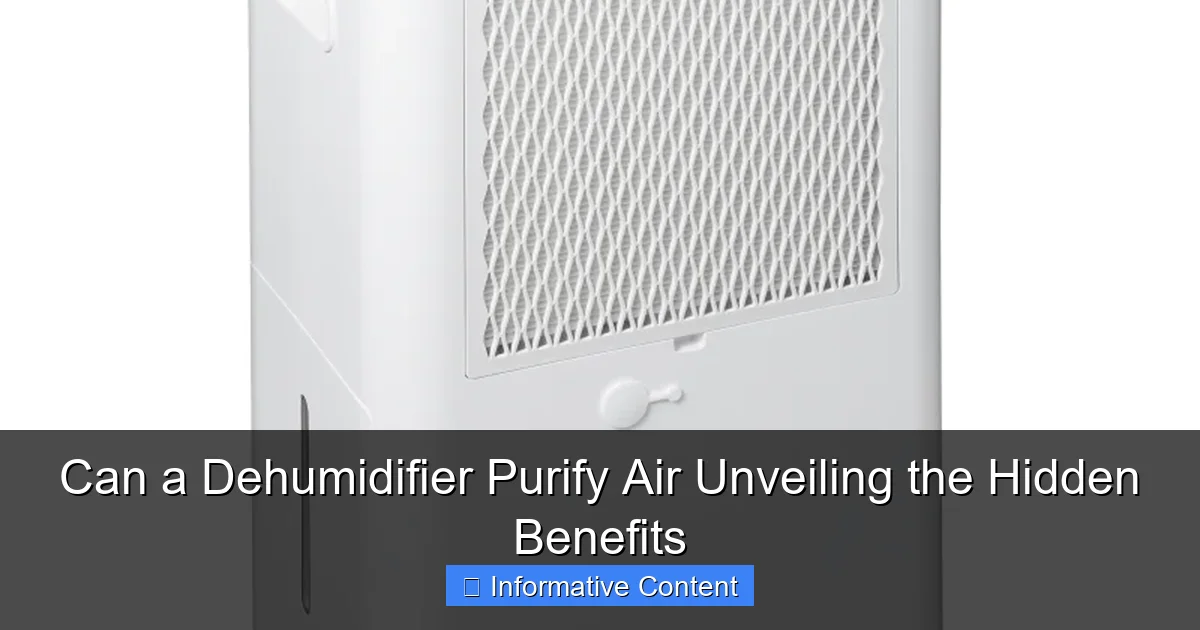
Featured image for can a dehumidifier purify air
Image source: sagspmdmgit01.blob.core.windows.net
While a dehumidifier doesn’t purify air like an air purifier, it significantly improves indoor air quality by reducing excess moisture and inhibiting mold, dust mites, and mildew growth. This creates a healthier environment, especially for allergy and asthma sufferers, by minimizing airborne irritants at their source. Though not a replacement for filtration systems, a dehumidifier plays a crucial role in maintaining cleaner, fresher air by tackling humidity-driven pollutants.
Key Takeaways
- Dehumidifiers reduce humidity, preventing mold and dust mites for cleaner air.
- They don’t filter pollutants like HEPA air purifiers; use both for optimal results.
- Lower humidity improves HVAC efficiency, indirectly enhancing air circulation and quality.
- Ideal for damp spaces like basements where allergens thrive due to moisture.
- Regular maintenance is crucial—clean tanks and filters to avoid bacterial growth.
📑 Table of Contents
- The Air We Breathe: A Personal Journey
- How Dehumidifiers Work: The Science of Moisture Removal
- Dehumidifiers vs. Air Pollutants: Tackling the Invisible Enemies
- Maximizing the Air Quality Benefits: Practical Tips and Tricks
- Complementary Strategies: Building a Complete Air Quality System
- Beyond the Basics: Long-Term Benefits and Considerations
The Air We Breathe: A Personal Journey
It started with a musty smell. I moved into a new apartment, and within weeks, my allergies flared up. I sneezed constantly, my eyes watered, and a persistent cough wouldn’t leave. I blamed the dust, the city air, and the occasional cigarette smoke from a neighbor. Then, my friend Sarah mentioned her dehumidifier. “It’s a game-changer for my asthma,” she said. I was skeptical. A dehumidifier? Wasn’t that just for damp basements? But I was desperate. I bought one, plugged it in, and within days, something shifted. The air felt… lighter. The musty odor faded. My symptoms eased. It wasn’t magic, but it felt close.
This experience sparked my curiosity: Can a dehumidifier purify air? It’s a question many people ask, often with a mix of hope and confusion. We know dehumidifiers tackle humidity, but does that translate to cleaner, healthier air? The short answer is: not directly, but indirectly, yes, it can significantly improve air quality. It’s not a standalone air purifier, but it addresses a root cause of many air quality problems: excess moisture. This post dives deep into the science, the benefits, the limitations, and the practical ways a dehumidifier can be your secret weapon for fresher, healthier air. We’ll explore how it tackles mold, dust mites, and odors, and how it complements other air cleaning methods. Think of it as unlocking a hidden layer of air quality control you might not have considered.
How Dehumidifiers Work: The Science of Moisture Removal
The Core Mechanism: Condensation and Collection
Let’s break down the basic operation. A dehumidifier isn’t a filter; it’s a climate controller. Its primary job is to reduce relative humidity (RH) in the air. Here’s how it works: Warm, moist air is drawn into the unit by a fan. This air passes over cold coils (like in a refrigerator). When warm air hits the cold surface, the water vapor in the air condenses into liquid water, just like water droplets on a cold drink on a hot day. This water drips into a collection tank or is drained via a hose. The now-cooler, drier air is then reheated slightly (to avoid making the room too cold) and released back into the room. This process continuously cycles, lowering the overall humidity.

Visual guide about can a dehumidifier purify air
Image source: quietmark.com
Imagine this: You have a glass of iced tea sweating on a humid summer day. The dehumidifier acts like a super-powered version of the condensation on that glass, but it actively pulls moisture from the entire room’s air. The key metric is RH, measured as a percentage. Ideal indoor RH is generally between 30% and 50%. Below 30%, the air is too dry (can cause dry skin, irritated sinuses). Above 50%, you enter the danger zone for mold and dust mites.
Types of Dehumidifiers: Compressor vs. Desiccant
Not all dehumidifiers are created equal. The two main types use different technologies:
- Compressor Dehumidifiers: The most common type. They use the condensation method described above with refrigerant gas. They’re efficient in warmer, humid environments (above 65°F/18°C). Think bathrooms, basements, laundry rooms in summer. They’re generally more energy-efficient but can be noisier and less effective in very cold spaces.
- Desiccant Dehumidifiers: Use a moisture-absorbing material (a desiccant, like silica gel) to pull water from the air. Air flows over the desiccant, which absorbs moisture. Then, the desiccant is heated to release the water vapor (which is vented outside or collected), and the cycle repeats. These work well in colder environments (down to 32°F/0°C) and are quieter. They’re often used in crawl spaces, garages, or areas where compressor units struggle. However, they can be less energy-efficient and may require more maintenance (replacing or recharging the desiccant).
Practical Tip: For a typical home, a compressor dehumidifier is usually the best choice for most rooms. For a cold basement or garage, consider a desiccant model. Always check the “pints per day” rating to ensure it’s powerful enough for your space (more on sizing later).
Beyond Humidity: The Indirect Air Purification Link
This is where the “air purification” magic happens. By removing moisture, the dehumidifier creates an environment where many airborne pollutants simply can’t thrive. It’s like pulling the plug on a breeding ground. The lower RH directly impacts biological contaminants and indirectly affects others. This is the core of how a dehumidifier contributes to cleaner air, even without traditional HEPA filters. It’s about changing the conditions that allow pollutants to grow and spread.
Dehumidifiers vs. Air Pollutants: Tackling the Invisible Enemies
Conquering Mold and Mildew: The Biggest Win
This is the #1 reason people buy dehumidifiers, and for good reason. Mold and mildew are fungi that require moisture to grow. They thrive in RH above 60%. Think damp basements, leaky pipes, condensation on windows, bathrooms with poor ventilation. Mold releases spores into the air, which are potent allergens and can trigger asthma attacks, respiratory infections, and even long-term health issues.
By maintaining RH below 50% (ideally 45% or lower), a dehumidifier creates a hostile environment for mold. It stops new mold growth on walls, ceilings, carpets, and furniture. It also helps prevent the musty, unpleasant odor associated with dampness and mold. I noticed this dramatically in my apartment – the persistent damp smell vanished, and the dark spots on the bathroom grout stopped spreading.
Practical Example: In a basement with a persistent musty smell, a dehumidifier set to 45% RH can eliminate the source of the odor and prevent structural damage from mold growth on wooden beams. For existing mold, professional remediation is essential, but a dehumidifier is critical for preventing recurrence.
Starving Dust Mites: A Silent Victory
Dust mites are microscopic creatures that feed on dead skin cells. They’re a major trigger for allergies and asthma. And guess what they need to survive and reproduce? High humidity (above 50% RH). In dry air, they dehydrate and die.
Studies show that maintaining RH below 50% significantly reduces dust mite populations. A dehumidifier in a bedroom, especially with carpeting or heavy bedding, can dramatically reduce dust mite allergens in the air you breathe while you sleep. This was a game-changer for my allergies. I used to wake up congested; now, I breathe easier at night.
Practical Tip: Combine your dehumidifier with other dust mite controls: use allergen-proof mattress and pillow covers, wash bedding weekly in hot water, and vacuum regularly with a HEPA-filter vacuum. The dehumidifier addresses the root cause, while these methods tackle the existing allergens.
Reducing Odors: The Freshness Factor
Many persistent household odors are linked to moisture. Think:
- Musty smells: From damp basements, crawl spaces, or leaky pipes (often caused by mold/mildew).
- Pet odors: Urine and feces break down more slowly in humid environments, releasing more odor molecules.
- Laundry odors: Damp clothes left in a laundry room or basement can develop a sour, mildewy smell.
- Food odors: Spills and cooking residues can foster bacterial growth in humid conditions, leading to lingering smells.
By drying the air, a dehumidifier slows down the biological processes (mold, bacteria) that create these odors. It doesn’t eliminate the source (you still need to clean up the spill!), but it prevents the odor from becoming embedded and persistent. It’s like stopping a stink before it has a chance to take hold.
Personal Anecdote: My laundry room used to smell vaguely of damp towels and mildew. After running a dehumidifier in there, the air is neutral, and clothes dry faster and fresher. No more “laundry room funk.”
The Limitations: What Dehumidifiers DON’T Do
It’s crucial to be realistic. A dehumidifier is not a direct air purifier in the way a HEPA filter is. It cannot:
- Capture airborne particles: It doesn’t remove dust, pollen, pet dander, smoke particles, or bacteria floating in the air. A HEPA air purifier is essential for this.
- Eliminate chemical VOCs: Volatile organic compounds (VOCs) from paints, cleaning products, new furniture, or off-gassing materials are gaseous pollutants. A dehumidifier doesn’t filter or break down these gases. An air purifier with activated carbon is needed.
- Neutralize odors at the source: While it prevents odor growth, it won’t instantly remove a strong smell like burnt toast or cat urine that’s already present. You need to clean the source and potentially use an odor absorber.
Think of it this way: A dehumidifier is like fixing a leaky roof to stop water damage. An air purifier is like using a wet vac to clean up the puddles. They address different aspects of the problem.
Maximizing the Air Quality Benefits: Practical Tips and Tricks
Choosing the Right Dehumidifier for Your Space
Size matters! A dehumidifier that’s too small will run constantly and struggle to lower humidity. One that’s too large will cycle on and off too frequently, reducing efficiency and potentially causing temperature fluctuations.
The key metric is pints per day (PPD) – how much water the unit can remove in 24 hours. Consider:
- Room Size: Larger rooms need higher PPD.
- Humidity Level: Extremely damp spaces (like a flooded basement) need a high-capacity unit. Moderately damp areas need less.
- Climate: Colder spaces need a desiccant model.
Here’s a general guideline (always check manufacturer recommendations for your specific conditions):
| Room Size / Humidity Level | Recommended PPD (Compressor) | Notes |
|---|---|---|
| Small Room (up to 500 sq ft), Slight Dampness | 20-30 PPD | Good for bathrooms, small bedrooms |
| Medium Room (500-1,500 sq ft), Moderate Dampness | 30-50 PPD | Ideal for basements, large bedrooms, living rooms |
| Large Room (1,500+ sq ft), Severe Dampness | 50-70+ PPD | For very damp basements, crawl spaces, or whole-house units |
| Very Cold Space (Below 65°F) | Desiccant Model (check PPD) | Essential for garages, cold basements |
Tip: Look for units with a built-in hygrometer (humidity sensor) and humidistat. This allows you to set your desired RH (e.g., 45%) and the unit will automatically turn on and off to maintain it. Much more efficient and convenient than manual operation.
Placement and Operation: Getting the Most Out of It
Where you put your dehumidifier and how you run it are crucial:
- Central Location: Place it in the center of the room, if possible, or near the source of moisture (e.g., a leaky pipe, a damp wall). Avoid corners or behind furniture.
- Clearance: Ensure at least 6-12 inches of clearance on all sides for proper airflow.
- Drainage: Use a continuous drain hose if possible (to a floor drain or sump pump) to avoid emptying the tank. If using the tank, empty it daily or set it up for automatic shutoff when full.
- Run Time: Run it continuously, especially in damp areas, until the humidity stabilizes at your target level. Once stable, it will cycle on and off automatically with a humidistat.
- Ventilation: In bathrooms or kitchens, use exhaust fans in addition to the dehumidifier. The dehumidifier handles the residual moisture after the fan removes steam.
Practical Example: In a basement, place the dehumidifier on a small stand in the center, with a hose running to a floor drain. Set the humidistat to 45%. Run it 24/7. You’ll notice the tank fills less frequently over time as the humidity drops.
Maintenance: Keeping it Efficient and Clean
A dirty dehumidifier is less effective and can become a source of mold itself! Regular maintenance is key:
- Empty the Tank: Daily or as needed. Clean the tank with mild soap and water monthly.
- Clean the Air Filter: Most units have a washable or replaceable air filter (check your manual). Clean it every 2-4 weeks, especially in dusty environments. A clogged filter reduces airflow and efficiency.
- Clean the Coils (Compressor Units): Dust and lint build up on the cold coils. Use a soft brush or vacuum to clean them every 3-6 months. This maintains efficient heat exchange.
- Inspect for Mold: Check the tank, drain pan, and internal surfaces occasionally. Wipe down with a mild bleach solution (1 part bleach to 10 parts water) if you see any mold, then rinse thoroughly.
- Desiccant Units: Follow the manufacturer’s instructions for recharging or replacing the desiccant cartridge.
Tip: Keep a log of filter cleaning and tank emptying to stay on schedule.
Complementary Strategies: Building a Complete Air Quality System
The Power of Combination: Dehumidifier + Air Purifier
Remember the roof and wet vac analogy? This is the most effective approach. Use your dehumidifier to prevent the conditions that foster mold, dust mites, and odor-causing bacteria. Then, use a HEPA air purifier with activated carbon to:
- Remove airborne particles (dust, pollen, pet dander, mold spores that are already in the air).
- Capture and neutralize gaseous pollutants (VOCs, cooking odors, smoke).
Place the dehumidifier in the dampest area (basement, bathroom) and the air purifier in high-traffic areas (living room, bedroom). They work synergistically: the dehumidifier stops new problems, the air purifier cleans existing pollutants.
Example: In a basement with a dehumidifier set to 45% RH, mold spores are less likely to grow. An air purifier in the main living area captures any spores that do become airborne from the basement, as well as pollen tracked in from outside and pet dander.
Other Moisture Control Allies
Don’t rely on the dehumidifier alone. Address the sources of moisture:
- Fix Leaks: Repair leaky pipes, faucets, roofs, and windows. This is the #1 source of excess moisture.
- Improve Ventilation: Use exhaust fans in bathrooms and kitchens. Open windows (when humidity outside is lower) to allow fresh air circulation.
- Use Ventilation Systems: Consider a whole-house ventilation system (ERV or HRV) that exchanges stale, moist indoor air with fresh outdoor air while recovering heat or cooling.
- Manage Indoor Plants: Overwatering plants increases humidity. Use saucers and avoid misting.
- Dry Clothes Outside or in a Well-Ventilated Area: Avoid drying clothes indoors, especially in small rooms.
Monitoring Your Progress: The Hygrometer is Your Friend
You can’t manage what you don’t measure. A simple, inexpensive digital hygrometer (often combined with a thermometer) is essential. Place it in the room with your dehumidifier to:
- Monitor RH levels and ensure your dehumidifier is working.
- Verify you’ve reached your target humidity (30-50%).
- Identify problem areas (e.g., a corner consistently above 55% RH might need better airflow).
Many dehumidifiers have built-in hygrometers, but a separate one gives you an independent reading.
Beyond the Basics: Long-Term Benefits and Considerations
Health and Wellbeing: The Ripple Effect
Consistently good air quality has profound long-term benefits:
- Reduced Allergy/Asthma Symptoms: Less mold, dust mites, and spores mean fewer triggers.
- Improved Sleep Quality: Easier breathing at night leads to better, deeper sleep.
- Reduced Respiratory Infections: Lower mold and bacterial levels decrease the risk of colds, bronchitis, and sinus infections.
- Improved Skin Health: Lower humidity can help with dry skin conditions, while preventing mold-related skin issues.
- Enhanced Comfort: Air feels less “stuffy” and more pleasant.
My personal experience: After months of using the dehumidifier, my chronic sinus issues and the need for allergy medication have significantly decreased. I wake up feeling more refreshed.
Energy Efficiency and Cost
Dehumidifiers use electricity, but they can actually save energy in the long run:
- Reduced AC Load: Drier air feels cooler at the same temperature. You can set your thermostat a few degrees higher and feel just as comfortable, reducing air conditioning costs.
- Prevents Structural Damage: Stopping mold growth saves money on costly repairs to walls, floors, and insulation.
- Energy Star Models: Look for Energy Star certified units for better efficiency. They use less power to remove the same amount of moisture.
Consider the cost of the unit, electricity usage, and potential savings on AC and repairs. For a damp basement, the investment often pays for itself.
The Verdict: A Valuable Tool, Not a Magic Bullet
So, can a dehumidifier purify air? It’s not a direct air purifier with filters, but it’s a powerful air quality optimizer. By controlling humidity, it:
- Creates an inhospitable environment for mold and mildew.
- Reduces dust mite populations.
- Minimizes the growth of odor-causing bacteria and fungi.
- Improves overall comfort and reduces allergy triggers.
It’s a crucial first line of defense, especially in damp environments. But it works best as part of a holistic approach. Combine it with a HEPA air purifier for particle and gas removal, address moisture sources (leaks, ventilation), and maintain the unit properly. It’s the hidden hero in your quest for cleaner, healthier, and more comfortable indoor air. My musty apartment is now a haven, and I credit the dehumidifier for a significant part of that transformation. It’s not just about dry air; it’s about creating an environment where the air can truly be fresh. Invest in one, set it up correctly, and breathe easier – you might be surprised by the difference you feel.
Frequently Asked Questions
Can a dehumidifier purify air by removing allergens?
Yes, a dehumidifier can indirectly purify air by reducing humidity levels, which inhibits the growth of mold, dust mites, and other allergens. However, it doesn’t filter airborne particles like a dedicated air purifier would.
Do dehumidifiers improve air quality in damp spaces?
Absolutely. By lowering excess moisture, dehumidifiers help prevent mold and mildew, which can significantly improve air quality in damp areas like basements or bathrooms. This makes the environment healthier and less prone to musty odors.
Can a dehumidifier purify air of bacteria and viruses?
While dehumidifiers reduce humidity—making it harder for bacteria and viruses to thrive—they don’t directly kill or remove these pathogens. For thorough air purification, pair a dehumidifier with an air purifier featuring a HEPA filter.
How does a dehumidifier help with indoor air pollution?
A dehumidifier reduces humidity, which minimizes pollutants like mold spores, dust mites, and volatile organic compounds (VOCs) that thrive in damp conditions. This contributes to cleaner, fresher indoor air over time.
Is a dehumidifier as effective as an air purifier?
Not exactly. While a dehumidifier purifies air by controlling moisture, it lacks advanced filtration systems. Air purifiers target particles and gases, making them better for direct air purification—but using both devices can offer comprehensive benefits.
Can a dehumidifier reduce asthma triggers in the air?
Yes, by maintaining optimal humidity (30–50%), dehumidifiers help reduce asthma triggers like mold, dust mites, and dampness-related irritants. This can lead to fewer respiratory issues and easier breathing for asthma sufferers.