
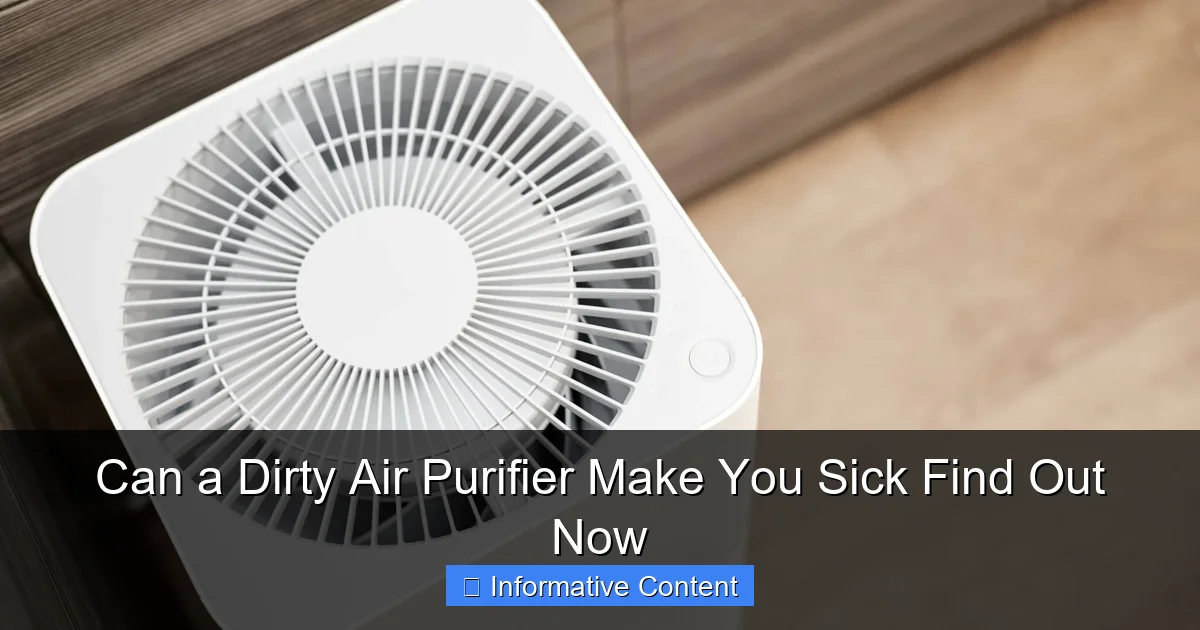
Featured image for can a dirty air purifier make you sick
Image source: studyfinds.org
Yes, a dirty air purifier can make you sick by circulating trapped mold, bacteria, and allergens back into your air instead of removing them. Neglecting filter maintenance turns your purifier into a health hazard, potentially worsening respiratory issues and triggering allergic reactions—regular cleaning and timely filter replacements are essential for safe, effective air purification.
Key Takeaways
- Dirty filters worsen air quality: Replace or clean them monthly to avoid spreading pollutants.
- Neglect breeds mold and bacteria: Regular maintenance prevents harmful microbial growth inside units.
- Reduced efficiency harms health: A clogged purifier can’t trap allergens or pathogens effectively.
- Follow manufacturer guidelines: Adhere to cleaning schedules to maximize performance and longevity.
- Unpleasant odors signal buildup: Address musty smells immediately to prevent airborne contaminants.
- Sealed units need professional help: Avoid DIY fixes; consult experts for internal cleaning.
📑 Table of Contents
- Can a Dirty Air Purifier Make You Sick? Let’s Break It Down
- How Air Purifiers Work—And Why They Can Backfire
- The Hidden Health Risks of a Dirty Air Purifier
- Signs Your Air Purifier Is Making You Sick
- How to Clean and Maintain Your Air Purifier (The Right Way)
- Data Table: Air Purifier Maintenance Schedule
- When to Upgrade (And What to Look For)
- Conclusion: Don’t Let Your Air Purifier Be the Problem
Can a Dirty Air Purifier Make You Sick? Let’s Break It Down
Imagine this: you’ve got an air purifier humming in the corner of your bedroom, quietly doing its job to keep your air clean. You bought it after reading about how indoor air can be five times more polluted than outdoor air—especially if you live in a city or have pets, kids, or allergies. But here’s the catch: what if that same device, instead of helping, is actually making you sick? Sounds counterintuitive, right? After all, air purifiers are supposed to be our allies in the fight against dust, pollen, mold, and viruses. But just like a dirty sponge or a clogged vacuum, a neglected air purifier can become a breeding ground for the very things it’s meant to eliminate.
I learned this the hard way. A few years ago, I started waking up with a scratchy throat and a stuffy nose—despite my air purifier running 24/7. I assumed it was seasonal allergies, but when the symptoms persisted, I opened the purifier to change the filter… and nearly gagged. The filter was black, slimy, and covered in what looked like fuzzy mold. That’s when it hit me: my air purifier wasn’t cleaning the air—it was recycling dirty air. And I wasn’t alone. After talking to HVAC experts and reading studies, I realized this is a common, often overlooked problem. So, can a dirty air purifier make you sick? Let’s dig in and find out.
How Air Purifiers Work—And Why They Can Backfire
The Basics: Filtration and Airflow
Most air purifiers use a multi-stage system to clean the air. The most common type is the HEPA (High-Efficiency Particulate Air) filter, which captures tiny particles like dust, pollen, pet dander, and even some bacteria and viruses. HEPA filters are rated to trap at least 99.97% of particles as small as 0.3 microns—about 1/300th the width of a human hair. Pretty impressive, right?

Visual guide about can a dirty air purifier make you sick
Image source: media-cldnry.s-nbcnews.com
Other models add layers like activated carbon filters (for odors and VOCs), ionizers (to charge particles so they stick to surfaces), or UV-C lights (to kill microbes). The idea is simple: pull air in, trap the bad stuff, and push clean air back out. But here’s the kicker: if the system gets dirty, it stops working—and can even spread contaminants.
What Happens When Filters Get Clogged?
Think of your air purifier’s filter like a sponge. When it’s fresh, it soaks up pollutants efficiently. But over time, it fills up. Once saturated, it can’t trap new particles. Worse, trapped pollutants can start to leak back into the air—especially if the purifier’s fan is strong enough to dislodge dust or mold spores. For example, a study by the University of Colorado found that clogged HEPA filters in hospitals released 10 times more airborne particles than clean ones.
Even worse, if moisture gets into the filter (from humidity, pets, or steam), it creates a perfect environment for mold and bacteria to grow. Imagine breathing in air that’s being “cleaned” by a filter that’s now a mold farm. Not exactly what you signed up for.
Real-Life Example: The Pet Owner’s Nightmare
Take Sarah, a friend of mine who has two cats and runs her air purifier daily. She changes the pre-filter (the outer mesh that catches pet hair) every month, but she’d never opened the HEPA filter. After two years, she noticed her allergy symptoms getting worse—despite the purifier running. When she finally checked, the HEPA filter was black with cat fur and dust mites, and there was a faint musty smell. Her doctor later confirmed she had a mild mold allergy. The purifier wasn’t helping—it was making her allergies worse.
The Hidden Health Risks of a Dirty Air Purifier
Mold and Bacteria: The Silent Spreaders
Moisture is the enemy here. If your home is humid (above 50% RH), or if you live in a damp climate, your air purifier’s filter can become a microbial playground. Mold spores thrive in dark, damp environments—and a clogged filter with trapped moisture is ideal. When the purifier runs, it can aerosolize these spores, releasing them into the air you breathe.
- Black mold (Stachybotrys chartarum) is especially dangerous. It produces mycotoxins linked to respiratory issues, headaches, and even memory problems.
- Bacteria like Legionella can grow in filters with stagnant water (e.g., if the purifier is near a bathroom or humidifier).
A 2020 study in Indoor Air found that 30% of used HEPA filters tested positive for mold or bacteria—even in homes with no visible mold. The takeaway? Dirty filters don’t just stop working—they can actively spread illness.
VOCs and Off-Gassing: When “Clean” Air Isn’t Clean
Volatile Organic Compounds (VOCs) are gases emitted by things like cleaning products, paint, furniture, and even air fresheners. Carbon filters in air purifiers absorb these gases—but only until they’re saturated. Once full, VOCs can off-gas back into the air, sometimes at higher concentrations than before. This is called desorption.
For example, a 2018 study showed that carbon filters in air purifiers released stored formaldehyde (a common VOC) when exposed to heat or humidity. If your purifier is near a sunny window or a heater, it could be recycling VOCs all day long.
Allergies and Asthma: A Vicious Cycle
If you have allergies or asthma, a dirty air purifier can make symptoms worse. Clogged filters can’t trap allergens like pollen or pet dander. Worse, mold spores from a dirty filter can trigger asthma attacks. The American Lung Association notes that mold exposure is a top asthma trigger—and a neglected purifier is a sneaky source.
One tip: If you notice your asthma symptoms flare up only when the purifier is on, it’s time to check the filter. You might be breathing in mold or dust that’s been trapped and then released.
Signs Your Air Purifier Is Making You Sick
1. Unexplained Health Symptoms
Pay attention to patterns. Do you or your family:
- Wake up with a scratchy throat, runny nose, or itchy eyes?
- Feel congested or dizzy when the purifier runs?
- Experience worse allergy/asthma symptoms in rooms with the purifier?
These could be signs of mold spores, VOCs, or particulate release from a dirty system.
2. Strange Smells
A musty, sour, or “dirty gym bag” smell near the purifier is a red flag. It likely means mold or bacteria is growing inside. Some carbon filters also develop a chemical odor when saturated—like old coffee grounds or burnt plastic.
3. Reduced Airflow or Noise
A clogged filter makes the purifier work harder. You might notice:
- The fan sounds louder or strained.
- The airflow feels weaker (test by holding your hand near the vent).
- The purifier runs longer to achieve the same air quality.
These are signs the filter is blocked and needs replacing.
4. Visible Mold or Dust
Open the purifier and look inside. If you see:
- Black or green fuzzy spots (mold).
- Thick layers of dust or pet hair.
- Water stains or dampness (especially on the pre-filter).
…it’s past time for a deep clean or filter replacement.
How to Clean and Maintain Your Air Purifier (The Right Way)
Step 1: Read the Manual
Every purifier is different. Some filters are washable; others are disposable. Some have UV lights that need bulb replacements. Always check the manufacturer’s guidelines before cleaning. For example, never wash a HEPA filter—it’s made of delicate fibers that tear easily.
Step 2: Clean the Pre-Filter Weekly
The pre-filter (usually a mesh screen) catches large particles like hair and dust. To clean:
- Remove it from the purifier.
- Rinse under warm water (no soap).
- Let it air-dry completely before reinstalling.
Pro tip: Keep a spare pre-filter so you can swap it out while the other dries.
Step 3: Replace the HEPA Filter on Schedule
Most HEPA filters last 6–12 months, but this depends on:
- Air quality in your home (pets, smoking, cooking).
- How many hours the purifier runs daily.
- Local pollution levels.
Set a calendar reminder to check the filter every 3 months. If it’s discolored or smells musty, replace it immediately—even if it’s “early.” A $50 filter is cheaper than a doctor’s visit.
Step 4: Wipe Down the Interior and Exterior
Use a dry microfiber cloth to wipe dust from the vents, fan, and housing. For stubborn grime, dampen the cloth with mild soap and water (never spray liquids directly on the purifier). Pay special attention to areas near the filter—this is where mold often starts.
Step 5: Clean the Carbon Filter (If Applicable)
Carbon filters can’t be washed, but you can:
- Vacuum the surface to remove loose particles.
- Replace every 3–6 months (or as recommended).
- Store spare filters in an airtight bag to prevent VOC absorption.
Data Table: Air Purifier Maintenance Schedule
| Component | Action | Frequency | Notes |
|---|---|---|---|
| Pre-filter | Wash or vacuum | Weekly | Keep a spare for rotation |
| HEPA filter | Replace | 6–12 months | Check every 3 months for mold/dust |
| Carbon filter | Replace | 3–6 months | Vacuum surface between replacements |
| UV-C bulb | Replace | 12 months | Check manual for wattage |
| Exterior | Wipe with dry cloth | Monthly | Use mild soap if needed |
When to Upgrade (And What to Look For)
Older Models: The Hidden Risks
Air purifiers older than 5 years may lack modern features like:
- Filter change indicators (light or app alerts).
- Sealed systems (to prevent air bypassing the filter).
- Anti-microbial coatings (to inhibit mold growth).
If your purifier is from 2015 or earlier, consider upgrading. Older models are more likely to leak contaminants when filters clog.
Key Features for a Healthier Home
When buying a new purifier, look for:
- True HEPA certification (not “HEPA-like”).
- Sealed construction (air can’t escape around the filter).
- Filter life indicator (to avoid guesswork).
- Anti-microbial treatment (e.g., silver ions on the filter).
- Smart sensors (to adjust speed based on air quality).
Brands like Levoit, Coway, and Dyson offer models with these features. While they cost more upfront, they’re less likely to make you sick in the long run.
A Real-Life Upgrade Story
My friend Mark upgraded from a 2014 purifier to a Coway Airmega with a filter indicator. Within weeks, his daughter’s nighttime coughing stopped. The old purifier had been releasing dust and mold for years—without him even knowing.
Conclusion: Don’t Let Your Air Purifier Be the Problem
So, can a dirty air purifier make you sick? Absolutely. A neglected purifier can:
- Spread mold spores and bacteria.
- Recycle VOCs and allergens.
- Worsen asthma and allergy symptoms.
But here’s the good news: this is 100% preventable. By cleaning your purifier regularly and replacing filters on schedule, you can turn it from a health risk into a true ally. Think of it like brushing your teeth—it only works if you do it consistently.
Start today. Open your purifier, check the filter, and give it a good clean. Set a reminder on your phone for monthly maintenance. And if your purifier is old or struggling, don’t hesitate to upgrade. Your lungs (and your family) will thank you. After all, clean air shouldn’t come with a side of mold.
Frequently Asked Questions
Can a dirty air purifier make you sick?
Yes, a dirty air purifier can make you sick by circulating trapped mold, bacteria, and allergens instead of removing them. Over time, these contaminants can worsen respiratory issues or trigger new health problems.
How does a neglected air purifier affect indoor air quality?
A clogged or unfiltered air purifier becomes a breeding ground for microbes, releasing them back into your space. This defeats the purpose of cleaner air and may increase allergy or asthma symptoms.
What are the signs my air purifier needs cleaning?
If you notice musty odors, reduced airflow, or visible debris on the filters, your unit is likely dirty. These are red flags that your air purifier could be spreading contaminants.
Can mold grow inside a dirty air purifier?
Absolutely—moisture and dust trapped in the filter create an ideal environment for mold growth. When this mold is dispersed, it can lead to respiratory irritation or infections.
How often should I clean my air purifier to avoid health risks?
Experts recommend cleaning reusable filters every 2–4 weeks and replacing disposable ones every 3–6 months. Regular maintenance prevents a dirty air purifier from harming your health.
Do dirty air purifiers spread germs instead of trapping them?
Yes, once filters are saturated, they lose efficiency and can release trapped bacteria, pollen, and viruses back into the air. This increases exposure to airborne pathogens over time.