

Featured image for can a swamp cooler act as an air purifier
Image source: m.media-amazon.com
No, a swamp cooler cannot effectively act as an air purifier, as its primary function is to cool air through evaporation, not to filter out pollutants, allergens, or airborne particles. While it may slightly improve air quality by adding moisture and circulating air, it lacks the filtration technology—such as HEPA filters or UV purification—needed to truly purify indoor air.
Key Takeaways
- Swamp coolers don’t purify air: They cool but don’t filter pollutants or allergens effectively.
- Use standalone air purifiers: Pair with HEPA filters to remove airborne contaminants efficiently.
- Humidity impacts air quality: High moisture can worsen mold or dust mite issues indoors.
- Regular maintenance is crucial: Clean water pads to prevent bacterial growth and odors.
- Best for dry climates: Optimal cooling in low-humidity areas, unlike humid regions.
- Ventilation enhances performance: Open windows slightly to improve airflow and cooling efficiency.
📑 Table of Contents
- Can a Swamp Cooler Act as an Air Purifier? Find Out Here
- How Swamp Coolers Work: The Basics of Evaporative Cooling
- Does a Swamp Cooler Filter or Purify the Air?
- Potential Benefits of Swamp Coolers for Air Quality
- Limitations and Risks: When Swamp Coolers Can Harm Air Quality
- How to Maximize Air Quality Benefits from Your Swamp Cooler
- Comparing Swamp Coolers and Air Purifiers: A Side-by-Side Look
- Final Thoughts: Should You Rely on a Swamp Cooler for Clean Air?
Can a Swamp Cooler Act as an Air Purifier? Find Out Here
You’ve probably heard the saying, “It’s not the heat, it’s the humidity.” And if you live in a dry, hot climate—like the deserts of Arizona, New Mexico, or parts of California—you know how brutal summer can be without the right cooling system. That’s where swamp coolers come in. These energy-efficient, eco-friendly devices have been a staple in arid regions for decades, using evaporation to cool the air naturally. But here’s a question I’ve heard more and more lately: Can a swamp cooler act as an air purifier?
It’s a fair question. After all, we’re all looking for ways to breathe cleaner air at home, especially with rising concerns about allergens, dust, and indoor pollutants. And since swamp coolers pull in outside air and circulate it through wet pads, it’s natural to wonder if they’re also filtering out the bad stuff. I remember the first time I asked this myself. I had just moved to Phoenix, installed a swamp cooler, and noticed my allergies seemed a little better. Was it the cooler? Or just wishful thinking? I decided to dig deeper—and what I found might surprise you.
How Swamp Coolers Work: The Basics of Evaporative Cooling
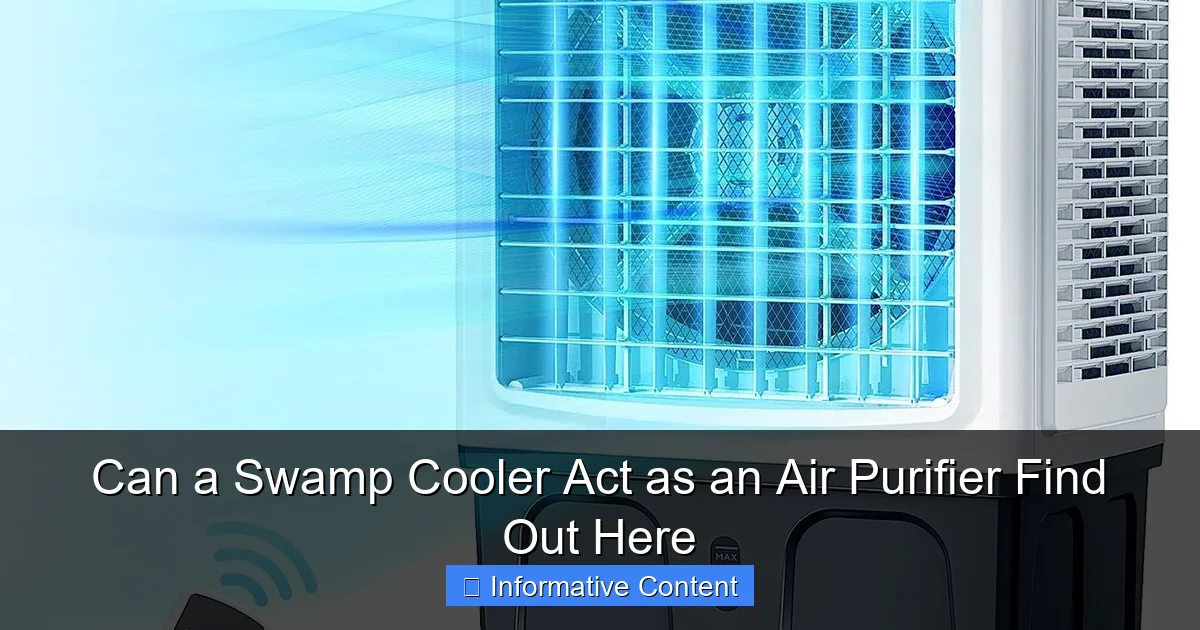
Before we can answer whether a swamp cooler can purify your air, we need to understand how it actually works. Swamp coolers—also known as evaporative coolers—operate on a simple but effective principle: evaporation. Unlike traditional air conditioners that use refrigerants and compressors, swamp coolers rely on water and airflow to cool the air.
Visual guide about can a swamp cooler act as an air purifier
Image source: m.media-amazon.com
The Science Behind Evaporative Cooling
Here’s the process in a nutshell: The cooler draws in warm, dry outside air through a series of water-saturated pads. As the air passes through these pads, the water evaporates, absorbing heat from the air and lowering its temperature. A fan then blows this cooled air into your home. The result? A refreshing breeze that can drop indoor temperatures by 15 to 40 degrees Fahrenheit, depending on the humidity level outside.
This method is incredibly efficient in dry climates because the lower the humidity, the more effectively water can evaporate. That’s why swamp coolers thrive in places like Nevada, Utah, and Colorado—but struggle in muggy areas like Florida or Louisiana.
Components of a Swamp Cooler
A typical swamp cooler has a few key parts:
- Water reservoir: Holds the water that keeps the pads moist.
- Cooling pads: Made of materials like cellulose or aspen, these absorb water and allow air to pass through.
- Pump: Circulates water from the reservoir to the pads.
- Fan: Pulls in outside air and pushes cooled air into your home.
- Ventilation system: Allows fresh air to enter and stale air to exit.
Now, here’s the thing: while this system is great at cooling, it’s not designed with air purification in mind. But that doesn’t mean it has zero effect on air quality. Let’s explore that next.
Does a Swamp Cooler Filter or Purify the Air?
So, can a swamp cooler act as an air purifier? The short answer is: not really—but it’s not entirely useless either. Let’s break it down.
What Air Purifiers Actually Do
True air purifiers are designed to remove contaminants from the air. They use filters—like HEPA filters—to trap particles such as dust, pollen, pet dander, mold spores, and even some bacteria and viruses. Some advanced models also use UV light, ionization, or activated carbon to neutralize odors and gases.
The key word here is filter. Air purifiers actively capture and remove pollutants. Swamp coolers, on the other hand, don’t have filters in the traditional sense. They don’t trap particles—they just move air.
How Swamp Coolers Interact with Airborne Particles
That said, swamp coolers do interact with airborne particles in a few ways:
- Moisture captures some dust: As air passes through the wet cooling pads, larger dust particles can get trapped in the water. This means some dust and pollen might not make it into your living space.
- Increased humidity can weigh down particles: Higher humidity makes the air heavier, causing some particles to settle faster on surfaces instead of floating around.
- Continuous air exchange: Swamp coolers constantly pull in fresh outside air and push out stale indoor air. This can help dilute indoor pollutants, similar to opening a window.
But here’s the catch: these effects are minimal and inconsistent. A swamp cooler won’t remove fine particles like smoke, viruses, or chemical fumes. And in some cases, it might even make air quality worse—especially if the pads aren’t cleaned regularly.
Real-World Example: My Experience in Tucson
When I first installed my swamp cooler in Tucson, I noticed my allergies improved slightly during the summer. I initially thought, “Wow, this thing is purifying my air!” But after a few weeks, I realized the improvement wasn’t consistent. On dusty windy days, I’d still wake up sneezing. That’s when I learned that while the cooler might catch some larger particles, it wasn’t enough to make a real difference for someone with allergies.
In fact, I later discovered that mold had started growing in the cooling pads because I hadn’t cleaned them properly. Suddenly, instead of cleaner air, I was breathing in mold spores. Lesson learned: a swamp cooler can only help with air quality if it’s well-maintained.
Potential Benefits of Swamp Coolers for Air Quality
Even though swamp coolers aren’t air purifiers, they do offer some indirect benefits that can improve your indoor air quality—especially when used correctly.
Improved Ventilation and Air Circulation
One of the biggest advantages of a swamp cooler is that it constantly brings in fresh outdoor air. Unlike central AC systems that recirculate the same air, swamp coolers create a steady flow of air through your home. This constant exchange helps reduce the buildup of indoor pollutants like cooking fumes, cleaning chemicals, and off-gassing from furniture.
Think of it like opening all your windows on a breezy day—except the air is also being cooled. This natural ventilation can make your home feel fresher and less stuffy.
Reduction in Static Electricity and Dust Accumulation
Dry air leads to static electricity, which attracts dust. By adding moisture to the air, swamp coolers can reduce static buildup, meaning dust doesn’t cling to surfaces as much. This can lead to less dust floating around and settling on furniture, which is a small but noticeable improvement in air cleanliness.
For example, I used to dust my shelves every few days during summer. After switching to a swamp cooler, I found I could go a full week without dusting—something my wife definitely appreciated!
Lower Energy Use Means Fewer Emissions
Swamp coolers use significantly less electricity than traditional air conditioners—up to 75% less, according to the U.S. Department of Energy. This means fewer greenhouse gas emissions from power plants, which contributes to better outdoor air quality over time. While this doesn’t directly purify your indoor air, it’s a win for the environment and public health.
Natural Humidity for Respiratory Comfort
For people with respiratory conditions like asthma or allergies, dry air can irritate the airways. Swamp coolers add moisture to the air, which can soothe dry throats and nasal passages. This isn’t purification, but it can make breathing easier and more comfortable—especially in desert climates where the air is bone-dry.
I have a friend with mild asthma who swears by his swamp cooler. He says the added humidity helps him sleep better and reduces nighttime coughing. Again, it’s not filtering the air, but it’s improving his quality of life.
Limitations and Risks: When Swamp Coolers Can Harm Air Quality
Now for the flip side: swamp coolers aren’t always good for air quality. In fact, if not properly maintained, they can become sources of pollution themselves.
Mold and Bacteria Growth in Cooling Pads
The biggest risk? Mold and bacteria. The cooling pads stay wet for long periods, creating a perfect breeding ground for microorganisms. If you don’t clean or replace the pads regularly, these can release spores and bacteria into your home every time the fan runs.
I learned this the hard way. After a month of use, I noticed a musty smell coming from my cooler. A quick inspection revealed black mold growing on the pads. I immediately shut it off, cleaned everything with a vinegar solution, and replaced the pads. The smell went away, but it was a wake-up call.
Increased Humidity Can Worsen Allergies
While some people benefit from added humidity, others—especially those with dust mite or mold allergies—can have worse symptoms. Dust mites thrive in humid environments, and higher indoor humidity can encourage their growth. If your home already has a dust mite problem, a swamp cooler might make it worse.
Similarly, if your region has high outdoor humidity during certain times of the year, the cooler won’t work efficiently—and the excess moisture can lead to condensation on walls and windows, promoting mold growth in your home.
No Protection Against Gases and Odors
Swamp coolers don’t remove gases, smoke, or strong odors. If you live near a busy road, a factory, or someone who smokes, the cooler will pull in polluted air just as easily as clean air. Unlike air purifiers with activated carbon filters, swamp coolers have no way to neutralize these contaminants.
For instance, during wildfire season in the West, I had to stop using my swamp cooler entirely because it was pulling in smoky air. I switched to a portable air purifier with a HEPA filter instead—something a swamp cooler simply can’t replace.
Mineral Buildup and Water Quality Issues
Hard water can leave mineral deposits on the cooling pads and inside the reservoir. Over time, this buildup can reduce efficiency and create a gritty residue that gets blown into your home. If your water is high in minerals, you may need to use a water softener or distilled water to prevent this.
I live in an area with very hard water, so I use a water treatment additive recommended by the manufacturer. It’s an extra step, but it keeps the system running smoothly and prevents white dust from accumulating on my furniture.
How to Maximize Air Quality Benefits from Your Swamp Cooler
So, can a swamp cooler act as an air purifier? Not on its own. But you can take steps to improve its impact on air quality and avoid the pitfalls.
Regular Maintenance Is Key
The single most important thing you can do is maintain your swamp cooler properly. Here’s a simple maintenance checklist:
- Clean the reservoir monthly: Drain and scrub it with a mild detergent to prevent algae and bacteria.
- Replace cooling pads every 1–2 seasons: Even if they look clean, they degrade over time.
- Check the pump and float valve: Make sure water is flowing properly and the reservoir isn’t overflowing.
- Run the cooler on “vent” mode occasionally: This helps dry out the pads and prevents mold.
- Winterize the unit: Drain all water and cover it to prevent damage and contamination.
I set a calendar reminder every month to check my cooler. It only takes 10 minutes, but it makes a huge difference in performance and air quality.
Use a Pre-Filter
Some swamp coolers allow you to install a pre-filter on the intake vent. This can catch larger particles like leaves, bugs, and dust before they enter the system. It won’t purify the air, but it reduces the load on the cooling pads and helps keep the unit cleaner.
I added a mesh pre-filter to my cooler last year. It’s made of reusable polyester and catches a surprising amount of debris. Plus, it’s easy to remove and wash.
Supplement with a True Air Purifier
If you’re serious about clean air, consider using a dedicated air purifier alongside your swamp cooler. Place a HEPA air purifier in your bedroom or living room to handle fine particles, allergens, and odors. The swamp cooler handles cooling and ventilation, while the purifier tackles air quality.
That’s what I do now. My swamp cooler keeps the house cool and fresh, and my air purifier runs quietly in the background, giving me peace of mind—especially during allergy season.
Monitor Indoor Humidity Levels
Use a hygrometer to keep an eye on indoor humidity. Ideally, it should stay between 30% and 50%. If it goes above 60%, you risk mold growth. If it drops below 30%, the air may be too dry for comfort.
I keep a digital hygrometer on my kitchen counter. It alerts me if humidity gets too high, so I can adjust the cooler or open a window to let moisture escape.
Comparing Swamp Coolers and Air Purifiers: A Side-by-Side Look
To help you understand the differences, here’s a quick comparison of how swamp coolers and air purifiers stack up when it comes to air quality:
| Feature | Swamp Cooler | Air Purifier |
|---|---|---|
| Primary Function | Cools air through evaporation | Removes pollutants from air |
| Air Filtration | Minimal; may trap large dust particles | High; uses HEPA, carbon, or UV filters |
| Humidity Control | Increases indoor humidity | No effect (unless combined with humidifier) |
| Ventilation | Yes; brings in fresh outdoor air | No; recirculates indoor air |
| Energy Use | Low (uses fan and pump) | Moderate to high (depends on model) |
| Maintenance | Monthly cleaning, pad replacement | Filter replacement every 6–12 months |
| Best For | Dry climates, energy efficiency | Allergies, asthma, smoke, odors |
As you can see, these devices serve different purposes. A swamp cooler is a cooling system with some incidental air quality benefits. An air purifier is a dedicated solution for cleaner, healthier air.
Final Thoughts: Should You Rely on a Swamp Cooler for Clean Air?
So, can a swamp cooler act as an air purifier? The honest answer is no—not in the way most people mean. It doesn’t filter out fine particles, remove odors, or kill germs. But it’s not completely useless either. In the right conditions and with proper care, a swamp cooler can contribute to better indoor air quality by improving ventilation, reducing dust, and adding comfortable humidity.
Think of it this way: a swamp cooler is like a gentle breeze through an open window. It feels refreshing and brings in fresh air, but it won’t stop pollen or smoke from entering your home. For that, you need a real air purifier.
If you’re using a swamp cooler, don’t skip maintenance. Clean it regularly, replace the pads, and consider adding a pre-filter. And if air quality is a major concern—especially if you have allergies, asthma, or live in a polluted area—invest in a quality air purifier to use alongside your cooler.
At the end of the day, both devices have their place. The swamp cooler keeps you cool and saves energy. The air purifier keeps you healthy. Use them together, and you’ll have the best of both worlds: a comfortable, clean, and breathable home.
Frequently Asked Questions
Can a swamp cooler act as an air purifier?
A swamp cooler is primarily designed to cool air through evaporation, not to purify it. While it can help capture some dust and pollen as air passes through the wet pads, it does not effectively remove allergens, bacteria, or viruses like a true air purifier would.
Do swamp coolers filter out allergens and pollutants?
Swamp coolers offer minimal filtration and are not effective at removing most allergens, smoke, or fine particulate matter. For better air purification, a dedicated HEPA air purifier is recommended alongside swamp cooling.
Can using a swamp cooler improve indoor air quality?
Swamp coolers can slightly improve air quality by adding moisture and trapping larger particles, but they may also promote mold or bacteria growth if not maintained properly. Regular cleaning is essential to prevent worsening air quality.
Is a swamp cooler a good alternative to an air purifier?
No, a swamp cooler should not be used as a replacement for an air purifier. While it cools and humidifies, it lacks the advanced filtration needed to remove airborne contaminants effectively.
How does a swamp cooler compare to an air purifier in cleaning air?
Unlike air purifiers that use filters or ionization to trap or neutralize pollutants, swamp coolers only moisten and cool the air. They do not provide the same level of air cleaning performance.
Can a swamp cooler help with asthma or allergies?
While increased humidity from a swamp cooler might ease breathing for some, it can also encourage mold and dust mite growth, potentially worsening allergy or asthma symptoms. An air purifier is a safer choice for respiratory health.