

Featured image for can ac act as air purifier
Image source: wantheat.com
No, your AC cannot fully replace a dedicated air purifier, but it can help reduce airborne particles through its built-in filter. While air conditioners circulate and cool air, their filtration is limited—most capture only large dust and allergens, not fine pollutants like smoke or VOCs. For true air purification, pair your AC with a HEPA air purifier for cleaner, healthier indoor air.
Key Takeaways
- ACs can reduce airborne particles but aren’t true air purifiers.
- Use HEPA filters in ACs to improve air purification efficiency.
- Regular maintenance is essential to prevent mold and bacteria buildup.
- ACs don’t remove gases or odors like dedicated purifiers can.
- Combine AC with an air purifier for cleaner, healthier indoor air.
- Check filter ratings—MERV 13 or higher captures more pollutants.
📑 Table of Contents
Can AC Act as Air Purifier? Discover the Truth Here
Imagine this: you’re sitting in your cozy living room, sipping on a warm cup of tea, enjoying the cool breeze from your air conditioner. The summer heat is brutal outside, but inside, it’s like a refreshing oasis. Then it hits you—your neighbor’s dog just started barking, and you catch a whiff of that unmistakable pet odor. Or maybe you’re allergic to dust, and despite your best efforts, you’ve been sneezing all day. You start wondering: Can my AC act as an air purifier? Could this machine that cools your space also clean the air you breathe?
You’re not alone in asking this. With rising concerns about indoor air quality—thanks to pollution, wildfires, allergies, and even the occasional lingering cooking smell—many of us are looking for simple, cost-effective ways to purify our air. After all, we spend most of our time indoors, and the quality of that air can impact our health, sleep, and overall well-being. So, it’s natural to wonder if your trusty AC, already working hard to keep you cool, can pull double duty. In this article, we’ll dive deep into how air conditioners work, what air purifiers do differently, and whether your AC can truly act as an air purifier. We’ll also share practical tips to improve your indoor air quality—whether you have a window unit, a split system, or central AC. Let’s get started!
How Air Conditioners Work: Cooling vs. Cleaning
First things first: let’s clear up a common misconception. Air conditioners and air purifiers serve different primary functions. An AC’s main job is to cool the air by removing heat and moisture. But does that mean it’s also cleaning the air? Not quite—and here’s why.
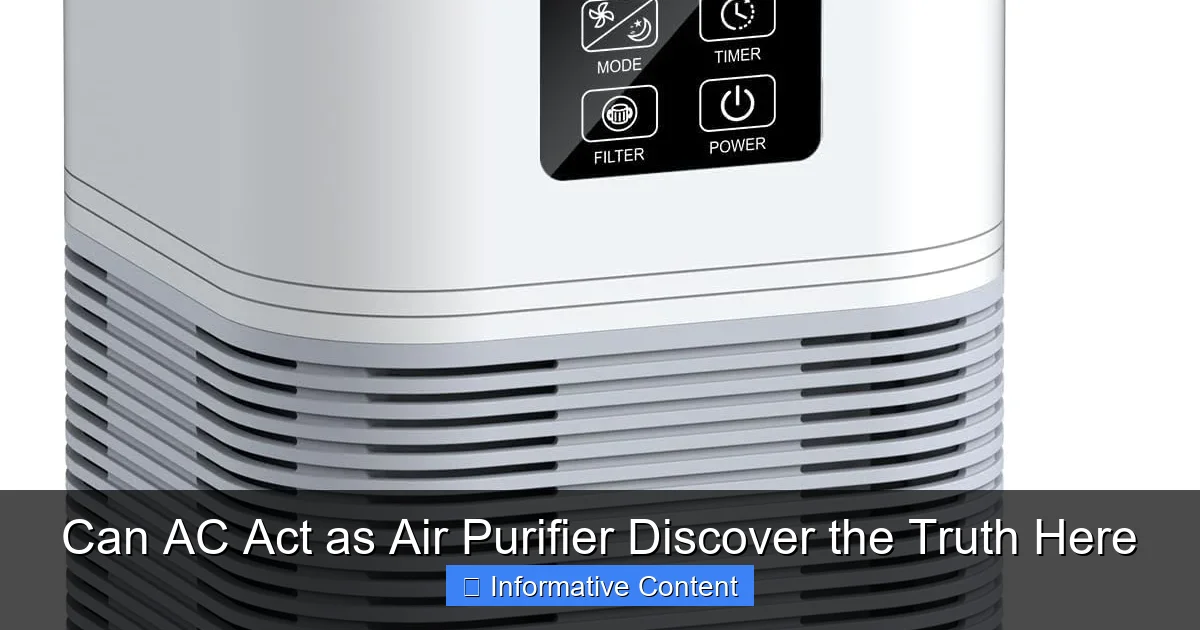
Visual guide about can ac act as air purifier
Image source: m.media-amazon.com
The Cooling Process: What Your AC Actually Does
When your AC runs, it pulls in warm air from your room through a return vent. This air passes over cold evaporator coils, where heat is absorbed, and moisture (humidity) condenses out. The cooled air is then blown back into the room. The moisture drips into a drain pan and is expelled outside. This process lowers the temperature and reduces humidity—making your space feel cooler and more comfortable.
But here’s the catch: while this process removes some humidity, it doesn’t actively filter out airborne pollutants like dust, pollen, pet dander, or volatile organic compounds (VOCs). In fact, if your AC’s filter is old or clogged, it might even circulate these particles back into the room. Think of it like a car’s AC—it cools the cabin, but it doesn’t remove exhaust fumes or pollen unless you have a dedicated cabin filter.
Filters in AC Units: Are They Enough?
Most ACs come with a basic mesh or fiberglass filter. These are designed to catch large particles—like lint, hair, and some dust—to protect the internal components. However, they’re not built to capture smaller contaminants. For example:
- Particulate matter (PM2.5): These are tiny particles from smoke, cooking, or outdoor pollution. Most standard AC filters can’t catch these.
- Allergens: Pollen, mold spores, and pet dander are often too small for basic filters.
- VOCs and odors: These gaseous pollutants pass right through unless the AC has a carbon filter or specialized technology.
So while your AC filter helps a little, it’s not a substitute for a true air purifier. In fact, a dirty AC filter can worsen air quality by trapping moisture and becoming a breeding ground for mold and bacteria. Yuck!
Air Purifiers vs. ACs: What’s the Difference?
Now that we know how ACs work, let’s compare them to air purifiers. The differences are key to understanding whether your AC can truly act as an air purifier.
Purpose and Design
Air purifiers are built specifically to clean the air. They use advanced filtration technologies—like HEPA filters, activated carbon, and sometimes UV-C light or ionizers—to trap or neutralize pollutants. Here’s a quick breakdown:
- HEPA filters: Capture 99.97% of particles as small as 0.3 microns (including pollen, dust mites, and even some bacteria).
- Activated carbon filters: Absorb odors, smoke, and VOCs.
- UV-C light: Destroys mold spores, viruses, and bacteria by disrupting their DNA.
- Electrostatic precipitators/ionizers: Charge particles so they stick to plates or surfaces (though these can produce ozone, a lung irritant).
ACs, on the other hand, are designed for thermal comfort. While some high-end models include HEPA or carbon filters, most rely on basic filters that don’t offer the same level of purification.
Air Circulation and Coverage
Another key difference is how each device moves air. Air purifiers are optimized to circulate air through their filters repeatedly. For example, a good purifier in a 500 sq ft room might exchange the entire air volume 2-4 times per hour. This ensures thorough cleaning.
ACs, however, are built to cool efficiently. They often prioritize rapid temperature drops over air exchange. This means they might not circulate air as frequently or evenly, leaving “dead zones” where pollutants linger. Plus, if your AC is set to a low fan speed, filtration (if any) becomes even less effective.
Real-World Example
Take Sarah, a friend of mine who lives in a smoky area prone to wildfires. She has a central AC with a basic filter. During fire season, she noticed her allergies acting up despite the AC running 24/7. Why? Because the AC wasn’t filtering out the fine smoke particles. Once she added a standalone HEPA air purifier, her symptoms improved dramatically. The lesson? ACs cool, but purifiers clean.
Can Some ACs Double as Air Purifiers?
So, can your AC act as an air purifier? The short answer is: sometimes. It depends on the type of AC and its features. Let’s explore the exceptions.
ACs with Advanced Filtration
Some modern ACs—especially split systems, portable units, and high-end central systems—come with enhanced filtration. For example:
- HEPA filters: A few premium ACs include true HEPA filters. These can capture tiny particles and are great for allergy sufferers.
- Activated carbon filters: Found in some split systems and portable ACs, these help with odors and VOCs.
- Electrostatic filters: These reusable filters use static electricity to trap particles. They’re better than basic filters but not as effective as HEPA.
Brands like Daikin, Mitsubishi, and LG offer models with “air purification” modes or built-in purifiers. These often combine filtration with other technologies, like plasma ionizers or UV light. For instance, Daikin’s Flash Streamer technology breaks down allergens and mold, while Mitsubishi’s Plasma Quad Plus system targets viruses and bacteria.
Hybrid Systems: The Best of Both Worlds
Hybrid HVAC systems are becoming more common. These integrate air purification into the central AC ductwork. For example:
- Air scrubbers: Installed in ducts, these use UV light and ionization to clean air as it circulates.
- Media filters: Thick, pleated filters (like MERV 13+) that capture smaller particles than standard AC filters.
These systems can genuinely act as air purifiers, but they’re expensive and require professional installation. If you’re building a new home or upgrading your HVAC, they’re worth considering.
The Catch: Maintenance Matters
Even if your AC has advanced filters, they’re only effective if maintained. A clogged HEPA filter in an AC can reduce airflow, strain the system, and even release trapped particles back into the air. Always follow the manufacturer’s maintenance schedule—clean or replace filters regularly, and schedule professional servicing annually.
Limitations of ACs as Air Purifiers
While some ACs have purification features, there are still significant limitations. Here’s what you need to know.
Not All Pollutants Are Covered
ACs—even those with HEPA filters—can’t remove all types of pollutants. For example:
- Gases and VOCs: Unless your AC has a carbon filter, it won’t absorb odors from cooking, pets, or cleaning products.
- Microbes: Without UV-C or ionization, mold spores, viruses, and bacteria can circulate freely.
- Outdoor pollutants: If you live near a busy road or industrial area, your AC might pull in smog or exhaust fumes, which basic filters won’t catch.
Air purifiers, with their specialized technologies, are far better at tackling these issues. A HEPA + carbon filter combo, for instance, can handle both particles and odors.
Airflow and Room Coverage Issues
ACs are often installed in a corner or near a wall, which can limit airflow distribution. This creates “clean zones” near the AC and “dirty zones” farther away. Air purifiers, designed for even circulation, usually have 360-degree intakes and adjustable fans to ensure uniform cleaning.
Energy Efficiency Trade-Offs
Running your AC 24/7 for air purification is inefficient. ACs consume a lot of energy, especially when set to high fan speeds. Air purifiers are designed to run continuously with minimal power use. For example, a typical air purifier uses 50-100 watts, while an AC can use 1,000+ watts. If your goal is air cleaning, a purifier is more cost-effective.
Real-World Tip
My neighbor, Mark, tried using his window AC as a purifier during pollen season. He set the fan to high and left it running all day. But he still sneezed constantly because the AC’s filter couldn’t catch the tiny pollen grains. He eventually bought a $150 air purifier—and his allergies improved overnight. Lesson learned: don’t rely on your AC alone for serious air quality issues.
Practical Tips to Improve Indoor Air Quality
Whether your AC has purification features or not, here are actionable steps to breathe cleaner air at home.
Upgrade Your AC Filter
Replace your AC’s basic filter with a MERV 11 or MERV 13 filter. These capture smaller particles (like pollen, mold, and dust) without restricting airflow. Avoid MERV 14+ filters—they can strain your AC’s fan.
Pro tip: Mark your calendar to change filters every 1-3 months (more often if you have pets or allergies).
Combine AC with a Standalone Air Purifier
The most effective approach? Use your AC for cooling and a dedicated air purifier for cleaning. Place the purifier in high-traffic areas (like the living room or bedroom) and run it 24/7. Look for models with:
- True HEPA filter
- Activated carbon filter
- CADR (Clean Air Delivery Rate) of 200+ for rooms under 500 sq ft
Control Humidity
High humidity promotes mold and dust mites. Use a dehumidifier if your AC doesn’t lower humidity enough. Aim for 30-50% humidity. A hygrometer (a humidity monitor) costs under $20 and helps you track levels.
Ventilate Smartly
Open windows during low-pollution times (like early morning) to bring in fresh air. But avoid this during high pollen or smog days. Use exhaust fans in kitchens and bathrooms to remove odors and moisture.
Clean Regularly
Dust and vacuum weekly with a HEPA-filter vacuum. Wash bedding in hot water to kill dust mites. Wipe down surfaces to prevent particle buildup.
Data Table: AC vs. Air Purifier Comparison
| Feature | Standard AC | AC with HEPA Filter | Air Purifier (HEPA + Carbon) |
|---|---|---|---|
| Primary Function | Cooling | Cooling + Basic Filtration | Air Purification |
| Particle Capture (PM2.5) | Low | High (if HEPA is true) | Very High |
| Odor/VOC Removal | None | Moderate (with carbon filter) | High |
| Microbe Control | None | Moderate (with UV/ionizer) | High (with UV-C) |
| Energy Use | High (1,000+ watts) | High | Low (50-100 watts) |
| Best For | Temperature control | Allergies (with HEPA) | Allergies, odors, VOCs |
Final Thoughts: The Verdict
So, can your AC act as an air purifier? The truth is nuanced. A basic AC with a standard filter? No—it won’t clean the air effectively. But a high-end AC with HEPA, carbon filters, or UV technology? Possibly, especially for particles and some odors. However, even these models have limitations compared to dedicated air purifiers.
Think of it this way: your AC is like a multitasking chef—it can cool your kitchen and stir a soup at the same time, but it won’t make a gourmet meal. For true air purification, you need a specialist. That’s where standalone air purifiers shine.
The good news? You don’t have to choose one over the other. By using your AC for cooling and a purifier for cleaning, you get the best of both worlds. Add in simple habits—like upgrading filters, controlling humidity, and cleaning regularly—and you’ll create a healthier, more comfortable home.
Remember, clean air isn’t a luxury—it’s a necessity. Whether you’re battling allergies, wildfire smoke, or just want to breathe easier, investing in your indoor air quality is one of the smartest things you can do. So go ahead, upgrade your setup, and take a deep breath. You’ve earned it.
Frequently Asked Questions
Can an AC act as an air purifier effectively?
While some modern AC units include built-in air purification features like filters or ionizers, standard ACs primarily cool air and remove moisture. They can trap large particles but aren’t as effective as dedicated air purifiers against allergens, smoke, or VOCs.
How does an air conditioner’s filtration system compare to an air purifier?
Most ACs use basic mesh or HEPA-like filters that capture dust and pollen, but dedicated air purifiers often have multi-stage filtration (e.g., activated carbon, true HEPA) for finer particles and odors. For severe allergies or asthma, a standalone purifier is more reliable.
Do all AC units have air-purifying capabilities?
No, only specific models with advanced filtration (e.g., HEPA, UV-C light, or electrostatic filters) can partially function as air purifiers. Check your AC’s specifications or look for features like “air purifier mode” to confirm.
Can AC reduce indoor air pollutants like mold or bacteria?
ACs with UV-C light or antimicrobial filters can inhibit mold and bacteria growth on coils, but they don’t eliminate airborne pathogens. Pairing your AC with an air purifier ensures better protection against such pollutants.
Is it worth buying an AC with an air purifier feature?
If you want dual functionality (cooling and basic purification), an AC with an air purifier feature is convenient. However, for homes with pets, smokers, or high pollution, a separate high-performance purifier is recommended.
What are the limitations of using an AC as an air purifier?
ACs circulate air but lack the high-efficiency filtration of purifiers, especially for ultrafine particles. They also don’t address odors or gaseous pollutants unless equipped with specialized filters, making them a partial solution.