

Featured image for can air purifier be used with open windows
Image source: aircaring.com
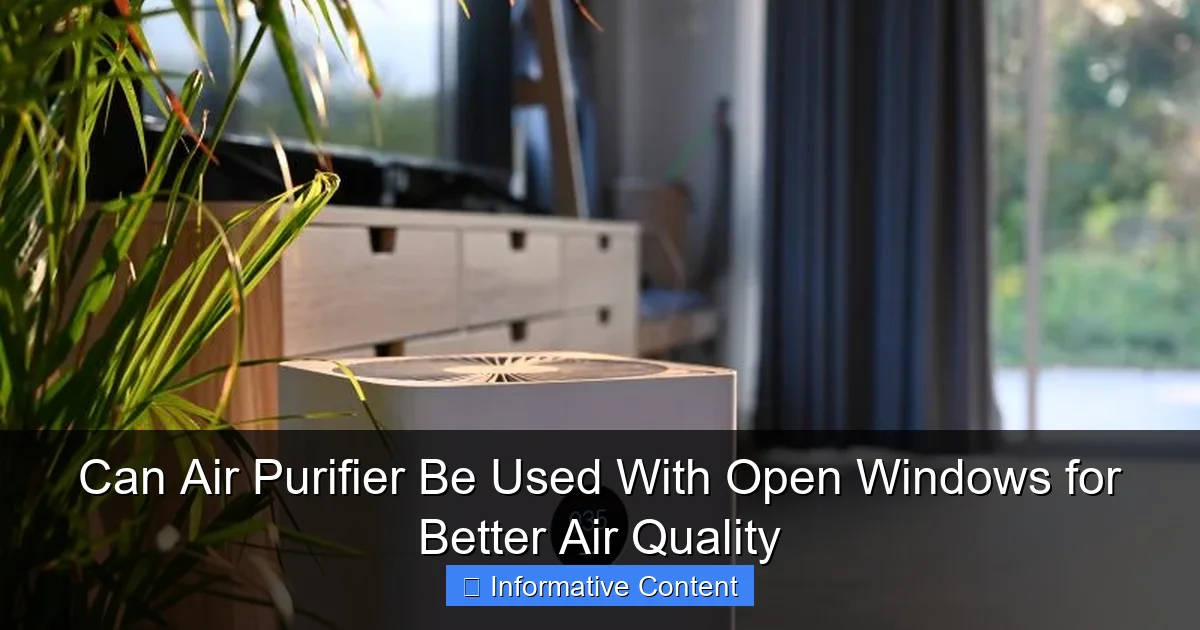
Yes, you can use an air purifier with open windows—but it’s most effective when outdoor air quality is good and airflow is controlled. While open windows allow fresh air in, they also let in pollutants, so running a purifier helps filter contaminants and maintain cleaner indoor air, especially during high-pollen days or in urban areas.
Key Takeaways
- Yes, but with limits: Air purifiers can work with open windows but are less effective against outdoor pollutants.
- Use during low-pollution times: Open windows when outdoor air quality is good to reduce indoor contaminants.
- Position purifier strategically: Place near open windows to capture incoming pollutants before they spread.
- Monitor air quality: Use an air quality monitor to decide when to open windows or run the purifier.
- Combine with ventilation: Use purifiers alongside controlled ventilation for balanced air quality and fresh air.
- Close windows during high pollution: Shut windows and run the purifier when outdoor pollution levels rise.
📑 Table of Contents
- Why Air Quality Matters More Than You Think
- How Air Purifiers Work (And Why Open Windows Change the Game)
- The Pros and Cons of Using Air Purifiers With Open Windows
- When to Open Windows (And When to Keep Them Closed)
- Optimizing Your Air Purifier for Open-Window Use
- Data Table: Air Purifier Performance With Open Windows
- Conclusion: Finding Your Perfect Air Quality Balance
Why Air Quality Matters More Than You Think
Let’s be honest—air quality is one of those things we rarely think about until something goes wrong. Maybe it’s the sudden sneeze attack from pet dander, or the musty smell that lingers after a rainy week. Or perhaps you’ve noticed your child’s asthma acting up during pollen season. Air isn’t just “there”—it’s a living, breathing (pun intended!) part of our daily health. And while we can’t control outdoor air, we can take steps to improve what we breathe inside our homes. That’s where air purifiers come in.
But here’s a question I get all the time: Can air purifier be used with open windows? It sounds counterintuitive, right? You’re trying to clean the air, yet you’re letting fresh (or sometimes not-so-fresh) air in. I’ve stood in my living room, purifier humming, debating whether to crack a window for that spring breeze or shut everything tight to keep allergens out. It’s a dilemma many of us face, especially when seasons change. The good news? Yes, you can use an air purifier with open windows—but there’s more to it than just flipping a switch and opening a pane. Let’s dive into the science, practical tips, and real-life trade-offs so you can breathe easy, whether your windows are up or down.
How Air Purifiers Work (And Why Open Windows Change the Game)
The Basics of Air Purification
Air purifiers aren’t magic boxes—they’re high-tech filters that pull air through layers designed to trap pollutants. Most use a combination of:
Visual guide about can air purifier be used with open windows
Image source: businesspartnermagazine.com
- Pre-filters: Catch large particles like dust and pet hair.
- HEPA filters: Trap 99.97% of particles as small as 0.3 microns (think pollen, mold spores, and some bacteria).
- Activated carbon filters: Absorb gases, odors, and volatile organic compounds (VOCs) from cooking, cleaning, or new furniture.
The purifier’s fan pulls air in, pushes it through these layers, and releases cleaner air back into the room. Simple, right? But here’s the catch: open windows disrupt the controlled environment the purifier is designed for.
What Happens When You Open a Window?
Opening a window introduces two big variables:
- Fresh air exchange: Outdoor air flows in, diluting indoor pollutants like cooking fumes or off-gassing from furniture.
- New pollutants: Pollen, smoke, car exhaust, or humidity can enter, depending on your location and weather.
Think of it like a leaky bucket: Your purifier is bailing water, but the window is a hole letting more in. The purifier’s effectiveness depends on how fast it can process the total air volume in the room. If outdoor air is rushing in (especially on a windy day), the purifier may struggle to keep up. For example, a purifier rated for 300 sq. ft. might work great in a closed room but feel overwhelmed in a 300 sq. ft. space with a 10 mph breeze blowing through an open window.
A Real-Life Example
Last spring, I opened my bedroom window at night to enjoy the cool air. My purifier was running, but by morning, I woke up congested—my usual sign of pollen exposure. Turns out, the window let in a wave of oak pollen that the purifier couldn’t filter fast enough. Lesson learned: Timing and airflow matter. Now, I use a hybrid approach—open windows during low-pollen hours (late evening) and close them when the purifier needs to work harder (like after vacuuming).
The Pros and Cons of Using Air Purifiers With Open Windows
The Pros: Fresh Air + Filtration
Let’s start with the positives. Using an air purifier with open windows isn’t all bad—it’s actually a smart strategy in certain situations:
- Reduces stale air: Trapped CO2 from breathing, cooking, or even plants can make a room feel “stuffy.” Open windows bring in oxygen-rich air, while the purifier tackles lingering odors and allergens.
- Dilutes VOCs: New paint, furniture, or cleaning products release chemicals that can linger for weeks. Ventilation helps, and the purifier’s carbon filter can absorb what’s left.
- Balances humidity: In humid climates, closed windows trap moisture, encouraging mold. Open windows (with a purifier) can reduce humidity while filtering mold spores.
- Energy efficiency: In mild weather, open windows reduce the need for AC or fans, saving energy. The purifier handles the air quality piece.
Pro tip: If you live in a city with low outdoor pollution (e.g., coastal areas or rural regions), open windows + purifier is a win-win. But if you’re near a highway or factory, proceed with caution.
The Cons: When Open Windows Backfire
Of course, there’s a flip side. Here’s when open windows can undermine your purifier’s efforts:
- Overwhelming the purifier: If outdoor air is heavily polluted (e.g., wildfire smoke, high pollen counts), the purifier may run nonstop without making progress. It’s like trying to dry a soaked towel with a hair dryer while someone keeps spraying water.
- Energy waste: In extreme heat or cold, open windows force your HVAC system to work harder. The purifier can’t compensate for temperature loss.
- Noise and pests: Open windows bring in not just air, but traffic noise, insects, or even birds (ask me about the sparrow incident of 2022…).
- Humidity swings: In dry climates, open windows can dry out indoor air, worsening respiratory issues. In humid areas, they can introduce mold-friendly moisture.
Real talk: I once left my purifier running with the window open during a thunderstorm. Rain splashed onto the filter, warping the HEPA material. Replacing it cost $70. Lesson: Always check the weather before cracking a window!
The Middle Ground: Strategic Use
The key is timing and moderation. For example:
- Short bursts: Open windows for 10–15 minutes during low-pollution times (e.g., early morning) to “flush” the room, then close them and let the purifier work.
- Cross-ventilation: Open windows on opposite sides of the house to create airflow, then run purifiers in high-traffic areas (like the living room).
- Monitor air quality: Use an indoor air quality monitor (like an AirVisual or Awair) to check PM2.5, CO2, and humidity levels. Open windows when CO2 is high but PM2.5 is low.
When to Open Windows (And When to Keep Them Closed)
Best Times to Open Windows
Not all hours are created equal for ventilation. Here’s when to let fresh air in:
- Early morning: Pollen counts are lower, and CO2 levels peak overnight. A 15-minute window burst can refresh the air without overwhelming the purifier.
- After cooking: Open windows to vent smoke or grease, then close them and run the purifier to remove lingering odors (especially if you’re frying fish or onions).
- During low-pollution weather: Check apps like IQAir or AirNow for real-time outdoor air quality. If the AQI is under 50 (“good”), it’s safe to ventilate.
- When using strong cleaners: Open a window to disperse fumes from bleach or ammonia, then use the purifier’s carbon filter to absorb residual VOCs.
Personal hack: I keep a sticky note on my window: “Open: 6–8 AM, 5–7 PM.” It reminds me to avoid high-pollen midday hours.
When to Keep Windows Closed
Some situations demand a sealed environment:
- High pollen counts: Check local forecasts. If pollen is “high” or “very high,” keep windows shut and run the purifier on high.
- Wildfire smoke or smog: Even a small window crack can let in hazardous PM2.5. Use the purifier in “turbo” mode and seal gaps with weatherstripping.
- Extreme temperatures: In summer or winter, open windows defeat the purpose of AC/heat. The purifier can’t compensate for heat loss/gain.
- Allergy/asthma flare-ups: If someone in your home is symptomatic, prioritize filtration over fresh air. A purifier can’t filter what it can’t catch.
Example: During a recent heatwave, I kept my apartment sealed with AC and the purifier on. My neighbor, who kept her windows open, complained about dust and humidity. The difference? My purifier’s humidity sensor showed a stable 45%—hers was 65%.
Seasonal Adjustments
Your strategy should shift with the seasons:
- Spring: Open windows at night (low pollen), close during the day. Use purifiers with HEPA filters for pollen.
- Summer: Ventilate early morning/late evening to avoid AC strain. Use purifiers with carbon filters for humidity-related odors.
- Fall: Watch for leaf mold and smoke from leaf burning. Keep windows closed if nearby.
- Winter: Seal windows but use purifiers to combat dry air and indoor allergens (like dust mites).
Optimizing Your Air Purifier for Open-Window Use
Choose the Right Purifier
Not all purifiers are equal for open-window scenarios. Look for:
- High CADR rating: Clean Air Delivery Rate (CADR) measures how fast the purifier removes particles. For open windows, aim for 250+ CADR for smoke/dust/pollen.
- Multiple fan speeds: A “turbo” mode helps when outdoor air is rushing in.
- Smart sensors: Purifiers with auto-mode (like Coway Airmega or Blueair) adjust speed based on real-time air quality.
- Large room coverage: If your room is 400 sq. ft., get a purifier rated for 500+ sq. ft. to handle extra airflow.
My pick: The Winix 5500-2 has a “plasmawave” feature that neutralizes odors and a 360 CADR—perfect for my open-window experiments.
Placement Matters
Where you put the purifier affects its performance:
- Near the window: If you’re opening a window, place the purifier close to it to catch incoming pollutants before they spread.
- Center of the room: For general use, central placement maximizes air circulation.
- Away from drafts: Don’t block the purifier’s intake with curtains or furniture. Leave 1–2 feet of clearance.
Maintenance Tips
Open windows mean more work for your purifier:
- Check filters monthly: Dust, pollen, and debris clog filters faster. Replace HEPA filters every 6–12 months (sooner if you have pets).
- Clean pre-filters weekly: Most purifiers have washable pre-filters. Rinse them in water to extend HEPA filter life.
- Use a vacuum attachment: Gently vacuum the exterior to remove dust buildup.
Pro tip: I keep a filter replacement calendar on my phone. No more guessing when it’s time to swap them out!
Data Table: Air Purifier Performance With Open Windows
| Scenario | Purifier Effectiveness | Best Practices | Risks |
|---|---|---|---|
| Low outdoor pollution + open windows (10–15 min) | High (if purifier has high CADR) | Open during early morning; use carbon filter for odors | Minimal; purifier handles influx well |
| High pollen + open windows | Low to moderate (unless purifier is on turbo) | Close windows during peak pollen; run purifier 24/7 | Overwhelms purifier; allergy symptoms may worsen |
| Wildfire smoke + open windows | Very low (PM2.5 enters faster than it’s filtered) | Keep windows sealed; use purifier with high PM2.5 CADR | Health risks from smoke inhalation |
| Extreme temperatures + open windows | Moderate (purifier can’t regulate temperature) | Ventilate during mild weather; use purifier to offset HVAC strain | Energy waste; discomfort from heat/cold |
Conclusion: Finding Your Perfect Air Quality Balance
So, can air purifier be used with open windows? Absolutely—but it’s not a one-size-fits-all answer. The secret is intentionality. Think of your home as a dynamic system: Fresh air is a tool, not a default. When used strategically, open windows and air purifiers work together like a tag team—one brings oxygen and dilutes pollutants, the other cleans and polishes the air.
Here’s my final advice: Start small. Open a window for 10 minutes while your purifier runs. Notice how the air feels. Does it smell fresher? Do you breathe easier? Or does your nose start to tingle? Adjust from there. Use tools like air quality monitors, pollen forecasts, and your own body’s feedback to guide you. And remember, no strategy is perfect—what matters is progress, not perfection.
At the end of the day, air quality isn’t about having the fanciest purifier or the most open windows. It’s about creating a space where you and your family can breathe deeply, sleep soundly, and live well. So go ahead—crack that window, flip on the purifier, and take a deep breath. You’ve got this.
Frequently Asked Questions
Can an air purifier be used with open windows effectively?
Yes, an air purifier can still be used with open windows, but its efficiency depends on outdoor air quality and airflow. It helps filter pollutants entering through the window, though performance may decrease slightly due to constant air exchange.
Does using an air purifier with open windows reduce its benefits?
Using an air purifier with open windows may reduce its concentration efficiency, but it can still capture outdoor pollutants like pollen, dust, and smoke. For best results, balance ventilation and air purification based on local air quality.
Is it counterproductive to run an air purifier with open windows?
Not necessarily—running an air purifier with open windows can improve indoor air quality by filtering incoming outdoor contaminants. However, in highly polluted areas, closing windows and using the purifier in recirculation mode may be more effective.
How does an air purifier work with open windows to improve air quality?
An air purifier with open windows continuously filters air entering the room, removing allergens, PM2.5, and odors. It complements ventilation by reducing the load of airborne pollutants while fresh air circulates.
Should I close windows when using an air purifier for optimal results?
For maximum efficiency, closing windows helps an air purifier maintain clean air in a contained space. However, if outdoor air quality is good, using it with open windows can offer balanced ventilation and filtration.
What’s the best way to use an air purifier with open windows?
Place the air purifier near the window to capture incoming pollutants and use a fan to direct airflow toward it. Monitor outdoor air quality and adjust window usage to balance fresh air intake and purification effectiveness.