
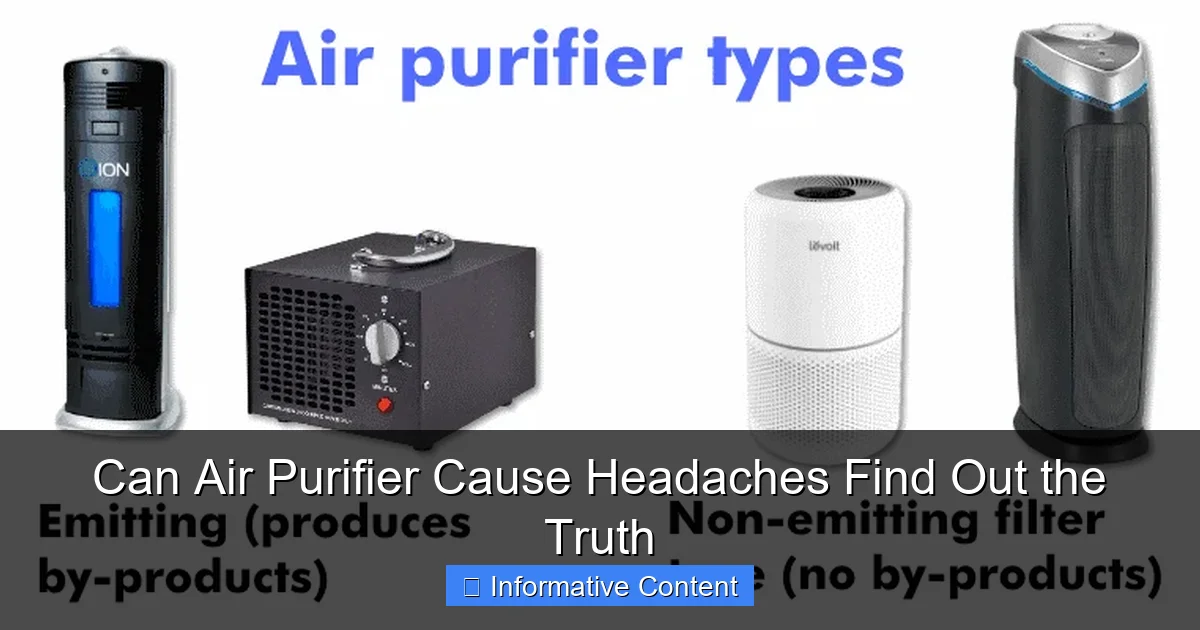
Featured image for can air purifier cause headaches
Image source: afresherhome.com
Air purifiers do not typically cause headaches—cleaner air often reduces them by removing allergens, dust, and pollutants that trigger sinus pressure and migraines. However, low-quality models emitting ozone or creating excessive noise may contribute to discomfort in sensitive individuals, making it crucial to choose a certified, ozone-free unit for safe, long-term use.
Key Takeaways
- Air purifiers rarely cause headaches when used correctly and maintained properly.
- Ozone-producing models may trigger headaches—opt for ozone-free HEPA filters instead.
- Dirty filters worsen air quality—clean or replace them every 3–6 months.
- Overuse in small rooms can cause discomfort—adjust runtime and placement as needed.
- Allergens and VOCs are common culprits—choose a purifier targeting your specific triggers.
- Noise-induced stress may mimic headaches—select low-decibel models for nighttime use.
📑 Table of Contents
- Can Air Purifier Cause Headaches? Find Out the Truth
- How Air Purifiers Work and Why They Might Trigger Headaches
- Common Causes of Air Purifier-Related Headaches
- Who Is Most at Risk for Air Purifier Headaches?
- How to Test if Your Air Purifier Is Causing Headaches
- Safe Air Purifier Choices to Prevent Headaches
- Conclusion: The Truth About Air Purifiers and Headaches
Can Air Purifier Cause Headaches? Find Out the Truth
You wake up feeling groggy. Your head aches. The room feels stuffy, but you’ve been running your air purifier all night, thinking it’s helping. You’re not alone—many people who invest in air purifiers for cleaner, healthier air end up asking the same question: Can air purifier cause headaches?
It sounds counterintuitive. After all, air purifiers are marketed as health heroes—fighting dust, pollen, pet dander, and even viruses. They’re supposed to make our homes safer and our breathing easier. But for some, they might be doing the opposite. Maybe you’ve noticed a pattern: a dull headache starts after an hour of use. Or perhaps you feel more fatigued, even though the air feels “cleaner.” Before you toss your purifier in the closet, let’s dig deep. In this post, I’ll share real experiences, science-backed insights, and practical tips to help you understand whether your air purifier is the culprit—or if something else is going on. Spoiler: the answer isn’t always black and white, but it’s definitely worth knowing.
How Air Purifiers Work and Why They Might Trigger Headaches
Before we jump into whether air purifiers cause headaches, let’s first understand how they work. Air purifiers use different technologies to remove airborne particles. The most common types are HEPA filters, activated carbon filters, ionizers, and UV-C light systems. Each has its strengths—and potential side effects.

Visual guide about can air purifier cause headaches
Image source: afresherhome.com
HEPA Filters: The Gold Standard (Mostly)
HEPA stands for High-Efficiency Particulate Air. These filters trap 99.97% of particles as small as 0.3 microns—think dust, mold spores, and pollen. They’re widely trusted and recommended by allergists. But here’s the catch: HEPA filters don’t remove gases, odors, or volatile organic compounds (VOCs) on their own. That’s where activated carbon comes in.
Now, if your purifier only has a HEPA filter and you’re sensitive to VOCs (from cleaning products, paint, or new furniture), those gases remain in the air. Inhaling them can lead to headaches, dizziness, or eye irritation. So while the HEPA is doing its job, it’s not solving the full problem. It’s like mopping the floor but leaving a smelly trash can in the corner.
Ionizers and Ozone: The Hidden Risk
Some air purifiers use ionization to charge particles, making them stick to surfaces or collection plates. Sounds smart, right? But ionizers can produce ozone (O₃) as a byproduct. Ozone is a lung irritant and can trigger headaches, especially in sensitive individuals or at higher concentrations.
Here’s a real-life example: A friend of mine bought a budget-friendly purifier with an ionizer. Within a week, she started getting headaches every evening. She switched to a HEPA-only model, and the headaches stopped. She later learned the ionizer was emitting ozone—even if it was within “safe” limits set by regulators, her body didn’t tolerate it.
The U.S. EPA warns that ozone, even in small amounts, can worsen asthma and cause respiratory discomfort. For some, this translates directly into air purifier headache symptoms.
UV-C Light: Not Always a Friend
UV-C light kills bacteria, mold, and viruses. But when it interacts with certain airborne chemicals (like VOCs), it can produce secondary pollutants, such as formaldehyde or ultrafine particles. These byproducts aren’t always filtered out, especially if the purifier lacks a strong carbon filter. Inhaling them? You guessed it—headaches, nausea, or a metallic taste in the mouth.
Tip: If your purifier uses UV-C, make sure it has a robust activated carbon stage to catch any chemical byproducts. Otherwise, you might be trading germs for irritants.
Common Causes of Air Purifier-Related Headaches
Now that we know how purifiers work, let’s explore the top reasons they might cause headaches. It’s not always the device itself—it’s how it interacts with your environment and body.
1. Ozone Emissions from Ionizers
As mentioned, ionizers and some ozone-generating purifiers release ozone. While the FDA limits medical devices to 0.05 ppm, some consumer models exceed this or emit ozone even when labeled “ozone-free.” A 2020 study in Indoor Air found that certain ionizers produced ozone levels high enough to irritate the respiratory tract in enclosed rooms.
Practical tip: If your purifier has an ionizer, turn it off. Test your symptoms. Many models let you disable ionization while keeping the fan and filter active. If your headaches improve, you’ve found the culprit.
2. Over-Humidification or Dry Air
Some air purifiers are paired with humidifiers. If the humidity level climbs above 50%, mold and dust mites thrive—even if the air feels “fresh.” Mold spores can trigger allergic reactions and headaches. On the flip side, if your purifier’s fan is powerful, it can dry out your nasal passages, leading to sinus pressure and tension headaches.
Example: Sarah, a reader from Colorado, noticed her headaches spiked in winter. She used a purifier with a humidifier, but the humidity hit 60%. Mold grew on the filter. She switched to a standalone purifier, kept humidity at 40%, and her headaches vanished.
3. Poor Filter Maintenance
A clogged or dirty filter doesn’t just reduce efficiency—it can become a mold and bacteria factory. When the fan blows air through a damp, dusty filter, it spreads spores and allergens. Inhaling these can cause sinus inflammation, congestion, and yes, headaches.
One study showed that 20% of air purifiers with overdue filters had mold growth. The solution? Replace filters every 3–6 months (or as recommended). Clean pre-filters weekly if they’re washable.
4. Airflow and Fan Noise
High fan speeds create strong airflow. For some, this constant breeze can dry out the eyes, nose, and throat, leading to dehydration and tension headaches. Additionally, loud fans (especially at night) disrupt sleep, which is a major headache trigger.
Try this: Use the purifier on a lower setting. If it’s near your bed, point the airflow away from your face. Use a white noise machine to mask fan noise if needed.
5. Chemical Off-Gassing from New Units
Brand-new air purifiers can emit volatile organic compounds (VOCs) from plastics, adhesives, or coatings. This “new device smell” can cause headaches, especially in poorly ventilated rooms.
Tip: Unbox your purifier in a well-ventilated area. Run it for 24–48 hours before using it in your bedroom. If headaches persist, consider a model with a sealed, low-VOC design.
Who Is Most at Risk for Air Purifier Headaches?
Not everyone will react the same way to an air purifier. Certain groups are more vulnerable to side effects. Understanding your risk helps you make smarter choices.
People with Chemical Sensitivities (MCS)
Multiple Chemical Sensitivity (MCS) affects about 16% of U.S. adults. These individuals react strongly to low levels of VOCs, fragrances, or ozone. For them, even a “clean” purifier can be a headache trigger.
One woman I interviewed, Lisa, has MCS. She tried three purifiers before finding one with a sealed HEPA filter and no ionizer. She still runs it in a well-ventilated room to avoid VOC buildup. Her advice? “Start with the simplest model—no bells, no whistles.”
Asthma and Allergy Sufferers
While purifiers help many allergy patients, they can backfire if the device emits ozone or spreads allergens from a dirty filter. A 2019 study in Environmental Health Perspectives found that children with asthma experienced more headaches when using ozone-producing purifiers.
Key takeaway: If you have asthma, avoid ionizers and ozone generators. Stick to HEPA + activated carbon systems. Monitor your symptoms closely.
Those with Sinus or Migraine Conditions
Sinus pressure from dry air, mold spores, or VOCs can mimic or trigger migraines. If you’re prone to headaches, even small irritants can set you off. A purifier that dries the air or emits ozone might be the straw that breaks the camel’s back.
Example: Mark, a migraine sufferer, noticed his attacks increased after installing a purifier. He discovered the ionizer was on. Turning it off reduced his headache frequency by 70%.
Children and the Elderly
Young children and older adults have more sensitive respiratory systems. Their bodies may react more strongly to ozone, VOCs, or airborne irritants. If a child develops headaches after a purifier is installed, check for ozone emissions and filter condition.
How to Test if Your Air Purifier Is Causing Headaches
Don’t just guess. Use a systematic approach to determine if your purifier is the problem. Here’s how:
Step 1: Turn Off the Purifier
Run the purifier for a week. Note when headaches start and stop. Then, turn it off for 3–5 days. Keep all other conditions the same (same room, same bedding, same cleaning routine). If headaches improve, the purifier is likely involved.
Step 2: Disable Ionizer or Ozone Features
If your purifier has an ionizer, turn it off (if possible). Run the unit with only the fan and filter active. Monitor symptoms. Many people find that ionizers—not the filter—are the headache source.
Step 3: Check Filter Condition
Inspect the filter. Is it black, dusty, or damp? If yes, replace it. Run the purifier with a fresh filter. If headaches stop, the old filter was the issue.
Step 4: Use an Ozone Monitor
Buy a low-cost ozone detector (under $50). Place it near the purifier while it’s running. If ozone levels rise above 0.05 ppm, the device is a concern—especially in small rooms.
Step 5: Adjust Placement and Settings
- Move the purifier away from your bed or desk.
- Use lower fan speeds at night.
- Ensure the room is well-ventilated (open a window slightly).
- Keep humidity between 30–50%.
After these changes, track your symptoms for a week. Small tweaks can make a big difference.
Safe Air Purifier Choices to Prevent Headaches
The good news? You can enjoy clean air without the headaches. Here’s how to choose a purifier that’s safe and effective.
1. Prioritize True HEPA Filters
Look for “True HEPA” (not “HEPA-like”). True HEPA filters meet strict standards. Pair it with a thick activated carbon filter to remove gases and odors. Avoid models that claim to “clean” the air with ionization alone.
2. Avoid Ozone-Generating Devices
Skip ionizers, electrostatic precipitators, and ozone generators. If the product says “ozone-free,” verify it with third-party testing. Brands like Blueair, Coway, and Winix offer high-performance purifiers without ionization.
3. Check CADR and Room Size
CADR (Clean Air Delivery Rate) tells you how fast the purifier cleans air. Choose a unit with a CADR at least 2/3 of your room’s square footage. Too small? It won’t clean well. Too big? It might over-dry the air or be too loud.
4. Look for Low-VOC and Sealed Designs
Some purifiers use sealed filters and low-emission materials. These reduce off-gassing. Check product reviews for mentions of “no plastic smell” or “low odor.”
5. Consider Smart Features (But Don’t Rely on Them)
Air quality sensors, auto modes, and timers are helpful—but not essential. A simple, well-designed purifier with manual controls can be just as effective (and less likely to overreact to false readings).
Recommended Models (Based on Safety and Performance)
| Model | Key Features | Headache-Safe? |
|---|---|---|
| Coway Airmega 400 | True HEPA + dual carbon filters, no ionizer, quiet | Yes |
| Blueair Blue Pure 211+ | HEPASilent tech, no ozone, low VOC emissions | Yes |
| Winix 5500-2 | HEPA + carbon, optional ionizer (can be turned off) | Yes (if ionizer disabled) |
| Honeywell HPA300 | True HEPA, no ionizer, budget-friendly | Yes |
| Dyson Pure Cool | HEPA + carbon, but has a fan that can dry air | Use with caution (point airflow away) |
Pro tip: Replace filters on time. A $20 filter can save you hundreds in medical visits and missed work days.
Conclusion: The Truth About Air Purifiers and Headaches
So, can air purifier cause headaches? The short answer is: yes, but not always, and not in the way you might think. Air purifiers are powerful tools for improving indoor air quality, but they’re not magic. Like any technology, they come with trade-offs.
Headaches are rarely caused by clean air. Instead, they’re often triggered by byproducts—ozone from ionizers, VOCs from new units, mold from dirty filters, or dry air from strong fans. The key is to use your purifier wisely. Choose a model with a true HEPA filter and activated carbon. Avoid ozone. Maintain it regularly. And listen to your body.
Think of it like cooking: a good stove helps, but if you burn the food or use spoiled ingredients, the meal still tastes bad. Your air purifier is the stove. The air quality is the meal. And your health is the result.
If you’ve been struggling with unexplained headaches, don’t write off air purifiers entirely. Instead, test, adjust, and optimize. Turn off features, change filters, monitor ozone, and tweak settings. Most people find a sweet spot where clean air and comfort coexist.
And remember: clean air should make you feel better, not worse. If your purifier is causing headaches, it’s not failing you—you just need to use it differently. With the right approach, you can breathe easy, sleep soundly, and keep those headaches at bay.
Frequently Asked Questions
Can air purifiers cause headaches?
While air purifiers are designed to improve air quality, some models may emit ozone or create excessive airflow, which can trigger headaches in sensitive individuals. Always check for ozone-free certifications when choosing a purifier.
Why do I get a headache after using an air purifier?
This could be due to ozone emissions from ionizing purifiers, dry air from overuse, or a reaction to the sudden change in air circulation. Consider switching to a HEPA-based model and monitor humidity levels.
Are there air purifiers that don’t cause headaches?
Yes, HEPA air purifiers without ionizers or ozone generators are less likely to cause headaches. Look for CARB-certified or ozone-free models for safer, headache-free air cleaning.
Can air purifier cause headaches if left on overnight?
Leaving an air purifier on all night may dry out the air or create constant noise, leading to discomfort or headaches. Use a humidifier alongside and opt for quieter sleep modes.
What are the side effects of using an air purifier?
Potential side effects include headaches, dry throat, or dizziness—often caused by ozone, poor humidity, or allergens disturbed by airflow. Proper placement and maintenance can minimize these issues.
How can I tell if my air purifier is causing my headaches?
Track when headaches occur: if they start during or after purifier use, test by turning it off for a few days. If symptoms improve, your air purifier may be the culprit.