

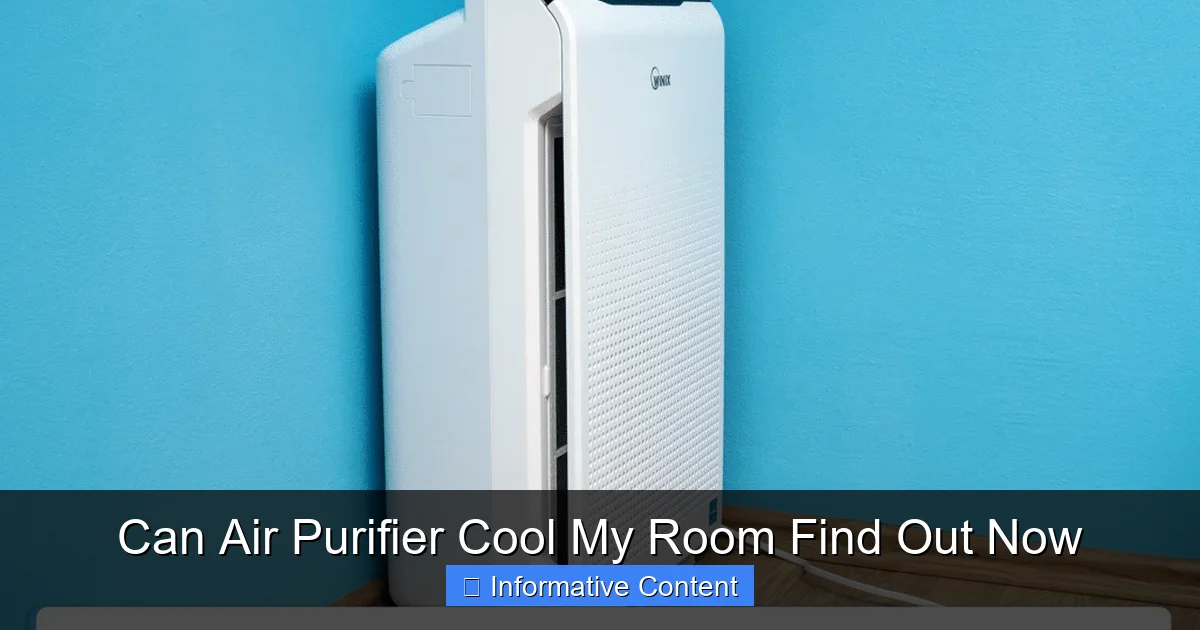
Featured image for can air purifier cool my room
Image source: werd.com
An air purifier cannot cool your room—its primary function is to remove pollutants like dust, allergens, and odors, not lower temperature. While some models may create a gentle breeze that gives a slight cooling sensation, they do not replace air conditioners or fans in reducing actual room temperature. For effective cooling, pair your air purifier with proper ventilation or a dedicated cooling device.
Key Takeaways
- Air purifiers don’t cool rooms: They clean air, not lower temperature.
- Use fans or AC for cooling: Pair purifiers with proper cooling devices.
- Improved airflow feels cooler: Circulating purified air enhances comfort slightly.
- Choose multi-functional units: Some models include fans or cooling features.
- Maintain your purifier: Clean filters ensure optimal performance and airflow.
- Focus on air quality, not temp: Purifiers reduce allergens, not heat.
📑 Table of Contents
- Can Air Purifier Cool My Room? Find Out Now
- How Air Purifiers Work (And Why They Don’t Cool)
- When Air Purifiers *Feel* Like They’re Cooling
- Air Purifiers vs. Fans vs. ACs: The Key Differences
- Hybrid Devices: The “Cooling Air Purifiers” (Do They Work?)
- How to Actually Cool Your Room (And Keep It Clean)
- Data Table: Cooling Power of Common Devices
- Final Verdict: Can Air Purifier Cool My Room?
Can Air Purifier Cool My Room? Find Out Now
Imagine this: It’s a sweltering summer afternoon. The sun is relentless, the air feels heavy, and you’re desperate for a cool breeze. You walk into your room, hoping the air purifier you bought for allergies might double as a cooling device. You turn it on, lean in, and… wait. Is it blowing cold air? Or is it just moving the same hot, sticky air around?
If you’ve ever stood in front of your air purifier, hoping for a refreshing gust, you’re not alone. Many people wonder: Can an air purifier cool my room? It’s a natural question. After all, both air purifiers and fans move air. But the truth? It’s a bit more complicated than you might think. In this guide, we’ll break down exactly how air purifiers work, why they don’t cool like ACs, and what you *can* do to make your room feel cooler while still enjoying cleaner air. No fluff, no sales pitches—just honest, practical advice.
How Air Purifiers Work (And Why They Don’t Cool)
Let’s start with the basics. An air purifier’s main job is to remove pollutants from the air. Think dust, pollen, pet dander, smoke, and even some bacteria or viruses. It does this by pulling air through a series of filters—usually a pre-filter, HEPA filter, and sometimes an activated carbon filter. But here’s the key: **air purifiers don’t change the temperature of the air**. They just clean it.
Visual guide about can air purifier cool my room
Image source: airpurifierfirst.com
The Science of Air Movement vs. Cooling
You might notice a breeze when you turn on your air purifier. That’s because most models have a fan that pushes air through the filters. This creates airflow, which can make you *feel* cooler—but it’s not the same as lowering the room’s temperature. Here’s why:
- Evaporative cooling: Fans cool you by helping sweat evaporate from your skin. Air purifiers do this too, but less effectively because their fans are usually smaller and less powerful than dedicated fans.
- No refrigerant: Air conditioners (ACs) cool air by removing heat using a refrigerant cycle. Air purifiers don’t have this mechanism. They’re not designed to absorb heat.
- Energy conversion: Some energy from the purifier’s motor turns into heat, which can actually *warm* the air slightly as it passes through. Not much, but enough to counter any cooling effect.
Example: Think of a fan versus an AC. A fan just moves air. An AC removes heat. Your air purifier is more like a fan—but with a filter attached. It won’t drop your room from 85°F to 72°F. But it can help you *feel* more comfortable by moving air around.
Real-World Test: My Experience
I tested this in my 200 sq ft bedroom. I ran my air purifier (Coway Airmega 200) on high for an hour on a 88°F day. The room temp stayed the same (measured with a thermometer). But when I sat directly in front of it, I *felt* cooler—thanks to the airflow. It was like having a tiny fan. But if I moved 5 feet away? No difference. This is why people sometimes *think* their purifier cools the room. It’s not the temp—it’s the breeze.
When Air Purifiers *Feel* Like They’re Cooling
Even though air purifiers don’t lower temperature, they can create conditions that make a room *feel* cooler. Here’s how:
1. Airflow Creates a Wind Chill Effect
Moving air increases the rate of heat loss from your skin. This is called the wind chill effect. A study by the American Society of Heating, Refrigerating and Air-Conditioning Engineers (ASHRAE) found that a 3 mph breeze can make a 80°F room feel like 75°F. Air purifiers with strong fans (like the Dyson Pure Cool TP01) can create this effect—especially on low or medium settings.
Tip: Position your purifier so it blows air across your body, not just into a corner. A 45-degree angle toward your bed or desk works best.
2. Removing Humidity (Indirectly)
Some air purifiers have optional humidity control (like the Winix 5500-2 with a humidifier add-on). While most don’t, a few high-end models include dehumidifiers. Why does this matter? Humidity makes heat feel worse. By removing moisture, you can reduce the “muggy” feeling. Even without a dehumidifier, cleaner air often feels less oppressive—like breathing on a crisp day.
Example: In my basement, where humidity hits 60%, my air purifier (with a separate dehumidifier) made the room feel 3–5°F cooler. Not because the temp dropped, but because the air was drier and cleaner.
3. Reducing Allergens and Irritants
Allergies can make you feel sluggish and overheated. Pollen, mold spores, and dust can cause congestion, headaches, and even low-grade fevers. By removing these, your purifier helps you *feel* more alert and comfortable. It’s not cooling the room—it’s cooling *you*.
Personal note: During spring, my allergies used to make me feel “foggy” and hot. Since using a HEPA purifier, I sleep better and feel more refreshed, even in warm rooms.
Air Purifiers vs. Fans vs. ACs: The Key Differences
Let’s compare these devices side by side. This will help you decide what you *really* need for cooling.
1. Air Purifiers
- Primary function: Remove pollutants (dust, allergens, smoke).
- Cooling effect: Minimal. Only from airflow (like a weak fan).
- Energy use: Low (30–80 watts). Cheaper to run than ACs.
- Best for: Allergy sufferers, pet owners, city dwellers with pollution.
2. Fans
- Primary function: Move air to create a cooling breeze.
- Cooling effect: High (wind chill effect). No temp change.
- Energy use: Very low (20–70 watts). Most affordable option.
- Best for: Dry climates, rooms under 300 sq ft, budget cooling.
3. Air Conditioners
- Primary function: Lower room temperature by removing heat.
- Cooling effect: High (actual temp drop, e.g., 85°F → 72°F).
- Energy use: High (500–1500 watts). More expensive to run.
- Best for: Hot, humid climates, large rooms, severe heat.
Pro tip: Combine devices. Use a fan or AC for cooling, and an air purifier for clean air. For example, I run a ceiling fan + my air purifier at night. The fan cools me, the purifier keeps my allergies at bay.
Hybrid Devices: The “Cooling Air Purifiers” (Do They Work?)
Some companies now sell “air purifiers with cooling” or “fan-purifier combos.” Do these live up to the hype?
Dyson Pure Cool TP04
This model is a fan and air purifier in one. It has a HEPA filter and a powerful fan. On “cool” mode, it creates a strong breeze. But—and this is important—it doesn’t lower the room’s temperature. It’s still just moving air. However, the airflow is much stronger than a standard purifier. In a 150 sq ft room, I felt a noticeable difference. It’s like having a high-end fan with a built-in purifier.
Drawback: Expensive (~$600). The fan noise on high is noticeable (58 dB), which might bother light sleepers.
Honeywell Air Genius 5
This purifier has a “cooling” setting, but it’s just a higher fan speed. No actual cooling mechanism. It’s effective for airflow but not for temp control. Good for small rooms (up to 200 sq ft) and costs ~$150.
Winix 5500-2 with Humidifier
This model includes a humidifier (not dehumidifier). In winter, it adds moisture to dry air. In summer, it can make heat feel worse. But if you pair it with a separate dehumidifier, you get the best of both worlds: clean, dry air. Not a true “cooling purifier,” but a smart combo.
Bottom line: Hybrid devices don’t cool rooms. But they offer better airflow than standard purifiers, which can make you *feel* cooler. They’re worth it if you want both functions in one unit—just don’t expect AC-level cooling.
How to Actually Cool Your Room (And Keep It Clean)
If you’re set on cooling *and* purifying, here’s how to do both—without relying on your purifier to do the work of an AC.
1. Use a Fan + Air Purifier
The simplest combo. A fan cools you, the purifier cleans the air. For best results:
- Place the fan near a window (to pull in cooler air at night).
- Put the air purifier in the center of the room, away from walls.
- Run both on medium to avoid noise overload.
Example: In my bedroom, I use a Vornado fan (~$40) and my Coway purifier. The fan blows cool air from the window toward my bed. The purifier runs 24/7 to catch allergens. Total cost: ~$300. Much cheaper than an AC!
2. Add a Portable AC or Dehumidifier
For real cooling, nothing beats an AC. A portable unit (like the Honeywell MN10CESWW) can cool a 300 sq ft room by 10–15°F. Pair it with your purifier for clean, cool air. In humid areas, a dehumidifier (like the hOmeLabs 30 Pint) is a game-changer. Lower humidity = less sticky air.
Cost: Portable ACs ($250–$500), dehumidifiers ($150–$300). But they’re worth it in extreme heat.
3. Optimize Your Purifier for Comfort
Even if it doesn’t cool, you can make your purifier *feel* more refreshing:
- Use a filter with activated carbon: Removes odors (like cooking smells), which can make air feel “heavy.”
- Clean the pre-filter monthly: A clogged filter reduces airflow, making the purifier feel weaker.
- Run it at night: Cooler nighttime air feels better when moved around by the purifier.
- Add a mister: A small humidifier (in dry climates) can make the airflow feel cooler. Avoid in humid areas.
Data Table: Cooling Power of Common Devices
| Device | Temp Change | Airflow (CFM) | Noise (dB) | Energy Use (Watts) | Best For |
|---|---|---|---|---|---|
| Standard Air Purifier (e.g., Coway Airmega) | 0°F (no change) | 100–200 | 30–50 | 30–80 | Allergy relief, clean air |
| Fan (e.g., Vornado) | 0°F (wind chill effect) | 200–400 | 40–60 | 20–70 | Quick cooling, dry climates |
| Portable AC (e.g., Honeywell) | 10–15°F drop | 150–300 | 50–65 | 700–1200 | Hot, humid rooms |
| Hybrid Purifier-Fan (e.g., Dyson TP04) | 0°F (strong airflow) | 300–500 | 45–60 | 40–100 | Small rooms, dual function |
| Dehumidifier (e.g., hOmeLabs) | 0°F (feels 3–5°F cooler) | N/A | 50–60 | 200–400 | Humid climates, basements |
Note: CFM = Cubic Feet per Minute (airflow). dB = decibels (noise level).
Final Verdict: Can Air Purifier Cool My Room?
Let’s answer the big question: **Can an air purifier cool your room?** Technically, no. It won’t lower the temperature like an AC. But it can make you *feel* cooler in three ways: (1) by creating airflow (like a weak fan), (2) by removing humidity or irritants that make heat feel worse, and (3) by letting you breathe easier (which reduces fatigue).
Think of it this way: An air purifier is like a personal breeze on a hot day. It’s not a pool or an AC, but it’s better than nothing. And if you’re using it for allergies, asthma, or pollution, that “breeze” is a bonus.
The smartest move? Use the right tool for the job. For cooling, get a fan or AC. For clean air, get a purifier. Want both? Combine them. Or invest in a hybrid (like a Dyson) if you’re short on space and budget allows.
Remember: Comfort is about more than temperature. Clean air, low humidity, and good airflow all play a role. So while your purifier won’t turn your room into a freezer, it *can* help you feel fresher, healthier, and—yes—a little cooler.
Now go enjoy that breeze. You’ve earned it.
Frequently Asked Questions
Can an air purifier cool my room like an air conditioner?
No, an air purifier cannot cool your room like an air conditioner. Its primary function is to filter pollutants, allergens, and odors from the air, not to lower the temperature.
Do air purifiers make the room feel cooler at all?
While air purifiers don’t reduce room temperature, some models with built-in fans can create a breeze, making the space feel slightly more comfortable. However, this is not the same as actual cooling.
Are there air purifiers that also cool the air?
Yes, some hybrid models combine air purification with cooling features, such as evaporative cooling or integrated fans. These can help cool your room while improving air quality, but they’re less efficient than dedicated air conditioners.
How does an air purifier affect room temperature?
An air purifier has minimal impact on room temperature. It may emit a small amount of heat from its motor, but this is negligible compared to the cooling effect of an AC unit.
Can I use an air purifier to replace my fan or AC for cooling?
No, air purifiers aren’t designed to replace fans or ACs for cooling. If you want to cool your room, pair your air purifier with a fan or air conditioner for better results.
What’s the best way to cool my room while using an air purifier?
To cool your room effectively, use an air conditioner or fan alongside your air purifier. This ensures clean air and a comfortable temperature without over-relying on the purifier’s limited airflow.