

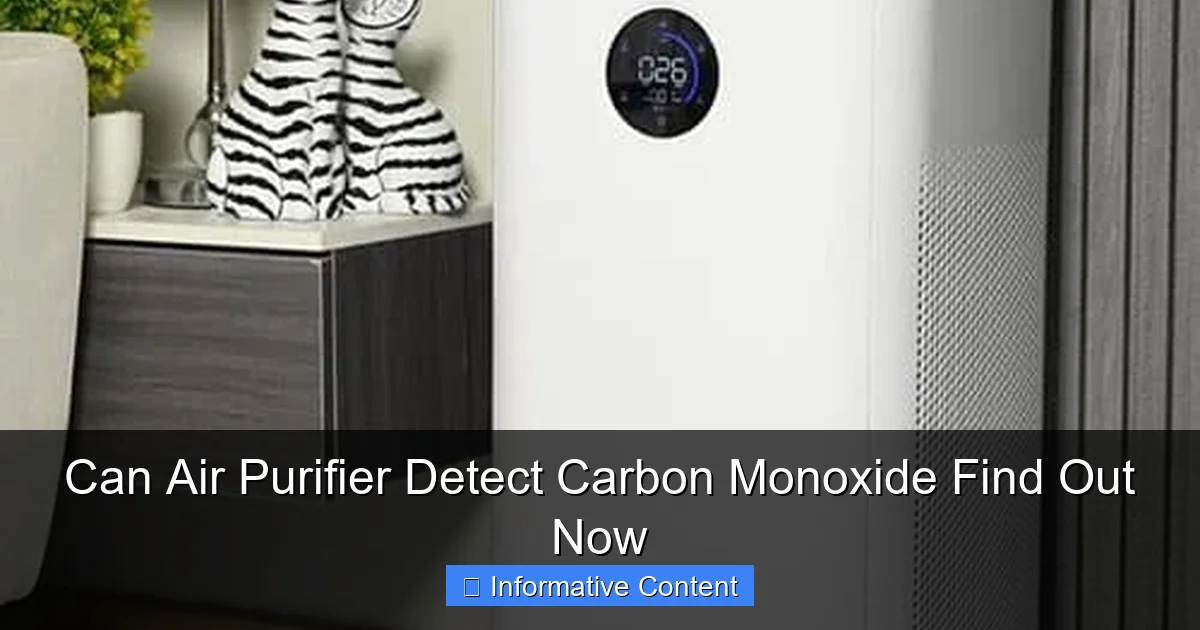
Featured image for can air purifier detect carbon monoxide
Image source: cleantheair.org
Air purifiers cannot detect carbon monoxide—this is a critical safety fact every homeowner should know. While air purifiers excel at removing particles like dust, pollen, and smoke, they lack the sensors needed to identify this odorless, deadly gas. For reliable carbon monoxide detection, you must install dedicated CO detectors near sleeping areas and fuel-burning appliances.
Key Takeaways
- Air purifiers cannot detect carbon monoxide unless specifically designed with CO sensors.
- Check for CO detection features before buying if safety is your priority.
- Use dedicated CO detectors for reliable monitoring in high-risk areas.
- HEPA filters don’t remove CO—they target particles, not gases.
- Combine air purifiers with CO alarms for comprehensive air quality protection.
- Smart purifiers may include CO alerts—verify specs before purchasing.
📑 Table of Contents
Understanding the Threat of Carbon Monoxide
Imagine this: you’re sitting in your cozy living room, sipping a warm cup of tea, completely unaware that an invisible, odorless killer is silently creeping into your home. This is the reality of carbon monoxide (CO), a toxic gas that claims hundreds of lives each year. Unlike pollutants you can see or smell, CO is a silent assassin. It’s produced by incomplete combustion of fuels like gas, oil, wood, or charcoal—common sources in our homes, from furnaces to stoves and even cars idling in garages.
Now, you might be wondering, “Can my air purifier detect this deadly gas?” It’s a question I asked myself after a close call with a faulty heater. The short answer? Most air purifiers can’t. But the long answer is more nuanced, and that’s exactly what we’ll explore here. Whether you’re a parent concerned about your kids, a pet owner, or just someone who wants to breathe cleaner air, understanding how to detect and protect against CO is essential. Let’s dive in.
How Air Purifiers Work (And Why They’re Not CO Detectors)
What Air Purifiers Are Designed For
Air purifiers are fantastic tools for improving indoor air quality. They work by pulling air through filters that trap pollutants like dust, pollen, mold spores, pet dander, and even some bacteria and viruses. The most common type is the HEPA filter, which can capture particles as small as 0.3 microns with 99.97% efficiency. Some models also include activated carbon filters to absorb odors and volatile organic compounds (VOCs), like those from cleaning products or paint.
Visual guide about can air purifier detect carbon monoxide
Image source: hnfosensor.com
But here’s the catch: air purifiers are built to filter pollutants, not detect gases like carbon monoxide. Think of it like this: a vacuum cleaner can suck up dust, but it can’t tell you if there’s a gas leak in your basement. The same logic applies to air purifiers.
Why Air Purifiers Can’t Detect Carbon Monoxide
Carbon monoxide is a gas, not a particle. It’s invisible, odorless, and doesn’t cling to surfaces the way dust or pollen does. Air purifiers rely on physical filtration (HEPA) or chemical absorption (activated carbon), but neither method can measure the concentration of CO in the air. Activated carbon filters can adsorb CO to a very limited extent, but this is not reliable or safe for detection purposes. Adsorbing a little CO doesn’t mean you’re protected—it could still be building up to dangerous levels.
For example, let’s say your furnace starts leaking CO. Your air purifier might pull some of it through the activated carbon layer, but it won’t alert you. Worse, the CO could saturate the carbon filter and then be released back into the air. So, while your purifier might slightly reduce CO levels temporarily, it’s like using a band-aid on a bullet wound—ineffective and potentially misleading.
The Right Tool for the Job: Carbon Monoxide Detectors
How CO Detectors Work
If air purifiers can’t detect CO, what can? The answer is a carbon monoxide detector. These devices use electrochemical sensors that react to CO molecules. When CO enters the sensor, it triggers a chemical reaction that generates an electric current. The detector measures this current and triggers an alarm when CO levels reach dangerous thresholds.
Most CO detectors follow safety standards like UL 2034, which require them to sound an alarm when CO reaches 70 parts per million (ppm) within 60–240 minutes or 400 ppm within 4–15 minutes. Some advanced models even display real-time CO levels, giving you a heads-up before it becomes critical.
Where to Place CO Detectors (And How Many You Need)
Placement matters. CO detectors should be installed:
- Near sleeping areas (within 15 feet of bedroom doors) so the alarm can wake you up.
- On every level of your home, including the basement.
- Away from humidity sources like bathrooms or kitchens (unless the detector is specifically rated for these areas).
- At least 15 feet from fuel-burning appliances to avoid false alarms from normal operation.
For a typical two-story home, that means at least three detectors: one in the basement, one on the first floor, and one near the bedrooms on the second floor. If you have a garage, add another one just inside the door leading to the house. Remember, CO can seep through shared walls and ducts.
Real-World Example: A Family’s Close Call
A few years ago, a friend of mine installed a CO detector after reading about a local incident. One winter night, the alarm went off at 2 a.m. They evacuated the house, called the fire department, and discovered a cracked heat exchanger in their furnace. Without that detector, they might not have woken up. This story isn’t rare—fire departments across the U.S. respond to thousands of CO incidents annually. A detector is the only reliable way to know if CO is present.
Air Purifiers vs. CO Detectors: A Comparison
Key Differences at a Glance
Let’s break down the differences between air purifiers and CO detectors in a simple, no-nonsense way:
| Feature | Air Purifier | Carbon Monoxide Detector |
|---|---|---|
| Primary Function | Filters particles (dust, pollen, etc.) and some gases (VOCs, odors) | Detects and measures CO levels in the air |
| Detection Capability | No CO detection | Real-time CO monitoring with alarms |
| Filter Type | HEPA, activated carbon, pre-filters | Electrochemical sensor (no filter) |
| Power Source | Electric plug (some battery backup) | Battery, plug-in, or hardwired (many have 10-year sealed batteries) |
| Lifespan | 3–5 years (filter replacements every 6–12 months) | 5–7 years (sensors degrade over time) |
| Cost | $50–$500+ | $20–$100 |
As you can see, these devices serve entirely different purposes. An air purifier improves air quality, while a CO detector saves lives. You need both—but never rely on an air purifier as a substitute for a detector.
Can Some Air Purifiers Include CO Detection?
Yes, but with caveats. A few smart air purifiers now come with built-in CO sensors (e.g., some Dyson models or specialized brands like Awair). These devices can display CO levels on a screen or app, but they’re not replacements for dedicated CO detectors. Why?
- Accuracy: Smart purifiers often use lower-cost sensors that may not meet safety standards like UL 2034.
- Alarm Reliability: A purifier’s alarm might be too quiet or delayed compared to a standalone detector.
- Coverage: A purifier is usually in one room, while CO detectors should be placed strategically throughout the house.
Think of it like a car: your stereo system might have a backup camera, but you’d still use mirrors and check blind spots. Similarly, use a smart purifier as a supplement, not a substitute.
Common Myths About Air Purifiers and CO
Myth 1: “My Air Purifier Has an Activated Carbon Filter, So It’s Safe”
Activated carbon filters can adsorb some CO, but they’re not designed for this. CO is a small molecule (28 g/mol) that passes through carbon filters easily. In fact, carbon filters saturate quickly and can even release CO back into the air. Relying on this is dangerous. For example, if your furnace leaks CO for 12 hours, the carbon filter might absorb a fraction, but the rest will still poison the air.
Myth 2: “If I Can’t Smell It, There’s No CO”
CO is odorless, colorless, and tasteless. You can’t smell it, taste it, or see it. Even low levels (20–50 ppm) can cause headaches, dizziness, and nausea over time. High levels (400+ ppm) can kill in minutes. Never rely on your senses—only a detector can tell you if CO is present.
Myth 3: “I Have a Smoke Detector, So I’m Covered”
Smoke detectors and CO detectors are not interchangeable. Smoke detectors sense smoke particles, while CO detectors sense gas molecules. You need both. In fact, many modern homes require both types by law (e.g., in bedrooms and hallways).
Myth 4: “I Only Need One Detector for the Whole House”
CO doesn’t spread evenly. It can accumulate near the source (e.g., a faulty water heater) while other areas remain safe. Multiple detectors ensure coverage. Think of it like fire alarms: you wouldn’t put one in the basement and assume the whole house is protected.
Creating a Safe Indoor Air Strategy
The Ideal Setup: Purifiers + Detectors + Maintenance
Here’s how to build a comprehensive air safety plan:
- Step 1: Install CO Detectors – One on each level, near bedrooms, and by the garage.
- Step 2: Add Air Purifiers – Place them in high-traffic areas (living room, bedroom) to reduce particles and allergens.
- Step 3: Maintain Fuel-Burning Appliances – Schedule annual inspections for furnaces, water heaters, and stoves.
- Step 4: Ventilate – Open windows occasionally or use exhaust fans to let fresh air in.
- Step 5: Test and Replace – Test CO detectors monthly and replace batteries annually (or when the low-battery chirp sounds). Replace detectors every 5–7 years.
Practical Tips for Everyday Safety
Beyond devices, here are simple habits to stay safe:
- Never run generators or grills indoors – Even with windows open, CO can build up.
- Don’t idle your car in the garage – CO can seep into the house through shared walls.
- Check vents and chimneys – Blocked flues are a common CO source.
- Use a smart thermostat – Some models (like Nest) can detect furnace issues and send alerts.
- Teach your family – Make sure everyone knows the sound of the CO alarm and evacuation plan.
Real-World Example: A Proactive Homeowner
My neighbor, Sarah, takes air quality seriously. She has:
- CO detectors in the basement, first floor, and hallway near bedrooms.
- HEPA air purifiers in the living room and her daughter’s bedroom (who has asthma).
- A yearly HVAC inspection every fall.
- A habit of testing alarms on the first day of each month.
Last winter, her CO alarm went off. The HVAC technician found a blocked flue. Sarah’s setup caught the problem before it became deadly. Her story shows that a layered approach works.
So, can air purifiers detect carbon monoxide? No—and they shouldn’t be trusted to. Air purifiers are excellent for cleaning the air, but they’re not safety devices for CO. Only dedicated carbon monoxide detectors can reliably sense this deadly gas and alert you in time.
The good news? CO detectors are affordable, easy to install, and can save lives. Pair them with air purifiers for a healthier home, but never rely on purifiers alone. Remember: CO is silent, but your detector shouldn’t be. Test it, maintain it, and take action if it ever sounds the alarm. Your family’s safety is worth the small investment.
Next time you’re shopping for air quality gear, ask yourself: “Am I improving my air, or protecting my life?” You need both. Stay safe, stay informed, and breathe easy.
Frequently Asked Questions
Can an air purifier detect carbon monoxide?
No, standard air purifiers cannot detect carbon monoxide. They are designed to remove particles like dust and allergens, not detect gases.
Do any air purifiers have carbon monoxide detection?
Most air purifiers do not include carbon monoxide detection. However, some advanced models may come with additional gas sensors, but these are rare and not standard.
What should I use instead of an air purifier to detect carbon monoxide?
You should use a dedicated carbon monoxide detector or alarm. These devices are specifically designed to sense dangerous CO levels and alert you immediately.
Can air purifiers help with carbon monoxide poisoning?
No, air purifiers cannot remove or neutralize carbon monoxide from the air. They do not address gas pollutants, so they offer no protection against CO poisoning.
Are there air purifiers that detect harmful gases like carbon monoxide?
While a few high-end models claim to detect certain gases, most cannot reliably detect carbon monoxide. Always rely on certified CO detectors for safety.
Why can’t air purifiers detect carbon monoxide?
Air purifiers focus on filtering airborne particles, not monitoring gas levels. Detecting carbon monoxide requires specialized electrochemical sensors not typically found in purifiers.