
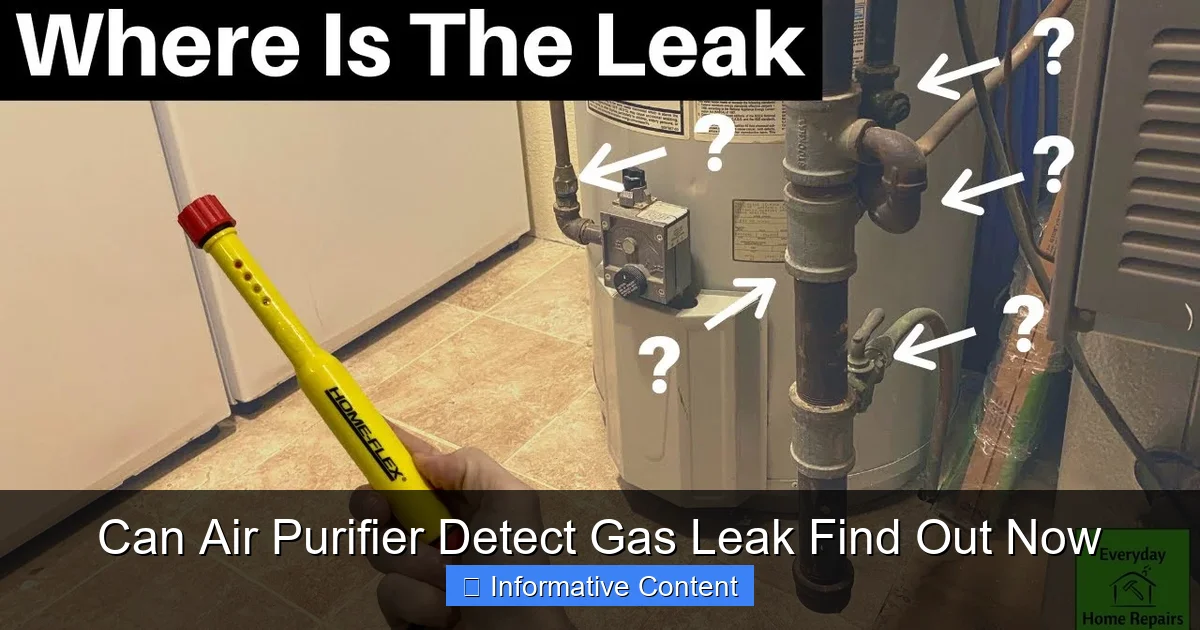
Featured image for can air purifier detect gas leak
Image source: i.ytimg.com
No, standard air purifiers cannot detect gas leaks—they are designed to filter airborne particles, not sense combustible gases like methane or propane. For gas leak detection, you need dedicated gas detectors or smart sensors that trigger alarms when dangerous gas levels are present, ensuring safety where air purifiers fall short.
Key Takeaways
- Air purifiers cannot detect gas leaks – they lack specialized gas sensors for methane or propane.
- Use dedicated gas detectors – install UL-listed alarms for reliable leak detection in homes.
- Some smart purifiers monitor VOCs – but these aren’t replacements for combustible gas alarms.
- Check for CO2 sensors – only detects carbon dioxide, not natural gas or propane leaks.
- Pair devices for safety – combine air purifiers with standalone gas detectors for full protection.
- Regular maintenance is critical – test detectors monthly and replace batteries annually.
- Act fast if you smell gas – leave immediately and call emergency services, don’t rely on purifiers.
📑 Table of Contents
- Can Air Purifier Detect Gas Leak? Find Out Now
- How Air Purifiers Work (And What They’re Designed For)
- Can Air Purifiers Detect *Any* Gases at All?
- What *Should* You Use to Detect Gas Leaks?
- Air Purifiers vs. Gas Detectors: A Side-by-Side Comparison
- Smart Home Integration: The Future of Air Quality and Safety
- Conclusion: The Bottom Line on Air Purifiers and Gas Leaks
Can Air Purifier Detect Gas Leak? Find Out Now
Imagine this: You’re cooking dinner, and suddenly a faint, egg-like smell fills the kitchen. Your heart skips a beat. Is it a gas leak? You look at your sleek, high-tech air purifier across the room—its soft blue light pulsing steadily. You wonder, Can this thing tell me if there’s a dangerous gas leak?
We’ve all been there—that moment of panic when you catch a whiff of something suspicious. Gas leaks are no joke. They can lead to fires, explosions, or long-term health issues from exposure to harmful gases like carbon monoxide (CO), methane (CH4), or volatile organic compounds (VOCs). With air purifiers becoming a staple in homes for cleaner air, it’s natural to ask: Can an air purifier detect gas leaks? The short answer is not directly—but the full story is more nuanced, and it’s worth understanding how these devices work, what they can (and can’t) detect, and what you should rely on instead.
How Air Purifiers Work (And What They’re Designed For)
Understanding Air Purifier Technology
To answer whether an air purifier can detect gas leaks, we first need to understand how these devices function. At their core, air purifiers are designed to clean the air—not to act as gas alarms or safety detectors.
Visual guide about can air purifier detect gas leak
Image source: zameenblog.s3.amazonaws.com
Most air purifiers use a combination of filters and sometimes sensors to capture airborne pollutants. Here’s a quick breakdown of the main technologies:
- HEPA Filters: These trap tiny particles like dust, pollen, pet dander, and mold spores. They’re excellent for particulate matter but do not capture gases or odors.
- Activated Carbon Filters: These are the real heroes for gas-related issues. Activated carbon absorbs gaseous pollutants like VOCs, smoke, and some odors (including the sulfur-like smell of natural gas, which is actually an added odorant called mercaptan). However, this is adsorption, not detection.
- Pre-filters: Catch larger particles like hair and lint to protect the main filter.
- Ionizers and UV-C Light: Some models use these to neutralize microbes or break down certain pollutants, but they don’t detect gases either.
So, while your air purifier might reduce the concentration of certain gases (like VOCs from paint or cleaning products), it doesn’t “sense” or “alert” you to their presence. It’s like a sponge soaking up water—it doesn’t tell you the faucet is leaking.
What Air Purifiers Are *Not* Designed For
Air purifiers are built for indoor air quality (IAQ) improvement, not emergency detection. They’re meant to:
- Reduce allergens
- Neutralize odors (like cooking smells or pet odors)
- Capture fine particles
- Support respiratory health (e.g., for asthma or allergies)
They are not safety devices. They won’t sound an alarm if carbon monoxide is building up in your basement. They won’t flash red if your stove has a methane leak. And they definitely won’t call 911.
Think of it this way: A fire extinguisher puts out fires—it doesn’t detect smoke. Similarly, an air purifier cleans air—it doesn’t act as a gas sniffer dog.
Can Air Purifiers Detect *Any* Gases at All?
Limited Gas Detection in Some Advanced Models
Here’s where things get interesting. While most standard air purifiers don’t detect gases, some newer, high-end models include built-in sensors that can detect certain airborne pollutants—including some gases.
For example:
- VOC Sensors: Devices like the Winix 5500-2 or Blueair 211+ Auto use VOC sensors to measure levels of volatile organic compounds (e.g., from paint, cleaning sprays, or new furniture). When VOCs rise, the purifier may increase fan speed automatically.
- PM2.5 and CO2 Sensors: Some purifiers (like the Dyson Pure Cool) include PM2.5 and carbon dioxide (CO2) sensors. These help monitor air quality but are not designed for dangerous gas leaks.
- Odor Sensors: Certain models use odor detection to adjust fan speed when cooking smells or pet odors are present. These often rely on VOC sensors.
So, can these sensors detect a gas leak? Sometimes—but not reliably or safely.
The Problem: False Positives, Delayed Alerts, and Incomplete Coverage
Even with sensors, air purifiers have major limitations when it comes to gas leak detection:
- False Positives: A spike in VOCs could come from opening a can of paint, not a gas leak. The purifier might ramp up, but it won’t distinguish between safe and dangerous sources.
- Delayed Response: Sensors take time to detect changes. A gas leak might be spreading silently for minutes before the purifier reacts—if it reacts at all.
- No Alarm System: Even if a sensor detects a rise in VOCs or CO2, most purifiers only adjust fan speed. There’s no loud alarm, flashing light, or emergency notification.
- Coverage Limitations: Air purifiers are designed to clean air in a specific room. A gas leak in the basement or garage might go undetected if the purifier is in the living room.
- No CO Detection (in Most Cases): Carbon monoxide is odorless and colorless. Most air purifiers do not have CO sensors. Even if they did, CO is deadly at low levels, and a purifier’s slow fan response wouldn’t help.
Here’s a real-life example: Sarah installed a smart air purifier with a VOC sensor in her kitchen. One evening, she noticed the fan sped up. “Oh, maybe it’s the garlic I just cooked,” she thought. Later, her carbon monoxide detector went off. It turned out the furnace had a small CO leak. Her air purifier never alerted her to the danger—only the CO detector did.
Lesson: Air purifiers with sensors can hint at poor air quality, but they’re not substitutes for dedicated gas detectors.
What *Should* You Use to Detect Gas Leaks?
Dedicated Gas Detectors: The Real Safety Tools
If you’re worried about gas leaks, don’t rely on your air purifier. Instead, invest in purpose-built gas detectors. These are designed specifically to detect hazardous gases and trigger immediate alarms.
Here are the types of gas detectors every home should consider:
- Carbon Monoxide (CO) Detectors: These are essential. CO is odorless, invisible, and deadly. Place one on each floor of your home, especially near bedrooms. Look for models with digital readouts and low-level CO alerts.
- Natural Gas/Methane Detectors: These detect leaks from gas stoves, furnaces, or water heaters. Natural gas is odorless in its pure form, but utility companies add mercaptan (the “rotten egg” smell) so leaks are detectable by humans. Still, a detector adds an extra layer of safety.
- Combination Detectors: Many modern units detect both CO and combustible gases (methane, propane). These are great for kitchens and utility rooms.
- Smart Detectors: Brands like Nest Protect or First Alert offer Wi-Fi-enabled detectors that send alerts to your phone, even when you’re away. Some even integrate with smart home systems to shut off gas valves automatically.
Where to Place Gas Detectors (And Why It Matters)
Placement is critical for effective gas detection:
- CO Detectors: Install near sleeping areas (within 15 feet of bedrooms). Also place in basements, garages, and near gas appliances. Mount at knee height or higher—CO mixes evenly with air, but low placement avoids false alarms from cooking fumes.
- Natural Gas Detectors: Natural gas is lighter than air, so place detectors near the ceiling in kitchens, utility rooms, or near gas lines. Avoid placing them directly above stoves or ovens, where heat and steam can interfere.
- Propane Detectors: Propane is heavier than air, so place detectors near the floor (6–12 inches from the ground), especially in basements or garages with propane tanks.
Pro Tip: Test your detectors monthly and replace batteries annually. Most detectors have a lifespan of 5–7 years—check the manufacturer’s label.
Additional Safety Measures
Beyond detectors, take these steps to prevent and respond to gas leaks:
- Regular Appliance Maintenance: Have your furnace, water heater, and stove inspected annually by a licensed technician.
- Ventilation: Use exhaust fans in kitchens and bathrooms. Open windows when using gas appliances.
- Know the Signs: Hissing sounds, dead plants near gas lines, bubbles in standing water, or a sulfur/rotten egg smell are red flags.
- Emergency Plan: If you suspect a leak, leave the house immediately, call 911 or your gas company from outside, and don’t use electronics or light switches.
Air Purifiers vs. Gas Detectors: A Side-by-Side Comparison
When to Use Each Device
To clear up the confusion, here’s a simple breakdown of when to rely on an air purifier versus a gas detector:
| Scenario | Use Air Purifier? | Use Gas Detector? |
|---|---|---|
| Allergies or asthma | Yes – HEPA filters reduce allergens | No |
| Smoke from cooking or wildfires | Yes – Activated carbon helps with odors and VOCs | No |
| New furniture or paint fumes | Yes – VOC sensors may adjust fan speed | No (unless CO is a concern) |
| Suspected gas leak (smell, hissing) | No – Won’t alert you | Yes – Immediate alarm |
| Carbon monoxide concern (headache, dizziness) | No – Most lack CO sensors | Yes – Critical for safety |
| General air quality monitoring | Yes – Some models show PM2.5/VOC levels | Yes – For CO and combustible gases |
This table shows that air purifiers and gas detectors serve different purposes. You might use both in the same room—but they’re not interchangeable.
Can They Work Together?
Absolutely. In fact, they make a great team. For example:
- Your gas detector alerts you to a CO spike at 2 a.m.
- You ventilate the room and fix the issue.
- The next day, your air purifier helps remove lingering VOCs and particles from the incident.
Think of it like a safety net: The detector is the alarm, the purifier is the cleanup crew.
Smart Home Integration: The Future of Air Quality and Safety
When Air Purifiers and Detectors Talk to Each Other
As smart home technology advances, we’re seeing more integration between air quality devices. Imagine this:
- Your smart gas detector senses a CO leak.
- It sends an alert to your phone and automatically turns on your air purifier to help ventilate the area.
- The purifier’s fan runs at high speed, pulling air through the carbon filter to reduce VOCs.
- Your smart thermostat increases ventilation by turning on exhaust fans.
Brands like Ecobee, Honeywell, and Dyson are already building this kind of ecosystem. While the purifier still can’t detect the gas, it can respond intelligently when a detector does.
What to Look for in Smart Devices
If you’re building a smart air quality system, prioritize:
- Interoperability: Devices that work with Alexa, Google Home, or Apple HomeKit.
- Real-time Alerts: Push notifications, email, or text messages when gas levels rise.
- Automation: Ability to trigger other devices (e.g., turn on purifier, open windows via smart vents).
- Data Tracking: Historical air quality reports so you can spot trends.
Example: The Kaiterra Sensedge Mini is an air quality monitor that detects CO2, PM2.5, and VOCs. It connects to your smart home and can trigger actions—like turning on your purifier when VOCs are high. But again, for CO, you still need a dedicated CO detector.
Conclusion: The Bottom Line on Air Purifiers and Gas Leaks
So, can an air purifier detect a gas leak? The honest answer is: No—not reliably, not quickly, and not safely. While some high-end models have sensors that can detect rising levels of VOCs or odors (which might correlate with a gas leak), they lack the speed, specificity, and alarm systems needed for real safety.
Air purifiers are excellent tools for improving indoor air quality. They can reduce allergens, neutralize odors, and help you breathe easier. But they are not substitutes for gas detectors. If you’re concerned about gas leaks—whether from your stove, furnace, or water heater—invest in dedicated carbon monoxide and natural gas detectors. Place them correctly, test them regularly, and have a plan in place.
Think of it this way: You wouldn’t use a thermometer to check for a fire. Similarly, don’t use an air purifier to check for a gas leak. Use the right tool for the job. Your safety—and your family’s—is worth it.
And if you do have a smart air purifier with sensors? Great! Use it to monitor general air quality and reduce everyday pollutants. Just remember: It’s a helper, not a hero. The real heroes are the quiet, unassuming detectors mounted on your wall, standing guard 24/7.
Stay safe, stay informed, and breathe easy—literally.
Frequently Asked Questions
Can an air purifier detect a gas leak in my home?
Most standard air purifiers are not designed to detect gas leaks, as they focus on filtering particles like dust and allergens. However, some advanced models with gas sensors (e.g., for VOCs) may alert you to certain airborne chemicals, but they are not a substitute for dedicated gas detectors.
How do I know if my air purifier can detect gas leaks?
Check the product specifications for features like VOC or gas sensors—these are the only air purifiers that might respond to gas leaks. Remember, even these models are not as reliable as professional gas leak detectors for safety-critical situations.
What types of gas can an air purifier with sensors detect?
Air purifiers with gas sensors typically detect volatile organic compounds (VOCs) or specific gases like formaldehyde, but they cannot detect odorless gases like carbon monoxide or natural gas. For those, a specialized gas leak detector is essential.
Is it safe to rely on an air purifier to detect gas leaks?
No, air purifiers—even those with gas sensors—are not safety devices for detecting hazardous gas leaks. Always use certified gas detectors for natural gas, propane, or carbon monoxide to ensure your home’s safety.
Can an air purifier help during a gas leak emergency?
While some air purifiers with activated carbon filters can reduce lingering odors after a gas leak, they do not neutralize or detect the gas itself. Evacuate and contact emergency services immediately if you suspect a leak.
What’s the difference between an air purifier and a gas leak detector?
Air purifiers improve air quality by filtering pollutants, while gas leak detectors are safety devices that sound alarms when specific gases are present. For gas leaks, a dedicated detector is the only reliable solution.