

Featured image for can air purifier filter carbon dioxide
Image source: airpurifiersandcleaners.com
Most air purifiers cannot effectively filter carbon dioxide (CO₂) because standard filters like HEPA and activated carbon are designed for particles and gases, not CO₂ molecules, which are too small and chemically stable. Only specialized systems with molecular sieves or chemical scrubbers can reduce CO₂, making typical consumer air purifiers ineffective for this purpose despite their marketing claims.
Key Takeaways
- Air purifiers cannot filter CO2: They lack specialized technology to capture carbon dioxide effectively.
- Focus on VOCs and particles: Most purifiers target pollutants like dust, smoke, and gases—not CO2.
- Use CO2 monitors: Measure indoor CO2 levels independently to assess ventilation needs accurately.
- Ventilation is key: Open windows or use HVAC systems to reduce CO2 buildup naturally.
- Plants help slightly: They absorb minimal CO2 but aren’t a reliable standalone solution.
- Consider hybrid systems: Some advanced units combine purifiers with CO2 scrubbers for better results.
📑 Table of Contents
- Can Air Purifier Filter Carbon Dioxide Effectively
- Understanding Carbon Dioxide and Indoor Air Quality
- How Air Purifiers Work: What They Can and Can’t Remove
- Why Air Purifiers Can’t Remove CO₂ (And What Actually Can)
- Alternative Solutions for Managing Indoor CO₂
- Choosing the Right Air Purifier for Your Needs
- Real-World Examples and Practical Tips
- Conclusion: The Truth About Air Purifiers and CO₂
Can Air Purifier Filter Carbon Dioxide Effectively
Imagine this: you’ve just finished a long day at work, kicked off your shoes, and settled into your cozy living room. You take a deep breath—only to feel a slight heaviness in your chest. The air feels stale, almost stuffy. You glance around and notice the windows are closed, the AC has been running all day, and there’s no breeze. You start to wonder: is the air inside your home actually clean? More importantly, could there be too much carbon dioxide (CO₂) building up?
This scenario isn’t just a random thought—it’s a real concern for many people, especially those living in urban areas or working from home in tightly sealed spaces. As we spend more time indoors, the quality of the air we breathe becomes increasingly important. And while air purifiers have become a popular solution for tackling dust, allergens, and odors, a common question keeps popping up: can air purifier filter carbon dioxide effectively? It’s a fair question, and one that deserves a clear, honest answer—not just marketing hype.
In this post, we’ll dive deep into how air purifiers work, what they’re actually designed to remove, and whether they can truly help reduce carbon dioxide levels in your home. We’ll also explore alternative solutions, share practical tips, and help you make an informed decision about improving your indoor air quality. Whether you’re a concerned parent, a remote worker, or just someone who wants to breathe easier, this guide is for you.
Understanding Carbon Dioxide and Indoor Air Quality
What Is Carbon Dioxide and Why Does It Matter?
Carbon dioxide (CO₂) is a colorless, odorless gas that’s naturally present in the atmosphere. We produce it every time we breathe out, and it’s also released from burning fuels, cooking, and even houseplants at night. In outdoor environments, CO₂ levels are typically around 400 parts per million (ppm), which is considered normal and safe.
Visual guide about can air purifier filter carbon dioxide
Image source: 5lrorwxhklprrij.leadongcdn.com
However, indoors, CO₂ can accumulate—especially in poorly ventilated spaces. When too many people are in a room with limited airflow, CO₂ levels can rise above 1,000 ppm. At this point, you might start to feel drowsy, have trouble concentrating, or experience headaches. In extreme cases, levels above 5,000 ppm can lead to more serious symptoms like dizziness, increased heart rate, and even nausea.
So why does this matter for air purifiers? Because many people assume that if a device cleans the air, it must remove CO₂. But the truth is, CO₂ behaves very differently from other indoor pollutants like dust, pollen, or smoke. It’s not a particle—it’s a gas. And that makes all the difference when it comes to filtration.
How CO₂ Builds Up Indoors
Let’s say you’re working from home in a small office with the door closed. You’re breathing, your laptop is running, and maybe you’ve got a space heater on. Over time, the CO₂ you exhale builds up because there’s no fresh air coming in. The same thing happens in classrooms, meeting rooms, or even bedrooms with multiple people sleeping.
Unlike pollutants such as pet dander or mold spores, which float around as tiny particles, CO₂ disperses evenly throughout the air. It doesn’t settle on surfaces or get trapped in filters easily. This means that even the most advanced air purifier with a HEPA filter won’t capture CO₂ molecules—they’re simply too small and too chemically stable.
Understanding this distinction is crucial. While air purifiers excel at removing particulate matter, they aren’t designed to handle gaseous pollutants like CO₂, carbon monoxide, or volatile organic compounds (VOCs)—unless they have specific technology to do so.
How Air Purifiers Work: What They Can and Can’t Remove
The Role of HEPA Filters
Most air purifiers on the market today rely on HEPA (High-Efficiency Particulate Air) filters. These filters are incredibly effective at capturing particles as small as 0.3 microns with an efficiency of 99.97%. That means they can trap dust, pollen, mold spores, pet dander, and even some bacteria and viruses.
But here’s the catch: HEPA filters only work on particles. They can’t capture gases like CO₂, which are molecular in size—much smaller than 0.3 microns. Think of it like trying to catch smoke with a fishnet. The holes in the net (or filter) are too big to trap something as fine as a gas molecule.
So while a HEPA-based air purifier can dramatically improve your indoor air quality by removing allergens and irritants, it won’t do anything to reduce CO₂ levels. If your main concern is stuffiness or fatigue due to high CO₂, a standard air purifier won’t solve the problem.
Activated Carbon Filters and Gas Removal
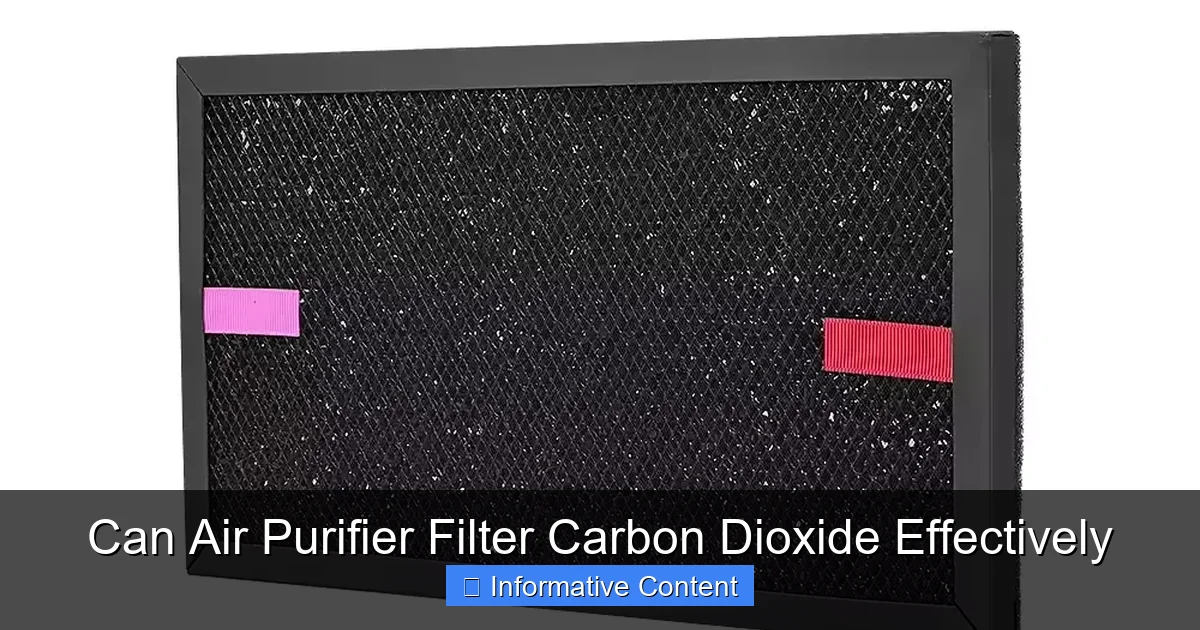
Now, some air purifiers come with an additional layer: activated carbon filters. These are designed to absorb gases, odors, and chemicals. You’ve probably seen them in water filters or gas masks—they’re made from porous carbon that traps volatile organic compounds (VOCs) from paints, cleaners, or cooking fumes.
But here’s the important part: activated carbon filters are not effective at removing carbon dioxide. CO₂ is a stable, non-reactive gas, and it doesn’t bind well to carbon. In fact, most activated carbon filters are specifically designed to target larger, more reactive molecules like formaldehyde or benzene—not CO₂.
So while a purifier with a carbon filter might help with smells or chemical fumes, it still won’t lower CO₂ levels. If you’re buying an air purifier hoping it will “clean” the CO₂ out of your air, you’re likely to be disappointed.
Other Technologies: Ionizers, UV Lights, and Ozone Generators
Some air purifiers use ionizers to charge particles in the air, causing them to stick to surfaces or each other. Others use UV light to kill bacteria or ozone generators to “break down” pollutants. But none of these technologies are effective against CO₂.
In fact, ozone generators can be harmful, producing a lung irritant that may worsen respiratory conditions. The EPA and other health organizations advise against using them indoors.
UV lights are great for sterilizing surfaces or killing microbes, but they don’t interact with CO₂ molecules. And ionizers might help particles clump together for easier filtration, but again, they don’t remove gases.
The bottom line? Most common air purifier technologies are not equipped to handle carbon dioxide. They’re built for particles and some odors—not for the invisible buildup of exhaled breath.
Why Air Purifiers Can’t Remove CO₂ (And What Actually Can)
The Science Behind CO₂ and Filtration
To understand why air purifiers can’t filter CO₂, it helps to look at the science. CO₂ molecules are extremely small—about 0.33 nanometers in diameter. That’s over 1,000 times smaller than the smallest particle a HEPA filter can catch. Even the most advanced mechanical filters can’t trap something that tiny.
Moreover, CO₂ isn’t sticky or reactive. It doesn’t cling to surfaces or get absorbed easily. Unlike VOCs, which have complex structures that can bond with activated carbon, CO₂ is a simple, stable molecule. It passes through filters like a ghost through a wall.
Some industrial systems use chemical absorbents or cryogenic distillation to remove CO₂, but these are expensive, energy-intensive, and not practical for home use. There’s currently no consumer-grade air purifier that can effectively scrub CO₂ from indoor air using filtration alone.
What Actually Reduces Indoor CO₂ Levels
If air purifiers can’t remove CO₂, what can? The answer is simple: ventilation.
Bringing in fresh outdoor air is the most effective way to dilute and remove excess CO₂. Opening windows, using exhaust fans, or installing a mechanical ventilation system (like an HRV or ERV) allows stale air to escape and fresh air to enter. This process, known as air exchange, is the gold standard for maintaining healthy indoor CO₂ levels.
For example, in a classroom or office, increasing ventilation can drop CO₂ levels from 2,000 ppm to under 800 ppm in minutes. That’s a huge difference in air quality and cognitive performance.
Another option is to reduce the source of CO₂. Fewer people in a room, shorter meetings, or taking breaks outside can all help. But in many cases, especially in homes or small offices, improving airflow is the most practical solution.
When Air Purifiers Can Help (Indirectly)
While air purifiers don’t remove CO₂, they can still play a supportive role in improving indoor air quality. For instance, if you’re in a room with high CO₂ and also have allergies or asthma, running an air purifier can reduce irritants like dust or pollen. This might make the air feel “cleaner” or easier to breathe, even if CO₂ levels remain unchanged.
Think of it like this: an air purifier can’t fix a stuffy room, but it can make that stuffy room less irritating. It’s not a replacement for ventilation, but it can be a helpful companion.
Also, some smart air purifiers come with built-in CO₂ sensors. These don’t remove CO₂, but they can alert you when levels are rising—so you know when to open a window or turn on a fan. That’s a useful feature, even if the purifier itself isn’t doing the filtering.
Alternative Solutions for Managing Indoor CO₂
Improve Natural Ventilation
The simplest and most cost-effective way to reduce CO₂ is to let fresh air in. Open windows and doors whenever possible, especially in rooms where people gather. Even cracking a window by a few inches can make a big difference over time.
If you live in a noisy or polluted area, consider using window vents or trickle vents that allow airflow without fully opening the window. These can be installed in most windows and provide continuous, quiet ventilation.
For example, I once worked in a small home office with no windows. CO₂ levels would spike within an hour, leaving me foggy and tired. Installing a small exhaust fan in the wall made a noticeable difference—within 30 minutes, the air felt fresher and my focus improved.
Use Mechanical Ventilation Systems
For homes or buildings without easy access to outdoor air, mechanical ventilation systems are a great option. Heat Recovery Ventilators (HRVs) and Energy Recovery Ventilators (ERVs) bring in fresh air while exhausting stale air, all while conserving energy by transferring heat between the two streams.
These systems are especially useful in energy-efficient homes, which are often tightly sealed to reduce heating and cooling costs. But that same sealing can trap CO₂ inside. An HRV or ERV solves that problem by ensuring constant air exchange without wasting energy.
While they require professional installation and can cost several hundred to thousands of dollars, they’re one of the most effective long-term solutions for maintaining healthy indoor air.
Monitor CO₂ Levels with Smart Sensors
Knowledge is power. By using a CO₂ monitor, you can track indoor levels in real time and take action when needed. Many affordable sensors are available, ranging from $50 to $200, and some even connect to your smartphone.
For instance, the Aranet4 is a popular portable CO₂ monitor that gives accurate readings and logs data over time. I use one in my home office, and it’s helped me realize how quickly CO₂ builds up during video calls. Now, I make a point to open a window every hour—something I wouldn’t have thought to do otherwise.
Some smart thermostats and air quality monitors also include CO₂ sensors, so you can integrate monitoring into your existing home system.
Limit Occupancy and Activity in Small Spaces
Sometimes, the best solution is behavioral. If you’re in a small room with multiple people, try to limit the time spent there or take breaks outside. In classrooms or meeting rooms, schedule shorter sessions or include outdoor time.
Even simple changes—like standing meetings instead of sitting in a closed room—can reduce CO₂ buildup. Movement increases airflow and reduces the time people spend breathing in the same air.
And if you’re working from home, consider setting a timer to remind yourself to step outside every hour. Fresh air does more than lower CO₂—it boosts mood, energy, and mental clarity.
Choosing the Right Air Purifier for Your Needs
Know What You’re Trying to Solve
Before buying an air purifier, ask yourself: What’s my main air quality concern? If it’s allergies, asthma, or pet dander, a HEPA-based purifier is an excellent choice. If it’s odors or chemical fumes, look for one with a robust activated carbon filter.
But if your goal is to reduce CO₂, an air purifier—no matter how advanced—won’t do the job. In that case, focus on ventilation and monitoring instead.
I learned this the hard way. I once bought a high-end air purifier hoping it would “refresh” the air in my basement apartment. It did a great job with dust and smells, but I still felt sluggish. Only when I started opening windows regularly did I realize the real issue was poor airflow, not lack of filtration.
Look for Smart Features and Sensors
Even if an air purifier can’t remove CO₂, some models come with useful extras. Look for units with built-in air quality sensors that detect particles, VOCs, or even CO₂. These can give you a fuller picture of your indoor environment.
For example, the IQAir HealthPro Plus includes a particle sensor and can be paired with external CO₂ monitors. While it won’t filter CO₂, it helps you understand when ventilation is needed.
Also, consider purifiers with auto modes that adjust fan speed based on air quality. This saves energy and ensures the unit runs only when necessary.
Consider Size, Noise, and Maintenance
Not all air purifiers are created equal. Make sure the unit is sized for your room—most manufacturers provide a recommended room size. A purifier that’s too small won’t clean the air effectively, while one that’s too large may be noisy or overkill.
Noise is another factor. If you’re using it in a bedroom or office, look for models with a “sleep mode” or low decibel rating. I once bought a purifier that sounded like a jet engine on high—definitely not conducive to concentration or rest.
And don’t forget maintenance. HEPA filters need replacing every 6–12 months, and carbon filters may need more frequent changes. Check the cost and availability of replacement filters before buying.
Real-World Examples and Practical Tips
Case Study: The Home Office Dilemma
Sarah, a freelance writer, worked from a small, windowless room in her apartment. She noticed she felt tired and unfocused after a few hours, even though she was well-rested. She bought a popular air purifier with a HEPA and carbon filter, hoping it would “clean” the air.
The purifier helped with dust and reduced pet hair, but Sarah still felt foggy. She eventually bought a CO₂ monitor and discovered levels were consistently above 1,500 ppm. The solution? She installed a small exhaust fan and started taking 10-minute outdoor breaks every hour. Within days, her energy and focus improved dramatically.
Her takeaway: “The air purifier was great for allergens, but it didn’t fix the CO₂ problem. I needed fresh air, not just filtration.”
Case Study: The Classroom Challenge
A teacher in a densely populated urban school noticed students were often drowsy during afternoon lessons. The classroom had no windows, and the HVAC system was outdated. CO₂ levels were measured at over 2,000 ppm.
The school installed portable air purifiers, but test results showed no change in CO₂. Instead, they upgraded the ventilation system and added CO₂ monitors. Within weeks, levels dropped below 800 ppm, and teachers reported improved student alertness and participation.
This case highlights a key point: air purifiers support air quality, but they don’t replace ventilation.
Practical Tips for Better Indoor Air
- Open windows daily, even for just 10–15 minutes, to allow air exchange.
- Use exhaust fans in kitchens and bathrooms to remove moisture and pollutants.
- Place plants strategically—while they don’t significantly reduce CO₂, they can improve perceived air freshness.
- Limit indoor combustion—avoid burning candles, using gas stoves without ventilation, or running generators indoors.
- Combine solutions: use an air purifier for particles and ensure proper ventilation for gases like CO₂.
Conclusion: The Truth About Air Purifiers and CO₂
So, can air purifier filter carbon dioxide effectively? The short answer is no—not on its own. While air purifiers are excellent at removing particles like dust, pollen, and pet dander, they aren’t designed to capture gaseous pollutants like CO₂. HEPA filters can’t trap such tiny molecules, and activated carbon filters aren’t effective against stable gases like carbon dioxide.
That doesn’t mean air purifiers are useless. On the contrary, they play a vital role in improving indoor air quality by reducing allergens and irritants. But if your main concern is high CO₂ levels—leading to stuffiness, fatigue, or poor concentration—you’ll need to focus on ventilation, not filtration.
The best approach is a balanced one: use an air purifier to tackle particles and odors, and ensure your space has adequate airflow to dilute CO₂. Combine that with a CO₂ monitor to stay informed, and you’ll create a healthier, more comfortable indoor environment.
At the end of the day, clean air isn’t just about what you remove—it’s about what you bring in. Fresh air is free, natural, and incredibly effective. So the next time you feel that familiar heaviness in your chest, don’t just reach for the air purifier. Open a window, step outside, and take a deep breath of real, fresh air. Your body—and your mind—will thank you.
Frequently Asked Questions
Can air purifier filter carbon dioxide from the air?
Most standard air purifiers cannot filter carbon dioxide (CO2) because it’s a gas with very small molecular size. However, specialized systems with activated carbon or molecular sieve filters can help reduce CO2 levels in specific environments.
Do air purifiers with activated carbon remove CO2 effectively?
Air purifiers with activated carbon can adsorb some carbon dioxide, but their effectiveness is limited compared to dedicated CO2 scrubbers. They work best when paired with other technologies like ventilation systems for optimal results.
How do air purifiers help reduce carbon dioxide indoors?
While most air purifiers don’t directly remove CO2, they improve air quality by filtering other pollutants, which can indirectly lower CO2 buildup when combined with proper ventilation. For high CO2, consider hybrid systems with CO2-specific filters.
What type of air purifier is best for carbon dioxide removal?
Look for air purifiers with molecular sieve filters or advanced activated carbon blends designed for gas-phase filtration. These are more effective at trapping CO2, though standalone HVAC systems or fresh air exchangers are often better solutions.
Why can’t HEPA air purifiers filter carbon dioxide?
HEPA filters are designed to capture particles like dust and pollen, not gaseous molecules like CO2. Carbon dioxide requires adsorption or chemical filtration, which HEPA technology doesn’t provide.
Can air purifier filter carbon dioxide and other harmful gases?
Some multi-stage air purifiers combine HEPA, activated carbon, and other gas-phase filters to target CO2 alongside VOCs and odors. For significant CO2 reduction, however, mechanical ventilation remains the most reliable method.