

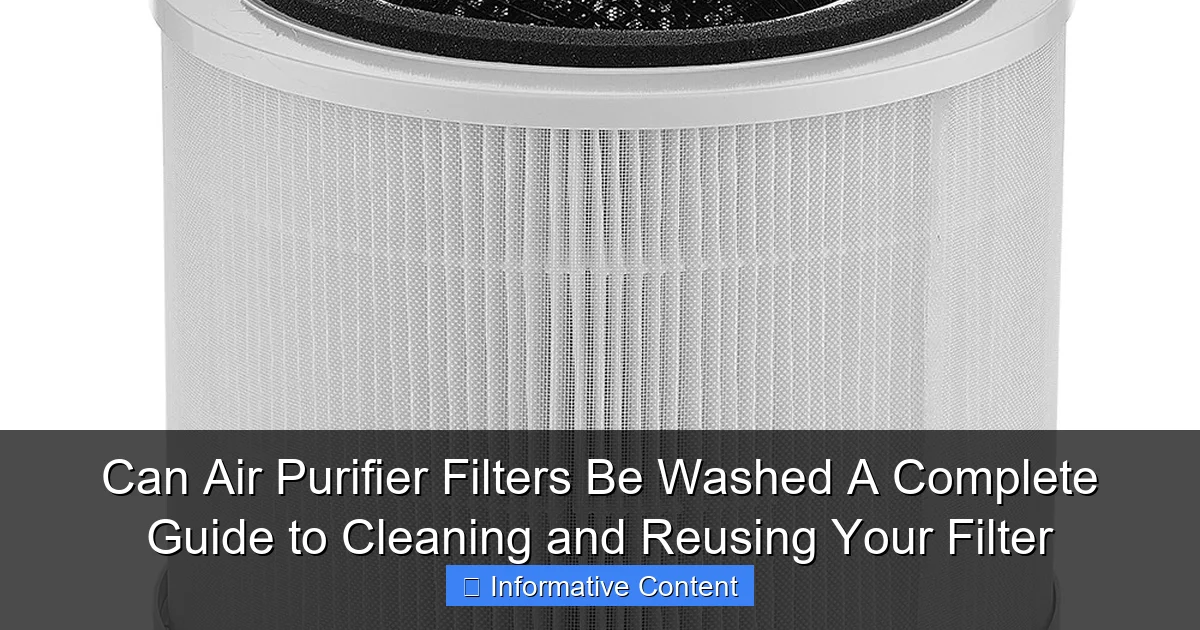
Featured image for can air purifier filters be washed
Image source: contentgrid.homedepot-static.com
Most air purifier filters cannot be washed, as water can damage their delicate fibers and reduce efficiency—only specific, manufacturer-labeled reusable filters should ever be cleaned. Always check your model’s manual to confirm washability and follow exact cleaning instructions to avoid voiding the warranty or compromising air quality.
Key Takeaways
- Check your filter type first: Only washable filters can be cleaned; HEPA and carbon filters are usually not washable.
- Rinse gently with cold water: Use low-pressure water to avoid damaging delicate filter fibers.
- Never use soap or cleaners: Harsh chemicals can degrade filter material and reduce effectiveness.
- Air-dry completely before reuse: Moisture promotes mold; ensure filters are fully dry to maintain performance.
- Replace non-washable filters regularly: Follow manufacturer guidelines to ensure optimal air purification.
- Clean washable pre-filters monthly: Regular maintenance improves efficiency and extends main filter life.
📑 Table of Contents
- Can Air Purifier Filters Be Washed? A Complete Guide to Cleaning and Reusing Your Filter
- Understanding Air Purifier Filters: Types and Functions
- Can You Wash Air Purifier Filters? The Short Answer
- Step-by-Step Guide to Washing Washable Filters
- What Happens If You Wash a Non-Washable Filter?
- Tips for Maintaining Your Air Purifier and Filters
- Filter Cleaning and Replacement Schedule Table
- Final Thoughts: To Wash or Not to Wash?
Can Air Purifier Filters Be Washed? A Complete Guide to Cleaning and Reusing Your Filter
Let’s be honest—air purifiers have become a staple in many homes, especially if you live in a city, have pets, suffer from allergies, or just want to breathe cleaner air. I remember the first time I bought one. I was sneezing nonstop during spring, and my doctor suggested improving indoor air quality. After a few weeks with my new purifier, the difference was noticeable. My allergies calmed down, and my apartment just felt fresher.
But then came the inevitable question: Can air purifier filters be washed? I stood over my machine one Saturday morning, filter in hand, squinting at the manual like it was written in another language. I wanted to save money, reduce waste, and keep my purifier running efficiently—but I also didn’t want to ruin the device by making a mistake. Sound familiar? You’re not alone. Many people assume all filters are washable, while others avoid cleaning them altogether out of fear. The truth is, it depends—and that’s exactly what we’re going to unpack in this guide.
Understanding Air Purifier Filters: Types and Functions
Before we dive into whether you can wash your filter, it’s important to understand what’s actually inside your air purifier. Not all filters are created equal, and each type plays a different role in cleaning the air. Think of your air purifier like a team of specialists—each member has a unique job, and they work together to deliver clean, breathable air.
Visual guide about can air purifier filters be washed
Image source: cdn11.bigcommerce.com
HEPA Filters: The Gold Standard
The most common and effective type is the HEPA filter (High-Efficiency Particulate Air). These filters are designed to capture 99.97% of particles as small as 0.3 microns—think dust, pollen, mold spores, and even some bacteria. They’re made from a dense mesh of fine fibers, usually glass or synthetic materials, layered tightly together.
Here’s the catch: HEPA filters are not washable. Because of their delicate structure, rinsing or soaking them can damage the fibers, reducing their efficiency or rendering them useless. I learned this the hard way when I tried to rinse my HEPA filter under the sink—only to find it crumbling apart like old paper. Lesson learned: never assume a filter is washable just because it looks sturdy.
Pre-Filters: The First Line of Defense
Many air purifiers come with a pre-filter, which sits in front of the HEPA filter. Its job is to catch larger particles like pet hair, lint, and dust bunnies. These are usually made from foam, mesh, or activated carbon and are often washable or reusable.
For example, my purifier has a removable foam pre-filter that I take out every two weeks, rinse under lukewarm water, and let air-dry before putting it back. It’s simple, effective, and saves me from replacing it every few months. If your purifier has a pre-filter, check the manual—it’s likely designed to be cleaned regularly.
Activated Carbon Filters: Odor and Gas Absorption
These filters are great for absorbing odors, smoke, and volatile organic compounds (VOCs) from cooking, cleaning products, or pets. They’re typically made from porous carbon material and are not washable. Water can ruin their absorbent properties, so avoid rinsing them.
However, some carbon filters are combined with washable pre-filters. In those cases, only the pre-filter portion should be cleaned. Always double-check the labeling or manufacturer instructions to avoid damaging the carbon layer.
Electrostatic and Washable Filters
Some budget-friendly or older models use electrostatic filters or permanent washable filters. These are made from materials like aluminum or plastic mesh and are designed to be rinsed and reused. They work by creating an electric charge that attracts particles.
While they’re reusable and eco-friendly, they’re generally less efficient than HEPA filters. I once used a purifier with a washable electrostatic filter, and while it helped with dust, it didn’t do much for allergens or odors. Still, for light use in a small room, they can be a decent option—especially if you’re on a tight budget.
Can You Wash Air Purifier Filters? The Short Answer
So, can air purifier filters be washed? The answer is: it depends on the type of filter. Let’s break it down clearly:
- HEPA filters: No, do not wash. Replace every 6–12 months.
- Pre-filters (foam or mesh): Yes, usually washable. Clean every 2–4 weeks.
- Activated carbon filters: No, do not wash. Replace every 3–6 months.
- Electrostatic or permanent filters: Yes, washable. Clean monthly or as needed.
Confused? You’re not alone. I used to mix up my filters until I started labeling them with a permanent marker. Now, I write “WASH” or “REPLACE” right on the frame. It’s a small trick, but it’s saved me from costly mistakes.
Why Manufacturer Instructions Matter
Always check your air purifier’s user manual. Some brands design hybrid filters or use proprietary materials that may have specific cleaning guidelines. For example, certain models from Dyson or Levoit have unique filter systems that require special care.
I once ignored the manual on a newer model and tried to vacuum the HEPA filter, thinking it would help. Turns out, the manufacturer explicitly warned against it—vacuuming can push particles deeper into the fibers or damage the structure. Now I treat the manual like a sacred text.
Signs Your Filter Needs Attention
Even if a filter is washable, it won’t last forever. Here are some signs it’s time to clean or replace:
- Reduced airflow or weaker fan performance
- Unusual odors coming from the purifier
- Visible dirt, dust, or discoloration on the filter
- The filter feels heavy or clogged
- Your allergies or asthma symptoms worsen
I noticed my purifier was louder than usual one day. After checking, I found the pre-filter packed with pet hair. A quick rinse and it was back to normal. Paying attention to these signs helps maintain performance and extends the life of your device.
Step-by-Step Guide to Washing Washable Filters
If your air purifier has a washable filter—like a foam pre-filter or electrostatic panel—cleaning it properly is key to keeping your system running smoothly. Here’s how I do it, step by step.
Step 1: Turn Off and Unplug the Purifier
Safety first. Always unplug your air purifier before removing any filters. I’ve made the mistake of forgetting this once—let’s just say the sudden fan noise was a surprise.
Step 2: Remove the Filter Carefully
Gently take out the washable filter. Some slide out, others snap in place. Avoid pulling or forcing it, as this can damage the frame or surrounding components.
Step 3: Vacuum Loose Debris (Optional)
Before washing, I use a vacuum with a brush attachment to remove loose dust and hair. This helps prevent clogging your sink or shower drain. It also makes the rinsing step more effective.
Step 4: Rinse with Lukewarm Water
Hold the filter under lukewarm running water. Use your hands to gently rub away dirt, but avoid scrubbing too hard—especially with foam filters, which can tear.
Pro tip: Never use hot water. High temperatures can warp or melt certain materials, especially in plastic or foam filters.
Step 5: Let It Air Dry Completely
This is crucial. Place the filter on a clean towel or drying rack in a well-ventilated area. Make sure it’s completely dry before reinstalling—any moisture left behind can lead to mold or mildew, which defeats the purpose of clean air.
I usually let mine dry overnight. If you’re in a hurry, you can use a fan to speed up the process, but never use a hair dryer or place it near a heater.
Step 6: Reinstall and Test
Once dry, slide the filter back into place. Turn on the purifier and listen for normal operation. If the airflow feels weak or the unit makes noise, double-check that the filter is seated correctly.
How Often Should You Clean?
Frequency depends on usage and environment:
- High-use homes (pets, smokers, allergies): Clean every 2 weeks
- Moderate use (city living, occasional dust): Clean monthly
- Low use (vacation homes, rarely used rooms): Clean every 6–8 weeks
I clean my pre-filter every two weeks because I have two cats and live in a dusty apartment building. If you’re unsure, start with monthly cleaning and adjust based on how dirty the filter gets.
What Happens If You Wash a Non-Washable Filter?
We’ve all been tempted. You see a filter that looks dirty, and your instinct is to rinse it off. But if it’s a HEPA or carbon filter, that instinct could cost you.
Damage to Filter Structure
HEPA filters are made of delicate fibers. Washing them—even gently—can cause the fibers to break, clump, or separate. This reduces their ability to trap particles, making your purifier less effective.
I once tried to “refresh” a HEPA filter by soaking it in water. Big mistake. The filter fell apart when I tried to dry it, and I had to buy a replacement that cost nearly half the price of the purifier.
Mold and Mildew Growth
If a non-washable filter gets wet and isn’t dried properly, it becomes a breeding ground for mold and bacteria. When you turn on the purifier, it can actually spread spores into the air—making your indoor air quality worse, not better.
This is especially dangerous for people with asthma or compromised immune systems. Clean air should help, not harm.
Voided Warranties
Many manufacturers void warranties if you wash non-washable filters. I learned this when I contacted customer service about a malfunctioning unit. They asked if I had cleaned the HEPA filter—and when I admitted I had, they denied the warranty claim.
Always follow the manufacturer’s guidelines to protect your investment.
When in Doubt, Replace
If you’re unsure whether a filter is washable, err on the side of caution. Check the manual, look for labels, or contact the manufacturer. Replacing a filter is cheaper than buying a new purifier.
Some brands offer filter replacement reminders or subscription services. I signed up for one with my current purifier—it sends me a new HEPA filter every 10 months, so I never forget.
Tips for Maintaining Your Air Purifier and Filters
Cleaning your filter is just one part of keeping your air purifier in top shape. Here are some practical tips I’ve picked up over the years.
Vacuum the Exterior and Vents Regularly
Dust builds up on the outside of your purifier, especially around the air intake and output vents. Use a soft brush or microfiber cloth to wipe it down weekly. I do this while cleaning my apartment—multitasking at its finest.
Replace Filters on Schedule
Even if a filter looks clean, it loses efficiency over time. HEPA filters should be replaced every 6–12 months, depending on usage. Set a calendar reminder or use a filter life indicator if your model has one.
Use Your Purifier Consistently
Air purifiers work best when running continuously or for several hours a day. I keep mine on “auto” mode, so it adjusts based on air quality. This helps maintain clean air and extends filter life by preventing overload.
Keep Windows Closed During High Pollen or Pollution Days
Your purifier can only do so much. On days with high pollen counts or smog, keep windows and doors closed to reduce the workload on your filter. I check the air quality index (AQI) on my phone each morning—if it’s above 100, I keep things sealed up.
Consider Your Room Size
Using a purifier that’s too small for your room means it has to work harder, which can shorten filter life. Check the Clean Air Delivery Rate (CADR) and match it to your room size. My living room is 300 sq ft, so I use a purifier rated for 350 sq ft—just to be safe.
Filter Cleaning and Replacement Schedule Table
| Filter Type | Washable? | Cleaning Frequency | Replacement Frequency | Notes |
|---|---|---|---|---|
| HEPA Filter | No | N/A | 6–12 months | Do not wash. Replace when dirty or as recommended. |
| Foam Pre-Filter | Yes | Every 2–4 weeks | 1–2 years | Rinse with lukewarm water. Air dry completely. |
| Mesh Pre-Filter | Yes | Every 2–4 weeks | 1–2 years | Gentle rinsing. Avoid harsh scrubbing. |
| Activated Carbon Filter | No | N/A | 3–6 months | Do not wash. Replace when odors return. |
| Electrostatic Filter | Yes | Monthly | 2–3 years | Rinse and dry. Less efficient than HEPA. |
| Washable Carbon Pre-Filter | Yes (pre-filter only) | Every 2–4 weeks | 6–12 months | Only wash the outer layer. Do not soak carbon. |
Final Thoughts: To Wash or Not to Wash?
So, can air purifier filters be washed? The answer isn’t a simple yes or no—it depends on the type of filter you have. Washable pre-filters and electrostatic panels can and should be cleaned regularly to maintain performance and save money. But HEPA and carbon filters? Those need to be replaced, not rinsed.
Taking care of your air purifier isn’t just about saving money—it’s about breathing healthier air. A clean filter means better airflow, fewer allergens, and a longer-lasting device. I’ve learned that a little maintenance goes a long way. Whether you’re rinsing a foam pre-filter or ordering a new HEPA replacement, staying informed and proactive makes all the difference.
Next time you’re staring at your filter wondering what to do, remember: check the manual, know your filter type, and when in doubt, replace rather than risk damage. Your lungs—and your purifier—will thank you.
Frequently Asked Questions
Can air purifier filters be washed and reused?
Most standard air purifier filters, like HEPA or activated carbon filters, cannot be washed and reused because water can damage their delicate fibers. However, some models include washable pre-filters designed to capture larger particles—check your manual to confirm.
How do I know if my air purifier filter is washable?
Check your device’s user manual or the manufacturer’s website for specifications. If labeled “washable” or “permanent,” it’s safe to clean, but standard HEPA filters should never be submerged in water.
Is it safe to wash a HEPA filter in water?
No, washing a HEPA filter in water will destroy its fine fiber structure, reducing its ability to trap microscopic particles. Instead, use a vacuum to gently remove dust if maintenance is needed.
How often should I clean a washable air purifier filter?
Washable pre-filters should be cleaned every 2–4 weeks, depending on usage and air quality. Rinse with water, let it dry completely, and reinstall to maintain optimal airflow and performance.
Can I use soap to clean a washable air purifier filter?
Use only mild soap and lukewarm water for washable filters, and avoid harsh chemicals or scrubbing. Residue or abrasion can compromise the filter’s efficiency and lifespan.
What happens if I wash a non-washable air purifier filter?
Water exposure can warp or tear non-washable filters, rendering them ineffective. Always follow the manufacturer’s guidelines to avoid costly replacements and ensure clean air output.