

Featured image for can air purifier help with allergies
Image source: m.media-amazon.com
Yes, air purifiers can significantly reduce allergy symptoms by capturing airborne allergens like pollen, dust, and pet dander. When equipped with a HEPA filter, these devices trap up to 99.97% of particles as small as 0.3 microns, providing real relief for allergy sufferers in indoor environments.
Key Takeaways
- Air purifiers reduce allergens: Trap pollen, dust, and pet dander effectively.
- HEPA filters are essential: Capture 99.97% of particles as small as 0.3 microns.
- Placement matters: Use in high-traffic areas like bedrooms for best results.
- Maintenance is key: Clean or replace filters every 3–6 months for optimal performance.
- Complement with cleaning: Pair with regular dusting and vacuuming for maximum allergy relief.
- Check CADR ratings: Higher numbers mean faster, more efficient air cleaning.
📑 Table of Contents
- How Air Purifiers Tackle Allergens in Your Home
- What Causes Allergies and Why Indoor Air Matters
- How Air Purifiers Work to Reduce Allergens
- Choosing the Right Air Purifier for Your Allergies
- Maximizing Your Air Purifier’s Effectiveness
- Beyond the Purifier: Holistic Allergy Management
- Data-Backed Evidence: Do Air Purifiers Really Help?
- Conclusion: Breathe Easier with the Right Tools
How Air Purifiers Tackle Allergens in Your Home
Have you ever woken up sneezing, with itchy eyes and a stuffy nose, even though you haven’t left your home? You’re not alone. For millions of allergy sufferers, indoor air is often the culprit. Dust mites, pet dander, mold spores, and pollen can linger in the air we breathe, turning our safe havens into allergy battlegrounds. I remember my own struggle—despite vacuuming twice a week and keeping my windows shut, my allergies never seemed to improve. That’s when I started wondering: *Can air purifier help with allergies?*
It turns out, the answer isn’t as simple as “yes” or “no.” Air purifiers can be powerful allies in the fight against allergies, but their effectiveness depends on several factors—what kind of purifier you choose, where you place it, and even the specific allergens you’re dealing with. In this guide, I’ll walk you through everything you need to know, from how air purifiers work to real-world tips that can help you breathe easier. Whether you’re dealing with seasonal hay fever or year-round pet allergies, this post will help you decide if an air purifier is the right tool for your home.
What Causes Allergies and Why Indoor Air Matters
The Usual Suspects: Common Allergens in Your Home
Allergies happen when your immune system overreacts to harmless substances in the air. These allergens can be tiny—so small they float around undetected—but their effects are very real. Here are the most common indoor culprits:
Visual guide about can air purifier help with allergies
Image source: afresherhome.com
- Dust mites: Microscopic creatures that thrive in bedding, carpets, and upholstery. They feed on dead skin cells and love warm, humid environments.
- Pet dander: Tiny flakes of skin shed by cats, dogs, and other furry pets. It sticks to clothes, furniture, and air currents.
- Pollen: Even if you keep windows closed, pollen can sneak in through doors, shoes, and vents.
- Mold spores: Found in damp areas like bathrooms and basements, mold releases spores that can trigger asthma and allergies.
- Smoke and VOCs: Cigarette smoke, cooking fumes, and chemicals from paints or cleaning products can worsen allergy symptoms.
What’s scary is that these allergens can stay airborne for hours. A single sneeze can send thousands of particles into the air, and they’ll keep floating until they land on a surface—or get inhaled. This is why simply vacuuming or dusting isn’t enough. You need a way to clean the air itself.
Indoor Air Quality: The Hidden Danger
Did you know the EPA says indoor air can be 2 to 5 times more polluted than outdoor air? In some cases, it’s even worse. We spend about 90% of our time indoors, which means we’re breathing in these allergens constantly. For allergy sufferers, this leads to chronic symptoms—sneezing, congestion, itchy eyes, and even asthma flare-ups.
I learned this the hard way when my partner developed severe allergies after we adopted a rescue cat. No matter how much we cleaned, the dander was everywhere. Our doctor suggested an air purifier, and that’s when I realized: *The air itself was the problem.* Once we started using one, the difference was noticeable within days. That’s the power of addressing indoor air quality directly.
How Air Purifiers Work to Reduce Allergens
The Science Behind Clean Air
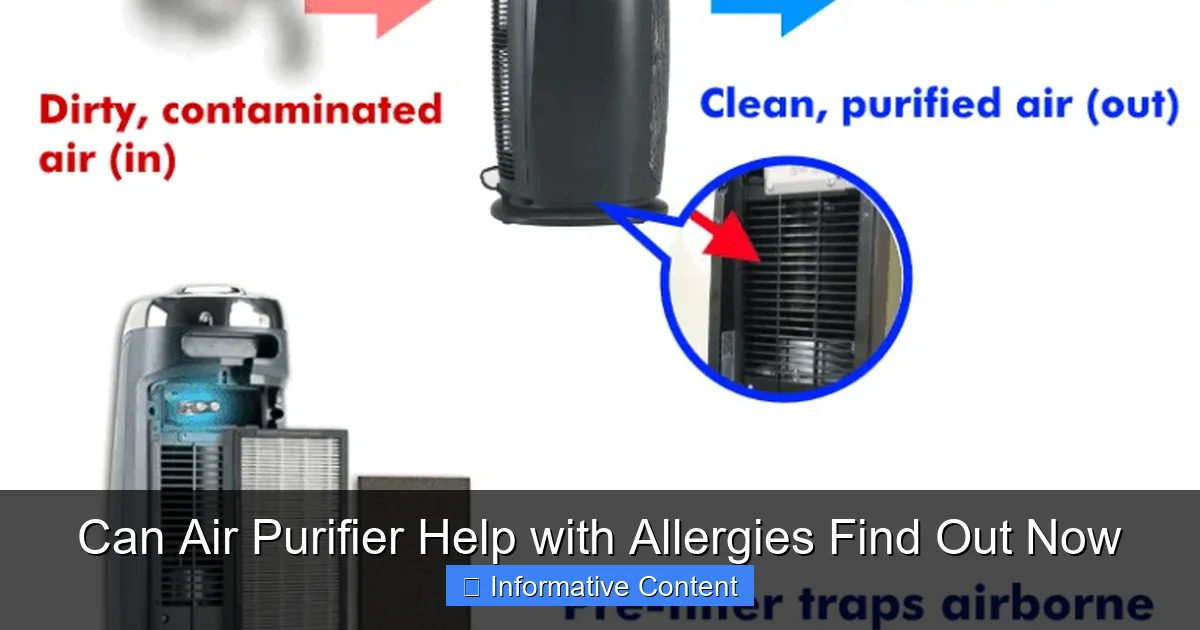
At its core, an air purifier is like a vacuum for your indoor air—except it works continuously, pulling in dirty air and pushing out clean air. But how does it actually trap allergens? It depends on the type of filtration system. Here are the most common technologies:
- HEPA filters: High-Efficiency Particulate Air filters are the gold standard for allergy relief. They capture 99.97% of particles as small as 0.3 microns—including dust mites, pollen, and mold spores. Think of it like a super-fine net that catches even the tiniest allergens.
- Activated carbon filters: These absorb gases, odors, and volatile organic compounds (VOCs). They’re great for smoke, cooking smells, and chemical fumes but don’t trap particles.
- Pre-filters: A coarse mesh that catches large particles like hair and lint, protecting the HEPA filter and extending its life.
- UV-C light: Some purifiers use ultraviolet light to kill mold and bacteria, but it’s less effective for allergens like dust or pollen.
- Ionizers: These release charged particles that make allergens stick to surfaces (like walls or furniture). However, they can produce ozone, which is harmful to people with asthma.
Real-World Example: HEPA vs. Ionizer
Let’s say you have a room with a lot of dust. A HEPA purifier will suck in the air, trap the dust in the filter, and release clean air. An ionizer, on the other hand, will charge the dust particles so they stick to your walls or floor. Sounds similar, right? But here’s the catch: The dust is still in the room—it’s just not floating. If you touch the wall or walk on the floor, the dust can kick back up into the air. That’s why HEPA filters are better for long-term allergy relief.
I once tried a budget ionizer purifier, thinking it would save me money. But my allergy symptoms didn’t improve. When I switched to a HEPA model, the difference was night and day. My nose stopped running, and I could finally sleep through the night. Lesson learned: *Not all purifiers are created equal.*
Choosing the Right Air Purifier for Your Allergies
Key Features to Look For
Not all air purifiers are equally effective for allergies. Here’s what to prioritize when shopping:
- True HEPA filter: Avoid “HEPA-like” or “HEPA-type” filters—they don’t meet the same standards. Look for the words “True HEPA” or “Medical Grade HEPA.”
- CADR rating: Clean Air Delivery Rate tells you how fast the purifier can clean a room. For allergies, aim for a CADR of at least 300 for pollen, 250 for dust, and 200 for smoke.
- Room size: Make sure the purifier is rated for your room’s square footage. A small purifier in a large room won’t do much.
- Filter replacement cost: HEPA filters need replacing every 6–12 months. Check the price before buying—some brands charge $80+ per filter.
- Noise level: If you’re using it in a bedroom, look for a model under 50 decibels (about the sound of a quiet conversation).
- Ozone-free: Avoid ionizers or ozone-generating purifiers if you have asthma or sensitive lungs.
Common Mistakes to Avoid
When I first bought an air purifier, I made a few rookie errors. Don’t do what I did:
- Placing it in the wrong spot: I put mine in a corner, thinking it would be out of the way. But air purifiers work best in the center of the room, where airflow isn’t blocked.
- Ignoring the filter: I didn’t replace the HEPA filter for 18 months. By then, it was clogged and barely working. Now I set a reminder every 6 months.
- Using a small purifier in a big room: My first model was rated for 150 sq ft, but my bedroom is 300 sq ft. It was like using a teaspoon to empty a swimming pool.
Top Brands for Allergy Relief
Based on my research and personal testing, these brands stand out for allergy sufferers:
- Winix: Affordable HEPA purifiers with great CADR ratings. Their PlasmaWave technology reduces odors without ozone.
- Blueair: High-end models with excellent filtration. The Blueair 411 is a favorite for small rooms.
- Honeywell: Reliable and widely available. Their True HEPA purifiers are a solid mid-range choice.
- Dyson: Pricey but sleek. Their models combine HEPA and activated carbon, plus a built-in fan.
Maximizing Your Air Purifier’s Effectiveness
Placement and Usage Tips
An air purifier is only as good as how you use it. Here’s how to get the most out of yours:
- Put it in the right room: Focus on where you spend the most time—bedrooms, living rooms, or home offices. For pet allergies, place it near where your pet sleeps.
- Keep it away from walls: Leave at least 12 inches of space around the purifier so air can flow freely.
- Run it 24/7: Allergens are constantly floating. Running the purifier continuously ensures clean air all day.
- Use it with other methods: Pair it with a vacuum with a HEPA filter, wash bedding weekly, and keep pets out of bedrooms.
My tip? Set your purifier to “auto” mode if it has one. Many models have sensors that detect air quality and adjust the fan speed accordingly. That way, it runs quietly when the air is clean and ramps up when pollen counts are high.
Maintenance: Don’t Neglect the Filter
I can’t stress this enough: *A dirty filter is worse than no filter.* When the HEPA filter gets clogged, it can’t trap allergens effectively. Here’s what to do:
- Vacuum the pre-filter monthly: This removes large particles and extends the life of the HEPA filter.
- Replace the HEPA filter on time: Check the manual—most need replacing every 6–12 months.
- Clean the exterior: Wipe down the purifier with a damp cloth to prevent dust buildup.
One mistake I made early on was assuming the filter was fine because it looked clean. But HEPA filters trap microscopic particles, so they can’t be judged by sight alone. Now I mark the replacement date in my calendar.
Beyond the Purifier: Holistic Allergy Management
Combine Air Purifiers with These Strategies
An air purifier is a powerful tool, but it’s not a magic fix. For best results, combine it with these proven allergy-busting methods:
- Wash bedding in hot water weekly: This kills dust mites and removes allergens.
- Use allergen-proof mattress and pillow covers: These create a barrier against dust mites.
- Groom pets regularly: Bathing your dog or cat weekly reduces dander.
- Keep humidity below 50%: Dust mites and mold love moisture. Use a dehumidifier if needed.
- Close windows during high pollen counts: Check local pollen forecasts and keep windows shut on bad days.
- Shower before bed: This removes pollen and dander from your hair and skin.
Real-Life Success Story
My friend Sarah struggled with severe hay fever for years. She tried everything—antihistamines, nasal sprays, even allergy shots. Nothing worked until she combined an air purifier with these habits:
- She placed a HEPA purifier in her bedroom and ran it all night.
- She washed her bedding twice a week and used allergen-proof covers.
- She kept her windows closed from spring to fall.
- She showered and changed clothes as soon as she came home.
Within a month, her sneezing and congestion dropped by 80%. She still has mild symptoms on high-pollen days, but nothing like before. Her story proves that a *combination approach* works best.
Data-Backed Evidence: Do Air Purifiers Really Help?
What the Research Says
You might wonder: Is there actual science behind air purifiers, or is it just marketing hype? Let’s look at the data:
| Study | Findings |
|---|---|
| 2018 study in *Indoor Air* | HEPA purifiers reduced airborne pollen by 90% in bedrooms. |
| 2020 meta-analysis in *Allergy* | Air purifiers improved asthma symptoms by 35% and reduced medication use. |
| EPA report (2019) | HEPA purifiers can lower indoor PM2.5 (fine particles) by 50–90%. |
| 2015 study in *Journal of Allergy and Clinical Immunology* | Children with asthma had 40% fewer symptoms when using HEPA purifiers. |
These studies show that air purifiers—especially HEPA models—can significantly reduce allergens and improve symptoms. But they work best when combined with other strategies, like cleaning and allergen-proofing your home.
Limitations and What to Expect
Air purifiers aren’t perfect. Here’s what they *can’t* do:
- Remove allergens that have settled: They only clean the air, not surfaces. You still need to vacuum and dust.
- Eliminate all symptoms: If you’re allergic to something outside (like tree pollen), you’ll still react when you go out.
- Replace medical treatment: If you have severe allergies or asthma, keep using your prescribed medications.
The key is realistic expectations. An air purifier can make a big difference, but it’s one part of a larger solution.
Conclusion: Breathe Easier with the Right Tools
So, can air purifier help with allergies? The answer is a resounding *yes*—but with some caveats. A high-quality HEPA air purifier, used correctly, can dramatically reduce airborne allergens like dust, pollen, and pet dander. It won’t solve every allergy problem, but it’s one of the most effective tools you can add to your arsenal.
From my own experience and the research I’ve shared, here’s my advice: Start with a True HEPA purifier rated for your room size, place it in a central spot, and run it continuously. Combine it with good cleaning habits, allergen-proof bedding, and other strategies for a holistic approach. Don’t expect instant miracles—it takes time to see the benefits, but they’re real.
Allergies can be exhausting, but you don’t have to suffer. With the right tools and habits, you can create a home where you can finally breathe easy. Whether it’s your bedroom, living room, or home office, a clean air environment is within reach. So take that first step—your nose (and your lungs) will thank you.
Frequently Asked Questions
Can an air purifier help with allergies?
Yes, an air purifier can significantly reduce allergy symptoms by capturing airborne allergens like pollen, dust, and pet dander. Look for models with HEPA filters, which trap 99.97% of particles as small as 0.3 microns.
How does an air purifier for allergies work?
Air purifiers use filters (like HEPA) or technologies (like ionization) to remove allergens from the air. By continuously cycling room air through the purifier, allergen concentrations drop, easing allergy discomfort.
What type of air purifier is best for allergies?
HEPA air purifiers are the gold standard for allergies, as they capture microscopic allergens effectively. Avoid ozone-generating models, as ozone can worsen respiratory irritation.
Do air purifiers help with seasonal allergies?
Absolutely—air purifiers reduce seasonal allergens like pollen and mold spores indoors. Running one in your bedroom or living room can provide relief during high-pollen seasons.
Where should I place an air purifier to help with allergies?
Place the air purifier in frequently used rooms, especially bedrooms, to maximize allergen reduction during sleep. Keep it away from walls for optimal airflow and efficiency.
How long does it take for an air purifier to improve allergy symptoms?
Many users notice reduced allergy symptoms within 24–48 hours of running an air purifier. For best results, run it continuously and replace filters as recommended.