
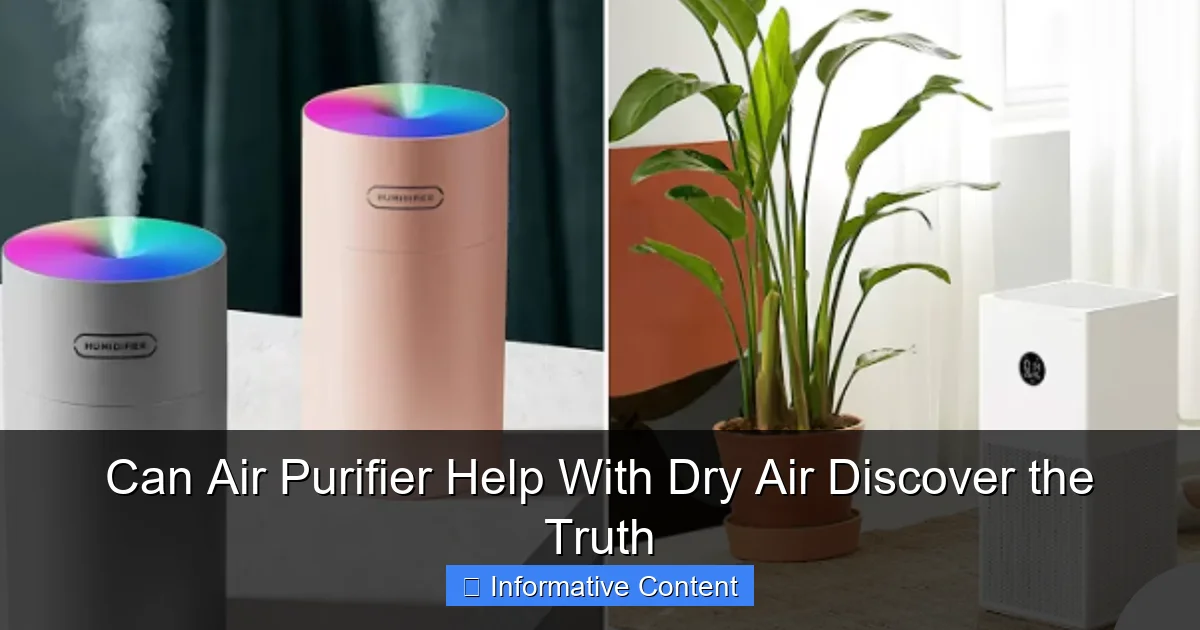
Featured image for can air purifier help with dry air
Image source: airpurityguide.com
Air purifiers do not add moisture to the air and therefore cannot directly help with dry air. While they excel at removing pollutants, allergens, and particles, they lack the humidifying function needed to raise indoor humidity levels. For true relief from dry air, a humidifier—not an air purifier—is the essential solution.
Key Takeaways
- Air purifiers don’t add moisture – they only clean air, not humidify it.
- Use a humidifier for dry air – pair with an air purifier for best results.
- HEPA filters trap irritants – reducing allergens may ease dry air discomfort.
- Maintain 30-50% humidity – ideal range for health and comfort indoors.
- Purifiers improve air quality – but won’t solve low humidity problems alone.
- Monitor humidity levels – use a hygrometer to track indoor moisture accurately.
📑 Table of Contents
- Can Air Purifier Help With Dry Air? Discover the Truth
- How Air Purifiers Work (And What They Actually Do)
- Why Dry Air Feels Worse (And How Air Purifiers Can Indirectly Help)
- Air Purifiers vs. Humidifiers: Knowing the Difference (And When to Use Both)
- Common Myths About Air Purifiers and Dry Air (Debunked)
- Choosing the Right Air Purifier for Dry Air Environments (Practical Tips)
- Data Table: Air Purifier vs. Humidifier – Key Differences
Can Air Purifier Help With Dry Air? Discover the Truth
Let’s be honest—dry air is one of those sneaky household problems that creeps up on you. One day, your skin is glowing, your sinuses feel clear, and your wooden furniture looks brand new. The next, you’re waking up with a scratchy throat, static shocks every time you touch a doorknob, and your houseplants are wilting like they’ve been forgotten in the desert. If you’ve ever found yourself wondering, “Can air purifier help with dry air?”—you’re not alone. I’ve been there too.
When winter rolls around, or you live in a naturally arid climate, the air inside your home can become so dry it feels like you’re breathing through a straw. Many people reach for humidifiers, which makes perfect sense—after all, they add moisture. But what about air purifiers? They’re everywhere these days, promising cleaner air, fewer allergens, and better sleep. But can they actually help with dry air? That’s the big question we’re diving into today. No fluff, no sales pitch—just real talk based on how these devices actually work, what they do, and what they don’t do.
How Air Purifiers Work (And What They Actually Do)
The Science Behind Air Purification
First, let’s clear the air—literally. Air purifiers don’t add moisture to the air. That’s a job for humidifiers. Instead, air purifiers are designed to remove airborne particles such as dust, pollen, pet dander, mold spores, smoke, and even some bacteria and viruses. Think of them like a high-tech vacuum cleaner for your indoor air.
Visual guide about can air purifier help with dry air
Image source: cleantheair.org
Most air purifiers use a multi-stage filtration system. The most common is the HEPA (High-Efficiency Particulate Air) filter, which captures at least 99.97% of particles as small as 0.3 microns. That includes things you can’t even see—like fine dust or allergens that float around after you’ve cleaned your house. Other filters may include:
- Activated carbon filters – great for absorbing odors, gases, and volatile organic compounds (VOCs) from cleaning products or cooking.
- Pre-filters – catch larger particles like hair and lint, protecting the main filter and extending its life.
- Ionizers or UV-C lights – some models add these features to neutralize germs or break down certain pollutants (though their effectiveness varies).
What Air Purifiers Don’t Do
Here’s where things get tricky. Air purifiers are excellent at cleaning the air, but they have zero impact on humidity levels. They don’t add moisture, nor do they remove it. In fact, some people report their rooms feeling slightly drier after running an air purifier—but that’s not because the purifier is “drying” the air. It’s usually because:
- The purifier’s fan circulates air, which can increase evaporation from your skin and nasal passages.
- You’re running the purifier in a room with already low humidity, and the movement of air makes the dryness more noticeable.
- You’re using a purifier with an ionizer, which can generate trace amounts of ozone (a lung irritant in high doses), potentially making your throat feel drier.
So, if you’re hoping an air purifier will magically turn your desert-like living room into a tropical oasis, you’re out of luck. But that doesn’t mean it’s useless when it comes to dry air. In fact, it might be more helpful than you think—just not in the way you expect.
Why Dry Air Feels Worse (And How Air Purifiers Can Indirectly Help)
The Link Between Dry Air and Indoor Pollutants
Here’s a little-known fact: dry air can make indoor pollutants more irritating. When the air is dry, your nasal passages and throat lose their natural moisture barrier. That makes them more sensitive to dust, allergens, and irritants in the air. You might not notice these particles in humid conditions, but in dry air? They feel like tiny needles.
For example, imagine you have a dusty shelf in your bedroom. In a humid room, the dust particles might clump together and settle faster. But in dry air, those particles stay airborne longer and float right into your nose and lungs. This can lead to:
- More frequent sneezing or coughing at night
- Itchy, dry throat
- Worsened allergy symptoms
- Even mild respiratory discomfort
How Air Purifiers Reduce Irritation in Dry Environments
This is where air purifiers come in. While they don’t add moisture, they reduce the number of irritants in the air, which means your body doesn’t have to work as hard to defend itself. Think of it like this: if your throat is already dry and raw, breathing in dust or pet dander is like pouring salt on a wound. An air purifier acts like a protective shield, removing those irritants before they reach you.
For example, my sister lives in Arizona—where the humidity can drop below 20% in winter. She used to wake up every morning with a sore throat and congestion, even though she kept her home clean. After she started using a HEPA air purifier in her bedroom, her symptoms improved significantly—not because the air got more humid, but because the purifier removed the fine dust and allergens that were making her dry air feel worse.
Another real-world example: a friend with asthma found that during the winter, her inhaler use went down by almost 40% after adding an air purifier to her living room. The dry air hadn’t changed, but the cleaner air meant her airways weren’t being bombarded with triggers.
Air Purifiers vs. Humidifiers: Knowing the Difference (And When to Use Both)
Humidifiers: The Moisture Makers
Let’s get this straight: if your main issue is dry air, the best solution is a humidifier. Humidifiers add water vapor to the air, raising the relative humidity to a more comfortable level—ideally between 30% and 50%. This helps:
- Reduce static electricity
- Prevent dry skin, chapped lips, and irritated nasal passages
- Protect wooden furniture and flooring from cracking
- Make breathing easier, especially for people with allergies or respiratory conditions
There are two main types of humidifiers:
- Cold mist (ultrasonic or evaporative) – releases a fine mist of water into the air. Great for year-round use and safer around kids.
- Warm mist – boils water and releases steam. Can be more soothing for colds, but requires more maintenance and caution.
Air Purifiers: The Clean Air Champions
Air purifiers, on the other hand, are all about removing contaminants. They don’t change humidity, but they make the air cleaner and easier to breathe. If you have:
- Allergies or asthma
- Pets that shed
- Smokers in the household
- High dust levels (urban areas, old homes)
- Concerns about mold or VOCs
Then an air purifier is a smart investment—even in dry conditions.
The Power of Using Both Together
Here’s the real game-changer: using a humidifier and air purifier together. This combo tackles both problems at once:
- The humidifier adds moisture, reducing dryness.
- The air purifier removes allergens and irritants, making the moist air easier to breathe.
Think of it like a spa for your home. The humidifier gives you the soothing mist, while the air purifier ensures it’s not carrying dust, mold spores, or pet dander along with it. In fact, many people don’t realize that dirty humidifiers can actually worsen air quality. If you use a humidifier with tap water (instead of distilled or demineralized), it can release white dust or bacteria into the air. An air purifier helps filter out those particles, making your humidifier safer to use.
One tip: place the humidifier and air purifier on opposite sides of the room. This helps ensure even distribution of moisture and prevents the humidifier’s mist from clogging the purifier’s filters too quickly.
Common Myths About Air Purifiers and Dry Air (Debunked)
Myth 1: Air Purifiers Dry Out the Air
You’ve probably heard this one: “My air purifier makes my room feel drier.” While it might feel that way, the purifier isn’t removing moisture. What’s actually happening is:
- The fan increases air circulation, which can speed up evaporation from your skin and nasal passages.
- If you’re using a purifier in a room with already low humidity, the movement of air makes the dryness more noticeable.
- Some purifiers with ionizers or UV-C lights may produce trace ozone, which can irritate the lungs and make dryness feel worse.
The fix? Pair your purifier with a humidifier. Or, if you’re sensitive, choose a purifier without ionizers and use it on a lower fan setting.
Myth 2: All Air Purifiers Are the Same
Not even close. Some purifiers are designed for small rooms, others for large open spaces. Some use HEPA filters, others use less effective filters. Some are whisper-quiet, others sound like a jet engine. And some even claim to “humidify” the air—but these are usually hybrid models that combine both functions.
Be cautious of “humidifying air purifiers.” While they sound convenient, they often don’t do either job well. A standalone humidifier and a high-quality air purifier will always outperform a jack-of-all-trades device.
Myth 3: You Only Need an Air Purifier During Allergy Season
False. Indoor air pollution is a year-round issue. Dust, pet dander, VOCs from furniture and cleaning products, and even cooking fumes are present every day. Dry air often makes these pollutants more irritating, so running a purifier during winter (or in dry climates) is just as important as during pollen season.
Bonus tip: If you use a fireplace or wood stove in winter, an air purifier is almost essential. These heat sources release fine particles and smoke that can linger in dry indoor air for hours.
Myth 4: Bigger Is Always Better
Size matters—but not in the way you think. You need a purifier with the right CADR (Clean Air Delivery Rate) for your room size. A purifier that’s too small will struggle to clean the air effectively. One that’s too big may be loud, energy-hungry, and unnecessary.
Check the manufacturer’s room size recommendation. For example, if you have a 300 sq ft bedroom, look for a purifier rated for at least that size—preferably a bit larger for better coverage.
Choosing the Right Air Purifier for Dry Air Environments (Practical Tips)
Look for a True HEPA Filter
When it comes to air purification, HEPA is the gold standard. Avoid “HEPA-like” or “HEPA-style” filters—they’re not the same. A true HEPA filter must meet strict standards set by the U.S. Department of Energy. It’s the best way to ensure you’re getting real air cleaning power.
Consider a Model with a Humidifier (But Use It Wisely)
Some air purifiers come with built-in humidifiers. These can be convenient, but they have trade-offs:
- Pros – Saves space, easy to maintain, often quieter than two separate units.
- Cons – Humidifier tanks need daily cleaning to prevent mold and bacteria. The added moisture can clog HEPA filters faster. Performance is often less powerful than standalone units.
If you go this route, look for models with removable humidifier tanks and automatic shutoff when the tank is empty. And always clean it daily—no excuses.
Check for Smart Features (But Don’t Overpay)
Many modern purifiers have smart features like:
- Air quality sensors that adjust fan speed automatically
- App control (so you can turn it on before you get home)
- Filter replacement reminders
- Humidity and temperature displays
These can be helpful, but don’t pay a premium just for Wi-Fi. Focus on performance first. A purifier that cleans the air well but doesn’t have an app is better than one with all the bells and whistles that underperforms.
Placement Matters
Where you put your air purifier makes a big difference. For best results:
- Place it in the room where you spend the most time (bedroom, living room).
- Keep it at least 6 inches from walls and furniture for proper airflow.
- Elevate it off the floor if possible (on a table or shelf), since many pollutants settle near the ground.
- Run it 24/7 if you have allergies or dry air issues—don’t just turn it on when you notice a problem.
Maintenance Is Key
Even the best purifier won’t help if you neglect it. Follow these tips:
- Replace HEPA filters every 6–12 months (or as recommended).
- Wash or replace pre-filters every 2–4 weeks.
- Wipe down the exterior and vents monthly to prevent dust buildup.
- If your purifier has a humidifier tank, clean it with vinegar weekly to prevent mold.
Data Table: Air Purifier vs. Humidifier – Key Differences
| Feature | Air Purifier | Humidifier |
|---|---|---|
| Main Function | Removes dust, allergens, smoke, odors | Adds moisture to the air |
| Impact on Humidity | None (may feel drier due to airflow) | Increases humidity (ideal 30–50%) |
| Best For | Allergies, asthma, pet owners, urban homes | Dry skin, static, winter dryness, respiratory comfort |
| Key Filter Type | HEPA (99.97% of particles ≥0.3 microns) | N/A (uses water tank) |
| Maintenance | Replace filters every 6–12 months | Clean tank daily, refill water |
| Energy Use | Low to moderate (fan-based) | Moderate (especially warm mist models) |
| Noise Level | Varies (low on sleep mode) | Usually quiet, but some hum |
| Ideal Pairing | With a humidifier for dry air | With an air purifier for clean, moist air |
So, can air purifier help with dry air? The short answer is: not directly, but yes, indirectly. It won’t add moisture to the air, but it can make dry air feel better by removing the irritants that make it harder to breathe. Think of it like wearing a clean shirt on a hot day—it doesn’t cool you down, but it makes the heat more bearable.
If you’re struggling with dry air, don’t rely on an air purifier alone. Pair it with a humidifier, stay hydrated, and keep your home clean. And remember: cleaner air is always better air—whether it’s humid or dry. The truth is, the best indoor environment isn’t just about moisture or purity. It’s about balance. And with the right tools, you can find that balance—and breathe easier, no matter the season.
Frequently Asked Questions
Can an air purifier help with dry air?
Air purifiers are designed to filter pollutants, allergens, and particles but do not add moisture to the air. While they improve air quality, they won’t directly resolve dry air issues—consider a humidifier for that purpose.
Do air purifiers worsen dry air in winter?
No, air purifiers don’t reduce humidity levels, so they won’t make dry air worse. However, using a HEPA air purifier alongside a humidifier can balance clean air and moisture in dry seasons.
Can air purifiers help with dry throat or nose caused by air quality?
Yes, if dryness is due to airborne irritants like dust or smoke, an air purifier can help by removing these particles. For humidity-related dryness, pair it with a humidifier for relief.
What’s the difference between an air purifier and a humidifier for dry air?
Air purifiers clean air by trapping pollutants, while humidifiers add moisture to combat dry air. For best results in dry environments, use both devices together to address separate issues.
Are humidifying air purifiers effective for dry air?
Some air purifiers include built-in humidifiers, which can help with dry air while filtering pollutants. However, their humidifying capacity is often smaller than standalone humidifiers, so check room size suitability.
Can an air purifier help with dry skin caused by indoor air?
Indirectly—by removing airborne irritants that can worsen skin dryness, an air purifier may help. But for optimal results, combine it with a humidifier to maintain healthy indoor humidity levels.