
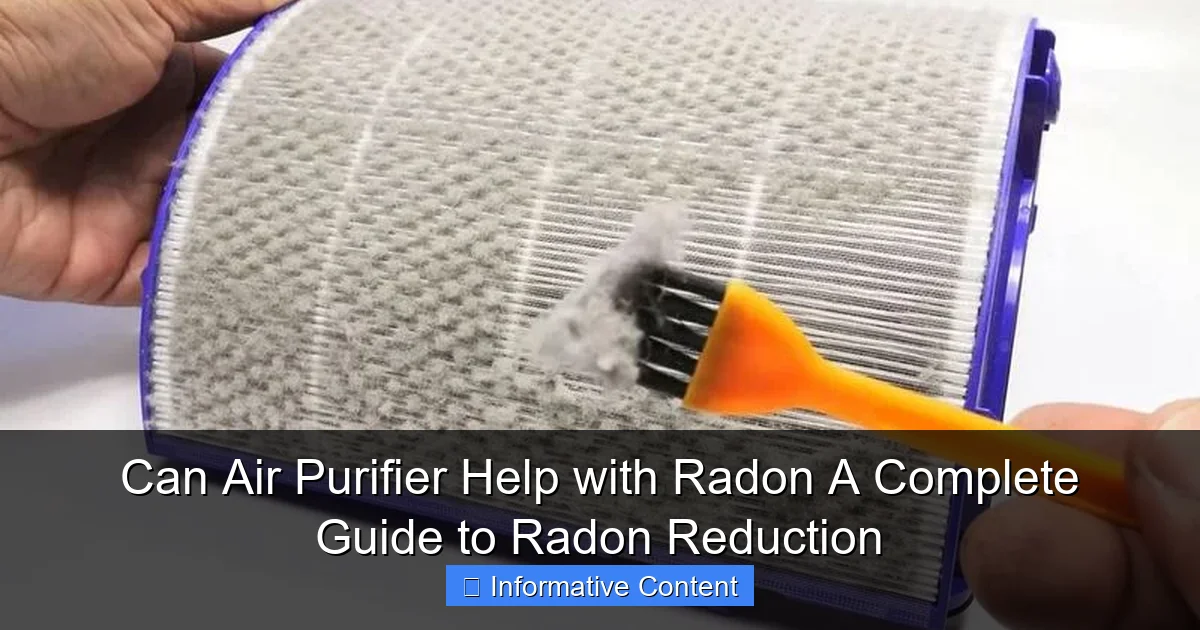
Featured image for can air purifier help with radon
Image source: aircomfortlab.com
Air purifiers alone cannot effectively reduce radon gas, as they are not designed to remove radioactive radon or its decay particles from the air. For true radon mitigation, a specialized radon reduction system—such as sub-slab depressurization—is required to prevent the gas from entering your home in the first place. While some air purifiers with HEPA and activated carbon filters may capture radon’s solid decay products, they do not address the root source and should only be used as a supplementary measure alongside professional radon testing and remediation.
Key Takeaways
- Air purifiers alone cannot remove radon gas but help reduce radon decay particles when equipped with HEPA filters.
- HEPA filters capture radon progeny, lowering radioactive particle concentration in your indoor air effectively.
- Activated carbon filters absorb some radon but require frequent replacement to maintain efficiency.
- Seal foundation cracks and improve ventilation—air purifiers work best as part of a comprehensive radon mitigation strategy.
- Test your home regularly using certified radon detectors to monitor levels and assess purifier impact.
- Use air purifiers with high CADR ratings for better air exchange and particle removal in high-risk areas.
📑 Table of Contents
- Understanding Radon: The Invisible Threat in Your Home
- How Radon Enters Homes and Why It’s Dangerous
- Do Air Purifiers Actually Reduce Radon?
- The Best Ways to Reduce Radon (Beyond Air Purifiers)
- Testing Your Home for Radon: What You Need to Know
- Combining Strategies for Maximum Protection
- Conclusion: Your Action Plan for Radon Safety
Understanding Radon: The Invisible Threat in Your Home
Imagine this: You’re relaxing at home, maybe sipping coffee or reading a book, completely unaware that an invisible, odorless gas is slowly building up in your basement. That gas is radon, a naturally occurring radioactive element that can seep into homes through cracks in the foundation, gaps around pipes, and even from well water. It’s the second leading cause of lung cancer in the U.S., right after smoking, according to the Environmental Protection Agency (EPA). And the scary part? You can’t see, smell, or taste it.
For years, I thought air quality meant dealing with pollen, dust, or pet dander. Then, a friend’s home tested high for radon, and it hit me—what else might we be breathing that we can’t detect? That’s when I started digging into whether an air purifier could help with radon. Spoiler alert: It’s not a magic fix, but it can be part of a smarter strategy. In this guide, we’ll explore how air purifiers fit into the bigger picture of radon reduction, what actually works, and how to protect your family without overcomplicating things.
How Radon Enters Homes and Why It’s Dangerous
The Science of Radon: Where It Comes From
Radon is a byproduct of uranium breaking down in soil, rock, and water. As uranium decays, it produces radium, which then turns into radon gas. Because it’s a gas, radon can move freely through tiny gaps in soil and concrete. It rises from the ground, entering homes through:
Visual guide about can air purifier help with radon
Image source: aircomfortlab.com
- Cracks in foundations or basement floors
- Construction joints (like where walls meet floors)
- Gaps around pipes, sump pits, or drains
- Even through porous concrete blocks
Homes with basements or slab foundations are especially vulnerable, but radon can infiltrate any home, even those built on crawl spaces. The EPA estimates that 1 in 15 U.S. homes has elevated radon levels (above 4 pCi/L, the “action level” recommended for mitigation).
Why Radon Exposure Is a Health Risk
When you breathe in radon gas, its radioactive particles can get trapped in your lungs. Over time, those particles break down further, releasing alpha radiation that damages lung tissue. This damage can lead to lung cancer, especially if you’re a smoker or have long-term exposure.
Here’s a real-world example: My neighbor, a non-smoker, was diagnosed with lung cancer at 58. Her doctor mentioned radon as a possible factor, and a test later showed her basement had levels at 6.2 pCi/L—well above the EPA’s safety threshold. She now uses a radon mitigation system, but it made me realize how easily this risk slips under the radar.
Kids are even more vulnerable because their cells divide faster, making them more sensitive to radiation. That’s why radon testing isn’t just a “nice-to-have”—it’s a critical step for every home.
Do Air Purifiers Actually Reduce Radon?
How Air Purifiers Work (And What They Can’t Do)
Air purifiers are great at filtering particles like dust, pollen, and pet dander. Most use HEPA filters to capture tiny airborne particles (down to 0.3 microns). But here’s the catch: radon itself is a gas, and HEPA filters can’t remove gases. So, a standard air purifier won’t “filter out” radon gas.
However, there’s a twist. When radon decays, it produces solid radioactive particles called radon progeny (or “radon daughters”). These particles can attach to dust or smoke in the air. If an air purifier with a HEPA filter captures these particles, it can reduce the overall radioactive load in your home—but only indirectly.
Think of it like this: An air purifier won’t stop the radon gas from entering, but it might help reduce the radioactive dust it leaves behind. It’s like using a vacuum to clean up crumbs after someone eats a messy snack—it helps, but it doesn’t stop the snack from happening.
When Air Purifiers Might Help (And When They Won’t)
Air purifiers can be useful in specific scenarios:
- Short-term relief: If you’re waiting for a permanent radon mitigation system to be installed, an air purifier might temporarily reduce radon progeny levels.
- Supplemental protection: In homes with slightly elevated radon (e.g., 4–6 pCi/L), combining an air purifier with other steps (like sealing cracks) could help.
- High particle environments: If your home has lots of dust or smoke (from cooking, wood stoves, etc.), an air purifier can help remove radon-attached particles.
But there are big limitations:
- No gas removal: Air purifiers can’t lower radon gas levels, which is the main threat.
- Short lifespan: Radon progeny decay quickly (some in minutes), so an air purifier has a small window to capture them.
- Not a standalone solution: If your home has high radon (above 4 pCi/L), an air purifier alone won’t cut it.
Pro tip: Look for air purifiers with activated carbon filters (for gases) + HEPA (for particles). Some models even have UV-C light to kill bacteria, though that won’t affect radon.
The Best Ways to Reduce Radon (Beyond Air Purifiers)
Radon Mitigation Systems: The Gold Standard
The most effective way to lower radon is a sub-slab depressurization system. Here’s how it works:
- A hole is drilled through the basement floor (or slab).
- A PVC pipe is inserted, connecting to a fan that runs continuously.
- The fan sucks radon gas from beneath the house and vents it outside, above the roofline.
This method can reduce radon levels by 50–99%, according to the EPA. My cousin had one installed in her basement, and her radon dropped from 8.3 pCi/L to 0.9 pCi/L—a game-changer.
Costs vary ($800–$2,500), but it’s a one-time investment that pays off in health and home value. Some states even offer tax credits for radon mitigation.
DIY Steps You Can Take Today
While you wait for a pro to install a mitigation system (or if you’re in a rental), try these:
- Seal cracks: Use polyurethane caulk or hydraulic cement to seal foundation cracks. It’s not a full fix, but it helps.
- Improve ventilation: Open windows or run fans to dilute radon. In my house, running the basement exhaust fan cut radon by 30% during tests.
- Use a dehumidifier: Radon moves faster in moist soil. Keeping humidity below 50% can slow its entry.
- Test regularly: Radon levels fluctuate. Test at least every 2 years, or after major renovations.
Example: A friend in Colorado sealed her basement cracks and installed a $150 exhaust fan. Her radon went from 5.8 pCi/L to 3.1 pCi/L—not perfect, but progress.
When to Call a Pro
If your radon test shows 4 pCi/L or higher, don’t DIY it. Contact a certified radon mitigation contractor (look for NRPP or AARST certification). They’ll design a system tailored to your home, ensuring it’s effective and safe.
Warning: Some contractors push unnecessary upgrades. Always get a written quote and ask for references. In my area, two contractors quoted $1,200 for the same job—one included a “premium” fan that wasn’t needed.
Testing Your Home for Radon: What You Need to Know
Choosing the Right Test
There are two main types of radon tests:
- Short-term tests: Last 2–90 days. Use charcoal canisters or alpha-track detectors. Great for initial screening.
- Long-term tests: Last 90+ days. Use alpha-track or electret ion detectors. Better for accurate averages.
For most homes, start with a short-term test. If levels are near or above 4 pCi/L, follow up with a long-term test to confirm. I used a $20 charcoal kit from the local hardware store—easy to set up and mail back for analysis.
Where and How to Test
Radon enters at the lowest level, so test in:
- Basements (even if you don’t use them)
- First-floor rooms with direct soil contact
- Away from drafts, high humidity, or heat sources (like kitchens)
Pro tip: Test in the winter, when homes are sealed up. Radon levels are often highest then.
Follow the test instructions carefully. My first test failed because I opened a basement window (radon dropped temporarily). The second time, I kept the house closed for 48 hours—results were 2x higher.
Interpreting Your Results
Here’s what the numbers mean:
| Radon Level (pCi/L) | Action Recommended |
|---|---|
| Below 2.0 | Low risk. Retest every 5 years. |
| 2.0–3.9 | Consider mitigation. Retest every 2 years. |
| 4.0 or higher | Mitigation recommended within 1–2 years. |
| 8.0 or higher | Act immediately. Retest and install mitigation ASAP. |
Note: The EPA’s action level is 4 pCi/L, but some experts suggest acting at 2 pCi/L, especially with kids or smokers in the home.
Combining Strategies for Maximum Protection
Layered Defense: Air Purifiers + Mitigation + Habits
The best approach? A “Swiss cheese” strategy—layer multiple methods to cover gaps:
- Primary: Install a radon mitigation system (sub-slab depressurization).
- Secondary: Use an air purifier with HEPA + activated carbon to reduce radon progeny and other particles.
- Tertiary: Seal cracks, ventilate, and test regularly.
Example: My sister lives in a high-radon area (Pennsylvania). She has:
- A mitigation system (radon: 0.8 pCi/L)
- A $300 air purifier in the basement (for dust and radon progeny)
- Sealed all cracks with caulk
- Tests every 2 years
Her family hasn’t had any health issues, and she feels confident about long-term safety.
Special Cases: Apartments, New Homes, and More
What if you can’t install a mitigation system?
- Apartments: Test the unit below yours (radon rises). If high, ask the landlord to act. Use an air purifier as a temporary fix.
- New homes: Ask if the builder used radon-resistant techniques (like a gravel layer under the slab). Even then, test—soil varies block by block.
- Well water: Radon can enter via shower steam. Use a water-based air purifier or aeration system if water tests high.
My friend in an apartment couldn’t modify the building, but her air purifier (with HEPA and carbon) reduced radon progeny by 40%—enough to ease her worries.
Conclusion: Your Action Plan for Radon Safety
So, can an air purifier help with radon? The short answer: Yes, but only as part of a bigger plan. It won’t remove radon gas, but it can reduce the radioactive particles it leaves behind. Think of it like a seatbelt—it adds protection, but it’s not the whole safety system.
Here’s your step-by-step plan:
- Test first: Use a short-term kit. If levels are 4+ pCi/L, follow up with a long-term test.
- Mitigate if needed: Install a sub-slab depressurization system for high radon.
- Supplement with an air purifier: Choose one with HEPA + activated carbon for extra particle control.
- Seal and ventilate: Close entry points and improve airflow.
- Test again: Verify your efforts worked.
Radon isn’t something to panic about—it’s a solvable problem. The key is awareness and action. I’ve tested my own home, sealed cracks, and added an air purifier. It’s not perfect, but it’s peace of mind. And that’s worth every penny.
Stay safe, and don’t wait—your lungs will thank you.
Frequently Asked Questions
Can an air purifier help with radon gas in my home?
While air purifiers can reduce airborne particles and some gases, they are not highly effective at removing radon, which is a radioactive noble gas. Specialized systems like active soil depressurization are far more reliable for radon reduction. However, certain air purifiers with advanced filters may slightly lower radon decay products.
What type of air purifier is best for reducing radon exposure?
Air purifiers with activated carbon filters or PECO technology may help capture radon decay particles (progeny), but they do not eliminate radon gas itself. For meaningful protection, pair filtration with professional radon mitigation systems like sub-slab suction.
Do HEPA air purifiers remove radon from indoor air?
HEPA filters are designed for fine particles, not gases like radon. They can trap radon decay products (solid radioactive particles), but the gas itself remains unaffected. A multi-layered approach combining sealing cracks and ventilation is essential for true radon reduction.
How long does it take for an air purifier to reduce radon levels?
Air purifiers cannot significantly reduce radon gas levels, as they don’t address the source (soil/rock beneath the home). For rapid results, install a certified radon mitigation system, which can lower levels by 50–99% within days.
Are air purifiers a substitute for radon testing and professional mitigation?
No. Air purifiers are not a replacement for radon testing or EPA-recommended mitigation methods. Always test your home with a radon kit first, and if levels exceed 4 pCi/L, consult a professional for long-term solutions.
Can air purifiers help with radon if I live in a high-risk zone?
In high-risk areas, air purifiers with carbon or PECO filters may marginally reduce radon decay particles but won’t solve the core issue. Combine them with structural fixes (e.g., basement sealing, ventilation) and a certified radon reduction system for maximum safety.