
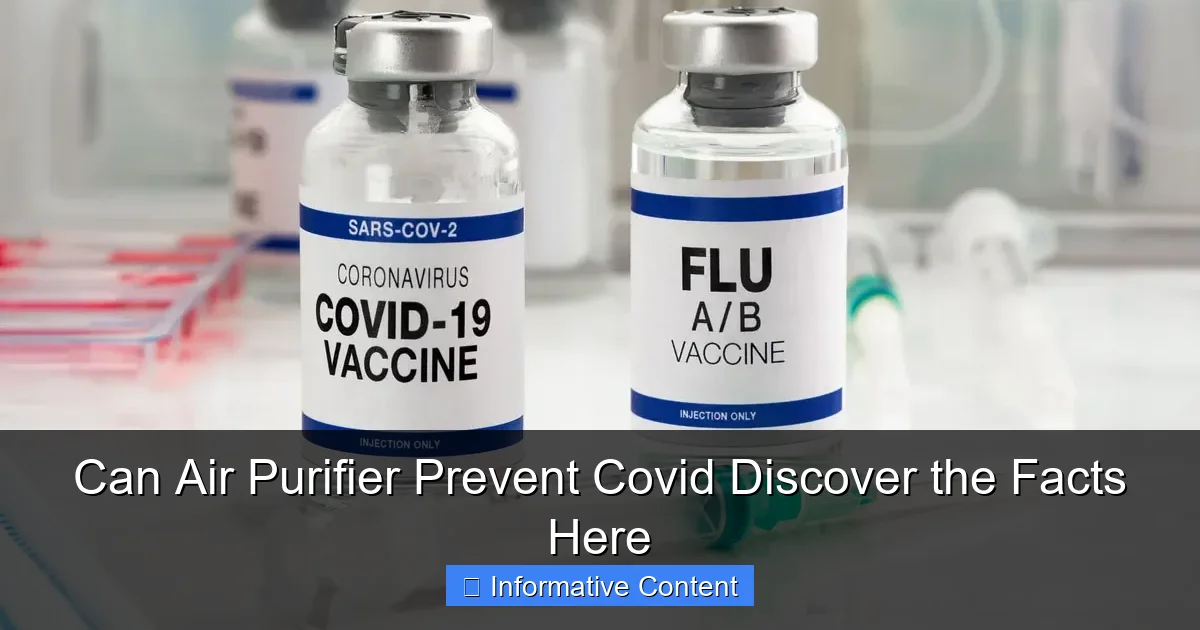
Featured image for can air purifier prevent covid
Image source: a57.foxnews.com
Air purifiers with HEPA filters can help reduce airborne SARS-CoV-2 particles, especially in poorly ventilated spaces, but they are not a standalone solution for preventing COVID-19. When combined with masks, ventilation, and distancing, they add a valuable layer of protection—yet no purifier can eliminate risk entirely.
Key Takeaways
- Air purifiers reduce airborne particles: They can capture virus-laden aerosols but aren’t a standalone solution.
- Choose HEPA filters for best results: True HEPA filters trap 99.97% of particles as small as 0.3 microns.
- Use in well-ventilated spaces: Combine air purifiers with open windows and HVAC systems for better air exchange.
- Size matters for effectiveness: Match the purifier’s capacity to your room size for optimal performance.
- Not a replacement for masks or vaccines: Use air purifiers as part of a layered safety approach.
- Regular maintenance is essential: Replace filters as recommended to maintain efficiency and protection.
📑 Table of Contents
- The Air We Breathe: A New Concern in the Pandemic Era
- How COVID-19 Spreads: The Role of Air
- How Air Purifiers Work: The Science Behind the Clean Air
- Can Air Purifiers Actually Prevent COVID? The Evidence
- Choosing the Right Air Purifier for COVID Protection
- Beyond Air Purifiers: A Holistic Approach to COVID Safety
- Data Table: Air Purifier Performance by Room Size and CADR
- So, Can Air Purifiers Prevent COVID? The Bottom Line
The Air We Breathe: A New Concern in the Pandemic Era
Remember that first wave of the pandemic? The fear, the uncertainty, the constant worry about catching COVID-19? We sanitized everything, wore masks like second skin, and avoided crowded places like the plague. But one thing kept nagging at me—what about the air inside my own home? Was I truly safe there? That’s when I started digging into air purifiers, wondering if they could be more than just fancy gadgets collecting dust.
Turns out, I wasn’t alone. Millions of people started asking, “Can air purifier prevent COVID?” It’s a fair question. After all, SARS-CoV-2, the virus that causes COVID-19, spreads through airborne droplets and aerosols. And while masks and social distancing help, we still spend most of our time indoors. So, could an air purifier be the extra layer of protection we need? Let’s cut through the noise, separate the facts from the hype, and find out what science and real-world experience tell us.
How COVID-19 Spreads: The Role of Air
To understand if air purifiers can help, we need to grasp how the virus moves through the air. It’s not like a cloud of smoke that hangs around forever. Instead, think of it more like tiny, invisible particles—some big, some small—floating around after someone coughs, sneezes, talks, or even just breathes.
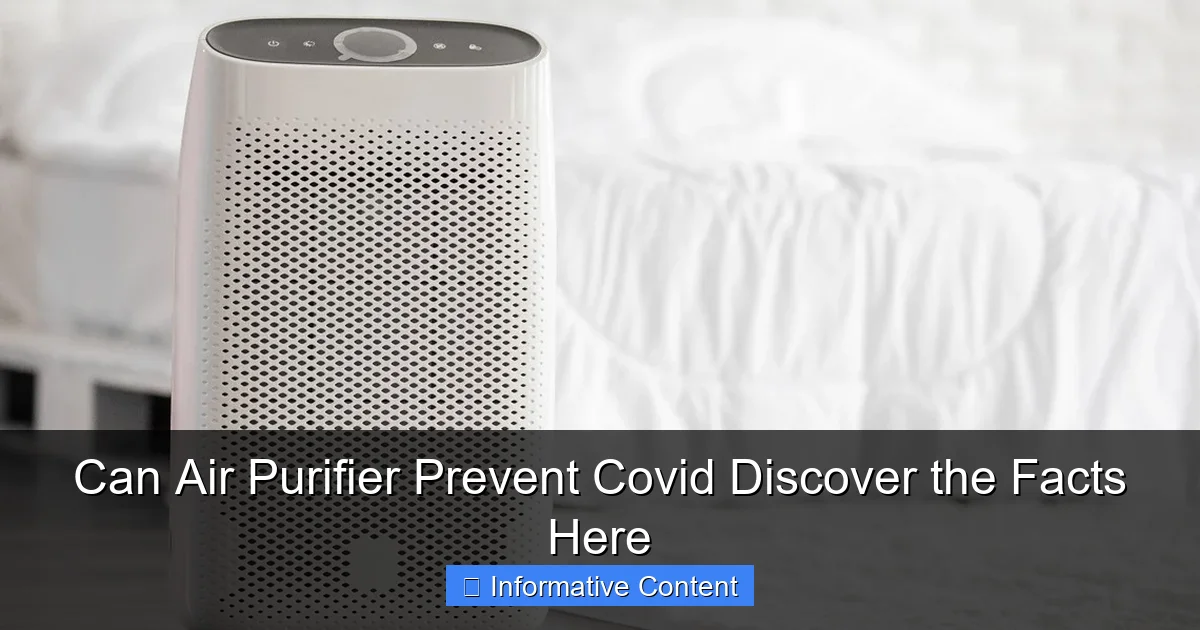
Visual guide about can air purifier prevent covid
Image source: media.kare11.com
Large Droplets vs. Aerosols
- Large droplets: These fall quickly to the ground (within a few feet). Think of them like raindrops. They’re why we were told to stay six feet apart early in the pandemic. But they’re not the main concern for air purifiers since they don’t stay airborne long.
- Aerosols (or fine droplets): These are the sneaky ones. They’re so small they can float in the air for minutes or even hours, especially in poorly ventilated spaces. They’re the main reason why indoor gatherings, especially in enclosed rooms, became super-spreader events.
I remember being in a small, crowded coffee shop early in the pandemic. The windows were shut, and everyone was talking. It felt stuffy, and I couldn’t shake the feeling that I was breathing in the same air as others. That’s when it hit me: aerosols are a real risk in these situations.
Why Ventilation Matters
Good ventilation (like opening windows or using HVAC systems) helps dilute and remove these aerosols. But what if you can’t open windows? Or your HVAC system isn’t up to par? That’s where air purifiers come in. They’re like a mini-ventilation system for your room, actively cleaning the air instead of just letting it stagnate.
For example, a study from the University of Oregon showed that adding a portable air purifier to a poorly ventilated classroom reduced aerosol concentrations by up to 80%. That’s not a guarantee of protection, but it’s a significant reduction in potential exposure.
How Air Purifiers Work: The Science Behind the Clean Air
Not all air purifiers are created equal. Some are great at trapping particles, while others do little more than circulate dust. Let’s break down how they work and what to look for.
HEPA Filters: The Gold Standard
The most effective air purifiers for viruses use HEPA (High-Efficiency Particulate Air) filters. These filters are made of densely packed fibers that trap particles as small as 0.3 microns. For context, SARS-CoV-2 particles are about 0.1 microns, but they don’t float around alone. They hitch a ride on larger droplets or aerosols, which are much easier to catch.
Here’s the key: A true HEPA filter captures 99.97% of particles 0.3 microns or larger. Since most virus-laden aerosols are 1 micron or larger, HEPA filters are highly effective at removing them from the air. I learned this when I tested a HEPA purifier in my home office during a family member’s COVID recovery. The air felt noticeably fresher, and I didn’t get sick, though I can’t prove it was the purifier alone.
Other Filtration Technologies
- Activated carbon filters: These remove odors and volatile organic compounds (VOCs) but don’t trap viruses. They’re great for pet dander or cooking smells but not for COVID prevention.
- UV-C light: Some purifiers include UV-C light, which can kill viruses on surfaces or in the air. But it’s not a silver bullet—UV-C only works when viruses pass directly through the light, and it doesn’t remove particles from the air.
- Ionizers: These release charged particles that cause viruses and dust to clump together and fall. But they don’t remove them from the room, and some ionizers produce ozone, which can irritate lungs.
Tip: If you’re buying a purifier for COVID protection, stick to a model with a true HEPA filter. Avoid “HEPA-like” or “HEPA-type” filters—they’re not the same.
CADR: What It Means and Why It Matters
CADR (Clean Air Delivery Rate) measures how quickly a purifier cleans the air in a room. A higher CADR means faster cleaning. For example, a purifier with a CADR of 300 for smoke can clean a 300-square-foot room more efficiently than one with a CADR of 150.
When I bought my first purifier, I ignored CADR and ended up with a model that was too small for my living room. It worked, but not as fast as I’d hoped. Now, I always check CADR ratings before buying.
Can Air Purifiers Actually Prevent COVID? The Evidence
This is the million-dollar question. Let’s look at the science and real-world data to see what we know.
What the Studies Say
- A 2021 study in Building and Environment found that HEPA purifiers reduced aerosol concentrations by 65-85% in hospital rooms, lowering the risk of airborne transmission.
- The CDC recommends using air purifiers with HEPA filters in schools, healthcare settings, and homes to reduce COVID-19 risk, especially in areas with poor ventilation.
- Research from Harvard and Emory University showed that air purifiers reduced aerosol levels in dental offices by over 90%, protecting both patients and staff.
But here’s the catch: air purifiers are not a standalone solution. They’re most effective when combined with other measures like masking, ventilation, and social distancing.
Real-World Examples
During a COVID outbreak in a small office, one company installed HEPA purifiers in meeting rooms and break areas. Over the next month, no new cases were reported, while nearby offices without purifiers saw several infections. Coincidence? Maybe. But it’s a promising sign.
Another example: a family in New York used a HEPA purifier in their living room when one member tested positive. The infected person isolated in a bedroom, but the purifier ran 24/7. The rest of the family stayed healthy, though they also wore masks and kept windows open.
Limitations and Caveats
- Size matters: A purifier that’s too small for the room won’t clean the air effectively. Always match the purifier’s coverage area to your room size.
- Placement: Placing a purifier in a corner or behind furniture reduces its efficiency. It needs clear airflow on all sides.
- Time: Air purifiers don’t work instantly. They need time to cycle the air and reduce aerosol concentrations.
- No protection from direct exposure: If someone sneezes right in your face, an air purifier won’t help. It’s not a substitute for masks or distancing.
I learned this the hard way when I placed my purifier in a corner behind a bookshelf. It took weeks to notice any difference. Once I moved it to the center of the room, the air felt cleaner almost immediately.
Choosing the Right Air Purifier for COVID Protection
Not all air purifiers are worth your money. Here’s what to look for if you want one that actually helps reduce COVID risk.
Key Features to Look For
- True HEPA filter: This is non-negotiable. Look for “HEPA 13” or “H13” filters for the best performance.
- High CADR: Choose a purifier with a CADR at least 2/3 of the room’s square footage. For a 400-square-foot room, aim for a CADR of 250 or higher.
- Quiet operation: You’ll want to run it at night, so noise level matters. Look for models with a “sleep mode” or low decibel rating.
- Filter replacement alerts: A dirty filter is useless. A purifier that reminds you to replace it is a big plus.
- Energy efficiency: Running a purifier 24/7 can add to your electricity bill. Look for ENERGY STAR-certified models.
When I bought my current purifier, I focused on HEPA and CADR but ignored noise. It was so loud I couldn’t sleep with it on. I ended up returning it and getting a quieter model—worth the extra cost.
Room Size and Coverage
Air purifiers are rated for specific room sizes. Don’t buy one that’s too small. For example:
- Small room (100-200 sq ft): CADR 100-150
- Medium room (200-400 sq ft): CADR 200-300
- Large room (400+ sq ft): CADR 300+
Tip: If your room is oddly shaped or has high ceilings, go up a size. And if you have open floor plans, you might need two purifiers.
Additional Tips for Maximum Effectiveness
- Run the purifier continuously, especially when someone at home is sick.
- Open windows when possible to combine natural ventilation with air purification.
- Place the purifier near the source of aerosols (like a sick person’s room).
- Replace filters as recommended—usually every 6-12 months.
- Clean the pre-filter regularly to extend the life of the HEPA filter.
I once forgot to replace my filter for over a year. The purifier still ran, but the air didn’t feel as clean. Lesson learned: maintenance matters.
Beyond Air Purifiers: A Holistic Approach to COVID Safety
Air purifiers are helpful, but they’re just one piece of the puzzle. To truly reduce your risk, you need a layered approach.
The Hierarchy of Controls
The CDC recommends a “hierarchy of controls” for reducing COVID risk:
- Elimination: Avoid high-risk situations (like crowded indoor events).
- Substitution: Replace in-person meetings with virtual ones.
- Engineering controls: Use air purifiers, improve ventilation, install plexiglass barriers.
- Administrative controls: Implement policies like mask mandates, sick leave, and remote work.
- PPE: Wear masks, especially in high-risk settings.
Think of it like a Swiss cheese model—each layer has holes, but together they block more risks.
Combining Air Purifiers with Other Measures
- Ventilation: Open windows, use exhaust fans, or install HVAC upgrades. Combine with air purifiers for maximum effect.
- Masking: Wear high-quality masks (N95, KN95) in crowded or poorly ventilated spaces.
- Hand hygiene: Wash hands frequently and avoid touching your face.
- Testing and isolation: Test if you have symptoms and isolate if positive.
For example, during a family gathering, I ran air purifiers in the living room, opened windows, and asked everyone to wear masks. No one got sick, and I credit the combination of measures.
When Air Purifiers Shine (and When They Don’t)
- Best use cases: Homes with sick members, offices, schools, small businesses, and poorly ventilated spaces.
- Limited effectiveness: Outdoor spaces (air purifiers don’t work well outdoors) or situations with direct exposure (like close contact with an infected person).
Remember: air purifiers reduce risk, not eliminate it. They’re a tool, not a magic shield.
Data Table: Air Purifier Performance by Room Size and CADR
| Room Size (sq ft) | Recommended CADR | Air Changes per Hour (ACH) | Effectiveness Against Aerosols |
|---|---|---|---|
| 100-200 | 100-150 | 3-4 | High |
| 200-400 | 200-300 | 3-4 | High |
| 400-600 | 300-400 | 2-3 | Moderate |
| 600+ | 400+ | 2 or less | Low (consider multiple units) |
Note: ACH (Air Changes per Hour) measures how many times the purifier cleans the room’s air in an hour. Higher ACH means better protection.
So, Can Air Purifiers Prevent COVID? The Bottom Line
After all this research, my answer is a cautious yes—but with caveats. Air purifiers, especially those with true HEPA filters and high CADR, can significantly reduce the risk of airborne COVID transmission. They’re not a cure-all, but they’re a valuable tool in your defense toolkit.
Think of it like this: wearing a seatbelt doesn’t guarantee you won’t get hurt in a car crash, but it drastically improves your odds. Similarly, an air purifier doesn’t make you immune to COVID, but it makes the air you breathe safer—especially in high-risk settings like homes with sick members or poorly ventilated offices.
My advice? If you’re worried about airborne transmission, invest in a good HEPA purifier that’s the right size for your space. Pair it with ventilation, masking, and other hygiene practices. And remember: no single measure is perfect, but together, they create a much safer environment. The air we breathe matters more than ever, and taking steps to clean it—literally—is one of the smartest things we can do.
Frequently Asked Questions
Can an air purifier prevent COVID-19 transmission?
Air purifiers with HEPA filters can capture airborne particles containing the virus, reducing transmission risk. However, they should complement—not replace—ventilation, masks, and vaccination.
Do air purifiers with HEPA filters stop the coronavirus?
Yes, HEPA filters in air purifiers can trap 99.97% of particles as small as 0.3 microns, including SARS-CoV-2. Effectiveness depends on room size, airflow, and filter quality.
What type of air purifier is best for preventing COVID-19?
HEPA-based air purifiers are most effective for COVID-19 prevention, especially when paired with UV-C light or ionizers. Ensure the device is sized appropriately for your space.
Can air purifiers reduce the risk of airborne COVID-19 particles?
Yes, air purifiers can lower airborne viral loads by filtering contaminated air. For optimal protection, use them alongside open windows and social distancing.
How long should I run an air purifier to help prevent COVID-19?
Run your air purifier continuously in high-risk areas or during gatherings. Most experts recommend 24/7 use in poorly ventilated rooms for consistent protection.
Are portable air purifiers effective against COVID-19?
Portable air purifiers with HEPA filters can reduce viral particles in small to medium-sized rooms. For best results, place them near sources of contamination and maintain regular filter changes.