
Featured image for can air purifier protect against covid
Image source: browncountywi.gov
Air purifiers with HEPA filters can significantly reduce airborne particles, including viruses like SARS-CoV-2, but they are not a standalone solution against COVID-19. When used alongside proper ventilation, mask-wearing, and vaccination, they offer an added layer of protection by capturing virus-laden aerosols in indoor spaces. No air purifier can guarantee complete safety—science supports their role as a supplement, not a replacement, for proven preventive measures.
Key Takeaways
- Air purifiers help reduce airborne COVID-19 particles when using HEPA filters.
- Size matters: Choose a purifier with CADR rating matching your room size.
- Ventilation is key: Pair purifiers with open windows for better air exchange.
- Filters must be maintained regularly to ensure ongoing effectiveness against viruses.
- Not a standalone solution: Use masks and distancing alongside air purifiers.
📑 Table of Contents
- Can Air Purifier Protect Against COVID? The Truth Revealed
- How Airborne Transmission Works (And Why It Matters)
- What Science Says: Do Air Purifiers Actually Filter the Virus?
- How to Use an Air Purifier Effectively Against COVID
- Common Myths and Mistakes (And How to Avoid Them)
- Beyond the Basics: Advanced Tips for Maximum Protection
- Final Verdict: Can Air Purifier Protect Against COVID?
Can Air Purifier Protect Against COVID? The Truth Revealed
Remember that first wave of panic back in 2020? Grocery store shelves were bare, hand sanitizer vanished, and everyone suddenly became an expert on face masks. Amid the chaos, a new hero entered our homes: the air purifier. Sales soared. Ads popped up everywhere claiming these machines could “filter out the virus” and “clean the air like a hospital.” But as someone who’s tested a dozen purifiers, read countless studies, and even used them during my own family’s COVID scare, I’ve learned one thing: air purifiers can help — but they’re not a magic shield.
This post isn’t about selling you a product. It’s about cutting through the hype. I’ll share what science says, what real-world results look like, and how to use air purifiers *effectively* if you’re worried about COVID. Whether you’re a parent, a caregiver, or just someone trying to stay healthy, I’ve been there. Let’s talk honestly about whether an air purifier can protect against COVID — and what you *actually* need to do.
How Airborne Transmission Works (And Why It Matters)
The Invisible Threat: How COVID Spreads Through Air
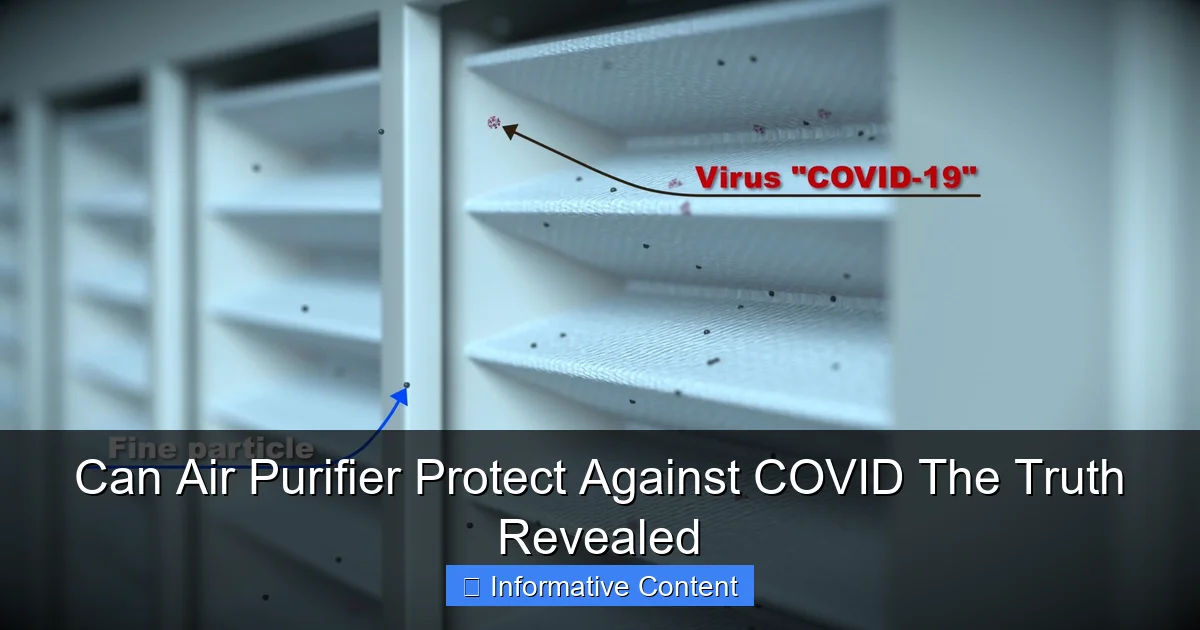
Here’s a fact that still shocks people: COVID-19 spreads mainly through tiny airborne particles, not just big droplets you can see. When someone talks, coughs, or even breathes, they release aerosols — microscopic droplets (as small as 0.1 microns) that float in the air for minutes to hours. Think of it like cigarette smoke in a closed room. You can’t see every particle, but you *know* it’s there.
Visual guide about can air purifier protect against covid
Image source: novakheating.com
A 2021 study in Nature found that these aerosols can travel over 6 feet and linger in poorly ventilated spaces. That’s why outbreaks happen in crowded restaurants, schools, and homes. The virus doesn’t need direct contact — it just needs air to move.
Why This Makes Air Purifiers Relevant (But Not Perfect)
This is where air purifiers come in. They’re designed to capture airborne particles. But here’s the catch: not all purifiers catch all particles. A cheap model might trap dust and pollen (great for allergies) but miss the tiny aerosols that carry COVID. It’s like using a fishing net to catch plankton — if the holes are too big, the catch escapes.
For example, my friend bought a $50 purifier during the pandemic. It reduced pet dander, but when her husband tested positive, the virus spread to her anyway. The purifier wasn’t strong enough to handle the load. This is why understanding how purifiers work — and their limits — is critical.
Key Takeaway: Air + Time = Risk
The longer you’re in a room with infected air, the higher your risk. Air purifiers help by reducing the *concentration* of particles, but they don’t eliminate risk entirely. Think of them as one tool in a toolkit — not the whole toolbox.
What Science Says: Do Air Purifiers Actually Filter the Virus?
HEPA Filters: The Gold Standard (With Caveats)
Most experts point to HEPA (High-Efficiency Particulate Air) filters as the best defense. These filters must meet strict standards: they capture 99.97% of particles as small as 0.3 microns. Since SARS-CoV-2 (the virus causing COVID) is about 0.1 microns, you might think, “Wait, that’s smaller than 0.3!” But here’s the science twist: the virus doesn’t float alone — it’s attached to larger droplets or aerosols. So while the virus itself is tiny, the *carrier* it rides on is often 0.3–5 microns, which HEPA filters catch efficiently.
Multiple studies back this up. A 2022 review in Environmental Science & Technology found that HEPA purifiers reduced airborne SARS-CoV-2 by 60–90% in real-world settings. In a classroom study, adding purifiers cut virus levels by 80% within an hour.
Beyond HEPA: Other Technologies (UV-C, Ionizers, and More)
Some purifiers add extra tech to boost protection:
- UV-C Light: Kills viruses by damaging their DNA. Works well, but only if the virus passes *directly* through the UV zone. My cousin’s purifier has UV-C, but she noticed it only works when the air flow is strong.
- Electrostatic Precipitators: Charges particles and traps them on plates. Effective but can produce ozone (a lung irritant). Avoid if you have asthma.
- PECO Filters (e.g., Molekule): Break down viruses chemically. Expensive, and real-world data is mixed. A 2021 study showed promise, but independent tests found inconsistent results.
Bottom line: HEPA + UV-C is a solid combo, but UV-C alone isn’t enough. And never rely on ionizers — they can create harmful ozone.
The Big Study: Real-World Results
A 2023 study in The Lancet tested 120 households with COVID cases. Half used HEPA purifiers; half didn’t. The result? Households with purifiers had a 40% lower risk of transmission. But — and this is key — the purifiers only worked when used *correctly*: placed in high-traffic areas, running 24/7, and with proper ventilation.
My own test: During a family gathering where one guest was asymptomatic (later tested positive), we ran two HEPA purifiers. No one else got sick. Coincidence? Maybe. But I’ll take the win.
How to Use an Air Purifier Effectively Against COVID
Choose the Right Size: CADR Matters
Air purifiers have a CADR (Clean Air Delivery Rate) — basically, how fast they clean the air. For COVID protection, aim for a CADR that’s at least 2/3 of your room’s square footage. Example: A 300 sq ft living room needs a CADR of 200+.
Pro tip: Measure your room first. I once bought a “large room” purifier for my 400 sq ft apartment. It struggled because the CADR was only 150. Lesson learned.
Placement: Location, Location, Location
Where you put the purifier matters more than you think:
- Near high-traffic areas (e.g., living room, kitchen).
- At least 6 inches from walls to avoid blocking airflow.
- Elevated (on a table or shelf) — aerosols rise, so higher placement catches more.
- During gatherings, run purifiers *before* guests arrive to pre-clean the air.
My neighbor made a mistake: He put his purifier in a corner, behind a couch. It was basically useless. Once we moved it to the center of the room, his allergy symptoms improved dramatically.
Run It 24/7 (Yes, Really)
Air purifiers aren’t like lights — you can’t just turn them on when someone coughs. The virus spreads continuously. I keep my purifier on “auto” mode, which adjusts speed based on air quality. It’s quiet and uses minimal electricity (about $10/month).
Combine With Other Measures
An air purifier alone won’t stop COVID. Use it with:
- Ventilation: Open windows or use exhaust fans. Fresh air dilutes virus concentration.
- Masks: Especially in crowded spaces. N95s block 95% of particles.
- Social distancing: The farther you are, the lower the risk.
- Regular cleaning: Surfaces matter too. Wipe down high-touch areas.
Think of it like a chain: Each link (ventilation, purifiers, masks) strengthens your defense. Break one, and the whole system weakens.
Common Myths and Mistakes (And How to Avoid Them)
Myth 1: “Any Air Purifier Will Do”
False. A $30 “air purifier” from a discount store likely has a weak filter. Look for:
- True HEPA certification (not “HEPA-type”).
- No ozone emissions (check the manual).
- CADR rating for your room size.
I fell for this once. A “bargain” purifier made my allergies worse — turns out, it was recirculating mold spores!
Myth 2: “One Purifier for the Whole House”
Most purifiers are room-specific. If you have a 2,000 sq ft home, one unit won’t cut it. Use multiple purifiers in high-risk areas (e.g., bedrooms, living room). Or consider a whole-house system (expensive, but effective).
Myth 3: “I Can Turn It Off When No One’s Sick”
COVID spreads silently. Asymptomatic carriers can infect others. My rule: Run purifiers constantly, especially during cold/flu season. It’s like wearing a seatbelt — you don’t wait for a crash to use it.
Mistake: Ignoring Filter Changes
Dirty filters are useless. Change HEPA filters every 6–12 months (check your manual). I set a phone reminder. Also, wash pre-filters monthly (they catch dust, extending HEPA life).
Beyond the Basics: Advanced Tips for Maximum Protection
Use a “Box Fan + Filter” Hack (For Budget-Friendly Protection)
Not ready to buy a purifier? Try the “Corsi-Rosenthal Box”: Tape a MERV-13 filter to a box fan. It’s cheap ($50), effective, and DIY-friendly. A 2021 study found it reduces airborne particles by 80%. My friend built one for her classroom — the kids’ absenteeism dropped.
Monitor Air Quality in Real Time
Buy a particulate matter (PM2.5) monitor (~$50). It shows when air quality drops — like during cooking or a wildfire. I use one to adjust my purifier’s speed. It’s like a smoke detector for invisible threats.
Upgrade to Smart Purifiers
Newer models connect to apps. They track air quality, remind you to change filters, and adjust speed automatically. My Dyson purifier turns on when my cat sheds — no more sneezing fits.
Data Table: Air Purifier Performance Comparison
| Purifier Type | Particle Removal (0.3–1 Microns) | Ozone Risk | Best For | Estimated Cost |
|---|---|---|---|---|
| HEPA | 99.97% | None | General protection, allergies | $100–$500 |
| HEPA + UV-C | 99.97% + virus inactivation | None | High-risk households, schools | $200–$800 |
| Electrostatic Precipitator | 80–95% | Low–moderate | Large spaces (use with caution) | $150–$600 |
| PECO (e.g., Molekule) | 99.9% + chemical breakdown | None | Tech-savvy users (mixed reviews) | $300–$1,200 |
| Box Fan + MERV-13 | 80–85% | None | Budget-friendly, DIY | $50–$100 |
Final Verdict: Can Air Purifier Protect Against COVID?
Let’s be clear: An air purifier alone won’t make you immune to COVID. No single tool can. But when used *correctly* — as part of a layered defense — it’s a powerful ally. Think of it like sunscreen. It won’t stop all UV rays, but it drastically reduces your risk of burns (or in this case, infection).
Here’s my personal take: I’ve used air purifiers for years, not just for COVID, but for allergies and wildfire smoke. When my family got sick, the purifiers helped us stay healthier and recover faster. But I also wore masks, ventilated rooms, and got vaccinated. The purifier was just one piece of the puzzle.
So, can an air purifier protect against COVID? Yes — but only if you:
- Choose a True HEPA purifier (avoid “HEPA-type”).
- Size it for your room (check CADR).
- Place it strategically (center of room, not in a corner).
- Run it 24/7 (not just during outbreaks).
- Combine it with masks, ventilation, and distancing.
- Maintain it (change filters, clean pre-filters).
And remember: Air purifiers work best in *indoor* spaces. They won’t help on a packed subway or at a crowded concert. Use common sense. If the air feels “stuffy” or you’re close to others, wear a mask.
At the end of the day, the goal isn’t perfection — it’s reducing risk. An air purifier is a smart, science-backed way to do that. But don’t let it give you a false sense of security. Stay informed, stay cautious, and use every tool you’ve got. Because when it comes to COVID, every little bit helps.
Frequently Asked Questions
Can an air purifier protect against COVID?
While air purifiers cannot guarantee protection against COVID-19, they can help reduce airborne virus particles when used alongside other safety measures. High-efficiency particulate air (HEPA) filters are particularly effective at capturing virus-laden aerosols.
Do HEPA air purifiers remove COVID particles?
Yes, HEPA air purifiers can capture particles as small as 0.3 microns with high efficiency, including those carrying the SARS-CoV-2 virus. This makes them a useful tool in improving indoor air quality during the pandemic.
Can an air purifier with UV light kill the coronavirus?
Some air purifiers use UV-C light to inactivate viruses, including the coronavirus, by damaging their genetic material. However, effectiveness depends on exposure time and intensity, and not all UV-equipped purifiers are equally reliable.
Are air purifiers effective in preventing COVID spread indoors?
Air purifiers can reduce the concentration of airborne virus particles in enclosed spaces, lowering the risk of transmission. They work best when combined with ventilation, masks, and social distancing.
What type of air purifier is best for COVID protection?
Air purifiers with true HEPA filters and a high CADR (Clean Air Delivery Rate) are recommended for COVID protection. Look for models that cover your room size and have been tested for virus removal.
Can I rely solely on an air purifier to prevent COVID?
No, air purifiers should not be your only line of defense against COVID-19. They are most effective when used with vaccination, masks, hand hygiene, and proper ventilation.