

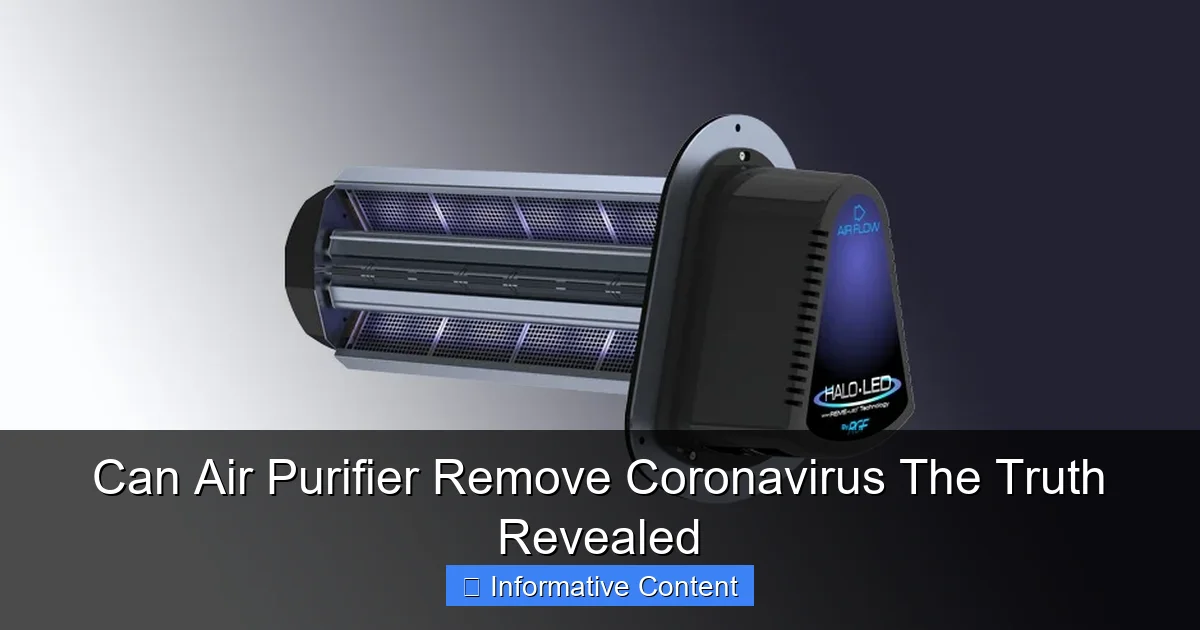
Featured image for can air purifier remove coronavirus
Image source: m.media-amazon.com
Air purifiers alone cannot guarantee the removal of the coronavirus, but certain high-efficiency models with HEPA filters can significantly reduce airborne viral particles when used properly. While they help improve indoor air quality and may lower transmission risk, they should complement—not replace—proven measures like vaccination, mask-wearing, and ventilation.
Key Takeaways
- HEPA filters can trap coronavirus particles when properly sized and maintained.
- Air purifiers reduce airborne virus risk but don’t replace masks or distancing.
- UV-C light in purifiers adds extra virus-killing protection if certified.
- Room size matters—match purifier capacity to your space for best results.
- Continuous use improves effectiveness; run purifiers 24/7 in high-risk areas.
- Filter replacement is critical—follow manufacturer schedules to maintain performance.
📑 Table of Contents
- The Invisible Threat: Can Air Purifiers Really Stop Coronavirus?
- How Viruses Like Coronavirus Travel Through the Air
- How Air Purifiers Work: The Good, the Bad, and the Misleading
- What the Science Says: Do Air Purifiers Actually Remove Coronavirus?
- How to Use an Air Purifier Effectively (Beyond Just Plugging It In)
- Debunking Myths and Addressing Concerns
- Choosing the Right Air Purifier: A Quick Comparison Guide
- Final Thoughts: The Bottom Line on Air Purifiers and Coronavirus
The Invisible Threat: Can Air Purifiers Really Stop Coronavirus?
Remember that moment when you first heard about the coronavirus? Maybe you were at the grocery store, and someone sneezed a few feet away. Your hand froze over the shopping cart, and your mind raced. Is this how I get it? That fear was real, and it sparked a global search for protection—masks, sanitizers, social distancing. But what about the air you breathe? Could something as simple as an air purifier help remove the coronavirus from your home, office, or classroom?
If you’ve ever wondered whether an air purifier can remove coronavirus, you’re not alone. During the pandemic, sales of air purifiers skyrocketed. People wanted a sense of control. I remember my neighbor installing one in her living room, saying, “If it helps even a little, it’s worth it.” But here’s the truth: not all air purifiers are created equal, and the science behind their effectiveness is more nuanced than a flashy ad might suggest. In this article, we’ll cut through the hype and get to the heart of the matter. We’ll explore how air purifiers work, what types are best for capturing viruses like SARS-CoV-2, and how to use them effectively—without spending a fortune on false promises.
How Viruses Like Coronavirus Travel Through the Air
The Science of Airborne Transmission
To understand whether an air purifier can remove coronavirus, we first need to know how the virus spreads. The coronavirus doesn’t float around like a dust particle. Instead, it travels in tiny respiratory droplets and aerosols. When someone coughs, sneezes, talks, or even breathes, they release these particles into the air.
Visual guide about can air purifier remove coronavirus
Image source: d3286fwb37l4bg.cloudfront.net
- Droplets: Larger particles (over 5-10 microns) that fall to the ground quickly. Think of them like raindrops—they don’t stay in the air long.
- Aerosols: Tiny particles (under 5 microns) that can linger in the air for minutes to hours, especially in poorly ventilated spaces. These are the real concern for airborne transmission.
Studies, including those by the CDC and WHO, now recognize that aerosols play a significant role in spreading SARS-CoV-2, especially in indoor settings like restaurants, classrooms, and homes. This means the virus can travel farther and stay active longer than we once thought.
Real-World Examples: Where Risk Is Highest
Imagine a packed gym with loud music and heavy breathing. Or a small office with no windows and a dozen people talking. These are high-risk environments because aerosols build up over time. I once attended a birthday party in a basement—no windows, one door. Within an hour, the air felt stale, and someone started coughing. That’s when I realized: the air itself could be a carrier.
Air purifiers don’t stop the initial release of virus particles, but they can reduce the concentration in the air—especially if used early and consistently. Think of them like a vacuum for invisible threats.
How Air Purifiers Work: The Good, the Bad, and the Misleading
Filtration Technologies Explained
Not all air purifiers use the same technology. Here’s a breakdown of the most common types and how they handle virus-sized particles:
- HEPA Filters (High-Efficiency Particulate Air): These are the gold standard. A true HEPA filter captures at least 99.97% of particles as small as 0.3 microns. Since SARS-CoV-2 is about 0.1 microns in size, you might think it slips through—but here’s the catch: the virus is almost always attached to larger particles (like saliva or mucus), which range from 0.5 to 10 microns. So HEPA filters are highly effective.
- Activated Carbon Filters: Great for removing odors and gases, but not viruses. They’re often paired with HEPA filters for broader air cleaning.
- UV-C Light: Ultraviolet light can kill viruses by damaging their DNA. But effectiveness depends on exposure time and intensity. A weak UV bulb in a poorly designed unit might do little.
- Ionizers and Electrostatic Precipitators: These charge particles so they stick to surfaces or collection plates. Some studies show they can reduce airborne viruses, but they may produce ozone—a lung irritant—so use with caution.
- PECO (Photo Electrochemical Oxidation): A newer tech that claims to destroy pollutants at the molecular level. Brands like Molekule use it, but independent testing is limited.
What to Look For (and What to Avoid)
When shopping, focus on HEPA-certified units. Look for labels like “True HEPA” or “HEPA H13/H14”—the higher the grade, the better the filtration. Avoid vague terms like “HEPA-type” or “99% efficient”—they often mean subpar filtration.
Also, check the CADR (Clean Air Delivery Rate). This tells you how fast the purifier can clean the air in a given room size. For example, a CADR of 300 for dust means it delivers 300 cubic feet of clean air per minute. For virus removal, you want a high CADR in a room that matches your space.
One common mistake? Buying a purifier that’s too small for your room. A unit rated for 100 sq. ft. won’t help much in a 400 sq. ft. living room. I learned this the hard way after my first purifier barely made a dent in my home office air quality.
What the Science Says: Do Air Purifiers Actually Remove Coronavirus?
Lab Studies vs. Real-World Performance
Lab tests are promising. Multiple studies show that HEPA air purifiers can capture SARS-CoV-2 aerosols in controlled settings. For example, a 2021 study published in Nature found that HEPA purifiers reduced aerosolized coronavirus by over 90% in a hospital room.
But labs are ideal environments. Real homes have furniture, pets, open windows, and people moving around—all of which affect airflow and filtration efficiency. A purifier might capture 99% of particles in a test chamber, but only 70% in a cluttered living room.
That said, even 70% reduction is meaningful. It lowers the chance of inhaling enough virus to cause infection. Think of it like wearing a seatbelt—it doesn’t guarantee safety, but it significantly improves your odds.
Case Studies: Air Purifiers in Action
Let’s look at real-world examples:
- Schools in Italy: During the pandemic, some schools installed HEPA purifiers in classrooms. A study found a 40-60% drop in respiratory virus cases compared to control groups.
- Dental Offices in the U.S.: Dentists use high-powered purifiers to capture aerosols generated during procedures. One clinic reported zero staff infections despite treating COVID-positive patients.
- Homes with Infected Members: Families using HEPA purifiers in shared spaces (like living rooms) reported fewer secondary infections. One Reddit user shared, “We used a HEPA purifier in the main area while my dad recovered. No one else got sick.”
These stories aren’t proof of 100% protection, but they suggest air purifiers are a valuable layer of defense.
How to Use an Air Purifier Effectively (Beyond Just Plugging It In)
Placement and Airflow: The Hidden Key
You can’t just set it and forget it. Placement matters more than you think. Here’s how to maximize effectiveness:
- Place near the source: If someone is sick, put the purifier in the same room, but not right next to them. You want to capture particles before they spread.
- Keep it away from walls and furniture: Air needs to flow freely. Blocking the intake or outlet reduces efficiency by up to 50%.
- Use multiple units in large or open-plan spaces: One purifier won’t clean the entire house. Think of it like lighting—you need multiple fixtures for a big room.
I once placed my purifier behind a sofa—bad idea. The airflow was blocked, and the filter barely lasted three months. After moving it to the center of the room, the air felt fresher, and the filter lasted twice as long.
Maintenance: Don’t Neglect the Filter
Filters don’t last forever. A clogged filter can’t capture particles—and it might even release trapped pollutants back into the air. Follow these tips:
- Change HEPA filters every 6-12 months (or as recommended by the manufacturer). In high-use areas (like a home with pets or smokers), replace sooner.
- Vacuum pre-filters monthly to extend the life of the main filter.
- Never wash HEPA filters—water damages the fibers. If the manual says “washable,” it’s not a true HEPA filter.
Pro tip: Mark the installation date on the filter with a marker. I forgot once and ended up replacing it a year too late—lesson learned!
Combine with Other Measures
Air purifiers aren’t a silver bullet. For best results, use them with:
- Ventilation: Open windows when possible, or use exhaust fans.
- Masking: In high-risk settings, masks add another layer of protection.
- Hand hygiene: Viruses can land on surfaces, so washing hands still matters.
Think of it like a safety net: the more layers, the safer you are.
Debunking Myths and Addressing Concerns
Myth: “All Air Purifiers Are the Same”
False. A $50 ionizer from a discount store isn’t the same as a $300 HEPA unit. The cheaper one might make the air smell better but won’t remove viruses. Always check certifications and independent reviews (look for sites like Wirecutter or Consumer Reports).
Myth: “I Need Ozone for Virus Removal”
Ozone is a powerful oxidizer, but it’s also a lung irritant. The FDA limits ozone emissions from air purifiers to 0.05 ppm—too low to kill viruses effectively. Plus, ozone can worsen asthma and allergies. Stick to HEPA + UV-C if you want germ-killing power without the risks.
Concern: “Do Air Purifiers Create a False Sense of Security?”
They can—if used alone. No device replaces masks, distancing, or vaccination. But when used as part of a broader strategy, air purifiers are a smart, science-backed tool. I think of mine like a smoke detector: it doesn’t prevent fires, but it gives me early warning and peace of mind.
Choosing the Right Air Purifier: A Quick Comparison Guide
Here’s a simple table to help you compare popular models based on key features:
| Model | Filter Type | CADR (Smoke) | Room Size (sq. ft.) | UV-C? | Ozone-Free? | Best For |
|---|---|---|---|---|---|---|
| Winix 5500-2 | True HEPA + Carbon + Ionizer | 232 | 360 | No | Yes | Bedrooms, living rooms |
| Blueair 211+ | True HEPA + Carbon | 350 | 540 | No | Yes | Large open spaces |
| Honeywell HPA300 | True HEPA | 300 | 465 | No | Yes | Allergies + viruses |
| Molekule Air Pro | PECO + HEPA | Not rated | 600 | Yes (PECO) | Yes | Tech enthusiasts |
| LEVOIT Core 300 | True HEPA + Carbon | 141 | 219 | No | Yes | Small rooms, apartments |
Note: CADR ratings are for smoke, which is closest to virus-sized particles. Room size is based on 8 ft. ceilings.
Final Thoughts: The Bottom Line on Air Purifiers and Coronavirus
So, can an air purifier remove coronavirus? Yes—but with conditions. A high-quality HEPA air purifier, used correctly, can significantly reduce airborne SARS-CoV-2 particles in indoor spaces. It won’t eliminate risk entirely, but it’s one of the most effective tools we have for improving indoor air safety.
Think of it this way: if you’re in a crowded room with someone who has COVID, an air purifier is like having a silent bodyguard. It won’t stop the person from breathing, but it will clean the air around you, giving you a better chance of staying healthy.
The key is realism. Don’t expect miracles. Use your purifier as part of a layered approach—ventilation, masks, hygiene, and vaccination. And remember: maintenance matters. A neglected filter is worse than no filter at all.
At the end of the day, the best air purifier is the one you use consistently and correctly. Whether you’re protecting yourself, your family, or your coworkers, taking control of your air quality is a smart, science-backed move. After all, we can’t see the virus—but we can see the effort we put into fighting it. And that effort? It’s worth every breath.
Frequently Asked Questions
Can air purifiers remove coronavirus from indoor air?
Yes, certain air purifiers with HEPA filters or UV-C technology can capture or inactivate airborne coronavirus particles. However, they should be used alongside other precautions like masking and ventilation for optimal protection.
Do air purifiers with HEPA filters work against COVID-19?
HEPA filters can trap 99.97% of particles as small as 0.3 microns, including respiratory droplets carrying coronavirus. While effective, ensure your purifier has a true HEPA rating and proper room coverage.
Is an air purifier enough to protect against coronavirus?
Air purifiers are a helpful tool but not a standalone solution. Combining air purification with social distancing, hand hygiene, and mask-wearing provides layered defense against airborne transmission.
How long does an air purifier take to clear coronavirus particles?
Most quality air purifiers can clean a room’s air 2-3 times per hour, significantly reducing airborne virus levels. Exact time depends on room size, purifier CADR rating, and airflow patterns.
Can air purifiers with ionizers kill coronavirus?
Some ionizers may deactivate viruses by disrupting their surface proteins, but evidence is mixed. Prioritize purifiers with proven technologies like HEPA or UV-C for reliable coronavirus removal.
What to look for in an air purifier for COVID-19 protection?
Choose a model with true HEPA filtration, high CADR for your room size, and optional UV-C or PECO technology. Avoid ozone-generating models, as they can worsen indoor air quality.