
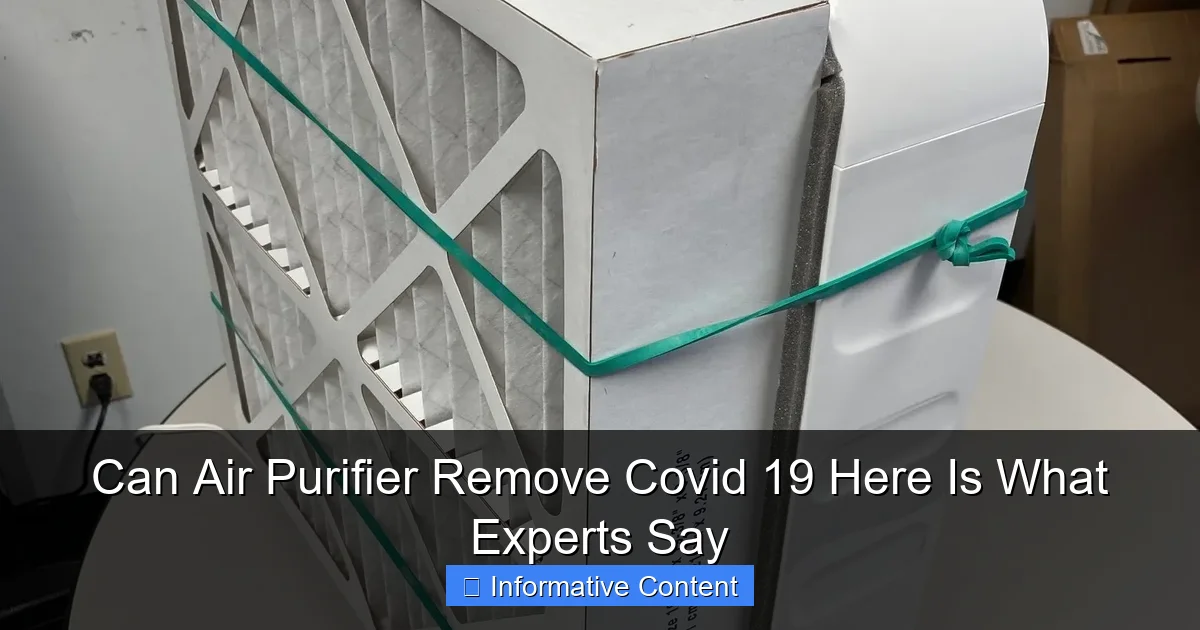
Featured image for can air purifier remove covid 19
Image source: media.wired.com
Air purifiers alone cannot completely remove or eliminate COVID-19 from indoor spaces, but they can significantly reduce airborne virus particles when used correctly. Experts agree that high-efficiency HEPA filters in air purifiers can capture virus-laden aerosols, helping lower transmission risk—especially when combined with ventilation, masks, and vaccination.
Key Takeaways
- Air purifiers with HEPA filters can capture airborne particles, including viruses like COVID-19.
- Not all purifiers are effective—only those with true HEPA or HEPA-type filters work reliably.
- Purifiers reduce risk but don’t eliminate it—combine with masks and ventilation for best protection.
- Room size matters—choose a purifier rated for your space to ensure proper air circulation.
- Regular maintenance is crucial—replace filters as recommended to maintain efficiency.
- Air purifiers help indoors—they’re most useful in enclosed, poorly ventilated areas.
📑 Table of Contents
- Can Air Purifier Remove Covid 19? Here Is What Experts Say
- How Does the Covid-19 Virus Spread Through the Air?
- How Do Air Purifiers Work to Capture Viruses?
- What Do Health Experts and Studies Say?
- Choosing the Right Air Purifier for Covid-19 Protection
- Limitations and Misconceptions About Air Purifiers
- Real-World Examples: Where Air Purifiers Make a Difference
- Conclusion: Should You Use an Air Purifier for Covid-19?
Can Air Purifier Remove Covid 19? Here Is What Experts Say
It started with a cough. Just a small one, really—nothing alarming at first. But then came the fever, the fatigue, and that strange loss of taste. Within days, my entire household was isolating, wondering how something so tiny could cause so much disruption. Like millions around the world, we found ourselves searching for ways to feel safer indoors. One question kept popping up: Can an air purifier remove Covid-19?
At the height of the pandemic, air purifiers flew off the shelves. Stores couldn’t keep them in stock, and online searches for “HEPA filters” and “virus-killing air cleaners” skyrocketed. We were desperate for solutions—anything to reduce the risk of airborne transmission in our homes, offices, and schools. But amid the marketing buzz and flashy claims, it was hard to separate fact from fiction. Were these devices really effective against the virus that changed our lives? Or were we just buying peace of mind in a plastic box?
The short answer? Air purifiers can help reduce the concentration of airborne particles that may carry the virus that causes Covid-19—but they’re not a magic shield. They work best as part of a broader strategy that includes ventilation, masks, and vaccination. In this post, we’ll dive into what experts actually say about air purifiers and Covid-19, how they work, which types are most effective, and how to use them wisely. Whether you’re a concerned parent, a remote worker, or just someone trying to breathe easier, this guide will help you make informed decisions—without the hype.
How Does the Covid-19 Virus Spread Through the Air?
To understand whether air purifiers can help, we first need to know how the virus spreads. Early in the pandemic, health officials focused heavily on surface transmission—washing hands, disinfecting groceries, wiping down doorknobs. But as research evolved, so did our understanding. Scientists now agree that the primary way Covid-19 spreads is through the air.
The Role of Aerosols and Droplets
When someone infected with the virus talks, coughs, sneezes, or even breathes, they release tiny respiratory particles into the air. These come in two main forms: droplets and aerosols. Droplets are larger and tend to fall to the ground within a few feet—this is why social distancing was initially recommended. But aerosols are much smaller, often less than 5 micrometers in diameter, and can linger in the air for minutes or even hours, especially in poorly ventilated spaces.
Think of it like cigarette smoke. If someone lights up in a closed room, the smoke doesn’t just drop to the floor—it spreads, hangs, and can be inhaled by others long after the cigarette is out. The same principle applies to virus-laden aerosols. In fact, a 2021 study published in The Lancet concluded that airborne transmission is the dominant route for Covid-19, particularly in indoor environments like classrooms, offices, and public transportation.
Why Indoor Air Quality Matters
Indoor spaces are especially risky because air doesn’t circulate as freely as it does outdoors. Without proper ventilation, aerosols can accumulate, increasing the chance that someone will inhale enough virus particles to become infected. This is why outbreaks have been linked to choir practices, restaurants, and gyms—places where people gather indoors for extended periods.
For example, a well-documented case in Washington State involved a single infected individual at a choir rehearsal. Despite no physical contact and minimal talking, 53 out of 61 attendees tested positive, and two died. Researchers later determined that the virus likely spread through aerosol transmission in the poorly ventilated room. This tragic event highlighted the importance of clean indoor air—not just for comfort, but for survival.
The Limitations of Masks and Distancing Alone
Masks and social distancing are essential tools, but they’re not foolproof. Cloth masks, while helpful, don’t filter out all aerosols. And even with distancing, you can still be exposed if you’re in a room where virus particles have built up over time. This is where air purifiers come into play—they don’t replace masks or distancing, but they can significantly reduce the concentration of airborne virus particles, lowering the overall risk.
As Dr. Linsey Marr, a leading expert in airborne virus transmission at Virginia Tech, puts it: “Masks are like seatbelts—they protect you directly. Air purifiers are like airbags—they reduce the hazard in the environment.” Both are important for safety.
How Do Air Purifiers Work to Capture Viruses?
Now that we know how the virus spreads, let’s look at how air purifiers fight back. Not all air purifiers are created equal, and understanding the technology behind them is key to choosing the right one.
HEPA Filters: The Gold Standard
The most effective air purifiers use HEPA (High-Efficiency Particulate Air) filters. These filters are designed to capture at least 99.97% of particles that are 0.3 micrometers in size—the so-called “most penetrating particle size.” While the SARS-CoV-2 virus itself is much smaller (around 0.1 micrometers), it doesn’t travel alone. It’s usually attached to larger respiratory droplets or aerosols, which HEPA filters can trap efficiently.
Think of it like catching a butterfly with a net. The butterfly (the virus) is tiny, but it’s flying alongside leaves and dust (the aerosols), which are much easier to catch. When the net (the HEPA filter) captures the larger particles, it also traps the virus riding along.
Real-world testing supports this. A 2020 study by the U.S. Department of Homeland Security found that HEPA filters removed 99.99% of virus-sized particles from the air. Similarly, hospitals have used HEPA filtration for decades to control the spread of airborne diseases like tuberculosis and influenza.
Other Technologies: UV-C, Ionizers, and Ozone
Some air purifiers go beyond filtration. UV-C light, for example, uses ultraviolet radiation to damage the genetic material of viruses and bacteria, rendering them harmless. While promising, UV-C is most effective when air passes slowly through a well-designed chamber—something many consumer units don’t achieve. In poorly designed systems, the exposure time may be too short to inactivate the virus.
Ionizers, or electrostatic precipitators, release charged particles that cause airborne contaminants to clump together and fall out of the air or stick to surfaces. While they can reduce particle counts, they may also produce small amounts of ozone, a lung irritant. The Environmental Protection Agency (EPA) warns that ozone-generating air purifiers can worsen respiratory conditions and are not recommended for home use.
Ozone generators, often marketed as “air sanitizers,” are particularly controversial. They intentionally produce ozone to “clean” the air, but ozone is a harmful pollutant at ground level. The EPA and the American Lung Association both advise against using ozone generators, especially in occupied spaces.
Why Filtration Becomes the Focus
Given the risks of ozone and the limitations of UV-C and ionizers, most experts recommend sticking with HEPA-based air purifiers. They’re safe, proven, and don’t produce harmful byproducts. As Dr. Marr explains, “The best air purifier is one that removes particles from the air without creating new hazards.”
That said, some high-end models combine HEPA with activated carbon filters (to remove odors and gases) and safe UV-C chambers. These multi-stage systems can offer added protection, but the HEPA filter remains the workhorse for virus removal.
What Do Health Experts and Studies Say?
With so much conflicting information online, it’s natural to wonder: what do the experts actually say? Let’s look at what major health organizations and scientific studies have concluded about air purifiers and Covid-19.
CDC and WHO Recommendations
The Centers for Disease Control and Prevention (CDC) acknowledges that improving indoor air quality can reduce the spread of Covid-19. In their guidance for schools and businesses, they recommend using air purifiers with HEPA filters, especially in areas with poor ventilation. They emphasize that air purifiers should be used alongside other measures like masking, distancing, and vaccination.
The World Health Organization (WHO) takes a more cautious stance. While they recognize that airborne transmission is possible, they state that air purifiers are not a substitute for ventilation. In their 2021 guidance, they recommend increasing outdoor air circulation as the primary strategy, with air purifiers as a supplementary tool in high-risk settings.
Scientific Studies and Real-World Evidence
Several studies have tested the effectiveness of air purifiers in real-world settings. One notable experiment took place in a hospital ward in Singapore. Researchers placed HEPA air purifiers in rooms where Covid-19 patients were isolated. They found that the devices reduced airborne virus particles by up to 90% within 30 minutes.
Another study, published in JAMA Internal Medicine, looked at air quality in a university dormitory during an outbreak. Rooms equipped with portable air purifiers had significantly lower levels of airborne virus RNA compared to control rooms. While this doesn’t prove that infections were prevented, it shows that air purifiers can reduce the viral load in the air.
Perhaps most compelling is a 2022 review by the Cochrane Collaboration, a respected international network of health researchers. They analyzed 77 studies on ventilation and air cleaning interventions. Their conclusion? “Mechanical ventilation and air filtration probably reduce the risk of respiratory infection transmission in indoor settings.”
Expert Opinions: A Balanced View
Experts agree that air purifiers are not a standalone solution. “They’re part of a layered defense,” says Dr. Richard Corsi, dean of the College of Engineering at the University of California, Davis, and a leading indoor air quality researcher. “You wouldn’t rely on just one tool to stay safe. You use masks, you ventilate, you vaccinate—and you clean the air.”
Dr. Marr adds: “Air purifiers won’t stop every infection, but they can tip the scales in your favor. In a high-risk situation—like a crowded indoor event or caring for a sick family member—every bit of risk reduction helps.”
The key takeaway? Air purifiers are not a cure, but they are a valuable tool. When used correctly, they can significantly reduce the concentration of virus particles in the air, lowering the chance of transmission—especially in enclosed spaces.
Choosing the Right Air Purifier for Covid-19 Protection
Not all air purifiers are created equal. With so many models on the market, how do you pick one that actually works? Here’s what to look for.
Look for True HEPA Filters
First and foremost, choose a purifier with a true HEPA filter—not “HEPA-type” or “HEPA-like.” These marketing terms don’t guarantee the same level of performance. True HEPA filters meet strict standards and are your best bet for capturing virus-carrying particles.
Check the product specifications. A true HEPA filter should be labeled as “H13” or “H14” under the European standard, or simply “True HEPA” under U.S. standards. Avoid models that only claim to “capture 99% of particles” without specifying the size or testing method.
Consider the CADR and Room Size
CADR stands for Clean Air Delivery Rate—it measures how quickly a purifier can clean the air in a given space. The higher the CADR, the faster it works. But more importantly, make sure the purifier is rated for the size of your room.
For example, if you’re using it in a 300-square-foot bedroom, choose a model with a recommended coverage area of at least 300 square feet. Using an underpowered unit is like trying to empty a swimming pool with a teaspoon—it might help a little, but it won’t make a real difference.
Noise Level and Energy Use
Air purifiers often run for hours or even continuously. A noisy unit can disrupt sleep or concentration, while a power-hungry one can spike your electricity bill. Look for models with a “sleep mode” or low-decibel ratings (under 50 dB is ideal for bedrooms).
Energy Star-certified models are more efficient and can save you money over time. Some even have smart features like air quality sensors and automatic speed adjustment, which can optimize performance and reduce wear on the filter.
Maintenance and Filter Replacement
HEPA filters don’t last forever. Most need to be replaced every 6 to 12 months, depending on usage and air quality. Check the manufacturer’s recommendations and factor in the cost of replacement filters—some models have expensive proprietary filters that can add up over time.
Also, clean the pre-filter regularly (usually monthly) to extend the life of the HEPA filter. A clogged pre-filter forces the unit to work harder, reducing efficiency and increasing noise.
Practical Tips for Maximum Effectiveness
- Place it wisely: Put the purifier in the room where you spend the most time—like your bedroom or home office. Keep it away from walls and furniture to allow proper airflow.
- Run it continuously: For best results, run the purifier 24/7 on a low or medium setting. This keeps the air constantly filtered.
- Close windows and doors: While ventilation is important, keep windows closed when the purifier is running to prevent unfiltered air from entering.
- Use multiple units: In larger homes, consider using more than one purifier—one per floor or per frequently used room.
Limitations and Misconceptions About Air Purifiers
While air purifiers can help, it’s important to understand their limits. They’re not a silver bullet, and relying on them alone can create a false sense of security.
They Don’t Kill the Virus—They Remove It
Air purifiers don’t “kill” the virus like disinfectants do. Instead, they trap it in the filter. Once captured, the virus may remain viable for a short time, but it’s no longer airborne and can’t infect anyone. Still, you should handle used filters carefully—wear gloves and seal them in a plastic bag before disposal.
They Can’t Replace Ventilation
Opening windows and using exhaust fans introduces fresh outdoor air, which dilutes indoor contaminants. Air purifiers clean the air but don’t add oxygen or remove carbon dioxide. In tightly sealed homes, this can lead to stuffiness and reduced air quality over time. The best approach? Combine both—ventilate when possible, and use a purifier when you can’t.
They Don’t Protect Against Surface Transmission
Remember, Covid-19 can also spread through touching contaminated surfaces. Air purifiers do nothing to clean your phone, doorknob, or kitchen counter. Continue washing your hands and disinfecting high-touch areas regularly.
Beware of Overhyped Claims
Some companies claim their purifiers “eliminate 99.99% of viruses” or “destroy Covid-19 in seconds.” These claims are often based on lab tests under ideal conditions—not real-world use. Always look for third-party testing and certifications from organizations like AHAM (Association of Home Appliance Manufacturers) or CARB (California Air Resources Board).
Real-World Examples: Where Air Purifiers Make a Difference
Air purifiers aren’t just for homes. They’re being used in schools, offices, healthcare facilities, and public spaces to reduce transmission risk.
| Setting | Use Case | Effectiveness |
|---|---|---|
| Schools | Portable HEPA units in classrooms | Reduced airborne virus particles by 50–80% in studies |
| Offices | Units in meeting rooms and open-plan areas | Improved air quality and employee confidence |
| Hospitals | Isolation rooms and waiting areas | Up to 90% reduction in airborne virus in controlled tests |
| Public Transport | HVAC systems with HEPA filters | Lower transmission risk on buses and trains |
In New York City, public schools installed over 100,000 air purifiers during the pandemic. Teachers reported fewer absences due to illness, and air quality monitors showed significant improvements. Similarly, airlines like Delta and United upgraded their cabin air systems with HEPA filters, which cycle the air every 2–3 minutes—far more frequently than most homes.
Conclusion: Should You Use an Air Purifier for Covid-19?
So, can an air purifier remove Covid-19? The answer is yes—but with important caveats. Air purifiers with true HEPA filters can effectively reduce the concentration of airborne virus particles, especially in enclosed spaces with poor ventilation. They don’t eliminate all risk, but they add a valuable layer of protection when used alongside masks, distancing, vaccination, and good hygiene.
Think of it this way: if you’re driving in a storm, you don’t just rely on your windshield wipers. You also slow down, use your headlights, and avoid flooded roads. Air purifiers are like those extra precautions—they don’t guarantee safety, but they help you navigate the storm more safely.
As we move forward in a world where respiratory viruses remain a threat, investing in clean indoor air is a smart, long-term strategy. Whether you’re protecting your family, your employees, or your students, a quality air purifier is a small step that can make a big difference. Just remember: it’s not a replacement for other safety measures—it’s a partner in them.
So go ahead, breathe a little easier. But keep the windows open when you can, wash your hands, and stay informed. Because when it comes to health, the best defense is a well-rounded one.
Frequently Asked Questions
Can air purifiers remove COVID-19 from the air?
Yes, certain air purifiers with HEPA filters or UV-C technology can effectively capture or inactivate airborne particles containing the COVID-19 virus. Experts emphasize that air purifiers should be used alongside other precautions like masking and ventilation.
What type of air purifier is best for removing COVID-19?
Air purifiers with HEPA (High-Efficiency Particulate Air) filters are most recommended, as they capture 99.97% of particles as small as 0.3 microns—including the SARS-CoV-2 virus. Models with UV-C light or bipolar ionization may offer added protection by neutralizing pathogens.
Do all air purifiers kill the COVID-19 virus?
No, not all air purifiers can remove or kill COVID-19. Only units with HEPA filtration, UV-C sterilization, or other proven technologies are effective. Standard filters or ionizers without these features may not provide sufficient protection.
How long does it take for an air purifier to remove COVID-19 particles?
The time depends on the purifier’s CADR (Clean Air Delivery Rate) and room size. A high-CADR air purifier can reduce viral particles in a typical room within 30 minutes to a few hours when run continuously.
Can an air purifier prevent me from getting COVID-19?
An air purifier can significantly reduce airborne transmission risks but isn’t a standalone solution. Pair it with masks, social distancing, and proper ventilation to maximize protection against COVID-19.
Where should I place my air purifier to fight COVID-19 effectively?
Place the air purifier in high-traffic or poorly ventilated areas, like living rooms or home offices. Ensure it’s centrally located with unobstructed airflow to maximize its ability to capture airborne virus particles.