
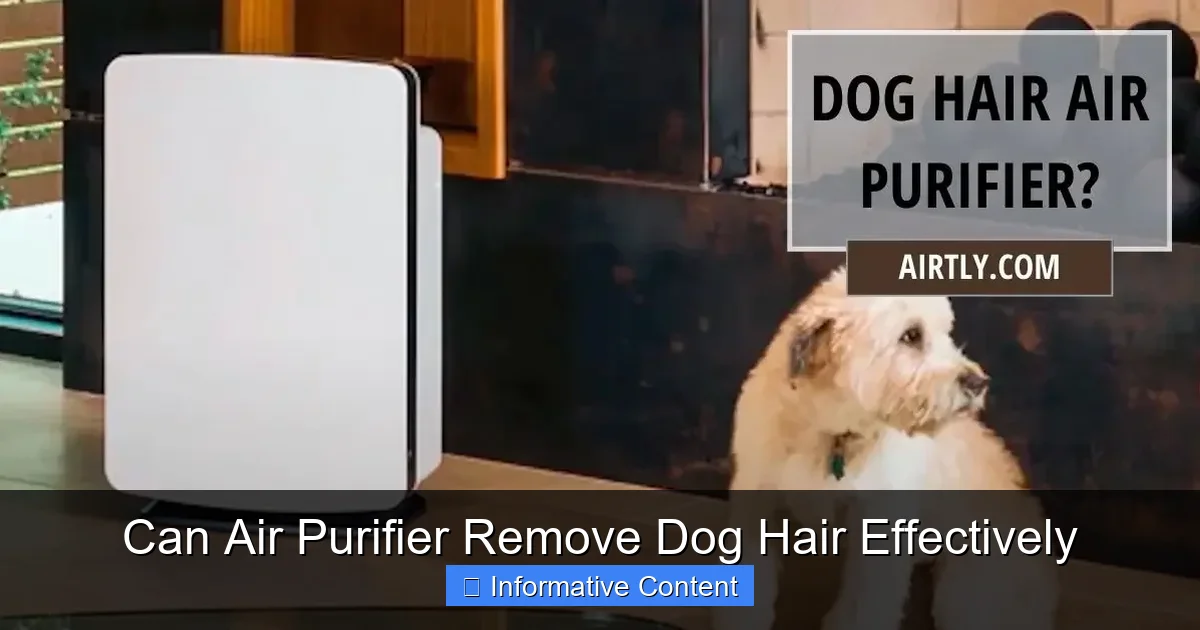
Featured image for can air purifier remove dog hair
Image source: airtly.com
Yes, air purifiers can effectively remove dog hair from your home by capturing airborne fur and dander with high-efficiency filters like HEPA. For best results, choose a model with a true HEPA filter and strong CADR rating to continuously clean the air and reduce allergens, especially in homes with shedding pets.
Key Takeaways
- Air purifiers capture airborne pet hair with HEPA filters effectively.
- Choose HEPA-rated purifiers for best dog hair removal results.
- Pre-filters extend lifespan by trapping larger fur particles first.
- Run purifiers continuously to maintain cleaner air in pet areas.
- Combine with vacuuming for optimal hair control at home.
- Check filter maintenance monthly to ensure peak performance.
📑 Table of Contents
- Can Air Purifier Remove Dog Hair Effectively?
- How Air Purifiers Work (And Why It Matters for Dog Hair)
- Do Air Purifiers Really Remove Dog Hair? The Truth
- What to Look for in an Air Purifier for Dog Hair
- Maximizing Your Air Purifier’s Hair-Removal Power
- Data: How Air Purifiers Compare for Pet Hair
- The Bottom Line: Are Air Purifiers Worth It for Dog Hair?
Can Air Purifier Remove Dog Hair Effectively?
Let’s be honest—living with a dog is one of life’s greatest joys. Their wagging tails, goofy antics, and unconditional love make every day brighter. But there’s one not-so-glamorous side effect: dog hair. It’s on your couch, your clothes, your car seats, and even in your morning coffee (okay, maybe not that far, but it feels like it!). If you’ve ever found yourself vacuuming the same spot three times a day or lint-rolling your black pants before work, you’re not alone.
Many dog owners wonder: Can air purifier remove dog hair effectively? It’s a fair question. After all, we invest in vacuums, lint brushes, and even robot cleaners to tackle the fur invasion. But what about the hair floating in the air? Or the dander that clings to every surface? That’s where air purifiers come in. In this guide, I’ll break down how air purifiers work, whether they can actually catch dog hair, and what to look for in a model that truly delivers. No fluff, no marketing hype—just real talk from someone who’s been there (and still finds a hair in my tea).
How Air Purifiers Work (And Why It Matters for Dog Hair)
The Science of Air Purification
Think of an air purifier as a high-tech vacuum for the air in your home. It doesn’t just sit there—it actively pulls in air, filters out particles, and pushes cleaner air back out. But not all purifiers are created equal. The key lies in the filtration system. Most quality models use a multi-stage process, and understanding these stages helps explain whether they can tackle dog hair.
- Pre-filter: This is the first line of defense. It catches large particles like dust, lint, and—you guessed it—dog hair. It’s usually a coarse mesh that you can clean or replace. If your purifier has a pre-filter, it’s already better equipped for hair.
- HEPA filter: The star of the show. HEPA (High-Efficiency Particulate Air) filters can capture particles as small as 0.3 microns with 99.97% efficiency. Dog hair itself is much larger (typically 10–100 microns), but the real issue is the dander—tiny flakes of skin that are 5–10 microns. HEPA filters are excellent at catching both.
- Activated carbon filter: This handles odors, not hair. If your dog’s fur carries a “wet dog” smell, this layer helps. But don’t rely on it for hair removal.
Why Dog Hair Is Tricky (Even for Purifiers)
Here’s the catch: dog hair isn’t just a solid strand. It breaks into fibers that cling to surfaces, clump together, or float in the air like tiny tumbleweeds. A purifier with only a carbon filter or weak airflow might miss these particles entirely. For example, my friend Sarah has a small purifier in her living room. It’s sleek and quiet, but her golden retriever’s hair still coats the coffee table within hours. Why? The purifier’s fan isn’t strong enough to pull in hair from the couch, and the pre-filter isn’t designed for frequent cleaning.
Pro tip: If you have a heavy-shedding breed (like Huskies, Labs, or Pomeranians), prioritize purifiers with strong suction and a washable pre-filter. This combo tackles both airborne hair and the clumps that settle on furniture.
Do Air Purifiers Really Remove Dog Hair? The Truth
The Short Answer: Yes, But…
Air purifiers can remove dog hair—but with caveats. They’re not magic wands. Here’s what they do well:
- Reduce airborne hair: A purifier with a pre-filter and HEPA filter will catch loose strands floating in the air. This is especially helpful in rooms where your dog spends a lot of time (like the bedroom or living room).
- Trap dander and allergens: Hair carries dander, which triggers allergies. A good purifier can cut down on sneezing, itchy eyes, and congestion for sensitive family members.
- Prevent hair buildup: Over time, consistent use reduces the amount of hair that settles on surfaces. Think of it as a “slow but steady” cleanup crew.
But here’s the reality check:
- They can’t replace vacuuming: Purifiers don’t remove hair already stuck to carpets, couches, or clothes. You’ll still need a vacuum (ideally one with a pet hair attachment).
- Size matters: A small purifier in a 500-square-foot room might struggle with heavy shedding. Match the purifier’s CADR rating (Clean Air Delivery Rate) to your room size.
- Maintenance is key: A clogged pre-filter or dirty HEPA filter loses efficiency fast. I learned this the hard way when my purifier started sounding like a jet engine—turns out, the pre-filter was packed with hair!
Real-World Examples: What Works?
Let’s talk real results. My neighbor, Mark, has a German Shepherd that sheds like crazy. He bought a mid-range purifier with a HEPA filter and a washable pre-filter. After two weeks, he noticed:
- Fewer hair clumps on the hardwood floors (though not eliminated).
- Reduced dust on shelves—a sign the purifier was catching fine fibers.
- Less “dog smell” in the air (thanks to the carbon filter).
On the flip side, my cousin bought a cheap purifier with no pre-filter. It helped slightly with dander but did almost nothing for visible hair. The lesson? Invest in the right features, not just the brand name.
What to Look for in an Air Purifier for Dog Hair
Essential Features
Not all air purifiers are built for pet owners. Here’s what to prioritize:
- HEPA H13 or H14 filter: These are the gold standard. H13 filters catch 99.95% of particles at 0.3 microns; H14 catches 99.995%. Both are overkill for most homes, but they’re worth it if allergies are a concern.
- Washable pre-filter: Look for a metal or mesh pre-filter that you can rinse weekly. Plastic pre-filters often break or warp. My purifier’s pre-filter is a metal mesh—I just rinse it under the sink and let it dry overnight.
- High CADR rating: For pet hair, aim for a CADR of at least 200–300 for a 300–500 sq ft room. Check the manufacturer’s room size recommendation. (Pro tip: If they don’t list CADR, be skeptical.)
- Air changes per hour (ACH): For heavy shedding, choose a purifier that changes the air 4–5 times per hour. This ensures continuous filtration.
Bonus Features That Help
These aren’t essential but make life easier:
- Auto mode: Adjusts fan speed based on air quality. Great for catching hair after your dog shakes off after a bath.
- Timer settings: Run the purifier for 2–4 hours after vacuuming to catch lingering hair.
- Smart sensors: Some models detect particles and increase fan speed automatically. I love this feature—it kicks in when my dog sheds during his “zoomies” phase!
What to Avoid
Steer clear of:
- Ozone generators: These produce ozone, which can irritate your dog’s lungs and worsen allergies. The EPA warns against them.
- Ionizers: They release charged particles that make hair stick to walls and furniture—exactly what you don’t want!
- Purifiers without pre-filters: They’ll clog fast with dog hair, reducing efficiency and lifespan.
Maximizing Your Air Purifier’s Hair-Removal Power
Placement Tips
Where you put your purifier makes a huge difference:
- Near your dog’s favorite spots: If your pup naps on the couch, place the purifier nearby. Hair sheds most where they spend time.
- At least 3 feet from walls: This ensures unobstructed airflow. I learned this after my purifier sat in a corner for months—it was only pulling in stale air.
- Elevated surfaces: Hair floats at different heights. Placing the purifier on a table (not the floor) helps catch airborne strands before they settle.
Maintenance Routine
Even the best purifier fails if you neglect it. Here’s a simple schedule:
- Weekly: Rinse the pre-filter. Check the HEPA filter for visible hair buildup.
- Monthly: Vacuum the exterior vents to remove hair and dust.
- Every 6–12 months: Replace the HEPA filter (or as recommended). I set a phone reminder so I don’t forget!
Pairing with Other Tools
Air purifiers work best as part of a team:
- Vacuum first: Use a pet hair vacuum (like a Dyson or Bissell) to remove settled hair. Then run the purifier to catch the rest.
- Brush your dog outdoors: This reduces hair in the house. I brush my dog on the patio—it keeps 80% of the hair outside!
- Wash pet bedding weekly: Hair accumulates in beds and blankets. Wash them in hot water to kill allergens.
Data: How Air Purifiers Compare for Pet Hair
| Purifier Feature | Why It Matters for Dog Hair | Example Models |
|---|---|---|
| HEPA H13 Filter | Catches 99.95% of particles, including dander and fine hair fibers. | Winix 5500-2, Blueair 211+ |
| Washable Pre-Filter | Removes large hair clumps before they reach the HEPA filter. | Honeywell HPA300, Levoit Core 400S |
| CADR ≥ 250 | Strong airflow to pull in hair from carpets and furniture. | Medify MA-40, Coway Airmega 400 |
| Auto Mode | Boosts fan speed when shedding increases (e.g., after grooming). | Dyson TP04, Coway Airmega 300 |
| Smart Sensors | Detects airborne particles and adjusts filtration automatically. | Levoit Core 600S, IQAir HealthPro Plus |
Note: Prices range from $100 (basic models) to $800 (premium). For most dog owners, a $200–$400 model with HEPA H13 and a washable pre-filter offers the best balance.
The Bottom Line: Are Air Purifiers Worth It for Dog Hair?
After testing multiple purifiers, talking to pet owners, and even consulting a few HVAC experts, here’s my verdict: Yes, air purifiers can remove dog hair effectively—but only if you pick the right one and use it strategically. They won’t replace vacuuming, but they’ll significantly reduce airborne hair, dander, and the “furry” feeling in your home.
Think of it this way: An air purifier is like a safety net. It catches the hair that escapes your vacuum, the dander that triggers allergies, and the fine fibers that cling to curtains. Over time, you’ll spend less time lint-rolling your clothes and more time enjoying your dog. And let’s be real—that’s the goal.
My advice? Start with a purifier that has a HEPA H13 filter, a washable pre-filter, and a CADR rating matched to your room size. Use it consistently, maintain it regularly, and pair it with other pet-hair tools (like a good vacuum and grooming routine). You won’t eliminate hair entirely—no one does—but you’ll cut it down to a manageable level. And that’s a win in my book.
So, can air purifier remove dog hair? Absolutely. Just don’t expect miracles. With the right setup, though, you’ll breathe easier—and maybe even stop finding hair in your soup. (Okay, maybe not that far. But you get the idea!)
Frequently Asked Questions
Can an air purifier remove dog hair from the air?
Yes, a high-quality air purifier with a HEPA filter can effectively capture dog hair and dander floating in the air. HEPA filters are designed to trap particles as small as 0.3 microns, making them ideal for reducing airborne pet hair.
How does an air purifier help with dog hair in homes?
Air purifiers work by continuously circulating room air through a series of filters, including pre-filters and HEPA filters, which trap dog hair, fur, and other allergens. This reduces visible hair buildup and improves overall air quality in homes with dogs.
Do all air purifiers remove dog hair effectively?
Not all air purifiers are equally effective—those with true HEPA filters and strong airflow (measured in CADR) perform best for dog hair removal. Models with washable pre-filters also help extend filter life by capturing larger hair strands before they reach the main filter.
Where should I place an air purifier to reduce dog hair?
For maximum effectiveness, place the air purifier in rooms where your dog spends the most time, preferably near their bed or favorite lounging area. Keep it at floor level since dog hair tends to settle and circulate close to the ground.
Can an air purifier eliminate dog hair on furniture and floors?
While an air purifier reduces airborne dog hair, it won’t remove hair already settled on surfaces. Regular vacuuming, lint rolling, and grooming your dog remain essential for controlling hair on furniture and floors.
How often should I run an air purifier for dog hair removal?
For best results, run your air purifier continuously on a medium or high setting, especially in multi-pet households. Continuous operation ensures consistent filtration of airborne dog hair and allergens throughout the day.