
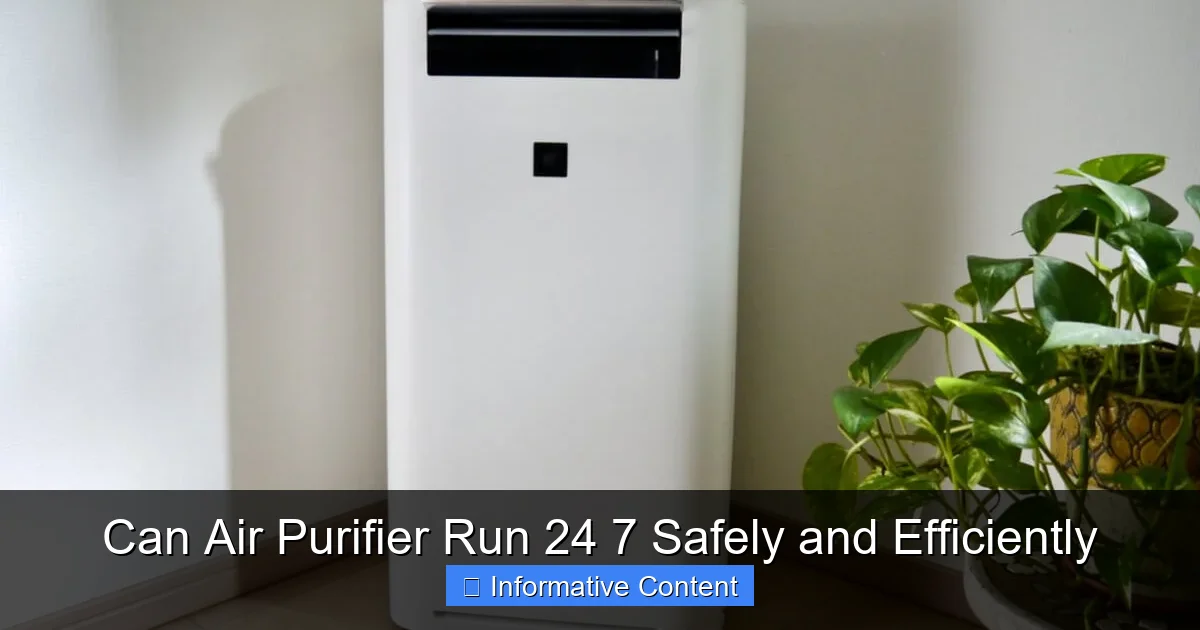
Featured image for can air purifier run 24 7
Image source: damp.tw
Yes, air purifiers can run 24/7 safely and efficiently if they are certified for continuous operation and feature energy-saving modes. Modern models are designed with durable motors and smart sensors to maintain air quality without overheating or excessive power use, making round-the-clock purification a smart, health-conscious choice.
Key Takeaways
- Yes, air purifiers can run 24/7: Most models are designed for continuous operation without overheating.
- Check energy efficiency: Choose ENERGY STAR-rated purifiers to reduce long-term electricity costs.
- Filter maintenance is critical: Replace or clean filters regularly to maintain performance and air quality.
- Monitor noise levels: Opt for sleep-mode features to minimize disturbance during nighttime use.
- Smart sensors optimize runtime: Use auto-mode to adjust fan speed based on real-time air quality.
- Prioritize safety certifications: Ensure your purifier has UL or ETL certification for safe, long-term use.
📑 Table of Contents
- Can Air Purifier Run 24/7 Safely and Efficiently
- How Air Purifiers Work and Why Continuous Use Makes Sense
- Safety Considerations: Can Running an Air Purifier 24/7 Be Dangerous?
- Energy Efficiency: Does Running an Air Purifier 24/7 Cost a Fortune?
- Filter Maintenance and Lifespan: The Hidden Cost of 24/7 Use
- When Should You Run Your Air Purifier 24/7? Practical Scenarios
- Tips for Safe and Efficient 24/7 Air Purifier Use
- Conclusion: Yes, You Can—and Should—Run Your Air Purifier 24/7
Can Air Purifier Run 24/7 Safely and Efficiently
You’ve just come home after a long day, kick off your shoes, and take a deep breath—only to be greeted by that faint, musty smell lingering in the air. Maybe it’s pet dander, cooking odors, or the invisible pollen sneaking in through the window. You’ve heard air purifiers can help, so you plug one in, turn it on, and wonder: Can this thing really run all day, every day, without burning out or wasting energy?
It’s a question I asked myself when I first brought home my air purifier. I wanted cleaner air, but I didn’t want to worry about overheating, skyrocketing electricity bills, or replacing filters every week. The good news? Most modern air purifiers are designed to run 24/7—safely and efficiently. But like any appliance, there are important factors to consider: the type of purifier, your home environment, energy consumption, and maintenance habits. In this post, I’ll walk you through everything you need to know so you can breathe easy—literally and figuratively—knowing your air purifier is working hard for you around the clock.
How Air Purifiers Work and Why Continuous Use Makes Sense
Before we dive into whether air purifiers can run nonstop, let’s quickly understand how they actually clean your air. Most home air purifiers use a combination of filters and fans to pull in polluted air, trap contaminants, and release cleaner air back into the room. The most common type is the HEPA (High-Efficiency Particulate Air) filter, which captures 99.97% of particles as small as 0.3 microns—think dust, pollen, mold spores, and even some bacteria.

Visual guide about can air purifier run 24 7
Image source: cdn.shopify.com
The Role of Filters and Fans
The fan draws air into the unit, pushing it through one or more filters. Some models also include activated carbon filters to absorb odors and volatile organic compounds (VOCs), while others use UV-C light or ionizers for additional purification. The cleaned air is then circulated back into the room. This cycle repeats continuously, gradually improving indoor air quality.
Now, why would you want this process running all the time? Because indoor air pollution isn’t a one-time event. It’s ongoing. Cooking, cleaning, pets shedding, people coming and going—these activities constantly reintroduce pollutants. Running your purifier 24/7 ensures that these contaminants are captured as soon as they appear, rather than letting them build up over hours or days.
Real-World Benefits of Continuous Operation
Let’s say you have allergies or asthma. Pollen levels might spike in the morning, but dust mites are active at night. If your purifier only runs for a few hours a day, you’re leaving gaps in protection. Continuous operation means consistent air quality, which can lead to better sleep, fewer allergy symptoms, and improved overall comfort.
Even if you don’t have respiratory issues, running your purifier nonstop can help reduce odors from cooking, pets, or smoking. I remember when I first started using mine in the kitchen—after frying fish, the smell used to linger for hours. Now, with the purifier running overnight, the air feels fresher by morning.
Safety Considerations: Can Running an Air Purifier 24/7 Be Dangerous?
One of the biggest concerns people have is safety. After all, leaving any electrical device on all the time feels risky. But modern air purifiers are built with safety in mind. Let’s break down the key safety aspects.
Overheating and Motor Durability
Air purifiers are designed with motors that can handle continuous use. Unlike older models, today’s units often feature brushless DC motors, which are more efficient, quieter, and generate less heat. Many also include thermal cutoffs—safety mechanisms that automatically shut off the unit if it overheats.
That said, it’s still important to follow the manufacturer’s guidelines. For example, some budget models may not be rated for 24/7 operation. Always check the user manual. If it says “suitable for continuous use,” you’re good to go. If not, consider running it in shorter intervals or upgrading to a more robust model.
Electrical Safety and Fire Risk
As long as your air purifier is plugged into a properly grounded outlet and not overloaded on a power strip, the risk of electrical issues is very low. Most units draw minimal power—similar to a small fan or LED light. However, avoid using damaged cords or placing the purifier near water sources like sinks or humidifiers.
One tip I’ve learned: unplug the unit during thunderstorms or power surges. While rare, electrical surges can damage electronics. A simple surge protector can add an extra layer of safety.
Ozone Emissions: A Word of Caution
Some air purifiers, particularly ionizers or “ozone generators,” produce small amounts of ozone as part of their cleaning process. While ozone can help neutralize odors, it’s also a lung irritant and not recommended for continuous use in occupied spaces.
If your purifier has an ionizer function, use it sparingly—or better yet, choose a model that doesn’t emit ozone at all. Look for certifications like CARB (California Air Resources Board) compliance, which ensures the device meets strict ozone emission standards.
Energy Efficiency: Does Running an Air Purifier 24/7 Cost a Fortune?
Let’s talk money. You’re probably wondering: “If I run this thing all the time, will my electricity bill double?” The short answer: not likely. Most air purifiers are surprisingly energy-efficient.
Understanding Power Consumption
Air purifiers typically use between 10 to 100 watts, depending on the model and fan speed. For comparison, a standard incandescent light bulb uses about 60 watts. On the lowest setting, many purifiers use less than 20 watts—about the same as a laptop charger.
To put this in perspective, let’s do a quick calculation. If your purifier uses 30 watts and runs 24 hours a day, that’s 720 watt-hours (or 0.72 kWh) per day. At an average electricity rate of $0.13 per kWh, that’s about $0.09 per day, or roughly $33 per year. Not bad for cleaner air, right?
Energy-Saving Features to Look For
Many newer models come with smart features that help reduce energy use. For example:
- Auto mode: The purifier adjusts fan speed based on air quality sensors. When the air is clean, it slows down, saving energy.
- Sleep mode: Runs quietly at a lower speed during the night, using minimal power.
- Timer functions: Let you set it to run only during peak pollution times, like when you’re cooking or cleaning.
I use the auto mode on my purifier, and it’s been a game-changer. It ramps up when I’m frying food or vacuuming, then quiets down when the air clears. This not only saves energy but also extends the life of the filters.
Comparing Models: Energy Use Examples
Here’s a quick look at how different models stack up in terms of energy use:
| Model Type | Power Use (Watts) | Daily Cost (24h @ $0.13/kWh) | Annual Cost |
|---|---|---|---|
| Basic HEPA (Low Speed) | 15 | $0.05 | $18 |
| Mid-Range with Auto Mode | 25 (average) | $0.08 | $29 |
| High-Performance (Max Speed) | 80 | $0.25 | $91 |
| Energy Star Certified | 20 (average) | $0.06 | $22 |
As you can see, even the highest-performing models are relatively affordable to run. And if you stick to lower speeds or use auto mode, the cost drops significantly.
Filter Maintenance and Lifespan: The Hidden Cost of 24/7 Use
While the electricity cost is low, the real ongoing expense of running an air purifier 24/7 comes from filter replacements. Filters get clogged over time, and if you’re running the unit constantly, they’ll wear out faster.
How Often Should You Replace Filters?
Most manufacturers recommend replacing HEPA filters every 6 to 12 months, and carbon filters every 3 to 6 months. But if you run your purifier nonstop—especially in a dusty or polluted environment—you may need to replace them more frequently.
For example, I live in a city with high pollen counts and have two cats. I run my purifier 24/7, and I end up replacing the HEPA filter every 8 months and the carbon filter every 4. It’s a small price to pay for peace of mind, but it’s something to budget for.
Signs Your Filter Needs Replacing
Don’t wait for the manufacturer’s timeline—watch for these signs:
- Reduced airflow: If the purifier sounds weaker or you notice less air movement, the filter may be clogged.
- Increased odors: If smells aren’t being absorbed as well, the carbon filter might be saturated.
- Visible dirt: Some filters are transparent or have indicators that change color when it’s time to replace.
- Allergy symptoms returning: If you start sneezing or coughing more, the filter may no longer be effective.
I made the mistake of ignoring a clogged filter once. The purifier was still running, but it wasn’t cleaning the air. My allergies flared up, and I couldn’t figure out why—until I checked the filter and found it packed with dust and pet hair.
Tips to Extend Filter Life
You can’t avoid replacing filters forever, but you can make them last longer:
- Vacuum the pre-filter: Many units have a washable pre-filter that catches large particles. Clean it monthly to reduce strain on the main filter.
- Keep windows closed: This reduces the amount of outdoor pollutants entering your home.
- Use exhaust fans: When cooking or showering, use kitchen and bathroom fans to remove moisture and odors before they circulate.
- Place the purifier wisely: Avoid corners or behind furniture. Good airflow helps the unit work more efficiently.
These small habits can add months to your filter’s life—and save you money in the long run.
When Should You Run Your Air Purifier 24/7? Practical Scenarios
Now that we’ve covered safety, energy use, and maintenance, let’s talk about when it actually makes sense to run your air purifier around the clock.
Homes with Allergies or Asthma
If you or a family member has respiratory conditions, continuous operation is highly recommended. Pollutants like dust mites, pet dander, and mold spores are present 24/7, and consistent filtration can significantly reduce symptoms.
My sister has severe asthma, and since she started running her purifier nonstop, she’s needed her inhaler less often. Her doctor even commented on the improvement in her lung function tests.
Pet Owners and Smokers
Pets shed fur and dander constantly, and cigarette smoke lingers in fabrics and air. Running a purifier 24/7 helps capture these particles before they settle or get inhaled.
I’ve noticed that my dog’s fur doesn’t seem to accumulate as much on the furniture since I started running the purifier overnight. And if guests smoke outside, the indoor air still feels fresher the next day.
Urban or High-Pollution Areas
If you live near a busy road, industrial area, or in a city with poor air quality, outdoor pollutants can seep indoors. Running your purifier continuously helps maintain a cleaner indoor environment, especially during high-pollution days.
During wildfire season, I keep my purifier on high 24/7. The air quality index (AQI) might be in the red outside, but inside, it feels breathable and safe.
New Homes or Renovations
New construction or renovations can release dust, paint fumes, and VOCs from adhesives and finishes. Running an air purifier continuously during and after the project helps clear these contaminants faster.
When we renovated our kitchen, we ran two purifiers nonstop for two weeks. The difference in air quality was noticeable—no chemical smell, and no dust on the furniture.
Tips for Safe and Efficient 24/7 Air Purifier Use
Ready to run your air purifier all day, every day? Here are some practical tips to make it safe, efficient, and effective.
Choose the Right Size for Your Room
An undersized purifier won’t clean the air effectively, even if it runs 24/7. Check the manufacturer’s recommended room size and aim for a unit that can handle at least 1.5 times your room’s square footage for better coverage.
For example, if your bedroom is 200 square feet, choose a purifier rated for 300 square feet. This ensures it can cycle the air multiple times per hour.
Use Auto Mode When Possible
Auto mode uses sensors to detect air quality and adjust fan speed accordingly. This saves energy and reduces noise when the air is clean, while ramping up when pollution is detected.
I love that my purifier “listens” to the room. It’s quiet most of the time, but kicks into gear when I’m cooking or if someone opens a window on a high-pollen day.
Clean and Maintain Regularly
Even with 24/7 use, a little maintenance goes a long way. Vacuum the exterior, wipe down vents, and clean or replace filters as needed. A well-maintained purifier runs more efficiently and lasts longer.
Don’t Forget to Ventilate
While air purifiers are great, they don’t replace fresh air. Open windows when outdoor air quality is good to let in natural ventilation. Just be mindful of pollen, pollution, or extreme weather.
I open my windows for 10–15 minutes each morning when the AQI is low. It refreshes the air and gives the purifier a break.
Monitor Air Quality
Consider using an air quality monitor to track pollutants like PM2.5, VOCs, and humidity. This helps you understand when your purifier is working hardest and whether adjustments are needed.
My monitor showed a spike in VOCs after I bought new furniture. I ran the purifier on high for a few days, and the levels dropped back to normal.
Conclusion: Yes, You Can—and Should—Run Your Air Purifier 24/7
So, can an air purifier run 24/7 safely and efficiently? The answer is a resounding yes—as long as you choose the right model, maintain it properly, and use it wisely. Modern air purifiers are built for continuous operation, with energy-efficient motors, safety features, and smart controls that make round-the-clock use both practical and affordable.
From reducing allergens and odors to improving sleep and overall well-being, the benefits of clean air are hard to ignore. Whether you’re dealing with pets, pollution, or just want to breathe easier, running your air purifier nonstop is a smart, safe, and effective strategy. Just remember to replace filters regularly, keep the unit clean, and listen to your home’s needs.
At the end of the day, your air purifier isn’t just a gadget—it’s an investment in your health and comfort. So go ahead, plug it in, turn it on, and let it work its magic—24 hours a day, 7 days a week. Your lungs will thank you.
Frequently Asked Questions
Can an air purifier run 24/7 without overheating?
Yes, most modern air purifiers are designed to run continuously without overheating. They include built-in safety features like thermal cutoffs and energy-efficient motors that prevent damage during prolonged use.
Is it safe to leave an air purifier on all the time?
It is generally safe to leave an air purifier running 24/7, especially if it’s Energy Star certified and designed for continuous operation. Just ensure it’s placed in a well-ventilated area and maintained regularly.
Will running an air purifier 24/7 increase my electricity bill significantly?
Running an air purifier 24/7 may increase energy usage, but many models use as little as 50 watts—similar to a light bulb. Opting for an energy-efficient model helps minimize costs over time.
Can an air purifier run 24/7 and still maintain its efficiency?
Yes, an air purifier can run 24/7 efficiently if the filters are replaced as recommended. Regular maintenance ensures optimal performance and prevents strain on the unit.
Do air purifiers have a recommended runtime, or can they operate nonstop?
Most air purifiers are built for continuous use and can operate nonstop without issues. Check your model’s manual, but many manufacturers explicitly state that 24/7 operation is supported.
Can running an air purifier 24/7 improve indoor air quality?
Yes, running an air purifier 24/7 helps maintain consistent indoor air quality by continuously removing pollutants like dust, allergens, and odors. This is especially beneficial for people with allergies or respiratory conditions.