

Featured image for can air purifiers be plugged into extension cords
Image source: electricaltechnology.org
Air purifiers should generally not be plugged into extension cords due to the risk of overheating, voltage drops, and potential fire hazards—especially with high-wattage models. Manufacturers often void warranties if used with non-approved power sources, so always check your device’s manual and use a direct wall outlet whenever possible to ensure safe, optimal performance.
Key Takeaways
- Always check wattage: Ensure your extension cord supports your air purifier’s power needs.
- Use heavy-duty cords: Opt for 14-gauge or thicker cords to prevent overheating risks.
- Avoid daisy-chaining: Plug directly into one cord—no multiple extensions or power strips.
- Inspect for damage: Replace frayed or worn cords immediately for safety.
- Prioritize grounded outlets: Use 3-prong cords and outlets to reduce electrical hazards.
- Follow manufacturer guidelines: Some air purifiers void warranties if used with extensions.
📑 Table of Contents
- Can Air Purifiers Be Plugged Into Extension Cords Safely
- Understanding Air Purifier Power Requirements
- Types of Extension Cords and Their Safety Ratings
- Safety Risks of Using the Wrong Extension Cord
- Best Practices for Safe Extension Cord Use
- When to Avoid Extension Cords Altogether
- Real-World Examples and Manufacturer Guidelines
- Conclusion: Safety First, Clean Air Always
Can Air Purifiers Be Plugged Into Extension Cords Safely
Let’s be real—most of us don’t have wall outlets exactly where we need them. Whether you’re trying to purify the air in a cozy bedroom corner, a cluttered home office, or a sunlit living room nook, chances are your air purifier isn’t sitting right next to a power source. That’s when the humble extension cord becomes your best friend. But here’s the million-dollar question: Can air purifiers be plugged into extension cords safely?
I remember the first time I bought an air purifier for my apartment. I was excited—finally, a way to breathe cleaner air during allergy season. But when I unboxed it and looked around, the nearest outlet was behind a bookshelf. I grabbed the first extension cord I could find, plugged it in, and breathed a sigh of relief. It worked… but was it safe? That moment sparked my curiosity. I started digging into electrical safety, power requirements, and manufacturer guidelines. What I learned surprised me—and it might surprise you too.
In this guide, we’ll explore whether it’s safe to plug your air purifier into an extension cord, what types of cords are best, and how to avoid common pitfalls. Whether you’re a first-time air purifier owner or just trying to optimize your setup, this post will give you the practical, no-nonsense advice you need. Let’s dive in.
Understanding Air Purifier Power Requirements
Before we talk about extension cords, it’s important to understand how much power your air purifier actually uses. Not all air purifiers are created equal—some are energy-efficient sleepers, while others are power-hungry beasts designed for large spaces. Knowing your device’s power draw is the first step in determining whether an extension cord is a safe option.
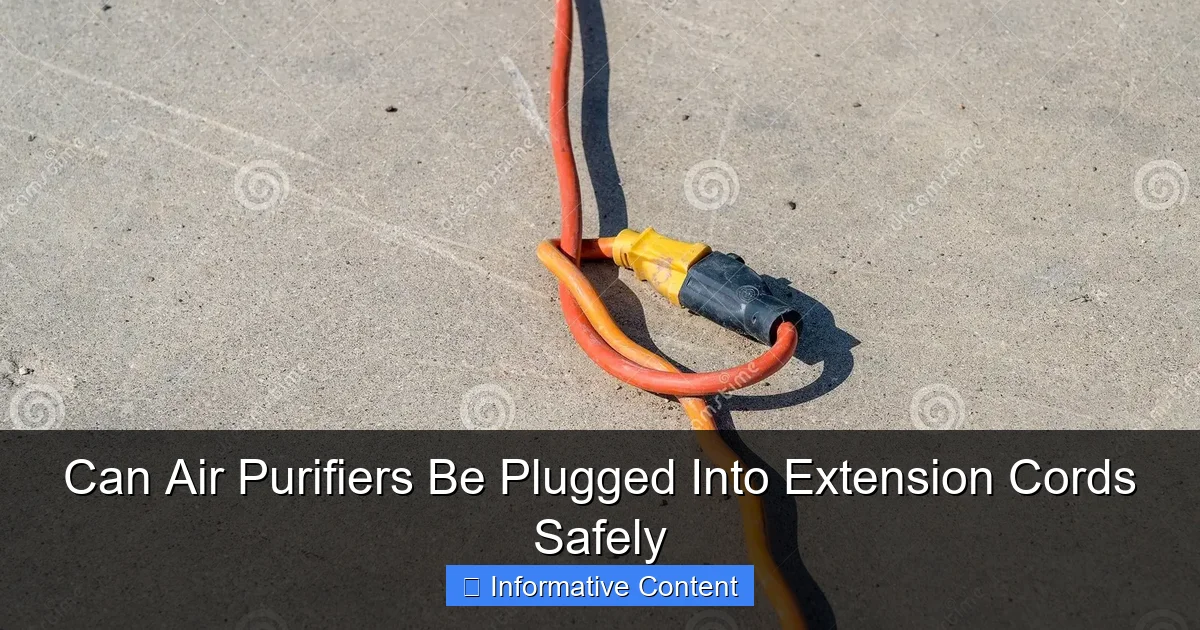
Visual guide about can air purifiers be plugged into extension cords
Image source: thumbs.dreamstime.com
How Much Power Do Air Purifiers Use?
Most residential air purifiers operate between 20 to 200 watts, depending on the model, fan speed, and features like UV lights or ionizers. For context, a typical LED light bulb uses about 10 watts, while a laptop might use 60 watts. So, even on high settings, most air purifiers aren’t massive energy hogs. However, some high-performance models—especially those with HEPA and activated carbon filters for large rooms—can draw closer to 150–200 watts, especially when running continuously.
To find your air purifier’s wattage, check the label on the back or bottom of the unit, or look up the model online. You’ll usually see it listed in watts (W) or sometimes in volts (V) and amps (A). If you only have volts and amps, you can calculate watts using this simple formula: Watts = Volts × Amps. For example, a purifier rated at 120V and 1.5A uses 180 watts.
Why Power Draw Matters for Extension Cords
Extension cords are rated for specific electrical loads, measured in amps or watts. If you plug a high-wattage device into a cord that’s not designed to handle that load, you risk overheating, voltage drop, or even fire. Think of it like trying to pour a gallon of water through a tiny straw—it just doesn’t work efficiently and can cause problems.
For example, a lightweight indoor extension cord rated for 750 watts might be fine for a 50-watt air purifier on low, but if you crank the fan to high and add a UV light, you could exceed the cord’s capacity. Over time, this can degrade the cord’s insulation, create hot spots, and increase the risk of electrical failure.
Practical Tip: Check the Label
Always look at the air purifier’s power label and compare it to the extension cord’s rating. Most quality extension cords will have a label or printing that says something like “13A, 125V, 1625W” or “For indoor use only.” Match your device’s wattage to the cord’s maximum capacity—and always leave a little buffer. A good rule of thumb is to use a cord rated for at least 1.5 times your device’s maximum wattage.
Types of Extension Cords and Their Safety Ratings
Not all extension cords are created equal. Some are designed for heavy-duty outdoor use, while others are meant for lightweight indoor gadgets. Using the wrong type can compromise safety and performance. Let’s break down the different kinds and which ones are best for air purifiers.
Indoor vs. Outdoor Extension Cords
Indoor extension cords are typically lighter, with thinner wires and less insulation. They’re great for lamps, chargers, and small electronics—but they’re not built for sustained high-power use. Most indoor cords are rated for 750 to 1,000 watts, which might be enough for a small air purifier, but not ideal for larger models.
Outdoor extension cords, on the other hand, are heavier-duty. They’re made with thicker wires (usually 12 or 14 gauge), weather-resistant insulation, and are rated for higher wattages—often 1,500 to 2,000 watts or more. These are much safer for air purifiers, especially if you’re running them for long periods.
Gauge Matters: Why Thicker Is Better
The “gauge” of an extension cord refers to the thickness of the wire inside. Lower gauge numbers mean thicker wires, which can carry more current with less resistance. For air purifiers, a 14-gauge or 12-gauge cord is ideal. Here’s a quick breakdown:
- 16-gauge: Light-duty, best for small electronics (e.g., lamps, phone chargers). Not recommended for air purifiers.
- 14-gauge: Medium-duty, good for most air purifiers up to 150 watts. Suitable for indoor use.
- 12-gauge: Heavy-duty, ideal for high-wattage purifiers or long cord runs. Best for peace of mind.
Using a 12-gauge cord for a 100-watt air purifier might seem like overkill, but it ensures minimal voltage drop and reduces heat buildup—especially if the cord is long or coiled.
Length and Voltage Drop
Longer extension cords can cause voltage drop, which means your air purifier might not get the full power it needs. This can cause the motor to work harder, overheat, or run less efficiently. For example, a 25-foot 16-gauge cord might drop voltage significantly, while a 10-foot 12-gauge cord delivers power more reliably.
If you need a long reach, opt for a shorter, heavier-gauge cord rather than a long, thin one. Or consider relocating the purifier closer to an outlet using furniture rearrangement or a power strip with a built-in cord.
Safety Risks of Using the Wrong Extension Cord
Plugging your air purifier into the wrong extension cord might seem harmless—after all, it turns on, right? But the risks are real and often invisible until it’s too late. Let’s look at the potential dangers and how to avoid them.
Overheating and Fire Hazards
The most serious risk is overheating. When an extension cord is overloaded, the wires inside heat up. If the cord is coiled, tucked under a rug, or pinched behind furniture, that heat can’t escape. Over time, the insulation can melt, exposing live wires and creating a fire hazard.
I once saw a friend plug a space heater into a thin indoor cord and drape it under a couch. Within an hour, the cord was warm to the touch. Luckily, they noticed and unplugged it—but it could have ended much worse. Air purifiers may not draw as much power as space heaters, but the same principle applies: sustained use on an undersized cord is risky.
Voltage Drop and Performance Issues
Even if your air purifier doesn’t overheat, using a low-quality or undersized cord can cause voltage drop. This means the motor doesn’t get the full 120 volts it’s designed for, so it runs slower, less efficiently, or even shuts off unexpectedly. You might notice weaker airflow, louder operation, or the purifier struggling to maintain settings.
For example, a purifier that normally cleans a room in 30 minutes might take an hour if it’s not getting enough power. Over time, this can also strain the motor and shorten the device’s lifespan.
Tripped Breakers and Electrical Noise
In rare cases, a poorly matched extension cord can cause circuit breakers to trip—especially if multiple high-wattage devices are on the same circuit. You might also notice electrical interference, like static on radios or flickering lights, which indicates unstable power delivery.
These issues aren’t just annoying—they’re signs that your electrical setup isn’t handling the load safely. If you experience frequent tripping or strange electrical behavior, it’s time to reassess your setup.
Practical Tip: Avoid Daisy-Chaining
Never plug one extension cord into another (called “daisy-chaining”) to reach an outlet. This increases resistance, heat buildup, and the risk of failure. If you need more length, use a single, properly rated cord—or better yet, consider installing a new outlet or using a power strip with a long, heavy-duty cord.
Best Practices for Safe Extension Cord Use
Now that we’ve covered the risks, let’s talk about how to use extension cords safely with your air purifier. With a few smart habits, you can enjoy cleaner air without compromising safety.
Choose the Right Cord for the Job
As a general rule, use a 14-gauge or 12-gauge outdoor extension cord for air purifiers. Look for cords labeled “heavy-duty” or “contractor-grade.” Avoid cheap, flimsy cords from discount stores—they often lack proper insulation and aren’t rated for continuous use.
Check the packaging or label for:
- Maximum wattage (aim for 1,500W or higher)
- Wire gauge (12 or 14 is ideal)
- Indoor/outdoor rating (outdoor is safer)
- UL listing (Underwriters Laboratories certification ensures safety standards)
Inspect Cords Regularly
Before each use, give your extension cord a quick visual check. Look for:
- Cracks or fraying in the insulation
- Bent or exposed prongs
- Discoloration or melting near the plug
- Loose connections
If you spot any damage, replace the cord immediately. A damaged cord is a ticking time bomb—don’t risk it.
Keep Cords Uncoiled and Ventilated
Never coil up an extension cord while it’s in use. Coiling traps heat and increases the risk of overheating. Lay the cord flat and straight, and avoid running it under rugs, furniture, or doorways where it can be pinched or crushed.
If you must run a cord across a walkway, use a cord cover or tape it down securely to prevent tripping hazards.
Use Surge Protectors for Added Safety
While not always necessary for air purifiers, a surge protector with a built-in circuit breaker can add an extra layer of protection. Look for models with:
- Joule rating of 1,000 or higher
- Indicator lights for power and protection status
- Multiple outlets for future expansion
Just make sure the surge protector itself is rated for the total wattage of all connected devices.
Consider a Dedicated Outlet
If you’re using your air purifier daily, it might be worth installing a new outlet closer to its location. A licensed electrician can add a dedicated circuit, eliminating the need for extension cords altogether. It’s a bigger upfront cost, but it’s the safest and most reliable long-term solution.
When to Avoid Extension Cords Altogether
While extension cords can be safe when used correctly, there are situations where it’s better to avoid them entirely. Let’s look at when you should rethink your setup.
High-Wattage or Industrial Air Purifiers
If you’re using a commercial-grade air purifier—like those used in hospitals, labs, or large offices—it may draw 300 watts or more. These units often require dedicated circuits and should never be plugged into extension cords, even heavy-duty ones. Always follow the manufacturer’s installation guidelines.
Continuous 24/7 Operation
Air purifiers are often left running all day, every day. While this is great for air quality, it means the extension cord is under constant load. Over months or years, even a well-rated cord can degrade. For long-term, continuous use, a direct wall outlet is always safer.
Older Homes with Outdated Wiring
If your home has old wiring, aluminum wires, or insufficient grounding, adding an extension cord can increase the risk of electrical issues. In these cases, consult an electrician before using any extension cords with high-draw devices.
Practical Tip: Use a Smart Plug Instead
If you want to control your air purifier remotely or schedule it to run at certain times, consider using a smart plug that plugs directly into the wall. These devices are designed to handle typical air purifier loads and can be controlled via your phone. Just make sure the smart plug is rated for your purifier’s wattage.
Real-World Examples and Manufacturer Guidelines
To bring this all together, let’s look at some real-world examples and what major air purifier brands recommend.
Example 1: Levoit Core 300
The Levoit Core 300 is a popular mid-range air purifier that uses about 45 watts on high. It’s designed for rooms up to 219 square feet. According to Levoit’s user manual, the device should be plugged directly into a wall outlet. However, they do not explicitly prohibit extension cords—just recommend avoiding “low-quality” cords.
In practice, a 14-gauge outdoor extension cord would be safe for this model, especially for short-term use. But for daily 24/7 operation, a direct outlet is still preferred.
Example 2: Dyson Purifier Humidify+Cool
The Dyson Purifier Humidify+Cool is a high-end model that combines air purification, humidification, and cooling. It can draw up to 63 watts for purification and much more when the humidifier and fan are active. Dyson strongly recommends plugging it directly into a wall outlet and warns against using extension cords or power strips.
This is a good reminder: always check the manufacturer’s guidelines. When in doubt, follow their advice—even if it seems overly cautious.
Data Table: Air Purifier Wattage and Cord Recommendations
| Air Purifier Model | Max Wattage | Recommended Cord Gauge | Extension Cord Safe? |
|---|---|---|---|
| Levoit Core 300 | 45W | 14-gauge | Yes (short-term) |
| Honeywell HPA300 | 130W | 12-gauge | Yes (with heavy-duty cord) |
| Dyson PH04 | 63W (higher with humidifier) | Direct outlet only | Not recommended |
| Blueair Blue Pure 211+ | 120W | 12-gauge | Yes (outdoor cord) |
This table shows that while many air purifiers can safely use extension cords, the safest choice depends on wattage, usage patterns, and manufacturer advice.
Conclusion: Safety First, Clean Air Always
So, can air purifiers be plugged into extension cords safely? The short answer is: yes, but with caveats. It’s not inherently dangerous, but it requires careful consideration of your purifier’s power needs, the quality of the cord, and how you use it.
If you’re using a small to mid-sized air purifier and choose a heavy-duty, properly rated extension cord, you can safely enjoy cleaner air without risking electrical hazards. Just remember to inspect the cord regularly, avoid coiling or overloading it, and follow the manufacturer’s guidelines.
However, for high-wattage models, continuous use, or older homes, it’s always safer to plug directly into a wall outlet—or consult an electrician for a permanent solution. Your health and safety are worth the extra effort.
At the end of the day, air purifiers are meant to improve your quality of life, not compromise it. With the right setup, you can breathe easy—literally and figuratively.
Frequently Asked Questions
Can air purifiers be plugged into extension cords safely?
Yes, air purifiers can be plugged into extension cords, but it’s important to use a heavy-duty, grounded extension cord rated for the appliance’s power requirements. Avoid cheap or undersized cords, as they can overheat and pose a fire hazard.
What type of extension cord should I use for an air purifier?
Use a UL-listed, grounded extension cord with a gauge of 14 or 12 AWG to safely handle the electrical load of most air purifiers. Make sure the cord is rated for indoor use and matches the wattage requirements of your device.
Are there risks when using an extension cord with an air purifier?
Yes, using an undersized or damaged extension cord can cause overheating, power loss, or even electrical fires. Always inspect the cord for wear and ensure it’s not running under rugs or furniture where heat can build up.
Can I leave my air purifier plugged into an extension cord overnight?
It’s generally safe if you’re using a high-quality, properly rated extension cord and the purifier is in good working condition. However, for long-term use, it’s best to plug the air purifier directly into a wall outlet when possible.
Do air purifiers need a dedicated circuit or can they share an extension cord?
Most air purifiers don’t require a dedicated circuit, but avoid plugging multiple high-wattage devices into the same extension cord. Overloading the cord can trip breakers or cause overheating, especially with older wiring.
Is it better to plug an air purifier directly into the wall instead of an extension cord?
Yes, plugging your air purifier directly into a wall outlet is the safest and most reliable option. It reduces the risk of power fluctuations, overheating, and connection issues that can occur with extension cords.