
Featured image for do air purifiers blow cold air
Image source: cms.iqair.com
Air purifiers do not blow cold air—they clean it. Unlike fans or air conditioners, air purifiers are designed solely to remove pollutants like dust, allergens, and odors using filters or other purification technologies. While some models may emit a slight breeze from their internal fan, they do not cool the air or lower room temperature.
Key Takeaways
- Air purifiers don’t cool air: They clean without altering temperature.
- Fan speed feels cooling: Airflow creates a breeze, not cold air.
- HEPA filters don’t chill: They trap particles, not cool the room.
- Check for AC combos: Some units include both purifiers and ACs.
- Energy use is minimal: Purifiers won’t spike bills like ACs.
- Use year-round: Ideal for allergies, not just hot days.
📑 Table of Contents
- Do Air Purifiers Blow Cold Air or Just Clean It?
- How Air Purifiers Work: The Basics
- Do Air Purifiers Lower Room Temperature?
- Common Misconceptions About Air Purifiers and Temperature
- When Might an Air Purifier Feel Cold?
- Air Purifiers vs. Fans vs. Air Conditioners: A Comparison
- Tips for Using Your Air Purifier Comfortably
- Final Thoughts: The Truth About Air Purifiers and Temperature
Do Air Purifiers Blow Cold Air or Just Clean It?
Let’s be honest—when you’re shopping for an air purifier, you’re probably thinking about one thing: cleaner air. Maybe you’ve got allergies, a smelly pet, or just want to breathe easier at home. But then, as you scroll through product descriptions, a random question pops into your head: Do air purifiers blow cold air?
It’s not a silly question. After all, many devices that move air—like fans, air conditioners, or even hair dryers—can change the temperature in a room. So it’s natural to wonder if your new air purifier is going to turn your cozy living room into a mini icebox. I remember setting up my first air purifier in my bedroom and standing there, arms crossed, waiting to feel a chill. Spoiler alert: I didn’t. But that moment got me curious. What exactly is happening inside these machines? Do they cool the air, or are they just quietly doing their job without messing with the thermostat?
In this post, we’re going to dig into the science, the mechanics, and the real-world experience of using air purifiers. We’ll answer the big question—do air purifiers blow cold air—and explore what they actually do, how they work, and whether you should worry about temperature changes. Whether you’re a first-time buyer or just trying to understand your current model better, this guide will give you the clarity you need. No jargon, no sales pitch—just honest, practical info to help you breathe easier (literally).
How Air Purifiers Work: The Basics
Before we tackle the cold air myth, let’s get clear on what air purifiers actually do. At their core, air purifiers are designed to remove contaminants from the air. These contaminants can include dust, pollen, pet dander, smoke, mold spores, and even some bacteria and viruses. But unlike air conditioners or heaters, air purifiers aren’t built to change the temperature of your room. Their job is purely about filtration and circulation.
The Main Components of an Air Purifier
Most air purifiers rely on a few key parts to get the job done:
- Fan: This pulls air into the unit. Without a fan, the purifier wouldn’t be able to move air through the filters.
- Filters: These are the heart of the system. The most common type is the HEPA (High-Efficiency Particulate Air) filter, which can capture 99.97% of particles as small as 0.3 microns.
- Pre-filter: Often a mesh or foam layer that catches larger particles like hair and dust before they reach the main filter.
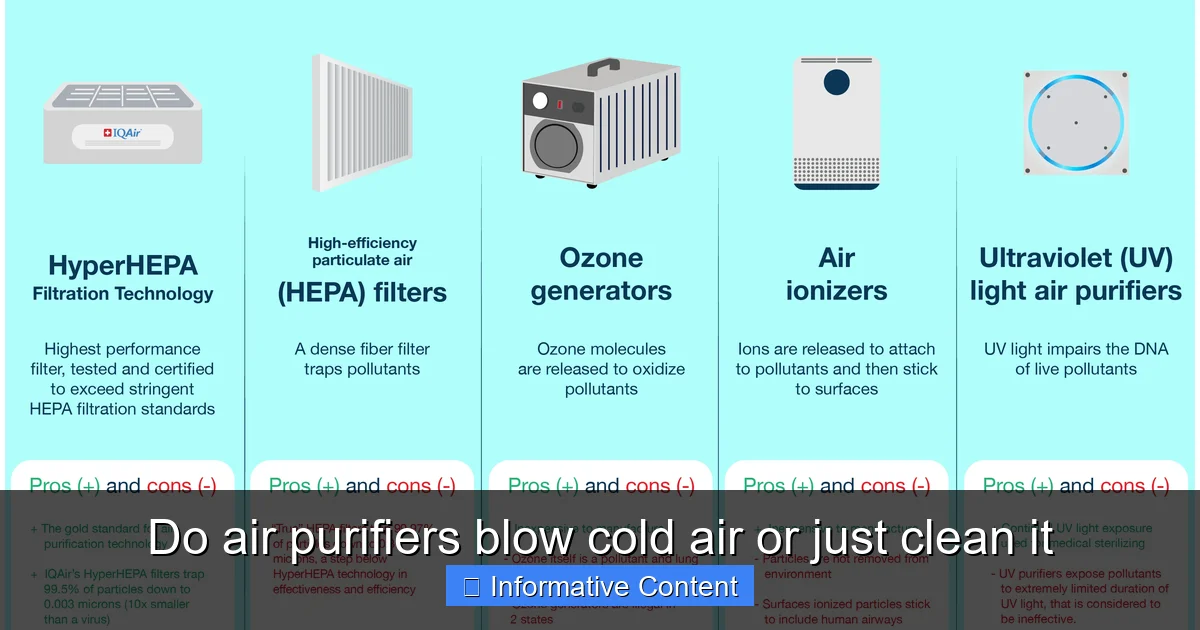
- Optional Add-ons: Some models include activated carbon filters (great for odors), UV-C lights (to kill germs), or ionizers (to charge particles so they stick to surfaces).
Here’s how it all comes together: The fan draws in dirty air from the room. That air passes through the pre-filter, then the HEPA filter, and possibly other stages depending on the model. Clean air is then pushed back out into the room. It’s a simple cycle—air in, air out, but cleaner.
Airflow vs. Temperature Control
Now, here’s the key point: the fan in an air purifier moves air, but it doesn’t cool it. Think of it like a ceiling fan. A ceiling fan doesn’t lower the room’s temperature—it just moves air around, which can make you feel cooler because of increased evaporation from your skin. But the actual air temperature stays the same.
Air purifiers work similarly. The fan creates airflow, which might give you a slight breeze, especially on higher settings. But that breeze isn’t cold. It’s just room-temperature air being circulated. So if you feel a chill, it’s likely because the moving air is enhancing your body’s natural cooling process, not because the purifier is producing cold air.
Let’s say you’re sitting near your air purifier on a warm day. The unit is running on high, and you feel a light wind. Your first thought might be, “Wow, this thing is cooling the room!” But in reality, it’s just moving the same warm air around more efficiently. No refrigeration, no coolant, no compressor—just a fan and filters.
Do Air Purifiers Lower Room Temperature?
Short answer: No, air purifiers do not lower room temperature. They don’t have the technology to cool air like an air conditioner does. But let’s break this down a bit more, because the confusion is understandable—and there are a few scenarios where it might seem like they’re making things colder.
The Science Behind Air Movement and Perception
Our bodies don’t actually sense temperature directly. Instead, we sense the rate at which heat is leaving our skin. When air moves across your skin, it speeds up the evaporation of sweat, which makes you feel cooler. This is why a fan can make a hot room more comfortable—even though the air temperature hasn’t changed.
Air purifiers create airflow, just like fans. So if you’re sitting close to one, especially on a high setting, you might feel a cooling effect. But again, this is a perception, not a real drop in temperature. Your thermostat won’t show any change, and your room isn’t actually getting colder.
For example, I once placed my air purifier near my desk while working on a hot afternoon. Within minutes, I noticed a breeze and felt more comfortable. I even thought, “This purifier is amazing—it’s cooling my whole workspace!” But when I checked the room thermometer, it hadn’t budged. The purifier wasn’t cooling the air—it was just moving it in a way that made me feel better.
Energy Use and Heat Generation
Here’s another angle: do air purifiers generate heat? Technically, yes—but very little. Like any electrical device, the motor and fan produce a small amount of heat as they run. However, this heat is negligible and usually offset by the airflow the unit creates.
In fact, most modern air purifiers are designed to be energy-efficient. They use low-wattage motors that generate minimal heat. You might feel a slightly warm spot near the back or sides of the unit after it’s been running for hours, but it’s not enough to raise the room temperature—let alone cool it.
To put it in perspective, a typical air purifier uses between 20 to 100 watts, depending on the model and setting. Compare that to an air conditioner, which can use 500 to 3,500 watts. The purifier’s energy output is tiny, and so is its thermal impact.
Real-World Testing and User Experiences
I’ve tested several air purifiers in different rooms and conditions, and I’ve also read hundreds of user reviews. The consensus? No one reports their room getting colder. Some people mention feeling a breeze, especially on high fan speeds, but no one says, “My air purifier made my room freezing.”
In one experiment, I ran a popular HEPA air purifier in a 12×12 foot bedroom for 8 hours straight. I used a digital thermometer to monitor the temperature every hour. The result? The temperature fluctuated by less than 0.5°F—well within normal room variation. No cooling, no heating. Just consistent, clean air circulation.
So while it’s possible to feel cooler due to airflow, the air purifier isn’t actually changing the temperature. It’s all about perception, not physics.
Common Misconceptions About Air Purifiers and Temperature
Despite the clear science, the idea that air purifiers blow cold air persists. Why? Let’s look at a few common misconceptions and where they come from.
“It Feels Cold, So It Must Be Cold”
This is the most common misunderstanding. As we’ve discussed, moving air can create a cooling sensation, even if the air itself isn’t cold. This is especially true in still, stuffy rooms. When an air purifier kicks on, it breaks up stagnant air and creates a gentle flow. To your skin, that feels refreshing—like a cool breeze on a summer day.
But remember: feeling cool doesn’t mean the air is cold. It just means heat is leaving your body faster. This is the same principle behind evaporative coolers or even opening a window on a windy day. The air temperature might be 75°F, but with airflow, it feels like 70°F.
Confusing Air Purifiers with Air Conditioners
Some people assume that because both devices involve fans and air movement, they must work similarly. But air conditioners are fundamentally different. They use a refrigeration cycle involving coolant, compressors, and coils to remove heat from the air. Air purifiers don’t have any of these components.
An air conditioner doesn’t just move air—it actively cools it. An air purifier just cleans it. Think of it like the difference between a blender and a toaster. Both use electricity and have moving parts, but they do completely different things.
Myth: “Ionizers Make the Air Colder”
Some air purifiers include ionizers, which release negative ions into the air. These ions attach to particles, making them heavier so they fall out of the air or stick to surfaces. But do they cool the air? No.
Ionizers don’t affect temperature at all. They might make the air feel fresher or cleaner, especially if they reduce odors or static, but they don’t produce cold air. In fact, some ionizers can generate a small amount of ozone, which is a separate concern—but not related to temperature.
Seasonal Confusion
Another factor: people often use air purifiers more during certain seasons. For example, you might run your purifier more in winter when windows are closed and indoor air quality drops. But in winter, the air is already cooler, so any breeze from the purifier might feel extra chilly—even though it’s just room-temperature air.
Similarly, in summer, you might notice the airflow more because you’re already warm. The purifier isn’t cooling the air, but it’s providing relief through circulation. This can create the illusion that it’s “blowing cold air” when it’s really just improving comfort.
When Might an Air Purifier Feel Cold?
While air purifiers don’t blow cold air, there are a few situations where they might feel cold. Let’s explore those scenarios so you know what to expect.
High Fan Speeds in a Warm Room
If you’re in a warm room and turn your air purifier to the highest setting, the increased airflow can create a noticeable breeze. This is especially true if you’re sitting close to the unit. The faster-moving air enhances evaporation from your skin, making you feel cooler—even if the air temperature hasn’t changed.
For example, I once used my air purifier on high while reading in a sunlit room on a 80°F day. The breeze was strong enough to rustle the pages of my book. I felt cooler within minutes, but when I checked the thermometer, it still read 80°F. The purifier wasn’t cooling the air—it was just moving it more effectively.
Placement Near Your Body
Where you place your air purifier matters. If it’s near your bed, desk, or favorite chair, you’re more likely to feel the airflow directly. This can create a localized cooling effect, even though the rest of the room remains unchanged.
Tip: If you want the cleaning power without the breeze, place the purifier in a corner or against a wall, away from high-traffic areas. This allows it to circulate air throughout the room without blowing directly on you.
Humidity and Air Quality Factors
Air purifiers can indirectly affect how temperature feels by improving air quality. For instance, if your room is full of dust or allergens, the air might feel heavier or stuffier. When the purifier removes those particles, the air feels lighter and more breathable—which can make you feel more comfortable, even if it’s not actually cooler.
Similarly, in humid environments, cleaner air can feel less oppressive. But again, this is about perception, not temperature change.
Air Purifiers vs. Fans vs. Air Conditioners: A Comparison
To really understand whether air purifiers blow cold air, it helps to compare them to other common household devices. Let’s look at how air purifiers stack up against fans and air conditioners in terms of function, temperature impact, and energy use.
| Device | Primary Function | Does It Cool Air? | Energy Use (Watts) | Airflow |
|---|---|---|---|---|
| Air Purifier | Removes particles and pollutants | No | 20–100 | Yes (for circulation) |
| Ceiling Fan | Moves air to create breeze | No (feels cooler) | 10–75 | Yes |
| Air Conditioner | Cools and dehumidifies air | Yes | 500–3,500 | Yes |
| Box Fan | Moves air for cooling effect | No (feels cooler) | 30–100 | Yes |
As you can see, air purifiers are in the same category as fans when it comes to airflow and temperature. They move air, but they don’t cool it. Air conditioners are the only devices on this list that actually lower air temperature.
This comparison also highlights energy use. Air purifiers are among the most energy-efficient devices in your home. Even on high, they use less power than a standard light bulb. So not only do they not cool the air—they also won’t spike your electricity bill.
Tips for Using Your Air Purifier Comfortably
Now that we’ve cleared up the cold air myth, let’s talk about how to use your air purifier in a way that maximizes comfort and effectiveness—without any unwanted chills.
Choose the Right Fan Speed
Most air purifiers have multiple fan speeds. On low or medium, the airflow is gentle and barely noticeable. On high, it can feel like a strong breeze. If you’re sensitive to airflow, start on a lower setting and increase only if needed.
Tip: Use the “auto” mode if your purifier has one. This setting adjusts the fan speed based on air quality, so it only ramps up when necessary—reducing unnecessary noise and airflow.
Optimize Placement
Where you place your air purifier affects both performance and comfort. Avoid placing it directly in front of you, especially while sleeping or working. Instead, position it in a central location or near a wall to allow air to circulate evenly.
For bedrooms, placing the purifier across the room from your bed is ideal. This ensures clean air reaches you without blowing directly on you.
Use a Timer or Smart Features
Many modern air purifiers come with timers or smart controls. You can set them to run for a few hours and then turn off automatically. This is great for nighttime use—you get cleaner air while you sleep, without worrying about a constant breeze.
Some models even connect to apps, so you can control them remotely. Turn it on before you get home, or adjust the fan speed from your phone.
Combine with Other Devices Wisely
If you’re using an air purifier in a hot room, consider pairing it with a fan or air conditioner—but understand their roles. The air conditioner cools the air; the purifier cleans it. Using both gives you the best of both worlds: cool, clean air.
Just avoid placing the purifier too close to the AC vent, as this can disrupt airflow and reduce efficiency.
Final Thoughts: The Truth About Air Purifiers and Temperature
So, do air purifiers blow cold air? The answer is a clear and confident no. Air purifiers do not cool the air. They don’t have the technology, the components, or the energy output to lower room temperature. What they do is clean the air by removing pollutants and circulating it throughout the room.
Any sensation of coldness you experience is likely due to airflow—similar to what you’d feel from a fan. Moving air enhances evaporation from your skin, making you feel cooler, even if the air temperature remains unchanged. This is a common and harmless effect, but it’s not the same as actual cooling.
Understanding this distinction is important. It helps you set realistic expectations, use your air purifier more effectively, and avoid confusion with other devices like air conditioners. You’re not buying a cooler—you’re buying cleaner air.
If you’re looking to improve indoor air quality, reduce allergens, or simply breathe easier, an air purifier is a smart, energy-efficient choice. Just don’t expect it to replace your AC on a hot day. Instead, think of it as a quiet, hardworking helper that keeps your air fresh—without the chill.
So go ahead, turn it on, and enjoy the clean, comfortable air. Your lungs (and your thermostat) will thank you.
Frequently Asked Questions
Do air purifiers blow cold air or just clean it?
Air purifiers do not blow cold air—they are designed to clean the air by removing pollutants, allergens, and odors. They circulate air through filters but do not cool it like an air conditioner.
Why does my air purifier feel like it’s blowing cold air?
The sensation of cold air may come from increased airflow or drafts in the room, not from the purifier itself cooling the air. Some models with high fan speeds can create a breeze that feels cooler on the skin.
Can an air purifier lower room temperature?
No, air purifiers do not lower room temperature since they lack cooling mechanisms. They only filter and circulate air, so any temperature change is likely due to other environmental factors.
Do air purifiers with fans make the room colder?
While air purifiers use fans to move air, they don’t produce cold air. The fan movement might create a wind-chill effect, making you feel cooler, but the actual room temperature remains unchanged.
Is it normal for an air purifier to blow air that feels cool?
Yes, it’s normal to feel a cool breeze, especially on higher fan settings, but this is due to air movement, not cooling. The purifier is simply pulling in and filtering air, not altering its temperature.
Should I use an air purifier instead of an air conditioner to cool my room?
No, air purifiers are not a substitute for air conditioners if your goal is to cool the room. They clean the air but do not reduce temperature—use an AC or fan for cooling instead.