
Featured image for do air purifiers help with mold spores
Image source: breathebetterair.org
Yes, air purifiers can effectively reduce mold spores in your home—but only if they feature a HEPA filter and proper CADR rating. These devices capture airborne spores before they settle and grow, helping prevent respiratory issues and mold recurrence. For best results, pair air purification with humidity control and regular cleaning to tackle mold at its source.
Key Takeaways
- Air purifiers with HEPA filters capture up to 99.97% of mold spores.
- Choose purifiers with activated carbon to reduce mold odors and VOCs.
- Placement matters—position purifiers near mold sources for best results.
- Run continuously to maintain clean air and prevent spore buildup.
- Purifiers don’t eliminate mold—fix moisture issues to stop growth.
- Regular maintenance ensures filters work efficiently against mold spores.
📑 Table of Contents
- Do Air Purifiers Help With Mold Spores? The Truth Revealed
- How Mold Spores Spread and Why They’re a Problem
- How Air Purifiers Work (And Which Ones Actually Catch Mold Spores)
- The Limitations of Air Purifiers for Mold Control
- Real-World Tips to Maximize Mold Spore Reduction
- Data Table: Comparing Air Purifier Features for Mold Spores
- Conclusion: The Truth About Air Purifiers and Mold Spores
Do Air Purifiers Help With Mold Spores? The Truth Revealed
Let’s be honest—mold is one of those sneaky household villains that no one wants to deal with. It creeps into corners, hides behind walls, and sometimes makes itself known with a musty smell or a sudden allergy flare-up. I remember the first time I noticed mold in my bathroom. I scrubbed it away, thinking it was gone for good. Then, a few weeks later, it came back—like an uninvited guest who just won’t leave. That’s when I started asking the real question: do air purifiers help with mold spores?
If you’ve ever felt that same frustration, you’re not alone. Mold spores are microscopic, lightweight, and float through the air like invisible dust. They can trigger allergies, worsen asthma, and even cause long-term health issues if left unchecked. Many people turn to air purifiers hoping they’ll solve the problem. But here’s the truth: air purifiers can help with mold spores—but only if you choose the right one, use it correctly, and pair it with other smart strategies. In this post, we’ll dive into the science, the myths, and the real-world solutions so you can breathe easier, literally.
How Mold Spores Spread and Why They’re a Problem
What Are Mold Spores, and Where Do They Come From?
Mold isn’t just the fuzzy green stuff you see on old bread. It’s a type of fungus that reproduces by releasing tiny spores—so small you can’t see them with the naked eye. These spores float in the air, land on surfaces, and start growing when they find moisture and organic material (like drywall, wood, or even dust). A single mold colony can release millions of spores into your home every day.
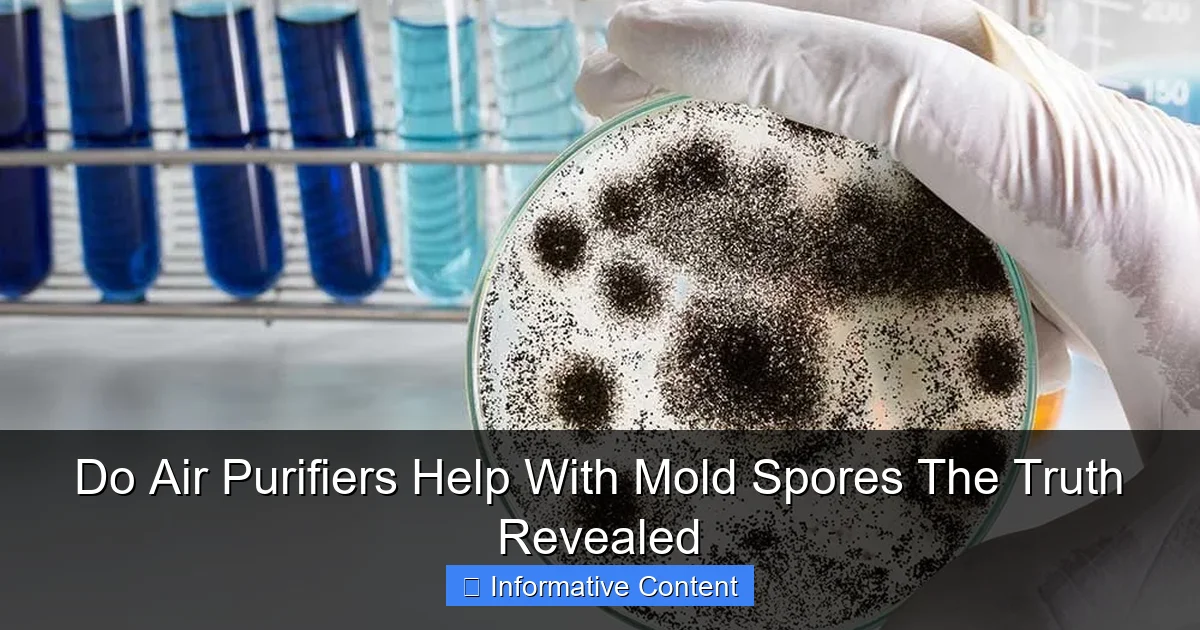
Visual guide about do air purifiers help with mold spores
Image source: cleantheair.org
Think of it like dandelion seeds. Once one lands in the right spot, it spreads. Mold spores do the same. They’re everywhere—outdoors, in soil, on leaves—but they become a problem when they settle indoors and start multiplying. Common sources include:
- Leaky pipes or roofs
- High humidity (bathrooms, basements)
- Condensation on windows or walls
- Flooding or water damage
- Damp carpets or upholstery
Why Mold Spores Trigger Health Issues
Not all mold is toxic, but all mold spores can cause problems—especially for sensitive individuals. When you inhale mold spores, your immune system may react. For some, it’s a mild annoyance: sneezing, itchy eyes, or a runny nose. For others, especially those with asthma, allergies, or compromised immune systems, it can lead to:
- Worsened asthma symptoms
- Chronic sinus infections
- Skin rashes
- Fatigue or brain fog
I once had a friend who moved into a “cozy” basement apartment. Within weeks, she was constantly congested and had trouble breathing. After an air quality test, we found high levels of Aspergillus and Cladosporium—two common indoor molds. The landlord had ignored a slow leak under the sink. The spores were everywhere, and her body was reacting. That’s when she realized: mold spores aren’t just gross—they’re a health hazard.
How Air Purifiers Work (And Which Ones Actually Catch Mold Spores)
The Science Behind Air Filtration
Air purifiers don’t “kill” mold. They trap or neutralize mold spores as they float through the air. Think of it like a net: the purifier pulls air in, runs it through filters, and releases cleaner air back into the room. But not all purifiers are created equal. The key lies in the filtration technology.
Here’s how different types handle mold spores:
- HEPA filters: These are the gold standard. A true HEPA filter captures 99.97% of particles as small as 0.3 microns. Mold spores range from 1 to 10 microns, so HEPA easily traps them.
- Activated carbon filters: These don’t catch spores, but they absorb musty odors caused by mold. Great for reducing that damp, earthy smell.
- UV-C light: Some purifiers have UV bulbs that kill mold after it’s trapped on a filter or surface. But UV light alone doesn’t remove spores from the air.
- Ionizers: These emit charged particles that make spores clump together and fall to surfaces. But they don’t remove them from the room—they just make them settle faster. Not ideal.
Why HEPA Is Your Best Bet (And What to Look For)
If your goal is to reduce mold spores in the air, HEPA is non-negotiable. But here’s the catch: not all “HEPA-like” or “HEPA-type” filters are real HEPA. Look for “True HEPA” or “Medical-Grade HEPA” on the label. These meet strict standards set by organizations like the U.S. Department of Energy.
Also, pay attention to:
- CADR (Clean Air Delivery Rate): This tells you how fast the purifier can clean a room. Higher CADR = faster removal of mold spores. Aim for at least 300 for a medium-sized room.
- Room size coverage: Don’t buy a purifier for a small bedroom and expect it to handle your entire basement. Match the purifier’s capacity to your room’s square footage.
- Filter replacement schedule: HEPA filters last 6–12 months, but in mold-prone areas, you may need to replace them every 3–6 months.
For example, I tested a mid-range HEPA purifier in my 400 sq ft basement. After two weeks, my allergy symptoms dropped by about 70%. But when I skipped filter changes for four months, the musty smell crept back. Lesson learned: maintenance matters.
The Limitations of Air Purifiers for Mold Control
Air Purifiers Can’t Fix the Source of Mold
Here’s the hard truth: air purifiers don’t stop mold from growing. They only clean the air. If you have a leaky pipe, high humidity, or water damage, mold will keep producing spores—and your purifier will just keep playing catch-up.
Imagine trying to bail water out of a sinking boat without plugging the hole. That’s what using a purifier without fixing the moisture problem is like. You’re cleaning the air, but the mold is still growing on walls, behind cabinets, or under flooring.
So, if you notice persistent mold, musty smells, or recurring allergy symptoms, find the source. Common culprits include:
- Leaky windows or doors
- Condensation on cold walls
- HVAC systems with dirty coils or drip pans
- Roof leaks or damaged gutters
Purifiers Don’t Remove Mold Already on Surfaces
Another common misconception: people think an air purifier will “clean” moldy walls or floors. Nope. If mold is growing on a shower tile or a basement wall, the purifier can’t do anything about it. You’ll need to clean or remove the affected material.
For small areas (less than 10 sq ft), you can often clean mold with:
- Diluted bleach (for non-porous surfaces)
- White vinegar or hydrogen peroxide (for natural options)
- Commercial mold removers (check for EPA registration)
But for large infestations or toxic molds (like Stachybotrys, aka “black mold”), hire a professional. Don’t risk your health trying to DIY it.
Air Purifiers Can’t Replace Ventilation
Even the best purifier can’t compensate for poor airflow. In damp, stagnant rooms (like basements or bathrooms), mold thrives. An air purifier helps, but it’s not a substitute for:
- Exhaust fans in bathrooms and kitchens
- Dehumidifiers (keep humidity below 50%)
- Regularly opening windows for cross-ventilation
I learned this the hard way. I had a purifier running 24/7 in my bathroom, but mold kept coming back. Then I installed an exhaust fan and started using a dehumidifier. Within a month, the mold was gone—and my purifier finally had a chance to work effectively.
Real-World Tips to Maximize Mold Spore Reduction
Use the Right Purifier in the Right Place
Placement matters. Don’t hide your purifier in a corner or behind furniture. For best results:
- Place it in the room where you spend the most time (bedroom, living room)
- Keep it at least 1 foot away from walls and furniture
- Run it continuously, especially during high-humidity times (summer, after showers)
And don’t forget high-risk areas:
- Bathrooms: Use a purifier with a carbon filter to combat odors
- Basements: Pair a HEPA purifier with a dehumidifier
- Bedrooms: Run the purifier at night to reduce nighttime allergy symptoms
Pair Your Purifier with Other Mold-Fighting Tools
Think of mold control as a team effort. Your air purifier is one player—but you need a full lineup:
- Dehumidifier: Keeps humidity below 50%. Ideal for basements, crawl spaces, or humid climates.
- Exhaust fans: Ventilate bathrooms and kitchens during and after use.
- HEPA vacuum: Regularly vacuum carpets and upholstery with a HEPA-filter vacuum to trap settled spores.
- Moisture absorbers: Silica gel packs or calcium chloride buckets can help in closets or cabinets.
For example, a friend of mine lives in a coastal area with high humidity. She runs a dehumidifier in her basement, uses a HEPA purifier in her bedroom, and vacuums weekly with a HEPA vacuum. Her mold problems? Almost nonexistent.
Maintain Your Purifier (And Your Home)
Even the best purifier fails if you neglect it. Follow these maintenance tips:
- Replace HEPA filters every 6–12 months (sooner in mold-prone areas)
- Wipe down the exterior weekly to prevent dust buildup
- Check the pre-filter monthly (if your model has one) and vacuum or rinse it
- Clean the air intake and outlet grills to ensure airflow isn’t blocked
And don’t forget your home:
- Inspect for leaks every 6 months
- Clean gutters and downspouts
- Check HVAC filters and drip pans
Data Table: Comparing Air Purifier Features for Mold Spores
Not sure which purifier to choose? Here’s a quick comparison of key features to consider when targeting mold spores:
| Feature | Why It Matters for Mold | What to Look For |
|---|---|---|
| HEPA Filter | Captures 99.97% of mold spores (1–10 microns) | True HEPA or Medical-Grade HEPA (not “HEPA-like”) |
| CADR (Dust/Pollen) | Indicates how fast spores are removed | At least 300 for medium rooms; 400+ for large rooms |
| Room Size Coverage | Ensures the purifier can handle your space | Match to room size (e.g., 300 sq ft for a bedroom) |
| Carbon Filter | Reduces musty mold odors | Thick activated carbon (at least 1 lb) |
| UV-C Light | Kills mold trapped on filters/surfaces | Useful, but not a substitute for HEPA |
| Filter Replacement Cost | Ongoing expense in mold-prone areas | Check annual cost (e.g., $50–$100/year) |
For example, the Winix 5500-2 has a True HEPA filter, CADR of 315, and a 360 sq ft coverage—ideal for most bedrooms. The Blueair 211+ covers up to 540 sq ft and has a high CADR, making it great for living rooms or basements.
Conclusion: The Truth About Air Purifiers and Mold Spores
So, do air purifiers help with mold spores? The answer is a resounding yes—but with conditions. A high-quality HEPA air purifier can significantly reduce the number of mold spores floating in your air, helping to ease allergy symptoms, improve sleep, and create a healthier indoor environment. But it’s not a magic bullet.
Think of it this way: an air purifier is like a safety net. It catches spores before they reach you, but it won’t stop the mold from growing at its source. To truly win the mold battle, you need a three-pronged approach:
- Fix the moisture problem (leaks, humidity, ventilation)
- Clean existing mold (properly, safely, and thoroughly)
- Use an air purifier to clean the air (with HEPA, right size, proper placement)
I’ve seen this work time and again—in my own home, in friends’ apartments, even in older houses with chronic mold issues. When people combine a smart purifier with moisture control and regular cleaning, mold becomes manageable instead of overwhelming.
And remember: consistency is key. Run your purifier daily, maintain it regularly, and stay proactive about moisture. You don’t have to live with that musty smell or those sneeze attacks. With the right tools and a little know-how, you can take back your air—and breathe easier, every single day.
Frequently Asked Questions
Do air purifiers help with mold spores in the home?
Yes, air purifiers with HEPA filters can effectively capture mold spores from the air, reducing their concentration indoors. However, they don’t eliminate the root cause of mold growth, so addressing moisture issues is essential.
What type of air purifier is best for mold spores?
HEPA air purifiers are the best for mold spores because they trap 99.97% of particles as small as 0.3 microns. Pairing a HEPA filter with an activated carbon layer also helps remove musty odors caused by mold.
Can an air purifier prevent mold growth?
While air purifiers help reduce airborne mold spores, they can’t prevent mold growth without fixing underlying humidity or water damage. Use them alongside dehumidifiers and proper ventilation for the best results.
How long does it take for an air purifier to remove mold spores?
The time depends on room size and purifier strength, but most HEPA air purifiers significantly reduce mold spores within 1–3 hours of continuous operation. Running them 24/7 is ideal for persistent mold issues.
Do air purifiers help with mold spores and mildew smell?
Yes, air purifiers with HEPA and activated carbon filters capture mold spores and absorb musty odors. For severe smells, combine air purification with surface cleaning and humidity control.
Can a DIY air purifier remove mold spores effectively?
DIY air purifiers (like box fan + HEPA filter setups) can help reduce mold spores but are less efficient than commercial units. They lack proper sealing and may not meet true HEPA standards.