
Featured image for do air purifiers qualify hsa
Air purifiers may qualify for HSA spending, but only if prescribed by a doctor to treat a specific medical condition like asthma or allergies. While the IRS doesn’t list air purifiers as automatically eligible, they can be considered a deductible medical expense when deemed medically necessary. Always keep a copy of the prescription and receipt to ensure compliance during tax filings.
Key Takeaways
- Air purifiers qualify for HSA if prescribed for medical conditions like asthma or allergies.
- Always get a doctor’s note to ensure HSA eligibility and reimbursement approval.
- Over-the-counter purchases without a prescription won’t qualify—documentation is key.
- Keep detailed receipts and records for HSA provider audits or claims.
- Check HSA plan rules—some may require specific certifications or models.
- Portable or medical-grade purifiers are more likely to be approved than standard units.
📑 Table of Contents
- Do Air Purifiers Qualify for HSA Spending
- Understanding HSA-Eligible Expenses
- When Do Air Purifiers Qualify for HSA Use?
- How to Properly Document and Claim Air Purifier Purchases
- Types of Air Purifiers and Their Medical Relevance
- Common Misconceptions and Pitfalls to Avoid
- Real-World Examples and Practical Tips
- Conclusion
Do Air Purifiers Qualify for HSA Spending
Let’s be honest—air quality isn’t something most of us think about until it affects our health. I remember the first time I noticed a difference in my breathing after moving to a city with high pollution levels. My allergies flared up, my sleep suffered, and I started waking up with a stuffy nose more mornings than not. That’s when I started researching air purifiers. They seemed like a simple fix, but as I dug deeper, I wondered: could I use my Health Savings Account (HSA) to pay for one? After all, if it’s helping my health, shouldn’t it count?
That question led me down a rabbit hole of IRS guidelines, medical expense definitions, and a lot of fine print. What I discovered surprised me—and it might surprise you too. While air purifiers aren’t automatically HSA-eligible like prescription medications or doctor visits, there are specific situations where they can qualify. The key lies in understanding what the IRS considers a “qualified medical expense” and how air purifiers fit into that framework. Whether you’re dealing with asthma, allergies, or just want cleaner air at home, this guide will walk you through everything you need to know about using your HSA for an air purifier—without breaking the rules.
Understanding HSA-Eligible Expenses
Before we dive into whether air purifiers qualify for HSA spending, it’s important to understand the foundation of what makes an expense eligible in the first place. Your Health Savings Account is a tax-advantaged account designed to help you pay for qualified medical expenses. But not every health-related purchase automatically qualifies—even if it feels like it should.
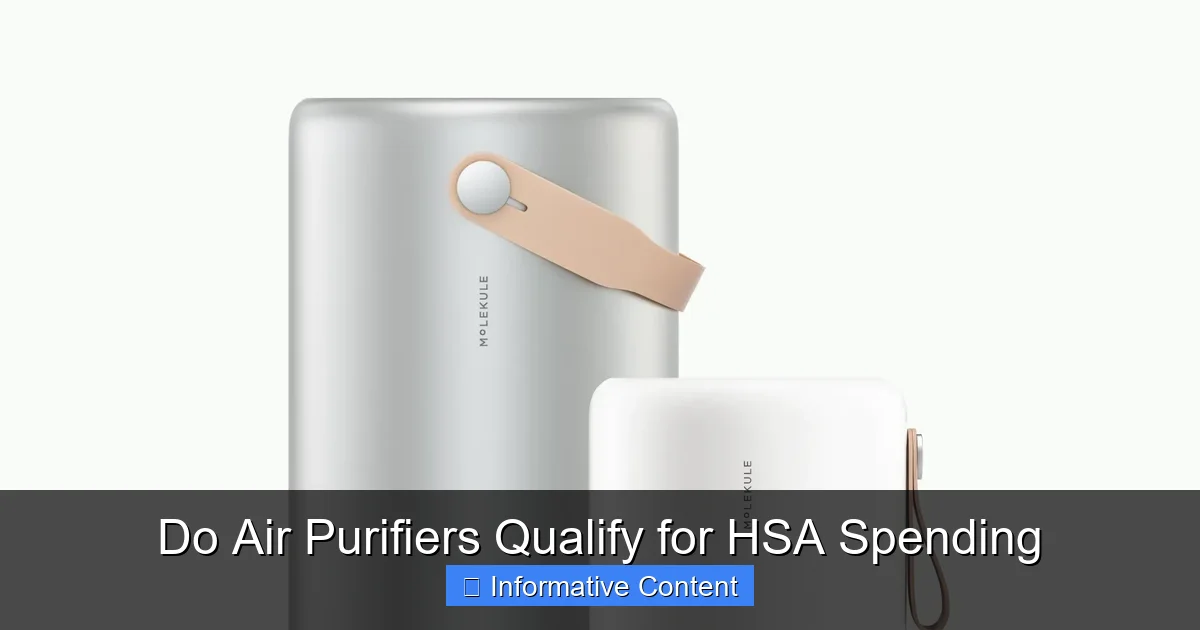
Visual guide about do air purifiers qualify hsa
Image source: molekule.com
What Counts as a Qualified Medical Expense?
According to the IRS, a qualified medical expense is one that is primarily for the “prevention or alleviation of a physical or mental defect or illness.” This includes things like doctor visits, prescription drugs, medical devices, and certain over-the-counter items—but only under specific conditions. For example, over-the-counter medications require a doctor’s prescription to be HSA-eligible, while insulin is eligible without one.
The IRS Publication 502 is the official guide for these rules, and it’s updated annually. It outlines hundreds of eligible and ineligible expenses, from acupuncture to wheelchairs. The common thread? The expense must have a direct, documented connection to treating or preventing a medical condition. General wellness products—like fitness trackers or essential oils—typically don’t qualify unless prescribed for a specific health issue.
The Role of Medical Necessity
Here’s where things get tricky: just because something improves your health doesn’t mean it’s HSA-eligible. The IRS looks for medical necessity. That means you need a diagnosed condition—like asthma, chronic obstructive pulmonary disease (COPD), or severe allergies—and a healthcare provider’s recommendation that the air purifier is part of your treatment plan.
For instance, if your doctor writes a letter stating that an air purifier is medically necessary to manage your asthma, that strengthens your case significantly. Without that documentation, the IRS may view the purchase as a general wellness expense, which isn’t covered. This distinction is crucial and often overlooked by HSA users.
Examples of Eligible vs. Ineligible Purchases
To clarify, here are a few examples:
- Eligible: A nebulizer prescribed for asthma treatment.
- Ineligible: A humidifier bought to improve sleep quality without a medical diagnosis.
- Potentially Eligible: An air purifier recommended by an allergist for severe pollen allergies.
The difference often comes down to intent and documentation. If you’re buying an air purifier because your doctor said it would help reduce your allergy symptoms, that’s a strong argument for eligibility. But if you’re buying it because you “just want cleaner air,” that’s more of a lifestyle choice—and not HSA-eligible.
When Do Air Purifiers Qualify for HSA Use?
Now, let’s get to the heart of the matter: when can you actually use your HSA funds to buy an air purifier? The short answer is: only if it’s medically necessary and properly documented. But let’s break that down further.
Medical Conditions That May Justify HSA Use
Air purifiers can qualify for HSA spending if they are prescribed or strongly recommended to treat a diagnosed medical condition. Common examples include:
- Asthma: Air purifiers can reduce airborne triggers like dust mites, pet dander, and mold spores, which are known asthma triggers.
- Severe Allergies: If you have allergic rhinitis or hay fever, an air purifier with a HEPA filter can significantly reduce allergen exposure.
- Chronic Obstructive Pulmonary Disease (COPD): Cleaner air can ease breathing and reduce flare-ups in COPD patients.
- Cystic Fibrosis or Other Respiratory Conditions: These patients often benefit from reduced airborne irritants.
- Immunocompromised Individuals: People undergoing chemotherapy or with weakened immune systems may need cleaner air to avoid infections.
In each of these cases, the air purifier isn’t just a nice-to-have—it’s a tool that directly supports medical treatment. That’s the kind of connection the IRS looks for.
The Importance of a Doctor’s Recommendation
Here’s a real-world example: Sarah, a 34-year-old teacher, was diagnosed with moderate asthma after frequent nighttime coughing and shortness of breath. Her pulmonologist recommended using a HEPA air purifier in her bedroom to reduce exposure to dust and mold. The doctor even wrote a note stating that the device was “medically necessary for symptom management.”
With that documentation, Sarah was able to use her HSA to purchase a $300 air purifier without issue. When she submitted her HSA reimbursement request, she included the doctor’s note and the receipt. Her HSA administrator approved it because the expense met the criteria for a qualified medical expense.
This kind of documentation is your best friend. Without it, even the most medically beneficial air purifier might be denied. Think of the doctor’s note as your “prescription” for cleaner air.
What If You Don’t Have a Formal Diagnosis?
Let’s say you suspect you have allergies but haven’t been formally diagnosed. Or maybe you’ve noticed your child coughing more at night, but your pediatrician hasn’t labeled it as asthma yet. In these cases, it’s still worth talking to your healthcare provider.
Even a simple conversation—like, “I’ve been having trouble breathing at night, and I’m wondering if an air purifier might help”—can lead to a recommendation. If your doctor agrees it’s worth trying as part of a diagnostic or treatment plan, they may provide a written statement. That statement could be enough to justify HSA use, especially if symptoms improve after using the purifier.
Remember: the goal isn’t to game the system, but to ensure you’re using your HSA funds appropriately for genuine health needs.
How to Properly Document and Claim Air Purifier Purchases
So, you’ve got a medical condition, a doctor’s recommendation, and you’re ready to buy an air purifier with your HSA. Great! But the process doesn’t end at checkout. Proper documentation is essential to avoid issues during audits or reimbursement requests.
What Documentation Do You Need?
To safely use your HSA for an air purifier, gather the following:
- A written recommendation from a licensed healthcare provider: This should clearly state that the air purifier is medically necessary for your condition. It doesn’t need to be a formal prescription, but it should be on letterhead and signed.
- The original receipt: Include the date of purchase, item description, and total cost.
- Proof of payment: A credit card statement or bank record showing the transaction.
- Optional but helpful: A brief note explaining how the air purifier will be used (e.g., “For bedroom use to reduce nighttime asthma symptoms”).
Keep all of this in a folder—digital or physical—so you can easily access it if your HSA administrator requests verification.
Submitting the Claim to Your HSA Administrator
Most HSA providers allow you to submit claims online through their portal. Here’s how the process typically works:
- Log in to your HSA account.
- Navigate to the “Submit a Claim” or “Reimbursement” section.
- Upload your receipt and doctor’s note.
- Select the expense category (e.g., “Medical Equipment” or “Other Qualified Expense”).
- Submit and wait for approval.
Some HSAs also allow you to pay directly with your HSA debit card at the time of purchase. In that case, you’ll still need to keep your documentation on file in case of an audit. The IRS can request records up to six years after you file your taxes, so don’t toss those receipts!
What Happens If Your Claim Is Denied?
Don’t panic if your HSA administrator denies your claim. It happens—sometimes due to missing documentation or unclear wording in the doctor’s note. If this occurs:
- Ask for a detailed explanation of why it was denied.
- Revise your documentation if needed (e.g., get a clearer statement from your doctor).
- Resubmit with additional supporting information.
- Contact your HSA provider’s customer service for guidance.
In rare cases, you may need to appeal the decision. But with proper preparation, most legitimate claims are approved on the first try.
Types of Air Purifiers and Their Medical Relevance
Not all air purifiers are created equal—and not all are equally justifiable for HSA use. Understanding the different types can help you choose one that’s both effective and defensible as a medical expense.
HEPA Filters: The Gold Standard
High-Efficiency Particulate Air (HEPA) filters are widely regarded as the most effective type for removing airborne allergens and irritants. They can capture 99.97% of particles as small as 0.3 microns, including pollen, dust mites, pet dander, and mold spores.
Because of their proven effectiveness in reducing asthma and allergy triggers, HEPA air purifiers are the most likely to be considered medically necessary. If your doctor recommends an air purifier, they’ll almost certainly suggest one with a true HEPA filter.
Activated Carbon Filters: For Odors and Chemicals
These filters are great for absorbing odors, smoke, and volatile organic compounds (VOCs). While they don’t capture particles as effectively as HEPA filters, they can be useful for people with chemical sensitivities or those recovering from smoke exposure (e.g., wildfire smoke).
If your condition is triggered by odors or airborne chemicals—such as in multiple chemical sensitivity (MCS)—a carbon filter might be part of your treatment plan. Just make sure your doctor notes this in their recommendation.
UV-C Light Purifiers: Killing Germs
Ultraviolet (UV-C) light can kill bacteria, viruses, and mold spores. Some air purifiers combine UV-C with HEPA filters for dual protection. These can be valuable for immunocompromised individuals or those with recurrent respiratory infections.
However, UV-C alone isn’t enough to remove particles from the air—it only disinfects them. So, for HSA purposes, a UV-C purifier is most justifiable when paired with a HEPA filter and prescribed for a specific infection risk.
Ionic and Ozone Generators: Proceed with Caution
Ionic air purifiers and ozone generators are controversial. While they can remove some particles, they may produce ozone—a lung irritant that can worsen asthma and other respiratory conditions. The EPA and many health organizations advise against them.
Because of these risks, it’s unlikely that an ionic or ozone-generating purifier would be recommended by a doctor for medical use. If you’re considering one, talk to your healthcare provider first—and don’t expect HSA approval without strong justification.
Choosing the Right Model for Your Needs
When selecting an air purifier for medical use, consider:
- Room size: Make sure the purifier is rated for the square footage of the room where it will be used.
- CADR rating: The Clean Air Delivery Rate indicates how quickly the purifier can clean the air. Higher is better.
- Noise level: If you’ll use it in a bedroom, look for a quiet model (under 50 decibels).
- Energy efficiency: Some models are Energy Star certified, which can save on electricity costs.
Popular medically recommended brands include Honeywell, Levoit, Blueair, and Coway. Many of these offer HEPA filtration and are frequently cited in clinical studies on air quality and respiratory health.
Common Misconceptions and Pitfalls to Avoid
Even with the best intentions, it’s easy to make mistakes when using your HSA for an air purifier. Let’s clear up some common misconceptions and help you avoid costly errors.
“If It’s Good for My Health, It Must Be Eligible”
This is the biggest myth. Just because an air purifier improves your air quality doesn’t mean it’s HSA-eligible. The IRS doesn’t care how much better you feel—only whether the expense is tied to a diagnosed medical condition.
For example, buying an air purifier because you live in a smoggy city or want to reduce your carbon footprint? Not eligible. But buying one because your allergist said it would reduce your sinus infections? That’s a different story.
“I Don’t Need a Doctor’s Note—I Know My Body”
Self-diagnosis doesn’t count. Even if you’re certain you have allergies or asthma, you still need a formal diagnosis and recommendation from a healthcare provider. Your HSA administrator won’t take your word for it.
That said, you don’t need a specialist. A primary care physician, nurse practitioner, or even a certified allergist can provide the necessary documentation. The key is that they’re licensed and can speak to your medical need.
“I Can Use My HSA for Any Air Purifier, Even Without Documentation”
Technically, you can use your HSA debit card to buy an air purifier—but that doesn’t mean it’s allowed. If you’re ever audited by the IRS and can’t prove the expense was medically necessary, you’ll owe taxes on the amount plus a 20% penalty.
It’s not worth the risk. Always get documentation before making the purchase.
“All Air Purifiers Are the Same for HSA Purposes”
As we discussed earlier, the type of purifier matters. A basic ionic purifier with no medical backing is far less likely to qualify than a HEPA model recommended by your doctor. Choose wisely—and justify your choice in writing.
“I Can Wait to Get Documentation After I Buy It”
While it’s possible to retroactively get a doctor’s note, it’s riskier. If your doctor refuses or can’t verify the medical necessity after the fact, you’re stuck with a non-reimbursable expense. Get the note before you buy.
Real-World Examples and Practical Tips
Let’s wrap this up with some real-life scenarios and actionable advice to help you navigate the process smoothly.
Case Study: Maria’s Allergy Relief
Maria, a 42-year-old with severe seasonal allergies, struggled with constant sneezing, itchy eyes, and sinus pressure every spring. After visiting an allergist, she was diagnosed with allergic rhinitis triggered by tree pollen. Her doctor recommended using a HEPA air purifier in her bedroom and provided a written statement.
Maria used her HSA to buy a $250 Levoit Core 300, submitted the receipt and doctor’s note, and was reimbursed within a week. Within two weeks of use, her nighttime symptoms improved by 70%. She now considers the purifier a vital part of her treatment plan.
Case Study: James and His Son’s Asthma
James’s 8-year-old son was recently diagnosed with mild persistent asthma. Their pediatrician suggested using an air purifier in his bedroom to reduce exposure to dust mites and pet dander (they have a cat). James got a signed note from the doctor and purchased a $180 Honeywell HPA300.
He submitted the claim through his HSA portal and included a photo of the purifier in his son’s room as additional context. The claim was approved, and his son’s rescue inhaler use dropped from 3 times a week to once every two weeks.
Practical Tips for Success
- Talk to your doctor early: Don’t wait until after you’ve bought the purifier.
- Choose a reputable brand: Stick with models known for medical use.
- Keep detailed records: Save receipts, emails, and doctor notes in one place.
- Check your HSA provider’s rules: Some have specific forms or processes.
- Be honest: Only claim expenses that are truly medically necessary.
Conclusion
So, do air purifiers qualify for HSA spending? The answer is: yes, but only under the right circumstances. If you have a diagnosed respiratory condition and your healthcare provider recommends an air purifier as part of your treatment plan, you can likely use your HSA funds—provided you have proper documentation.
This isn’t about bending the rules; it’s about using your HSA as it was intended: to support your health in a tax-advantaged way. Air purifiers can make a real difference for people with asthma, allergies, and other respiratory issues. And when used correctly, they’re a smart, eligible expense.
Just remember: the key is medical necessity, not convenience. Get that doctor’s note, choose a quality HEPA model, and keep your receipts. With the right approach, you can breathe easier—both literally and financially.
Frequently Asked Questions
Do air purifiers qualify for HSA spending?
Yes, air purifiers can qualify for Health Savings Account (HSA) spending if they are prescribed by a licensed healthcare provider to treat or alleviate a specific medical condition, such as asthma or allergies. The purchase must be primarily for medical care to be eligible.
What medical conditions make air purifiers HSA-eligible?
Air purifiers may qualify for HSA reimbursement when used to treat diagnosed conditions like chronic allergies, asthma, or respiratory illnesses. A physician’s written recommendation is typically required to validate the medical necessity.
Can I use my HSA to buy an air purifier without a prescription?
Generally, no—air purifiers are only HSA-eligible if they are prescribed by a doctor for a specific health condition. Purchases made without a medical recommendation are considered non-qualified expenses and won’t qualify for HSA spending.
Are replacement filters for air purifiers covered by HSA?
Replacement filters may qualify for HSA reimbursement if the air purifier itself is medically prescribed and the filters are necessary for ongoing treatment. Keep the original prescription and receipts for documentation.
How do I submit an air purifier purchase for HSA reimbursement?
To get reimbursed, submit the itemized receipt, a Letter of Medical Necessity (LMN) from your doctor, and any other required forms to your HSA administrator. Ensure the documentation clearly links the air purifier to your medical condition.
Do all HSA plans cover air purifiers?
While air purifiers can qualify for HSA spending, coverage depends on your specific plan’s guidelines and the presence of a valid medical prescription. Always check with your HSA provider before making a purchase to confirm eligibility.