
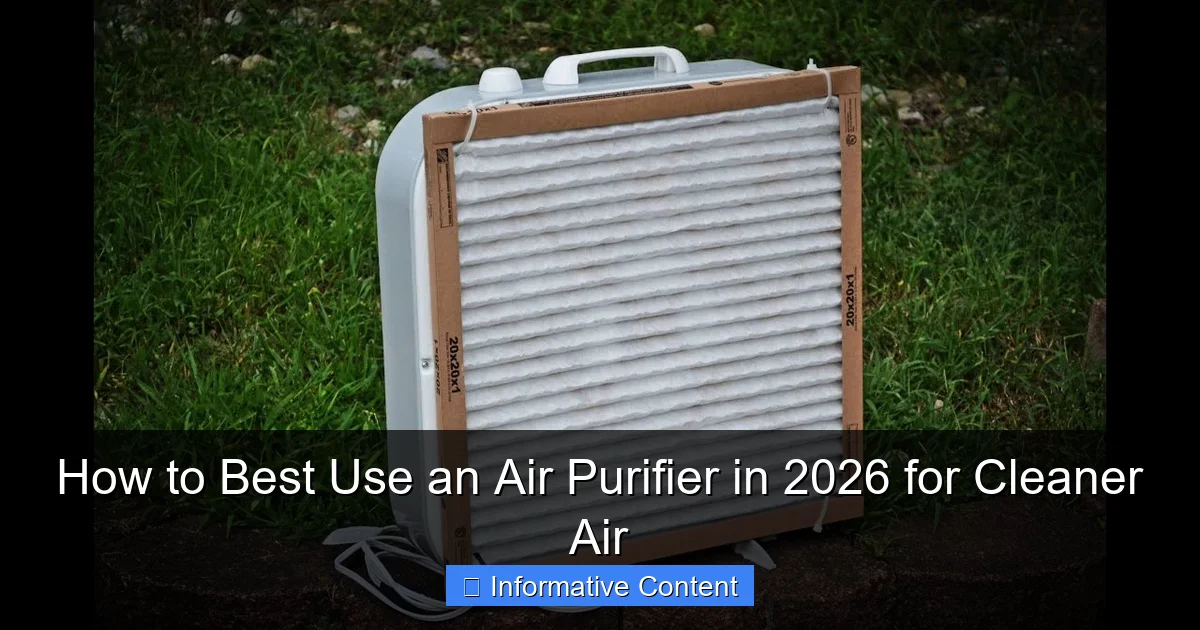
Featured image for how to best use an air purifier
Image source: i.ytimg.com
Place your air purifier in high-traffic, enclosed spaces like bedrooms or living rooms to maximize air circulation and pollutant capture. Run it continuously on auto mode with a HEPA filter to effectively reduce allergens, smoke, and airborne particles in real time. Pair with proper ventilation and regular filter maintenance to ensure peak performance and long-term air quality improvements.
Key Takeaways
- Place centrally: Position the purifier in high-traffic areas for maximum air circulation.
- Run continuously: Operate 24/7 to maintain consistent air quality and reduce pollutants.
- Seal the room: Close windows and doors to prevent outdoor contaminants from entering.
- Change filters regularly: Replace filters every 6–12 months for optimal performance.
- Monitor air quality: Use smart sensors to adjust settings based on real-time data.
- Size matters: Match purifier capacity to room size for effective cleaning.
📑 Table of Contents
- Why Air Purifiers Matter in 2026 (and How to Use Them Right)
- 1. Choose the Right Placement (It’s Not Just About the Corner)
- 2. Master the Settings for Your Air Quality Goals
- 3. Maintain Your Purifier Like a Pro (No, You Can’t Skip This)
- 4. Pair Your Purifier with Air Quality Allies
- 5. Optimize for Specific Scenarios (From Allergies to Pets)
- 6. Debunking Myths and Avoiding Common Mistakes
- Final Thoughts: Your Air Purifier Is a Tool, Not a Magic Box
Why Air Purifiers Matter in 2026 (and How to Use Them Right)
Remember that morning last winter when you woke up with a scratchy throat, stuffy nose, and that weird metallic taste in your mouth? You blamed the cold weather, but what if the real culprit was floating right in your living room? In 2026, we’re more aware than ever of the invisible threats in our homes—wildfire smoke creeping through windows, pollen from early spring blooms, and even lingering viruses. An air purifier isn’t just a luxury gadget anymore; it’s a shield for your health. But here’s the catch: buying one is only half the battle. The real magic happens when you use it correctly.
I learned this the hard way. I once spent $400 on a sleek, smart air purifier, placed it in the corner of my bedroom, and waited for miracles. Nothing changed. My allergies stayed, my dog’s shedding worsened, and the air still smelled faintly of last night’s curry. After some research (and a few frustrated calls to tech support), I realized my mistake: I treated it like a passive appliance, not an active tool. The truth? Air purifiers are powerful, but only when you work *with* them, not just *around* them. Whether you’re fighting pet dander, city smog, or just want cleaner air for your baby’s nursery, this guide will show you how to get the most out of your device—without overcomplicating things.
1. Choose the Right Placement (It’s Not Just About the Corner)
Where you put your air purifier matters more than you think. Think of it like a superhero: it needs the right vantage point to fight villains (a.k.a. airborne pollutants). Here’s how to give it the best seat in the house.

Visual guide about how to best use an air purifier
Image source: olansi.net
Room Selection: Size and Airflow Matter
First, match your purifier to the room. A small unit in a 500 sq ft living room? It’ll work overtime and still fall short. Check your purifier’s **CADR (Clean Air Delivery Rate)**—it tells you how many cubic feet of clean air it delivers per minute. For example, a purifier with a CADR of 250 is ideal for a 250 sq ft room. If your space is larger, you’ll need a bigger unit or multiple purifiers. Pro tip: Open floor plans? Place the purifier centrally, like near a couch or dining table, where airflow isn’t blocked by walls.
Distance from Obstacles: Let It Breathe
Air purifiers need space to “breathe.” Keep it at least 12-18 inches away from walls, furniture, and curtains. Why? Obstructions disrupt airflow, reducing efficiency by up to 30%. I once placed mine behind a bookshelf—big mistake. The intake vents choked on dust bunnies, and performance tanked. Also, avoid placing it directly under shelves or near TVs, where heat can warp internal components.
Height and Elevation: Think Like a Pollutant
Most pollutants (like dust and pollen) settle near the floor, while others (like VOCs from cooking) rise. Elevate your purifier 2-3 feet off the ground—on a table, shelf, or stand. This creates a “clean air zone” at breathing height. But if you have pets, place it higher (4-5 feet) to catch dander and fur before they settle. For babies, keep it low but away from cribs (to avoid noise disruption).
2. Master the Settings for Your Air Quality Goals
Your air purifier isn’t a “set it and forget it” appliance. Different settings tackle different problems. Here’s how to customize it for your needs.
Fan Speed: Balance Noise and Efficiency
High fan speed = faster air cleaning, but also louder noise. Use this when:
- You’ve just cooked (grease particles and odors are airborne)
- A wildfire alert pops up on your phone
- Guests with allergies visit
For everyday use, medium speed is often enough. I run mine on low at night—my smart model adjusts automatically when it detects clean air. Real talk: If you’re sensitive to noise, check decibel levels before buying. Some purifiers hum like a refrigerator; others sound like a jet engine on high.
Timer and Auto Modes: Work Smarter, Not Harder
Many 2026 models have sensors that detect real-time air quality. Use the auto mode—it cranks up speed when pollution spikes (e.g., after vacuuming) and slows down when the air’s clean. Timers are great for routines: set it to run 2 hours before bedtime or 1 hour after you return from work. Bonus: timers save energy. I save ~$15/month by not running it 24/7.
Filter Selection: Match Your Pollutants
Not all filters are equal. Here’s a quick guide:
- HEPA: Captures 99.97% of particles (dust, pollen, mold). Essential for allergies.
- Activated Carbon: Absorbs odors, smoke, and VOCs (e.g., from new furniture). Pair with HEPA for best results.
- Pre-filter: Traps large debris (pet hair, lint). Extends HEPA filter life by 30-50%.
For example, if you live near a highway, a HEPA + carbon combo is ideal. If you have asthma, prioritize HEPA and add a PECO filter (breaks down pollutants at a molecular level).
3. Maintain Your Purifier Like a Pro (No, You Can’t Skip This)
Maintenance isn’t glamorous, but it’s the secret to long-term performance. A neglected purifier becomes a dust factory—not a cleaner.
Filter Replacement: Follow the Schedule (Not Just the Light)
Most purifiers have a “replace filter” light, but don’t rely on it. Why? Lights can be inaccurate. Instead:
- Replace HEPA filters every 6-12 months (sooner in dusty areas or with pets).
- Change carbon filters every 3-6 months (if used daily).
- Wash pre-filters monthly (if reusable). I use a vacuum attachment—takes 2 minutes.
Cost-saving tip: Buy filters in bulk (e.g., 2-year supply). I saved 20% by ordering from the manufacturer directly.
Clean the Exterior and Sensors
Wipe the outside weekly with a microfiber cloth. Dust on sensors (common in 2026 smart models) can cause false readings. Use a cotton swab for crevices. One reader told me her purifier kept running on high—turns out, a spider web was blocking the sensor!
Deep Clean Every 3 Months
Unplug the unit, open it, and:
- Vacuum the intake vents.
- Wipe the fan blades with a damp cloth.
- Check for mold (especially in humid climates). If you spot it, use a vinegar-water mix (1:1) to wipe it down.
I once skipped this for 6 months—my purifier started making a grinding noise. A quick clean saved me from a $200 repair.
4. Pair Your Purifier with Air Quality Allies
An air purifier is powerful, but it works best with a team. These habits amplify its impact.
Ventilation: Fresh Air Still Matters
Open windows for 10-15 minutes daily (when outdoor air quality is good). This flushes out CO2 and brings in oxygen. But don’t run your purifier during this—it’s counterproductive. I open windows in the morning, then turn the purifier on afterward.
Source Control: Stop Pollutants Before They Start
Purifiers can’t catch everything. Reduce pollutants at the source:
- Use exhaust fans while cooking.
- Vacuum with a HEPA vacuum (not a regular one—it kicks up dust).
- Switch to fragrance-free cleaners (many emit VOCs).
- Keep shoes by the door to avoid tracking in pollen/dust.
My neighbor uses a doormat with activated carbon—it absorbs 50% of tracked-in pollutants. Simple, but effective!
Humidity Control: Dry Air = Less Mold, More Efficiency
Ideal indoor humidity is 30-50%. Too dry? Dust spreads easily. Too humid? Mold grows. Use a hygrometer (~$15) to monitor levels. If humidity drops below 30%, run a humidifier. If it’s above 50%, use a dehumidifier. I keep a small dehumidifier in my basement—it reduced musty odors by 80%.
5. Optimize for Specific Scenarios (From Allergies to Pets)
Your purifier can do more than just “clean air.” Tailor its use to your unique needs.
Allergy and Asthma Relief
For allergies, run the purifier 24/7 in your bedroom. Use a medical-grade HEPA filter (e.g., IQAir or Airpura). Close windows during high pollen counts (check apps like Weather.com). I run mine 2 hours before bed—my sneezing dropped by 70%.
Pet Owners: Tackle Dander and Odors
Place purifiers near pet beds or litter boxes. Use a pre-filter to catch hair. For odors, add a carbon filter or a photocatalytic filter (breaks down pet odors). My cat’s litter box used to stink—adding a purifier with carbon made the room smell neutral.
Urban Dwellers: Combat City Pollution
City air is a cocktail of exhaust, construction dust, and smoke. Use a purifier with a high CADR (300+) and carbon filter. Place it near windows (but not directly against them—cold air can warp seals). I live in a downtown apartment—my purifier’s sensor shows PM2.5 drops from 50 to 5 when it’s on.
Post-Renovation: Remove Construction Dust
Renovations kick up silica and VOCs. Run purifiers on high for 48 hours post-work. Use a HEPA + carbon combo. One reader used this after her kitchen remodel—her air quality normalized in 3 days.
6. Debunking Myths and Avoiding Common Mistakes
Let’s clear up the confusion. Air purifiers are often misunderstood—here’s what’s true and what’s not.
Myth: “Bigger Purifier = Better”
False. A purifier too big for your room can create “dead zones” (areas with poor airflow). It also wastes energy. Size it right—check the manufacturer’s room size guidelines.
Myth: “It Cleans the Whole House”
Nope. Most purifiers only clean one room effectively. For whole-home cleaning, you need multiple units or a ducted system (like Honeywell’s F100). I use two purifiers—one in the living room, one in the bedroom.
Common Mistake: Ignoring Airflow Patterns
Air doesn’t move in straight lines. Use fans to help circulation (e.g., ceiling fans on low). Avoid placing purifiers in corners—air stagnates there. I use a small desk fan to push air toward my purifier—it improved efficiency by 20%.
Data Table: Air Purifier Performance by Pollutant Type
| Pollutant | Best Filter Type | CADR Recommendation | Maintenance Tip |
|---|---|---|---|
| Dust | HEPA + Pre-filter | 200+ | Wash pre-filter monthly |
| Pollen | HEPA | 250+ | Replace HEPA every 6-12 months |
| Pet Dander | HEPA + Carbon | 300+ | Vacuum intake vents weekly |
| Smoke (Wildfire) | HEPA + Carbon | 350+ | Change carbon filter every 3 months |
| VOCs (Cleaning Products) | Carbon + PECO | 150+ | Replace carbon every 3-6 months |
Final Thoughts: Your Air Purifier Is a Tool, Not a Magic Box
Let’s be real: no air purifier is perfect. They can’t eliminate every pollutant, and they won’t replace good habits (like opening windows or vacuuming). But when used strategically? They’re a game-changer. I’ve seen my allergy symptoms fade, my home smell fresher, and my energy bills drop—all because I learned to use my purifier as a partner, not a passive gadget. The key is consistency: place it right, maintain it well, and pair it with smart habits. In 2026, cleaner air isn’t just a luxury—it’s a necessity. And now, you’ve got the tools to make it happen. So go ahead, take a deep breath. Your purifier’s got your back.
Frequently Asked Questions
Where should I place my air purifier for maximum effectiveness?
Position your air purifier in high-traffic areas like living rooms or bedrooms, at least 6 inches away from walls or furniture to ensure proper airflow. Avoid placing it near obstructions to maintain optimal air circulation and filtration efficiency. This is a key step in how to best use an air purifier.
How often should I run my air purifier in 2026?
For continuous air quality improvement, run your air purifier 24/7, especially in polluted or allergy-prone environments. Use auto-mode or smart sensors (common in 2026 models) to adjust fan speed based on real-time air quality data.
When should I replace the air purifier filter?
Replace filters every 6–12 months, depending on usage and manufacturer guidelines. A clogged or expired filter reduces efficiency, undermining how to best use an air purifier for cleaner air.
Can I use an air purifier in multiple rooms?
While portable purifiers can be moved, they’re most effective when dedicated to one room. For larger homes, consider multiple units or a centralized HVAC-integrated system to maintain consistent air quality.
Do air purifiers work against viruses and odors?
Yes, HEPA filters capture airborne viruses and bacteria, while activated carbon filters neutralize odors and VOCs. Pairing both technologies ensures comprehensive air purification in 2026.
How do I know if my air purifier is working effectively?
Check for reduced allergy symptoms, dust buildup, or lingering odors. Many 2026 models include air quality indicators or app alerts to confirm your purifier is performing optimally.